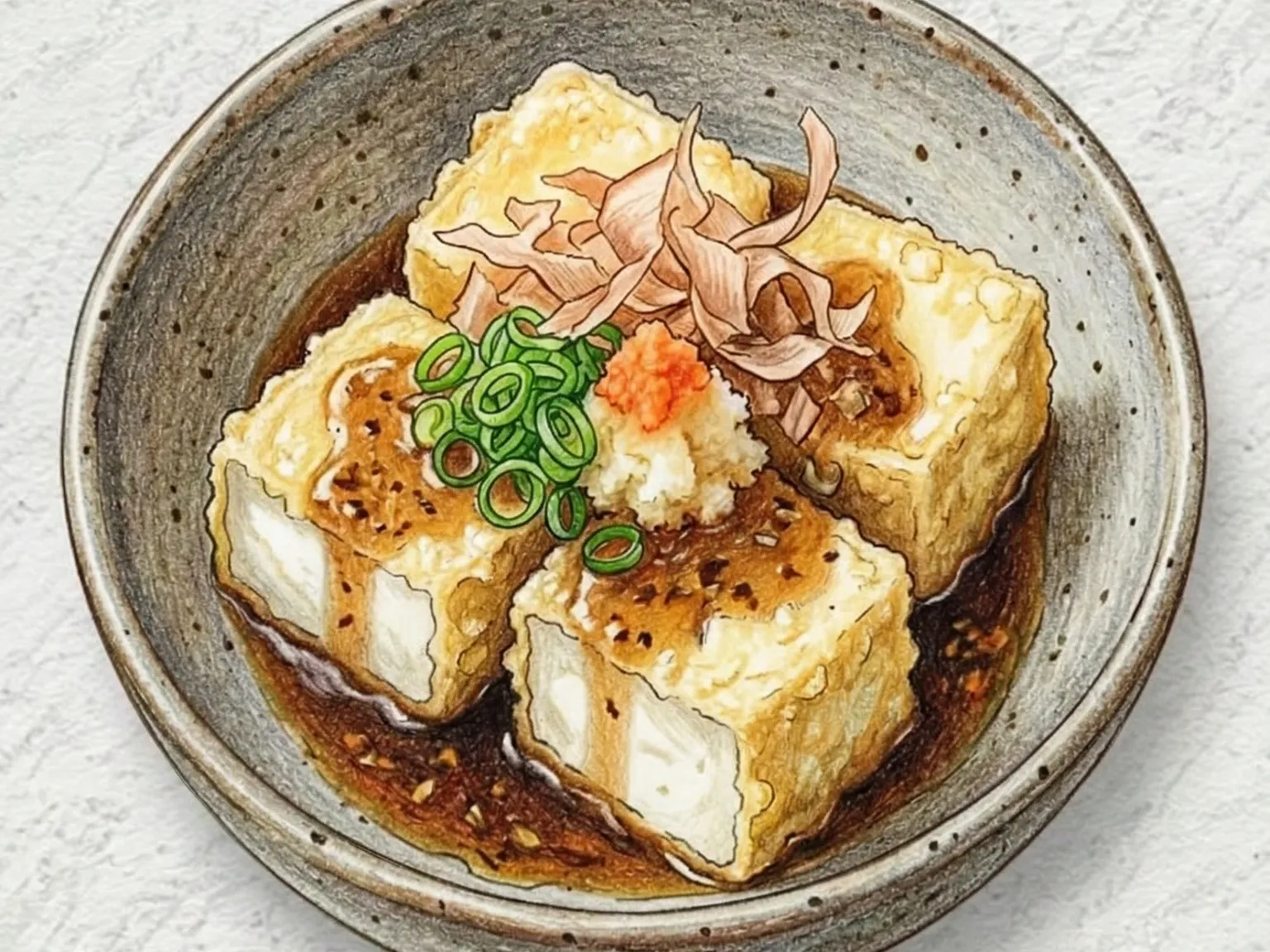
Agedashi Tofu (Japanese Crispy Fried Tofu in Dashi Broth)
Quick answer
The dish has been in Japanese izakaya cookbooks since the Edo period - essentially a method for turning a block of tofu into something worth drinking beside.
What makes this special
- Firm tofu dried and dusted in potato starch fries into a shell that stays crisp in dashi broth for 30 seconds.
- Thin potato starch coat fried at 170°C for 2-3 minutes
- Hot dashi tsuyu poured the instant it leaves the oil
Key ingredients
Core cooking flow
- 1 Wrap 350g firm tofu in paper towels, set a weight on top, and press for at least 30 minutes.
- 2 Cut the drained tofu into large cubes.
- 3 Combine 200ml dashi, 1.5 tablespoons soy sauce, and 1 tablespoon mirin in a small saucepan.
The dish has been in Japanese izakaya cookbooks since the Edo period - essentially a method for turning a block of tofu into something worth drinking beside. Firm tofu is pressed under weight for at least half an hour to drive out moisture, then tapped lightly in potato starch. Any residual water causes violent spitting in the oil; too thick a starch coat turns gummy once the broth hits. Into oil held at 170C until a translucent golden shell forms, two to three minutes without touching it. From there, hot dashi-soy-mirin broth goes on immediately at the table. The edges of the crust absorb the liquid and turn to something between gel and noodle; the center stays dry and crisp for roughly thirty seconds. That window is the whole point. Eat past it and you have soft tofu in broth, which is fine but is a different dish entirely. Grated daikon on top cuts through any lingering oil.
Instructions
Read the steps as a cooking flow: prep, heat, seasoning, doneness control, and finish.
- 1Step
Wrap 350g firm tofu in paper towels, set a weight on top, and press for at least 30 minutes.
Pat the surface dry again so trapped moisture does not spit in the oil.
- 2Prep
Cut the drained tofu into large cubes.
Coat each side lightly with 60g potato starch, then shake off clumps because a thick layer turns gummy as soon as the hot broth touches it.
- 3Control
Combine 200ml dashi, 1.5 tablespoons soy sauce, and 1 tablespoon mirin in a small saucepan.
Bring it just to a boil over medium heat, then lower the heat and keep it warm for serving.
- 4Heat
Heat 500ml frying oil to 170C and lower in the tofu carefully.
Leave the pieces untouched for the first 2 minutes so a translucent golden shell can form without tearing.
- 5Heat
Once the outside is set, turn each piece only once and fry for 2 to 3 minutes total.
Remove when the surface is crisp and the edges look pale golden, then drain briefly.
- 6Finish
Place the fried tofu in bowls immediately and pour the hot dashi broth over it at once.
Top with 2 tablespoons grated daikon and serve while the center is still crisp.
After the steps
Pick a recipe that fits this dish.
Continue with shared ingredients, meal pairings, or a similar method.
Recipes That Go Well With This
More Asian →Based on shared ingredients and meal pairing
Yuzu Karaage (Japanese Citrus-Marinated Fried Chicken)
Yuzu karaage is a citrus-accented variation of Japanese fried chicken that incorporates yuzu into the traditional soy-ginger marinade. Boneless chicken thighs are marinated in soy sauce, cooking sake, garlic, ginger, and yuzu marmalade, which infuses the meat with a floral citrus fragrance distinct from lemon or lime. After marinating, the pieces are coated in potato starch and deep-fried until the exterior turns shatteringly crisp while the inside stays moist and well-seasoned. The yuzu adds a bright, aromatic acidity that lifts the richness of the fried coating and dark soy marinade, giving each bite a clean finish rather than a heavy aftertaste.
Japanese Karaage (Soy-Ginger Fried Chicken)
Karaage is Japanese fried chicken where boneless thigh pieces are marinated in soy sauce, mirin, grated ginger, and minced garlic for at least fifteen minutes before being coated in potato starch and double-fried. Ginger in the marinade counters the stronger gaminess of dark meat, and mirin contributes a mild sweetness and sheen to the finished crust. Potato starch produces a lighter and crispier shell than wheat flour or cornstarch, but any excess coating must be shaken off before frying or the surface sets unevenly. The first fry at 170 degrees Celsius runs for three to four minutes, cooking the chicken fully through. Pulled from the oil and rested for two minutes, residual heat equalizes the interior temperature. The second fry at 180 degrees for one to two minutes drives off remaining surface moisture, leaving a thin, shattering crust that holds its texture far longer than a single fry would. This is the central technique that keeps karaage crisp even as it cools. Squeezing lemon juice over the pieces just before eating cuts through the richness and sharpens the contrast between the crust and the juicy interior.
Udon with Seasoned Fried Tofu
Kitsune udon is a Japanese noodle soup defined by its topping of sweet-simmered fried tofu pouches floating on a clear, deeply savory dashi broth. The aburaage is blanched first in boiling water to remove the excess oil that would otherwise cloud the broth and repel the seasoning, then braised in a mixture of water, soy sauce, mirin, and sugar for about six minutes until the liquid has been absorbed and the sweetness has penetrated to the center of each pouch. The broth is built separately from a stock of katsuobushi and kombu, seasoned with soy sauce, mirin, and just enough salt to round out the flavor without making it salty. The quality of this broth is the single most important factor in the finished bowl. Frozen udon noodles are warmed in boiling water for about two minutes, just long enough to loosen and heat through without losing their elastic, springy texture, then transferred to the bowl with the broth ladled over. The simmered tofu pouch sits on top, and as you eat, it releases its sweetened liquid gradually into the surrounding broth, shifting the flavor of the soup with each bite. Sliced scallion and a pinch of shichimi togarashi finish the bowl with fresh aroma and gentle heat. The tofu benefits from being prepared a day in advance, as resting overnight deepens the braising flavor throughout.
Osaka Kitsune Udon (Thick Noodles with Sweet Fried Tofu in Dashi)
Kitsune udon is Osaka's signature noodle bowl, defined by sweet simmered fried tofu draped over thick wheat noodles in a clear dashi broth. The broth is drawn from kombu and bonito flakes, then seasoned with light soy sauce in the Kansai tradition, pale in color but layered with umami. The aburaage tofu is simmered separately in a mixture of dashi, soy sauce, mirin, and sugar until it swells with sweet braising liquid, and each bite releases a burst of that concentrated sweetness into the bowl. Thick, chewy udon noodles sit in the steaming broth, their mild wheat flavor providing a neutral base for the delicate soup. Sliced green onion scattered on top adds freshness and a gentle bite. In Osaka, kitsune udon is eaten at all hours, as a quick breakfast before work, a light lunch, or a late-night bowl after drinks, and every neighborhood udon shop holds its own variation on the sweet tofu recipe passed down through the years.
Serve with this
Japanese Kani Salad
Kani salad is a Japanese-inspired dish centered on imitation crab meat that is prepared using a specific shredding technique. Instead of chopping the crab, the sticks are pulled apart along their natural grain to create a soft and fibrous texture. This particular structure allows the crab to absorb the dressing thoroughly while preventing the pieces from becoming saturated with excess liquid. These shreds are combined with cucumbers and carrots that have been julienned into thin strips to add a crisp and refreshing crunch to the overall composition. The dressing for the salad is a mixture of mayonnaise, rice vinegar, and fresh lemon juice. This specific blend results in a creamy coating that provides a smooth mouthfeel without leaving a heavy or oily sensation after eating. Toasted sesame seeds are incorporated into the mixture to provide a warm and nutty element that complements the gentle sweetness of the imitation crab. The most significant requirement for a successful salad is ensuring that the vegetables are patted completely dry before they are tossed with the other ingredients. If there is any moisture left on the cucumber or carrots, it will dilute the mayonnaise base and cause the salad to become thin and watery within a short amount of time. Because the recipe requires no cooking or heat, the entire bowl can be assembled in approximately ten minutes, which provides an efficient solution for a quick and refreshing lunch or dinner side. This salad is versatile in its application, serving as a popular topping for sushi rolls or as a light starter when paired with slices of fresh avocado.
Yakitori Rice Bowl (Soy-Mirin Glazed Grilled Chicken over Rice)
Direct heat and a repetitive glazing process define the preparation of this chicken skewer bowl. Small pieces of chicken thigh are secured onto skewers and grilled over a flame while a mixture of soy sauce, mirin, and sugar is applied in thin, sequential layers. This technique builds a lacquered surface through caramelization, which directs the sweet and salty flavors to the exterior of the meat. Applying the sauce too heavily in a single pass often leads to burning and an uneven crust. Because chicken thigh contains natural fats, the meat remains moist and tender even under high temperatures. When the cooked pieces are removed from the skewers and placed onto the rice, the excess glaze permeates the grains to provide sufficient seasoning. Sprinkling shichimi togarashi or sansho powder introduces a sharp or citrus-like contrast to the sweetness of the chicken. While chicken breast serves as a leaner alternative, it requires a longer marinating period and a shorter time on the grill to prevent the meat from drying out. The tare sauce can be prepared in advance and stored in the refrigerator for several weeks. Adding a halved soft-boiled egg or sliced scallions provides different textures and prevents the meal from feeling repetitive.
Korean Minari Apple Juice
Minari apple juice is a Korean green juice made by blending fresh water dropwort, apple, and cucumber with cold water until smooth. Water dropwort carries a sharp, herbaceous bite that anchors the drink in clean, green territory, while the apple's natural juice sweetens the blend without any added sugar. Cucumber brings lightness and hydration, softening the overall texture so each sip goes down easily. A small piece of fresh ginger adds quiet warmth underneath the green notes, and lemon juice keeps water dropwort's grassy edge in check while honey rounds out the tart finish. Drinking the blended mixture straight gives a fuller, fiber-rich texture, but straining through cheesecloth or a fine-mesh sieve transforms it into a clear, polished juice with a noticeably smoother feel. Spring water dropwort harvested at peak season delivers the most concentrated herbal fragrance, and choosing a tart apple variety prevents the sweetness from overpowering the other ingredients.
Similar recipes
Steamed Komatsuna and Tofu
Komatsuna mushi is a Japanese steamed dish of mustard spinach and tofu, finished with a poured dashi-soy sauce. Komatsuna has less bitterness than regular spinach and keeps a firm bite after steaming, which stands in textural contrast to the soft tofu beneath it. The sauce is made from kombu and katsuobushi dashi seasoned with soy sauce and salt alone, so there is nothing artificial in the flavor and each ingredient comes through cleanly. No oil is used anywhere in the preparation, making this one of the lighter dishes in a multi-course Japanese home meal, where it commonly appears alongside several other small plates. A small amount of bonito flakes laid over the tofu at the end adds fragrance and gives the dish a tidy, composed appearance.
Takikomi Gohan (Japanese Mixed Rice Cooked with Vegetables and Dashi)
Takikomi gohan is a Japanese mixed rice dish in which short-grain rice is cooked together with seasonal vegetables, mushrooms, and a seasoned dashi-soy-mirin liquid instead of plain water. Shiitake mushrooms, carrot, and burdock root are julienned and placed on top of the soaked, drained rice-never stirred in-so the grains cook evenly and stay distinct rather than clumping. As the rice cooker runs its normal cycle, the dashi infuses every grain with a savory depth while the soy sauce adds a gentle salinity and the mirin a whisper of sweetness. After a ten-minute rest with the lid closed, the rice is fluffed and the toppings folded through, releasing an earthy, woodsy aroma from the mushrooms and burdock. The dish is a staple of Japanese home cooking, simple enough for a weeknight yet considered enough for a guest meal when made with premium seasonal ingredients.