Aloo Gobi (Indian Cauliflower Potato Curry)
Quick answer
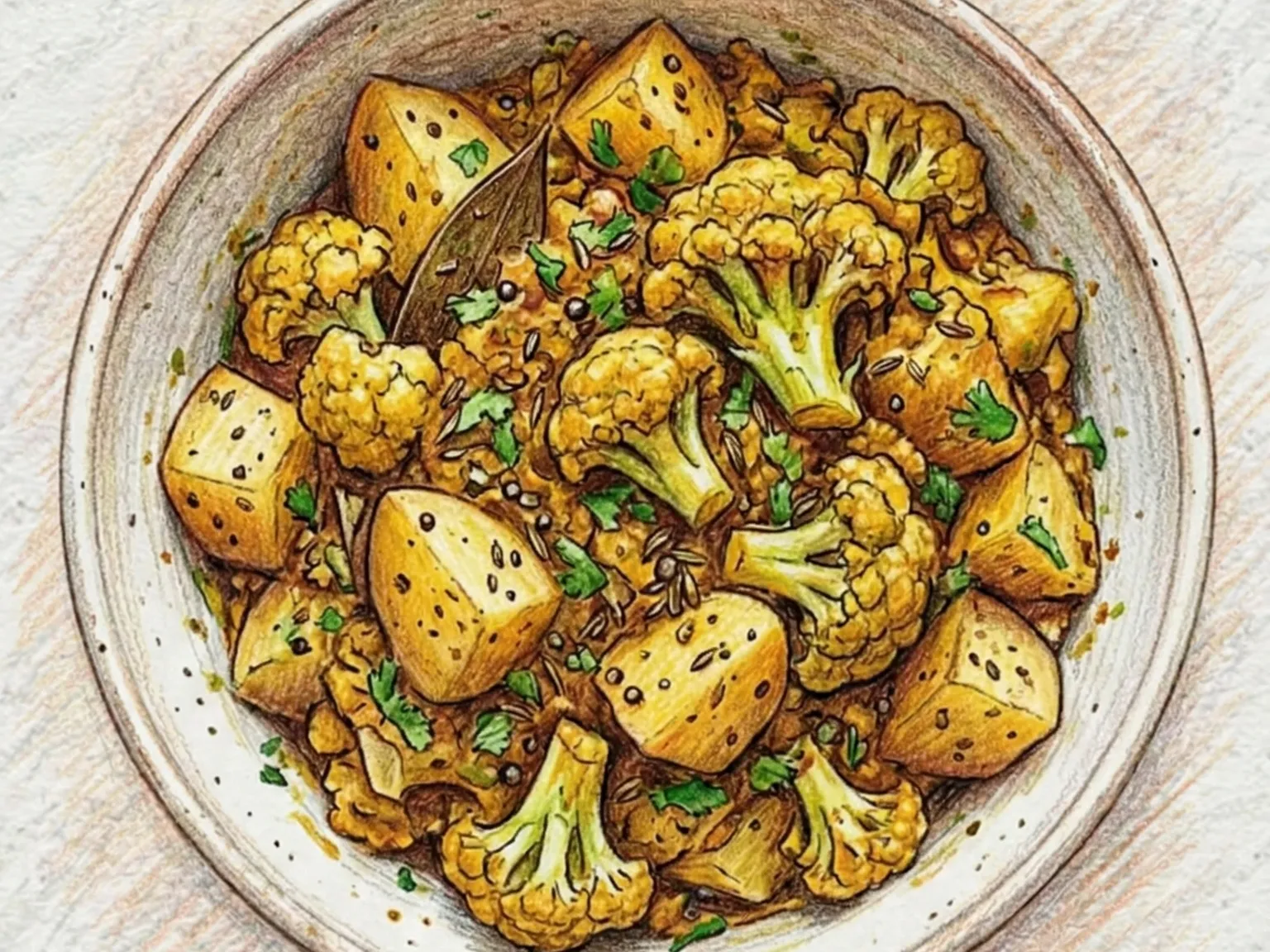
Aloo gobi is the kind of North Indian dish that appears in both roadside dhabas along Punjab highways and home kitchens across Uttar Pradesh, eaten by people with very di...
What makes this special
- Aloo Gobi is a dry North Indian curry of cauliflower and potatoes flavored with toasted cumin.
- Cumin seeds toasted in oil before any other ingredient
- Steam-cooks under a lid while the base stays dry
Key ingredients
Core cooking flow
- 1 Cut 250g potatoes into 2cm cubes and divide 250g cauliflower into similar florets.
- 2 Warm 2 tablespoons of oil in a wide pan over medium heat, then add 1 teaspoon cumin seeds.
- 3 Add 100g onion and 1 tablespoon minced garlic, then cook for about 4 minutes.
Aloo gobi is the kind of North Indian dish that appears in both roadside dhabas along Punjab highways and home kitchens across Uttar Pradesh, eaten by people with very different relationships to food. It is a dry preparation - no gravy, no broth - just potatoes and cauliflower coated in cumin, turmeric, and chili powder that forms a thin spice crust as the vegetables cook. Cumin seeds go into hot oil first, blooming their fragrance before the vegetables are added and turned to coat them evenly in the spiced fat. The lid goes on, trapping steam to cook the interiors while the base stays dry enough for browning to develop. Flipping once or twice is enough - too much movement breaks the crust and stews the vegetables instead of roasting them. The result: cauliflower edges that carry a faint char and a nutty depth, potato cubes that hold their structure with a floury, tender interior. Roti or plain steamed rice are the natural companions, and the spice notes actually sharpen as the dish cools, which makes it equally good packed for lunch the next day.
Instructions
Read the steps as a cooking flow: prep, heat, seasoning, doneness control, and finish.
- 1Prep
Cut 250g potatoes into 2cm cubes and divide 250g cauliflower into similar florets.
Rinse them, then dry every surface well so the spices cling and the vegetables brown instead of steaming wet.
- 2Control
Warm 2 tablespoons of oil in a wide pan over medium heat, then add 1 teaspoon cumin seeds.
When they sizzle and smell nutty, lower the heat so the next aromatics soften without burning.
- 3Heat
Add 100g onion and 1 tablespoon minced garlic, then cook for about 4 minutes.
Stir often enough to prevent sticking, but let the onion turn translucent with only light golden edges.
- 4Control
Stir in 1 teaspoon turmeric and 0.5 teaspoon chili powder over low heat for 1 minute.
Keep the spices moving in the oil until the color deepens, stopping before any dark scorching appears.
- 5Control
Add the potatoes and cauliflower, then fold gently until every piece is coated with the spiced oil.
Cover the pan and cook on low heat for 10 minutes, using trapped steam to soften the centers.
- 6Control
Flip only once or twice while cooking so the cauliflower stays intact and the potatoes keep their shape.
When a potato yields to a skewer, season with salt, uncover, and evaporate moisture over medium heat.
After the steps
Pick a recipe that fits this dish.
Continue with shared ingredients, meal pairings, or a similar method.
Recipes That Go Well With This
More Asian →Based on shared ingredients and meal pairing
Aloo Methi (Indian Potato Fenugreek Dry Stir-Fry)
Aloo methi is a North Indian home-cooking classic built on the natural pairing of starchy potatoes and bitter fenugreek leaves - two ingredients whose flavors balance each other. Fresh methi leaves carry a pronounced earthy bitterness that softens and sweetens into a warm, maple-like aroma once they hit a hot pan. The potatoes are cut into small cubes and cooked covered with cumin, turmeric, and chili powder until fork-tender, absorbing the spices throughout as they steam. Methi leaves fold in at the end, and their residual moisture evaporates quickly on the hot pan, concentrating the herbaceous flavor into every bite. In Indian households this dish appears regularly alongside dal and rice as a weeknight staple that comes together in under thirty minutes. When fresh methi is unavailable, dried kasuri methi - rubbed between the palms to release its aroma before adding - produces a comparable result with a more concentrated flavor. Unlike many North Indian preparations built on layered masala chains, aloo methi has a short ingredient list and a straightforward method, which explains why it appears so consistently on everyday family tables.
Goan Fish Curry (Tangy Coconut Fish Stew)
Goan fish curry - known locally as xitt-kodi - is the daily centerpiece of fishing households along India's Goa coast, shaped over five centuries by the meeting of Konkani culinary tradition and Portuguese colonial influence. Freshly pressed coconut milk forms the foundation, into which a masala paste of tamarind, Kashmiri red chilies, coriander seeds, and cumin is stirred and brought to a simmer. Local fish - kingfish, pomfret, or mackerel - are added bone-in and cooked over gentle heat for no more than five minutes. That restraint is the defining technique: the flesh absorbs the sauce fully while still breaking apart in clean, moist flakes at the press of a spoon rather than turning dense and dry. Tamarind's sharp acidity slices through the coconut cream's weight, producing a broth that reads as fresh and light despite its deep orange color and creamy texture. The Kashmiri chili contributes vivid color with only moderate heat, so the sauce is bold-looking but not aggressively spicy. Goan fishermen have long followed the practice of cooking their morning catch into curry by midday and serving it over boiled parboiled rice called ukde tandull, a pairing so bound to local identity that it crosses every line of religion, caste, and neighborhood across the state.
Kachumber Salad (Indian Kachumber salad)
Kachumber salad finely dices cucumber, tomato, and red onion, then tosses them with chopped cilantro, lime juice, ground cumin, chaat masala, and salt in a quick Indian raw vegetable preparation. Removing some of the seeds from the cucumber and tomato limits excess moisture so the dressing stays concentrated rather than watery. Soaking the diced red onion in cold water for three minutes draws out its harsh sharpness, letting it blend more smoothly with the other ingredients. Ground cumin lays down a warm, earthy undertone, and chaat masala layers a tangy, salty complexity over the lime acidity, lifting a simple combination of vegetables into something distinctly Indian. Chopping cilantro stems together with the leaves releases more of the herb's aromatic oils than leaves alone provide. Letting the dressed salad rest for about fifteen minutes before serving allows the flavors to meld so the final result is noticeably more cohesive.
Aloo Paratha (Punjabi Spiced Potato Stuffed Flatbread)
Aloo paratha is a cornerstone of Punjabi breakfast culture - pulled hot off the tawa and served with a knob of butter melting on top, thick yogurt, and tangy mango pickle on the side. The technique involves wrapping spiced mashed potato inside a whole wheat dough ball, then rolling the stuffed parcel flat on a floured surface without letting the filling puncture through. The spice mix includes garam masala, finely chopped green chili, fresh coriander leaves, and minced ginger, giving the filling a warmth that builds as you eat. On a dry, very hot griddle, the paratha develops golden brown patches on each side when oil or ghee is brushed over the surface, and the steam trapped inside from the potato pushes the dough layers apart slightly, creating a flaky interior texture. The more generous the filling, the better the flavor, but it also raises the risk of tearing - draining the mashed potato of excess moisture and calibrating the filling-to-dough ratio is where the skill lies. Street vendors in Delhi and Amritsar stack them high on charcoal-heated tawas, selling them wrapped in newspaper to morning commuters.
Serve with this
Masala Chai
Masala chai is an Indian spiced milk tea made by simmering crushed ginger, cinnamon, and cardamom in water until the spices release their oils fully, then adding black tea leaves and whole milk and continuing to heat gently over low flame. The spices build aromatic depth that wraps around the tea's tannins, transforming them into warm, rounded complexity rather than raw astringency. Stirring in sugar during the final minutes of simmering softens the spice's sharpness and allows the milk's creaminess to come forward. Using whole spices rather than ground powders keeps the brew free of gritty residue and produces a cleaner, more transparent aroma in each cup.
Korean Kimchi Glass Noodle Stir-Fry
Kimchi japchae is a variation on classic Korean glass noodle stir-fry that replaces the usual assortment of vegetables with well-fermented aged kimchi, giving the dish a bold tangy heat that the original does not have. Glass noodles are boiled, rinsed in cold water to stop the cooking, and pre-seasoned with soy sauce so they absorb flavor before hitting the pan. Pork shoulder goes in first to render its fat and build a savory base in the wok, then the kimchi -- thoroughly squeezed dry -- is added and stir-fried until the sourness concentrates and caramelizes slightly. Removing the kimchi's moisture is a non-negotiable step: excess liquid steams the noodles rather than frying them, causing the noodles to swell and the overall seasoning to turn watery and flat. Sliced onion goes in with the kimchi to contribute a natural sweetness that softens the acidity. Once the aromatics are cooked down, the noodles are tossed in with additional soy sauce and a small amount of sugar if the kimchi is especially sour. The pan comes off the heat before sesame oil is added to preserve its fragrance, and whole sesame seeds finish the dish. The combination of the noodles' chewy elasticity and the kimchi's pungent, fermented character produces a version of japchae that tastes fundamentally different from the traditional preparation.
Korean Sashimi Rice Bowl (Flounder Sashimi with Cho-Gochujang)
Sliced flounder sashimi sits atop julienned cucumber, lettuce, and perilla leaves over slightly cooled rice, dressed with cho-gochujang just before eating. The rice must not be piping hot because residual heat softens the sashimi and dulls its clean texture, so resting it until just warm is essential. The vinegar tang and chili warmth in cho-gochujang lift the mild fish flavor, while sesame oil and seeds leave a nutty finish on the palate. Keeping the vegetables well chilled before assembly creates a temperature contrast against the warm rice that sharpens every bite. Adding the cho-gochujang right before eating rather than in advance prevents the vegetables from weeping moisture and going limp.
Similar recipes
Palak Paneer (Indian Spinach Curry with Paneer Cheese)
Palak paneer is one of North India's most beloved vegetarian curries, pairing a bright spinach puree with cubes of mild, milky paneer cheese. Fresh spinach is blanched briefly and blended into a green sauce, combined with a base of sauteed onions, garlic, ginger, and tomatoes seasoned with garam masala. The paneer cubes are typically pan-seared first to form a light skin that holds their shape in the sauce while the interior stays soft and creamy. A swirl of heavy cream at the end rounds out the flavors, blending the earthy depth of spinach with warm spice and dairy richness.
Aloo Samosa (Indian Crispy Potato-Filled Fried Pastry)
Samosa first appears in written form in a 10th-century Central Asian cookbook under the name sambosa, then follows trade routes westward into Persia and east into the Indian subcontinent, where it settled into street-food culture so thoroughly that chai stalls sell hundreds before noon each morning. The dough is stiff - flour, water, and oil kneaded until firm - and rolled thin. Too soft a dough absorbs oil during frying and turns greasy rather than crisp. The filling is boiled potato mixed with cumin, fresh green chili, and cilantro; the cumin's earthy fragrance permeates the potato during the mixing. The dough folds into a cone, filling goes in, air is pressed out carefully before sealing - trapped air expands in the hot oil and splits the crust. Fried at the correct temperature, the layered shell blisters outward, turns golden brown, and shatters audibly on first bite. Inside is a warm, lightly spiced potato that has absorbed all that cumin. Mint chutney and tamarind sauce are served alongside, their sourness and sweetness doing what the filling alone cannot.
Butter Chicken
Butter chicken - murgh makhani - starts by marinating chicken thighs in yogurt, garam masala, and cumin, then roasting or grilling them at high heat to develop a slightly charred, smoky exterior. That surface char is a defining element; plain poaching cannot replicate it. The tomato sauce base requires long, patient reduction - the raw acidity must cook off and round into sweetness before any dairy is added. Butter and heavy cream then go in, wrapping the spice blend sharp heat in a velvety richness that carries through to the last bite. Cumin and garam masala provide the earthy, layered warmth that anchors this curry's identity, and together they produce the mild, creamy character that sets murgh makhani apart from hotter Indian preparations.