Garlic Olive Oil Pasta
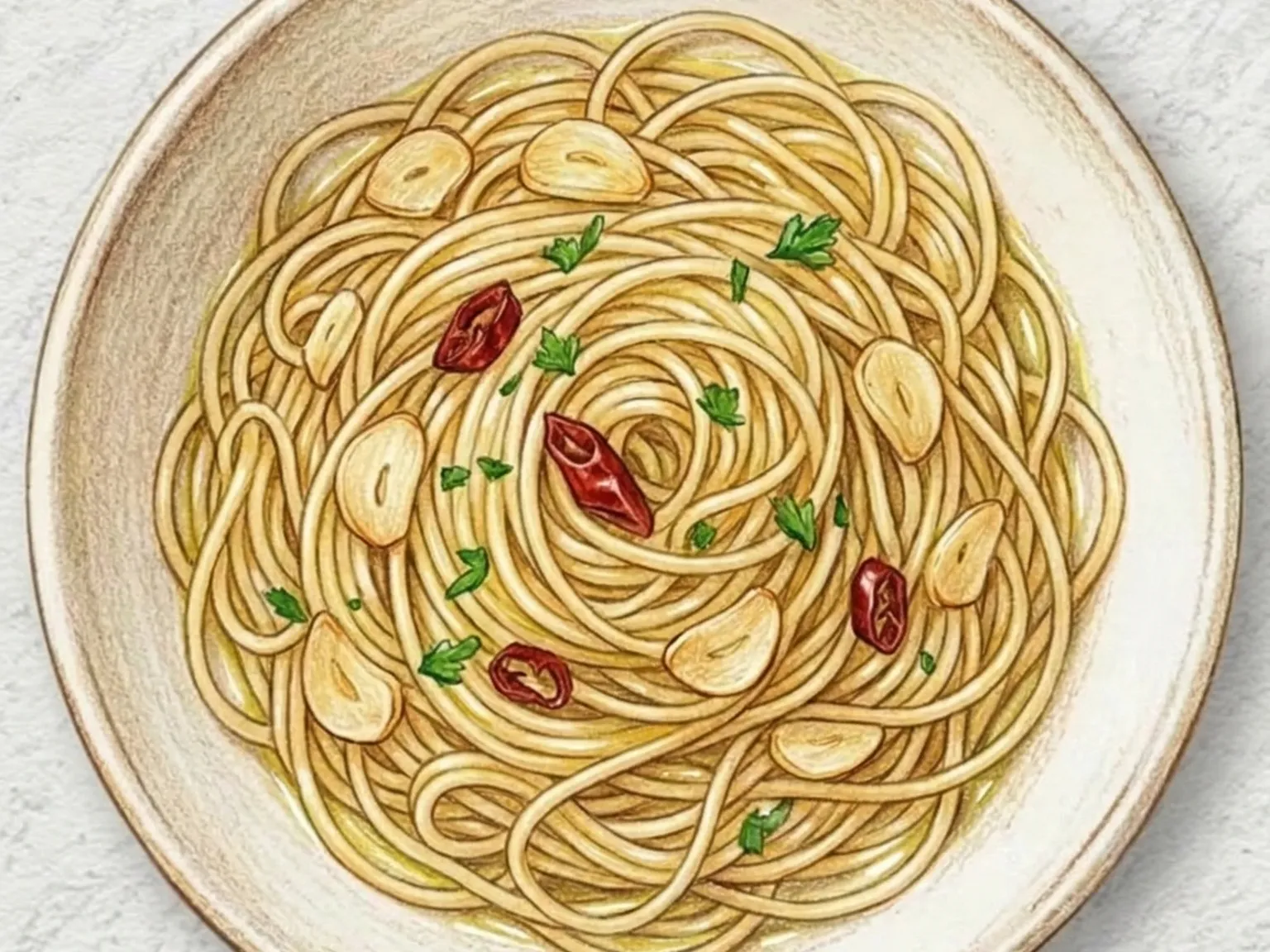
Aglio e olio - garlic and oil - is the pasta Italians make at midnight with nothing in the kitchen but pantry staples. It originated in Naples, where olive oil was abundant and elaborate sauces were a luxury working-class cooks could not afford. The entire dish depends on technique: garlic must be sliced thin and toasted slowly in generous olive oil on low heat until fragrant and barely golden - seconds past that point and it turns acrid. Peperoncino flakes go in briefly to release their capsaicin into the oil. The real transformation happens when starchy pasta water hits the hot oil, emulsifying into a silky, clinging sauce that coats every strand of spaghetti. No cream, no cheese in the traditional version - just the clean triad of garlic, chili, and good olive oil. Parsley scattered on at the end adds a fresh, herbal brightness.
Adjust Servings
Instructions
- 1
Cook spaghetti in salted water until al dente and reserve 80 ml pasta water.
- 2
Thinly slice garlic and finely chop parsley.
- 3
Heat olive oil with garlic on low heat to infuse flavor gently.
- 4
When garlic turns lightly golden, add pepper flakes and stir for 20 seconds.
- 5
Add pasta and reserved water, then toss over high heat to emulsify.
- 6
Season with salt and pepper, then finish with parsley.
As an Amazon Associate, we may earn from qualifying purchases.
Tips
Nutrition (per serving)
More Recipes

Spaghetti Aglio e Olio (Garlic and Olive Oil Pasta)
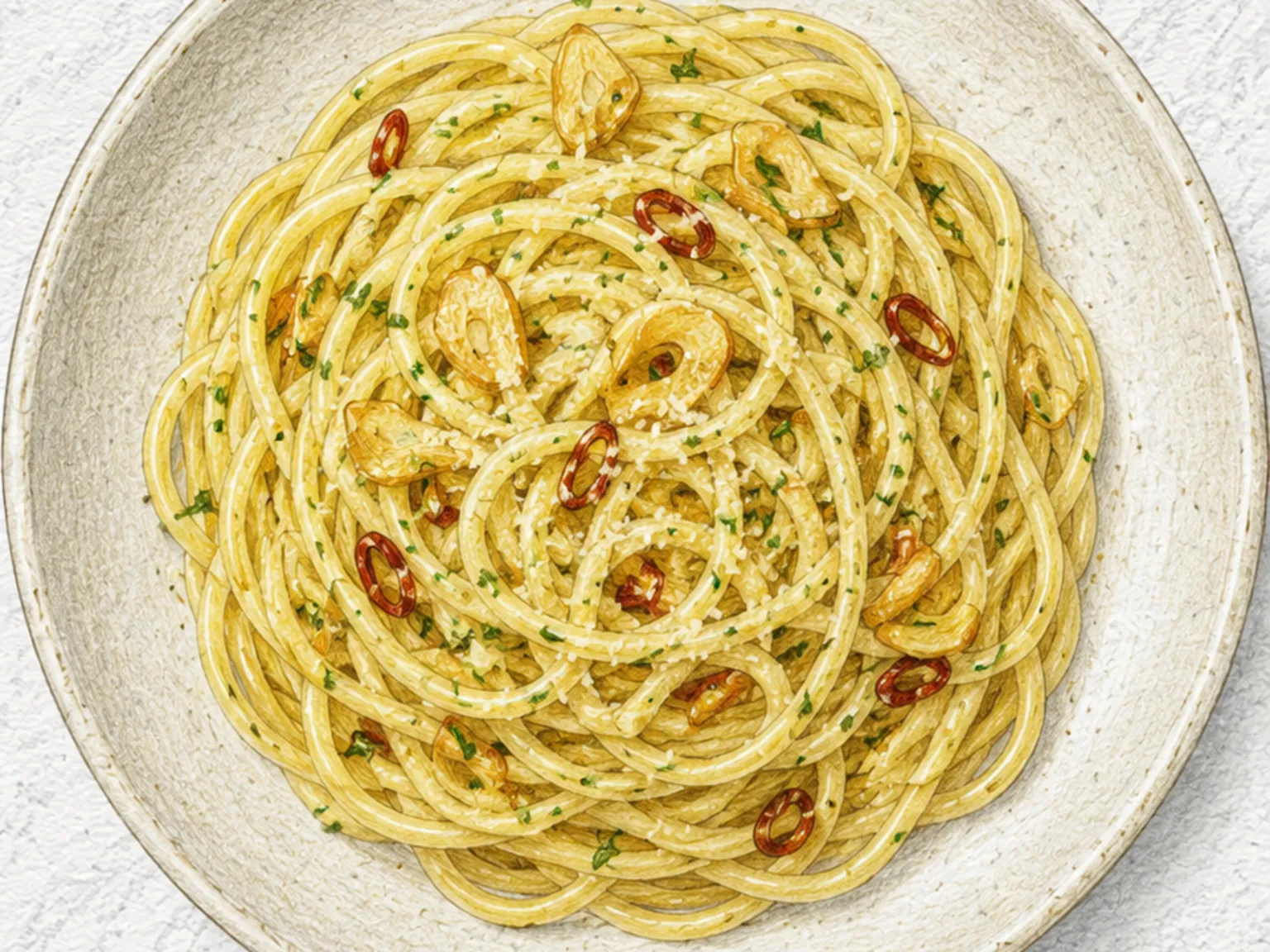
Spaghetti aglio e olio is among the oldest recipes in the Italian pasta canon, documented in cookbooks as early as the 19th century. The dish is a study in restraint - five core ingredients, no sauce in the traditional sense, and a total cooking time under twenty minutes. Extra virgin olive oil heated gently with sliced garlic and dried chili flakes becomes the medium that carries flavor to every strand of pasta. The critical step is adding starchy pasta water to the pan and tossing aggressively over high heat, which emulsifies the oil and water into a glossy, clinging coat. Parmesan - not strictly traditional but widely adopted - adds a salty, crystalline crunch when shaved on top. The finished plate should look barely dressed, each strand glistening with oil rather than drowning in sauce. It is the dish that separates cooks who understand heat control from those who do not.

Orecchiette with Broccoli Rabe
Orecchiette with broccoli rabe is a Southern Italian pasta from Puglia that pairs ear-shaped pasta with blanched broccoli rabe, garlic, anchovy, and dried chili in olive oil. Blanching the broccoli rabe for one to two minutes tames its bitterness, and cooking the pasta in the same water infuses it with the green's flavor. Garlic and anchovy fillets are warmed slowly in olive oil until the anchovy dissolves into a savory paste, providing salt and umami without needing additional seasoning. Dried chili flakes contribute a gentle background heat. Tossing the drained pasta and greens in the pan with a splash of pasta water emulsifies the oil into a light coating on every piece. Grated parmesan scattered on top adds a salty, nutty finish that balances the vegetal bitterness.

Spaghetti alle Vongole
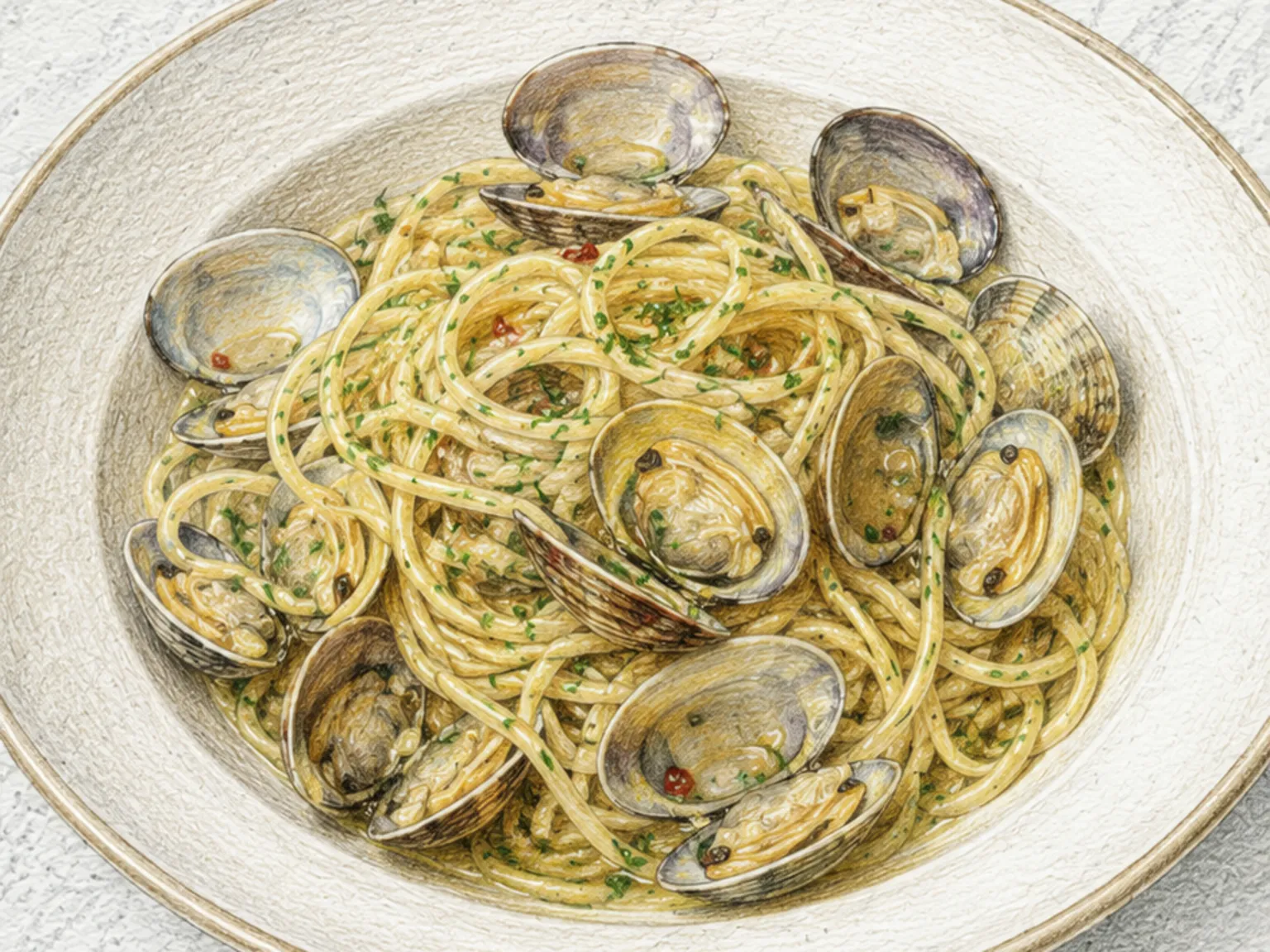
Spaghetti alle vongole is an Italian pasta where clams are cooked in olive oil with sliced garlic, chili flakes, and dry white wine until they open and release their briny juices. The spaghetti is boiled one minute short of al dente, then finished in the clam pan with a few tablespoons of starchy pasta water to create an emulsified sauce. Vigorous tossing for about a minute binds the oil and clam liquid into a glossy coating around each strand. Fresh parsley is added at the end for color and herbal freshness.

Pasta Puttanesca (Neapolitan Anchovy Olive Caper Tomato Sauce)
Pasta puttanesca is a Neapolitan pasta sauce built from anchovies melted into olive oil, crushed whole tomatoes, black olives, capers, and peperoncino. The anchovies dissolve completely during cooking, leaving behind a deep umami foundation rather than a fishy taste. Olives and capers provide enough salt that additional seasoning is rarely needed. The entire sauce comes together in under twenty minutes using shelf-stable pantry ingredients.

Pasta Primavera
Pasta primavera is a vegetable-forward Italian pasta that stir-fries broccoli, zucchini, bell pepper, and green peas in olive oil with garlic. Each vegetable is cut to a similar size and cooked in sequence to maintain distinct textures. Pasta water emulsifies the dish into a light, glossy coating without the need for heavy cream or butter. Parmesan is folded in off-heat to prevent clumping, keeping the finish clean and fresh.

Spaghetti alla Puttanesca
Spaghetti alla puttanesca melts anchovy fillets into olive oil with sliced garlic over low heat, creating a deeply savory base before any tomato is added. Hand-crushed whole tomatoes, halved black olives, capers, and red pepper flakes go in next and simmer for eight minutes, during which the sauce reduces and the briny, salty, and spicy elements fuse into a bold, cohesive flavor. The anchovies dissolve completely, leaving no trace of fish but contributing an intense umami backbone. Because capers and anchovies are already heavily salted, seasoning is adjusted only at the very end by taste. The spaghetti is pulled one minute short of al dente and finished in the sauce pan with a splash of pasta water, which allows the starch to bind the sauce tightly to each strand.