Korean Andong Guksi (Clear Beef Broth Celebration Noodles)
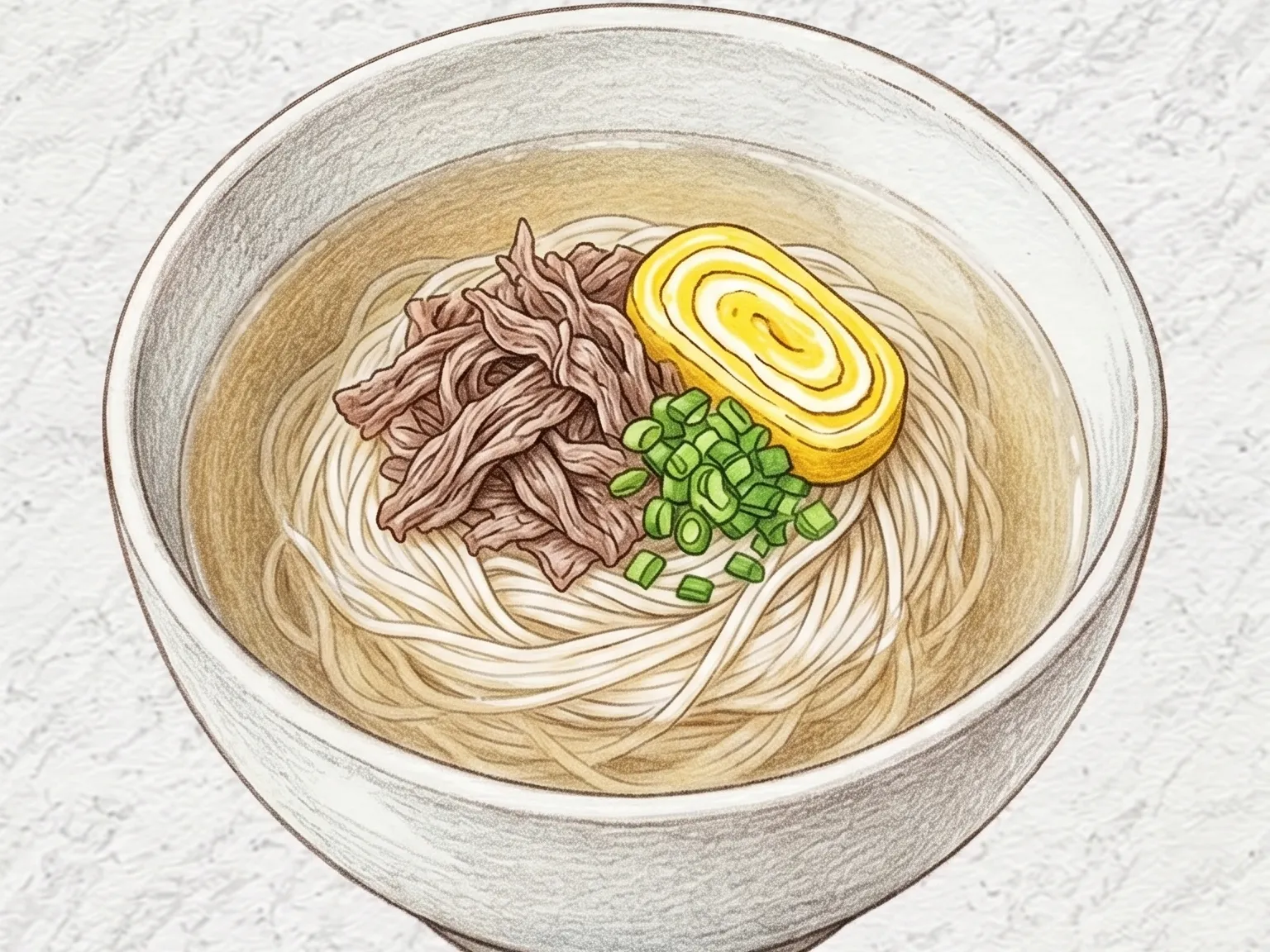
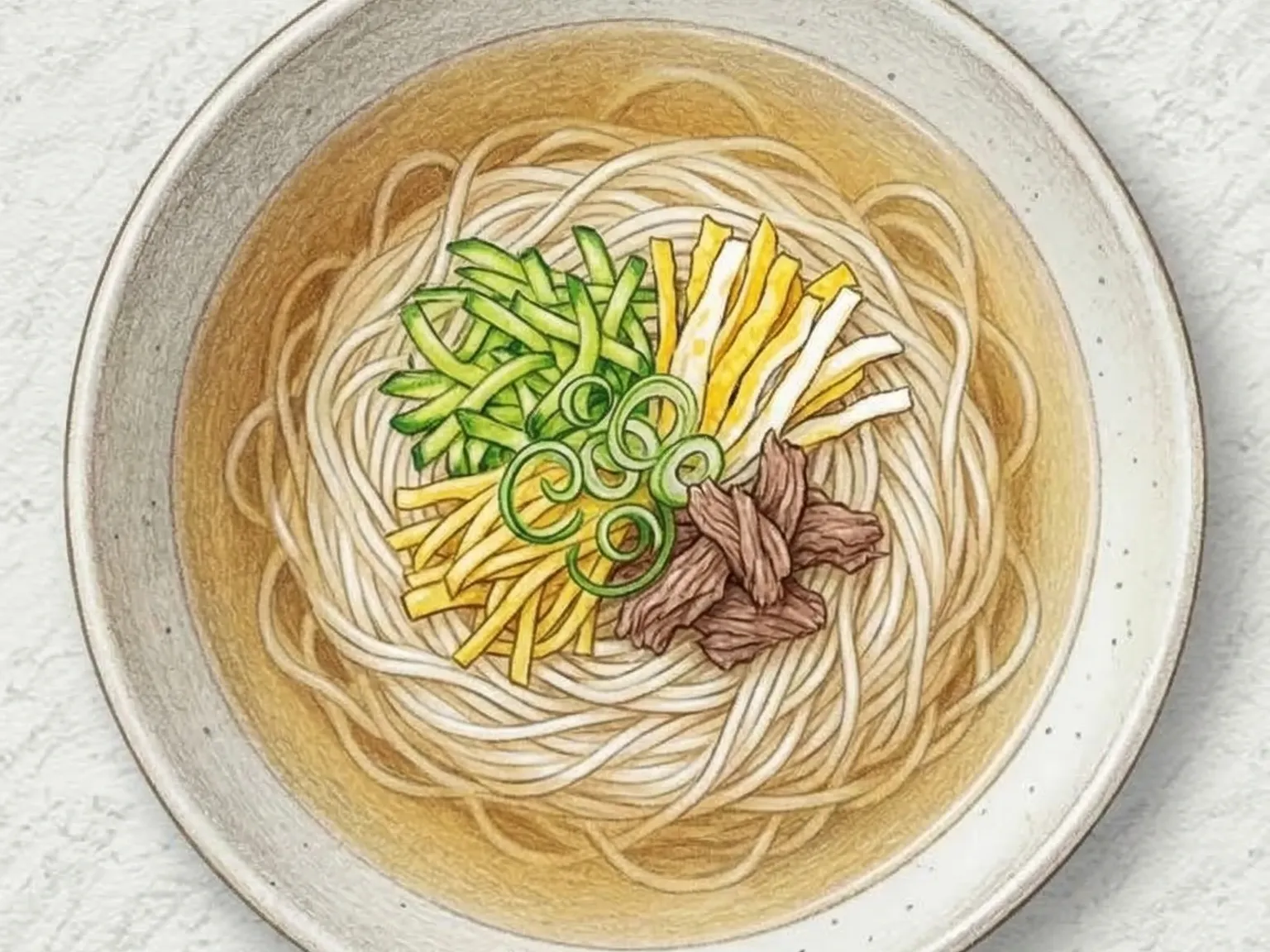
Andong guksi is a noodle tradition from the city of Andong in North Gyeongsang Province, where it has been served at weddings, ancestral rites, and important family events for centuries - in Korean culture, long noodles symbolize longevity. The broth is made by simmering beef brisket and bones for hours until the liquid is clear yet deeply flavored, with a clean gelatin richness that coats the lips. Wheat noodles - historically hand-pulled but now usually dried - are boiled separately, rinsed, and placed in the strained broth. The toppings are deliberately understated: thin strips of egg jidan, julienned zucchini, and perhaps a few slices of the boiled brisket. Seasoning with soup soy sauce and a touch of garlic keeps the broth transparent and lets the beef flavor speak. Unlike the bold, chili-heavy soups of Andong's other famous dish (jjimdak), guksi is an exercise in restraint and clarity.
Adjust Servings
Instructions
- 1
Soak brisket and soup bones in cold water for 20 minutes, blanch for 3 minutes, then rinse clean and place in a pot.
- 2
Add 2200 ml water, bring to a boil, skim impurities, then simmer on low heat for 70 minutes to build the broth.
- 3
Remove the cooked brisket and shred it. Strain the broth for clarity, then season with soup soy sauce and salt.
- 4
Julienne zucchini and lightly saute it. Make thin egg crepes and slice into strips for garnish.
- 5
Boil noodles for 4-5 minutes, rinse in cold water to remove starch, then dip in hot water for 10 seconds and drain.
- 6
Place noodles in bowls, pour over hot broth, and top with shredded brisket, zucchini, egg garnish, sliced green onion, and minced garlic.
As an Amazon Associate, we may earn from qualifying purchases.
Tips
Nutrition (per serving)
More Recipes

Onmyeon (Korean Warm Somyeon in Beef Brisket Broth)
Onmyeon is a Korean warm noodle soup built on a clear beef brisket broth served over thin somyeon noodles. The brisket simmers in water for about twenty-five minutes to produce a light yet flavorful stock, which is then strained to remove fat and sediment for clarity. Soup soy sauce seasons the broth gradually so its color stays pale, preserving the clean appearance that defines this dish. The noodles are cooked separately and rinsed in cold water to wash away surface starch before being placed in bowls, which keeps the broth from turning cloudy. Shredded brisket, thin egg garnish, and sliced scallion are arranged on top, and hot broth poured over them releases gentle waves of beef aroma and egg richness.

Korean Spicy Beef Soup Noodles
Yukgaejang guksu starts with a deep broth made by simmering beef brisket until the liquid turns rich and full-bodied. The meat is shredded along the grain and returned to the pot alongside fernbrake, bean sprouts, and green onion that have been seasoned with gochugaru, sesame oil, and garlic before a brief stir-fry. This pre-seasoning step lets the chili heat dissolve into the oil, producing a rounded spiciness rather than raw powder burn. Korean soup soy sauce adjusts the salt level without clouding the broth's color. Thin wheat somyeon noodles are boiled separately and added at the end so they absorb the broth without turning mushy. Swapping in glass noodles changes the texture to a chewier, more slippery bite that holds onto the soup longer.

Korean Mussel Soup Noodles
Honghap tangmyeon is a mussel noodle soup where a generous amount of mussels is simmered to produce a deeply briny, clear broth. Korean radish cooks alongside the mussels, lending the liquid a natural sweetness and a clean finish. Soup soy sauce and cooking wine adjust the seasoning, while minced garlic and green onion build an aromatic layer that keeps any fishiness at bay. A light dusting of black pepper over the steaming bowl sharpens the broth's marine character and warms the palate.

Korean Spicy Seafood Noodle Soup
Jjamppong is a fiery Korean-Chinese noodle soup where squid, mussels, and vegetables are stir-fried in chili-infused oil before being flooded with chicken stock and brought to a rolling boil. The high-heat frying step blooms the gochugaru in oil, embedding a smoky, roasted spice into the broth that raw chili powder alone cannot achieve. Cabbage, onion, and green onion soften into the liquid and release their natural sugars, while soy sauce ties the seasoning together. Springy fresh wheat noodles absorb the vivid red broth, delivering intense heat and deep seafood flavor in every mouthful.

Jesa Tangguk (Ancestral Clear Beef Soup)
Jesa-tangguk is a traditional Korean clear soup prepared for ancestral rites (jesa) and formal family gatherings. Beef brisket is simmered for an extended time to produce a clear yet deeply flavored stock, which forms the foundation of the entire bowl. Radish cooks until nearly translucent, giving the broth a gentle sweetness, while blocks of tofu and sliced shiitake mushrooms add contrasting textures-soft and yielding against earthy and slightly chewy. Seasoning is limited to soup soy sauce and garlic, preserving the purity of the broth. The aesthetic matters as much as the taste: ingredients are cut into tidy, uniform shapes and arranged with care, reflecting the respect embedded in the ritual. Outside ceremonial contexts, jesa-tangguk is also a comforting home-style soup valued for its clean, balanced flavor.

Naju Gomtang (Naju Clear Brisket Beef Soup)
Naju-gomtang is a traditional beef soup from Naju in Korea's Jeolla Province, renowned for its clear yet profoundly savory broth. Beef brisket and shank are simmered together at a gentle, sustained heat for at least two hours - never a hard boil, which would cloud the liquid. The extended low simmer draws collagen and flavor from the connective tissue, producing a broth that appears light but coats the palate with rich, beefy depth. The meat is removed, shredded or thinly sliced, and returned to the strained broth. Seasoning is minimal - soup soy sauce and salt - because the entire point is the pure, unadorned taste of long-simmered beef. Sliced green onion and a crack of black pepper go on just before serving, adding brightness without complicating the broth.