Charim

2686 Korean & World Recipes

2686+ Korean recipes, clean and organized. Ingredients to instructions, all at a glance.

Noodles
Noodles

Noodles Recipes

169 recipes

Korean noodle dishes range from chilled naengmyeon in summer to steaming bowls of kalguksu in winter. Thin somyeon, chewy jjolmyeon, and glass noodles (dangmyeon) each bring a different texture to the table. A simple bibim sauce transforms plain noodles into a flavor-packed meal in minutes.

This collection features traditional Korean noodle recipes alongside Asian-fusion takes, covering both broth-based and tossed preparations.

Abura Soba (Soupless Noodles in Rich Soy Sesame Oil Sauce)
NoodlesMedium

Abura Soba (Soupless Noodles in Rich Soy Sesame Oil Sauce)

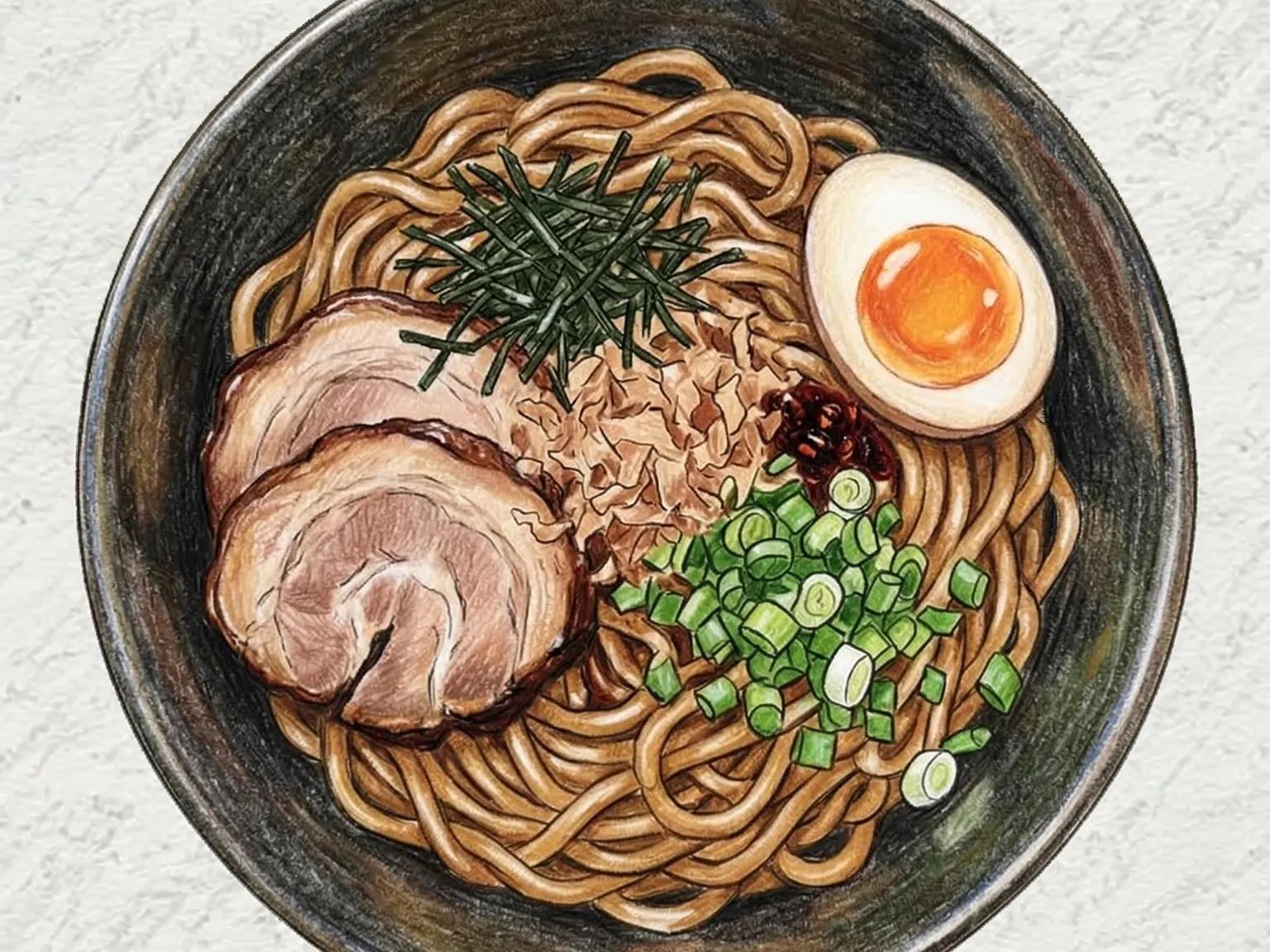
Abura soba emerged in Tokyo's student districts during the 1950s as a cheaper, faster alternative to ramen - no slow-simmered broth needed. The name translates to 'oil noodle,' and the dish lives or dies on its sauce: soy sauce, sesame oil, oyster sauce, and a splash of vinegar pooled at the bottom of the bowl. Chewy ramen noodles land on top, and the eater mixes everything from below, coating each strand in the concentrated glaze. Toppings - chashu pork, a runny soft-boiled egg, nori, bonito flakes, and sliced scallion - add layers of salt, fat, and umami. The lack of broth means every flavor hits at full intensity, making this a late-night favorite across Japan's izakaya scene.

🌙 Late Night Quick
Prep 10minCook 10min1 servings
Garlic Olive Oil Pasta
NoodlesEasy

Garlic Olive Oil Pasta

Aglio e olio - garlic and oil - is the pasta Italians make at midnight with nothing in the kitchen but pantry staples. It originated in Naples, where olive oil was abundant and elaborate sauces were a luxury working-class cooks could not afford. The entire dish depends on technique: garlic must be sliced thin and toasted slowly in generous olive oil on low heat until fragrant and barely golden - seconds past that point and it turns acrid. Peperoncino flakes go in briefly to release their capsaicin into the oil. The real transformation happens when starchy pasta water hits the hot oil, emulsifying into a silky, clinging sauce that coats every strand of spaghetti. No cream, no cheese in the traditional version - just the clean triad of garlic, chili, and good olive oil. Parsley scattered on at the end adds a fresh, herbal brightness.

🏠 Everyday🌙 Late Night
Prep 10minCook 15min2 servings
Korean Anchovy Broth Thin Noodle Soup
NoodlesEasy

Korean Anchovy Broth Thin Noodle Soup

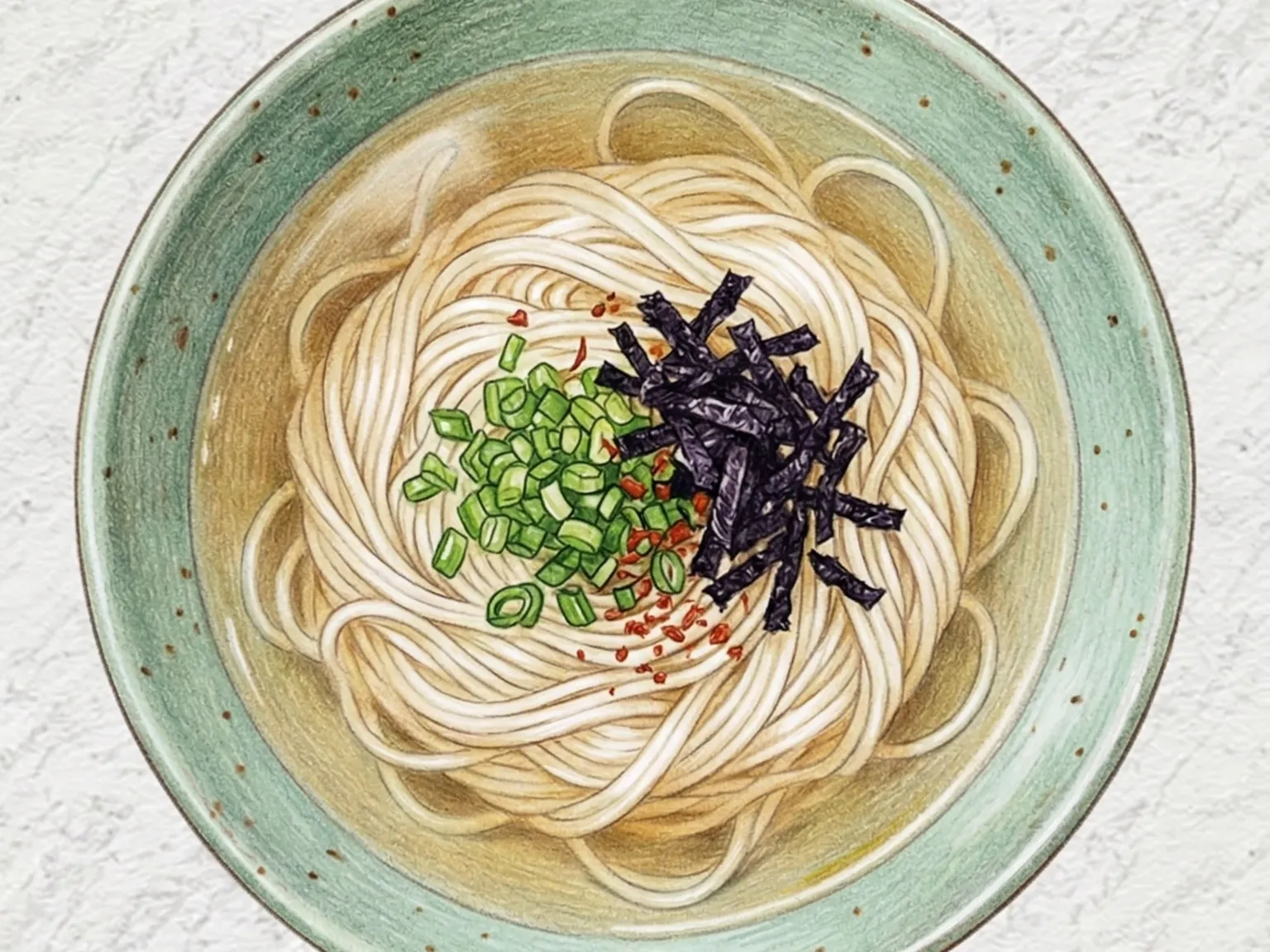
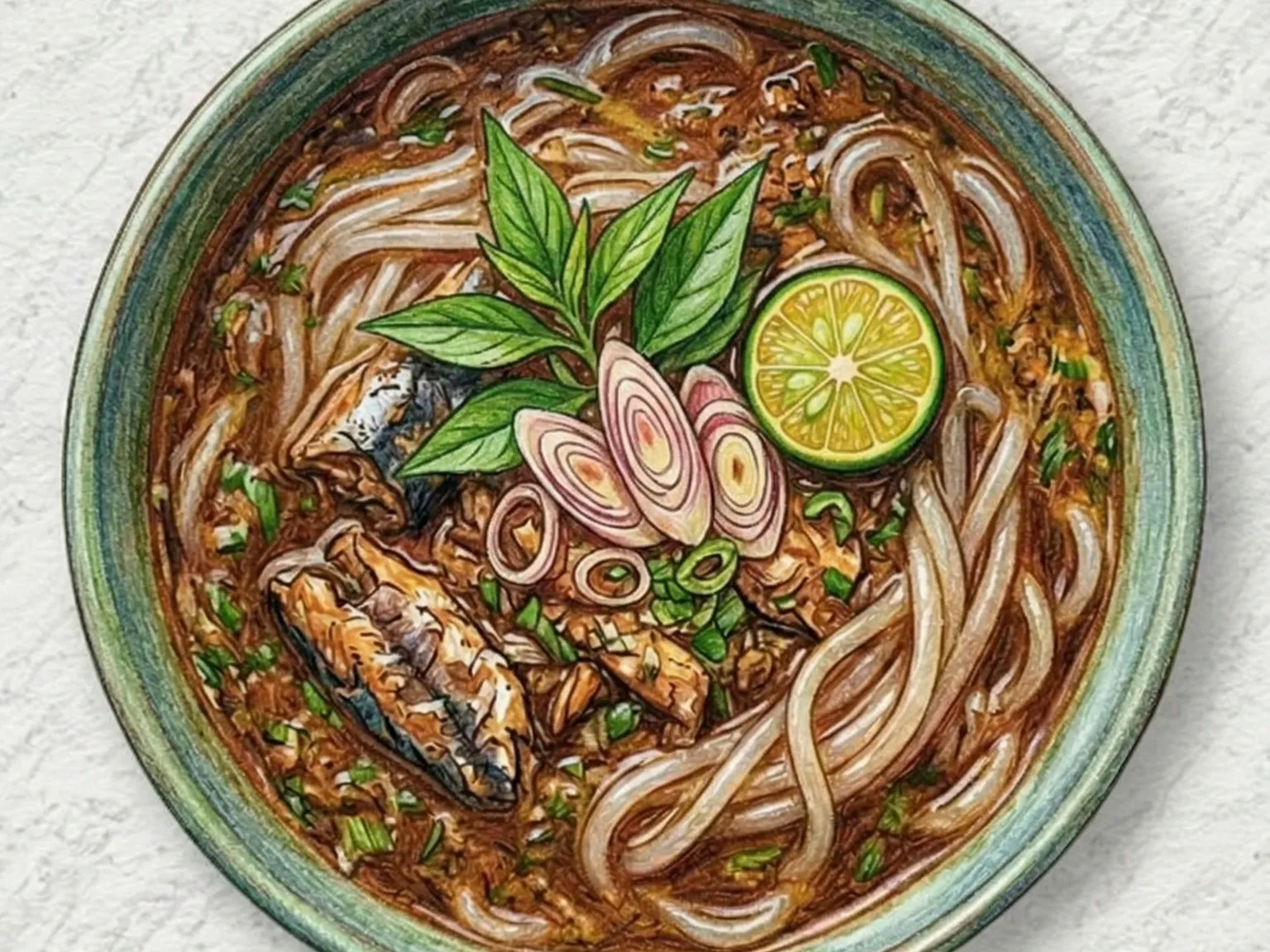
Anchovy somyeon is the noodle soup Korean families turn to when the kitchen has nothing special - dried anchovies, a strip of kelp, and a bundle of thin wheat noodles are all it takes. The broth is built by simmering dried anchovies and dashima in water for fifteen minutes, then straining for a clear, umami-rich liquid with a faint oceanic sweetness. Somyeon - hair-thin wheat noodles - cook in a separate pot to prevent their starch from clouding the broth, then are rinsed under cold water until the strands separate cleanly. The noodles sit in a bowl of the hot broth, topped with sliced scallion, a drop of sesame oil, and sometimes a sheet of toasted gim. The appeal lies in its restraint: no chili, no fermented paste, just clean anchovy flavor meeting springy noodles. Korean mothers have served this as a quick lunch for generations, and it remains comfort food in its most distilled form.

🏠 Everyday
Prep 10minCook 15min2 servings
Korean Andong Guksi (Clear Beef Broth Celebration Noodles)
NoodlesMedium

Korean Andong Guksi (Clear Beef Broth Celebration Noodles)

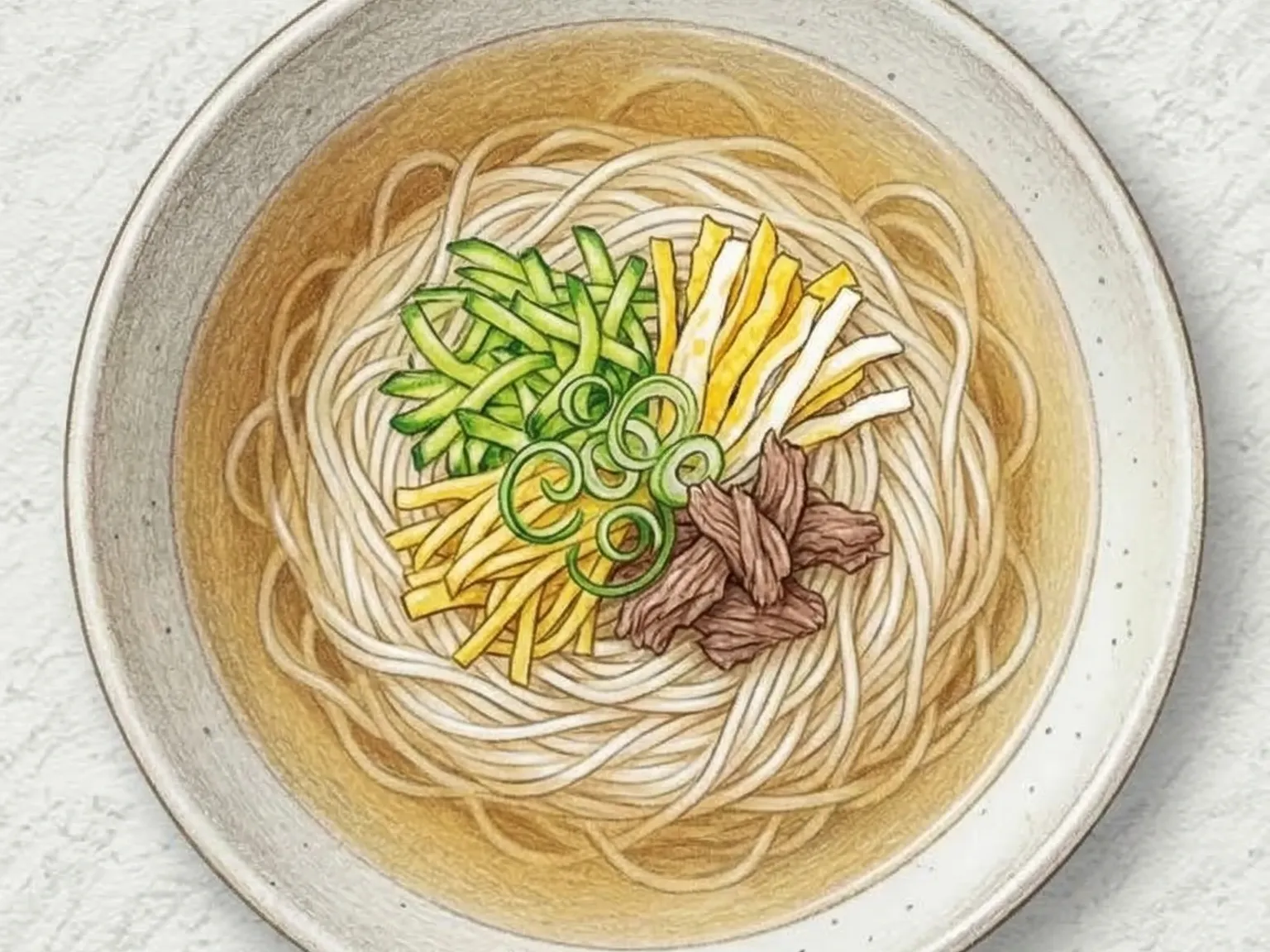
Andong guksi is a noodle tradition from the city of Andong in North Gyeongsang Province, where it has been served at weddings, ancestral rites, and important family events for centuries - in Korean culture, long noodles symbolize longevity. The broth is made by simmering beef brisket and bones for hours until the liquid is clear yet deeply flavored, with a clean gelatin richness that coats the lips. Wheat noodles - historically hand-pulled but now usually dried - are boiled separately, rinsed, and placed in the strained broth. The toppings are deliberately understated: thin strips of egg jidan, julienned zucchini, and perhaps a few slices of the boiled brisket. Seasoning with soup soy sauce and a touch of garlic keeps the broth transparent and lets the beef flavor speak. Unlike the bold, chili-heavy soups of Andong's other famous dish (jjimdak), guksi is an exercise in restraint and clarity.

🎉 Special Occasion
Prep 25minCook 90min4 servings
Korean Clam Kalguksu (Hand-Cut Noodles in Clam Broth)
NoodlesMedium

Korean Clam Kalguksu (Hand-Cut Noodles in Clam Broth)

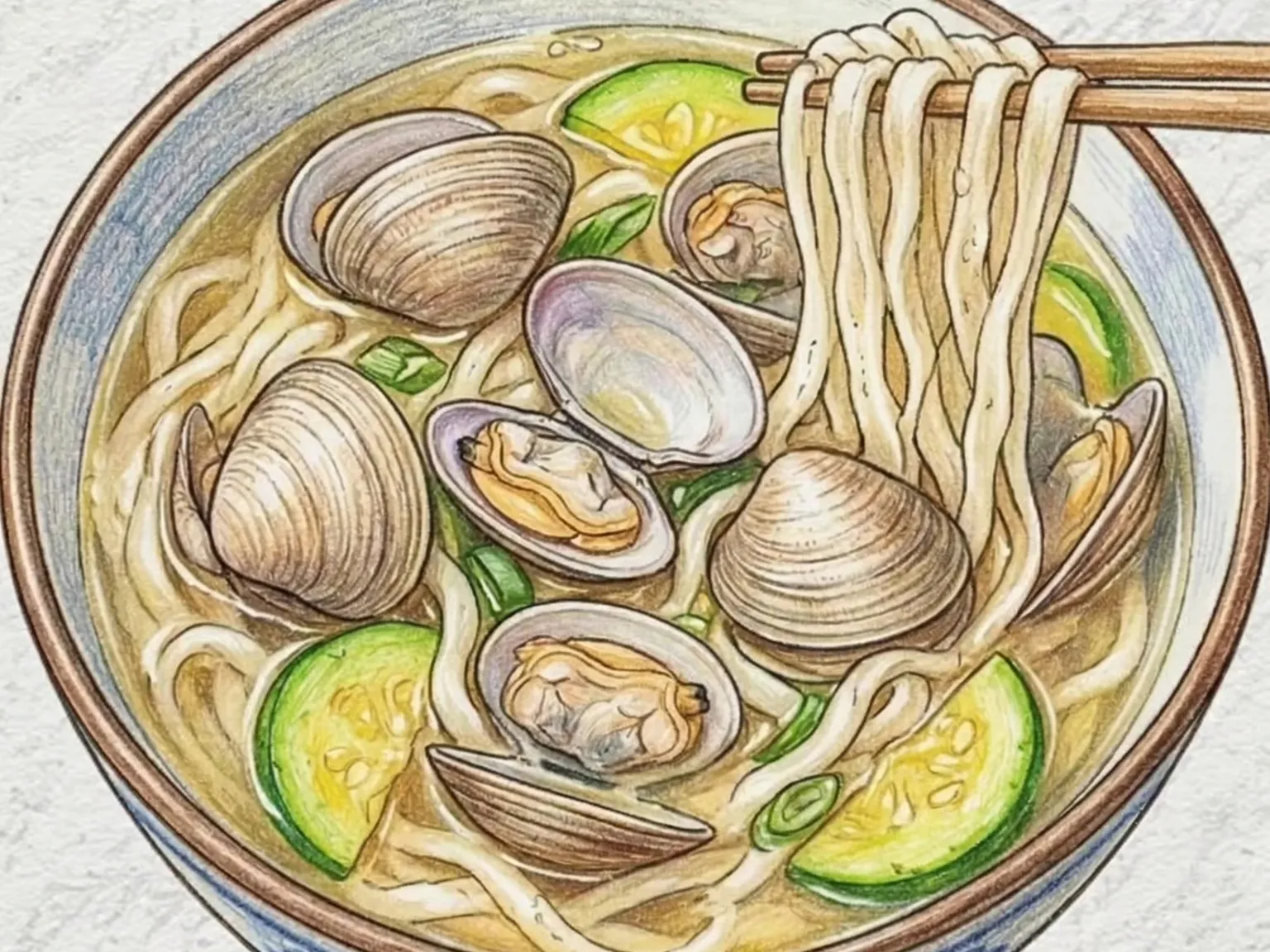
Baekhap kalguksu is a Korean knife-cut noodle soup where the broth comes entirely from hard clams. Purged clams are simmered in water until they open, then removed while the broth is strained through cloth to catch any remaining grit. Thinly sliced daikon radish and Korean zucchini cook in the strained broth for five minutes, adding vegetal sweetness. The hand-cut noodles go in next and boil for six to seven minutes until they turn translucent; starch released from the noodles thickens the broth naturally into a lightly viscous consistency. Once the noodles are cooked, the reserved clam meat returns to the pot and the soup is seasoned with minced garlic and guk-ganjang. Adding onion deepens the broth's sweetness further. Because the base is clam liquor rather than the more common anchovy stock, the soup carries a distinctly marine character that infuses every strand of noodle, setting it apart from other kalguksu variations.

🎉 Special Occasion
Prep 20minCook 25min2 servings
Korean Manila Clam Knife-Cut Noodle Soup
NoodlesEasy

Korean Manila Clam Knife-Cut Noodle Soup

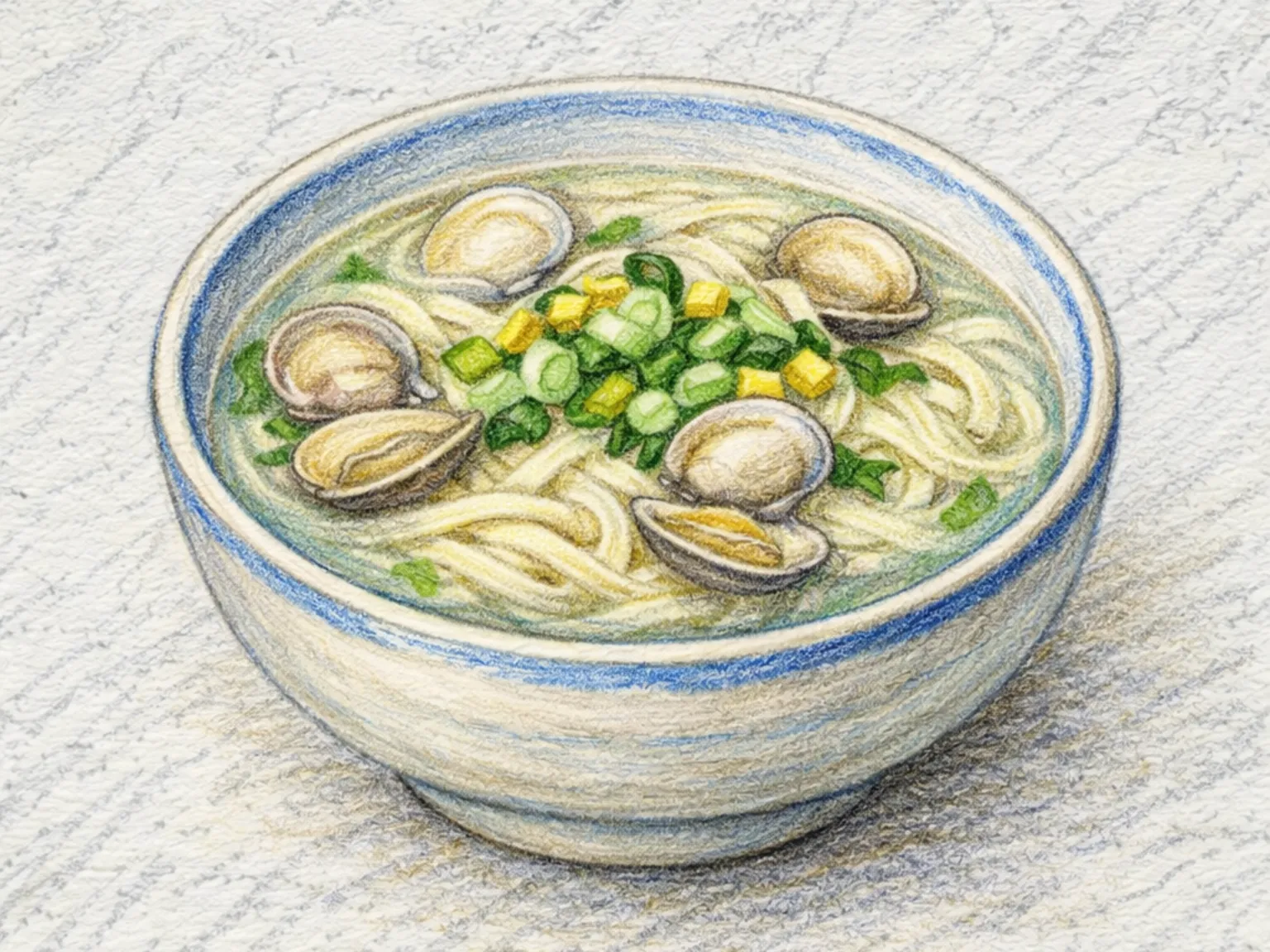
Bajirak kalguksu is one of Korea's most recognized noodle dishes, featuring hand-cut wheat noodles in a broth made entirely from manila clams. Purged clams are boiled in water until they open, then removed while the stock is strained through cloth to eliminate any remaining grit. Korean zucchini and scallion simmer in the strained broth for five minutes, adding vegetal sweetness that rounds out the clam flavor. When the knife-cut noodles go in, they release starch into the liquid as they cook, thickening the broth into a lightly viscous consistency that distinguishes kalguksu from other noodle soups. The noodles cook for six to seven minutes until they turn translucent, at which point the reserved clam meat returns to the pot. Seasoning with soup soy sauce is done carefully since the clam stock already carries its own salinity. Unlike anchovy-based kalguksu, the marine character here is direct and present in every strand of noodle, making the clam the unmistakable center of the dish.

🏠 Everyday
Prep 35minCook 20min2 servings
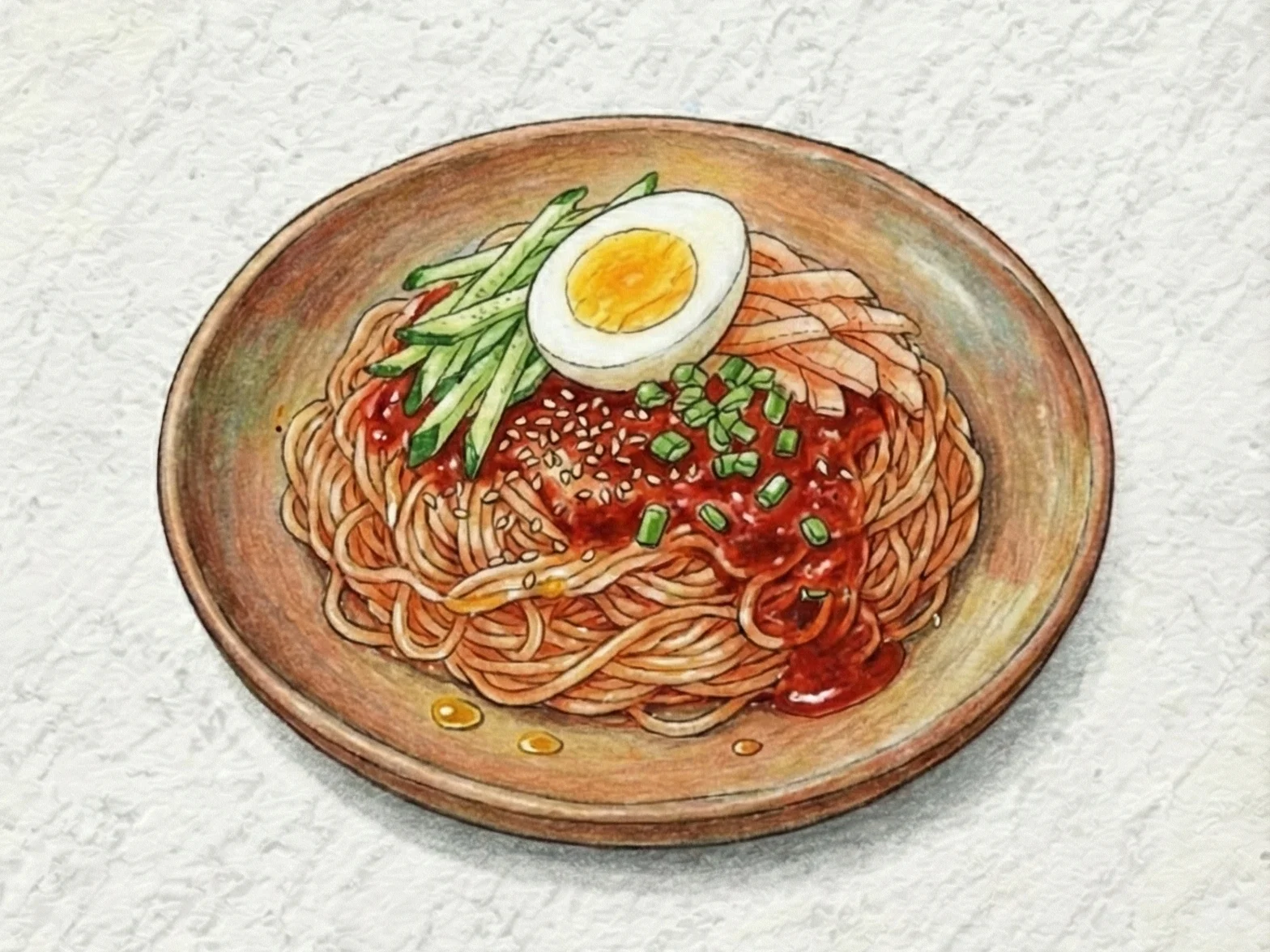
Korean Spicy Mixed Wheat Noodles
NoodlesEasy

Korean Spicy Mixed Wheat Noodles

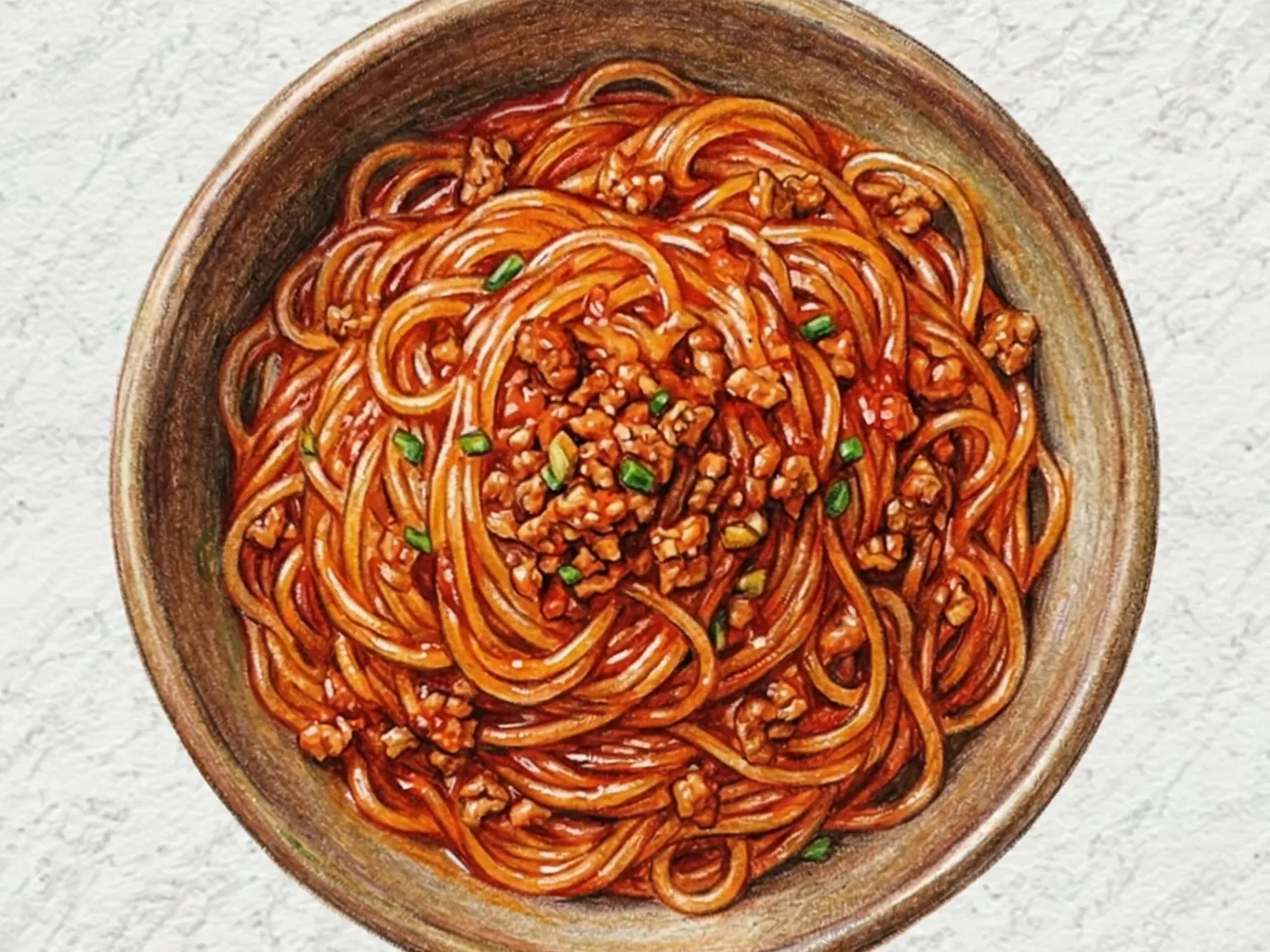
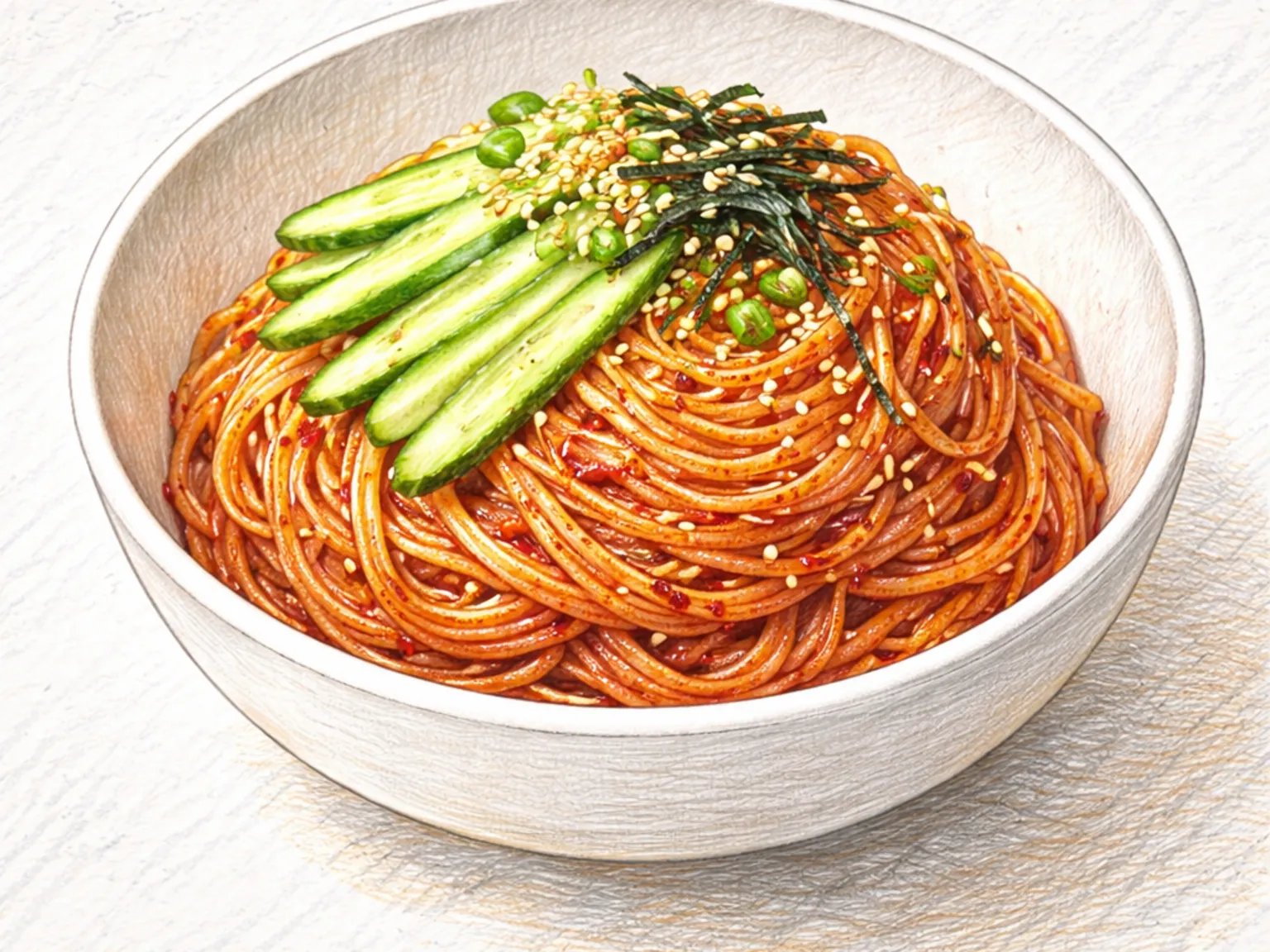
Bibim guksu is a chilled Korean noodle dish in which boiled and cold-rinsed somyeon wheat noodles are tossed in a sauce of gochujang, chili flakes, plum syrup, vinegar, soy sauce, and sesame oil. The heat from the gochujang, the sweetness of plum syrup, and the brightness of vinegar layer together into a multi-dimensional flavor in every bite. Rinsing the noodles thoroughly in cold water removes excess starch, giving them a bouncy chew and allowing the sauce to cling evenly. Torn lettuce and julienned cucumber folded in at the end contribute crunch and moisture that loosen the thick sauce just enough. A tablespoon of noodle cooking water can thin the sauce if it feels too heavy.

🏠 Everyday🌙 Late Night
Prep 15minCook 7min2 servings
Korean Spicy Mixed Cold Noodles
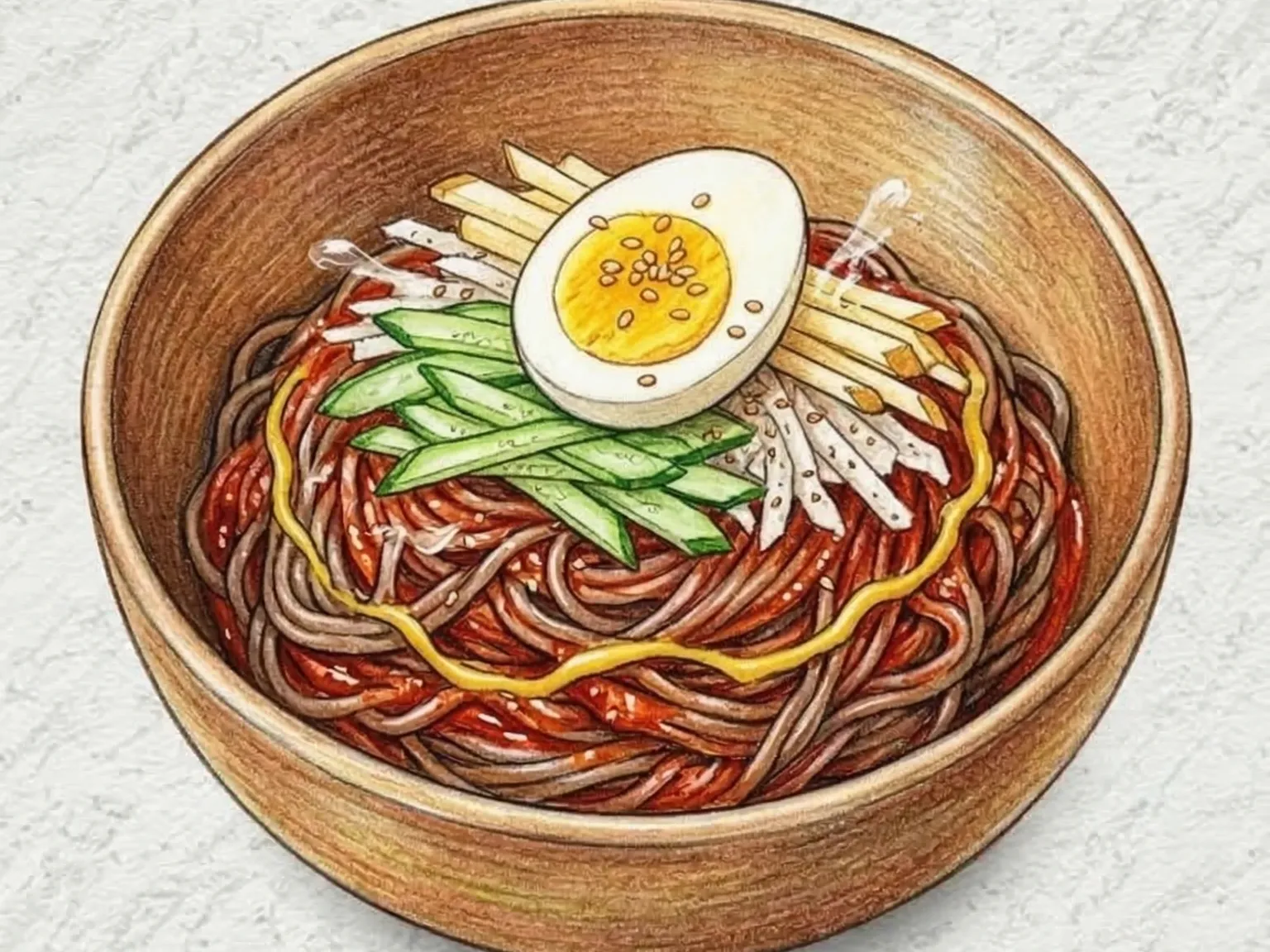
NoodlesEasy

Korean Spicy Mixed Cold Noodles

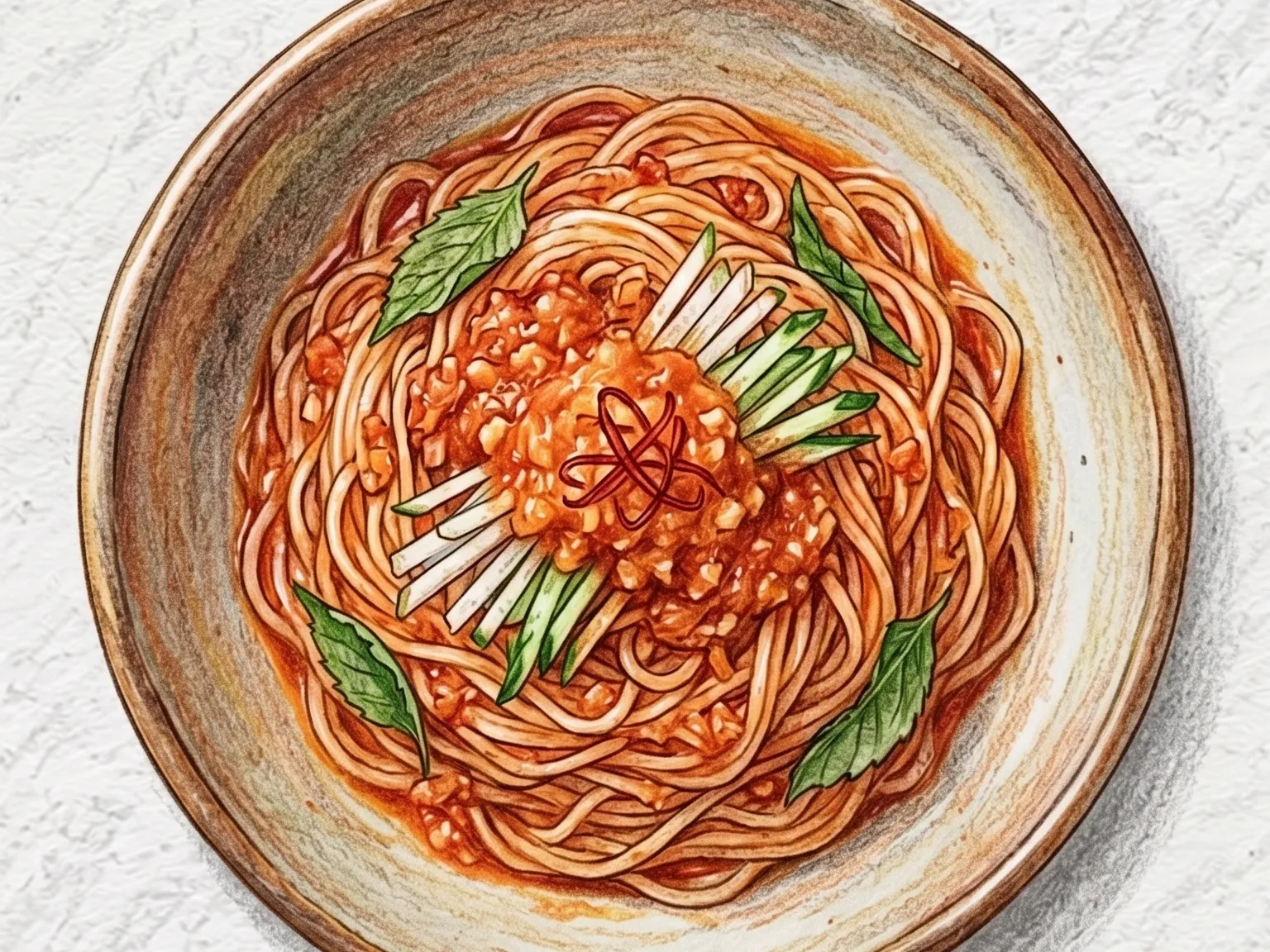
Bibim naengmyeon is a spicy cold noodle dish made by tossing chewy naengmyeon noodles in a sauce of gochujang, chili flakes, vinegar, sugar, and sesame oil. The noodles' distinctively resilient, almost rubbery chew grips the bold sauce, creating an intensely textured eating experience. Rinsing the boiled noodles multiple times in cold water and draining them thoroughly is critical to prevent the sauce from becoming watery. Julienned cucumber and thinly sliced Korean pear cut through the heat with refreshing crunch and a mild fruity sweetness. A halved boiled egg placed on top offers a creamy counterpoint to the spice.

🏠 Everyday
Prep 20minCook 10min2 servings
Vietnamese Spicy Beef Noodle Soup
NoodlesHard

Vietnamese Spicy Beef Noodle Soup

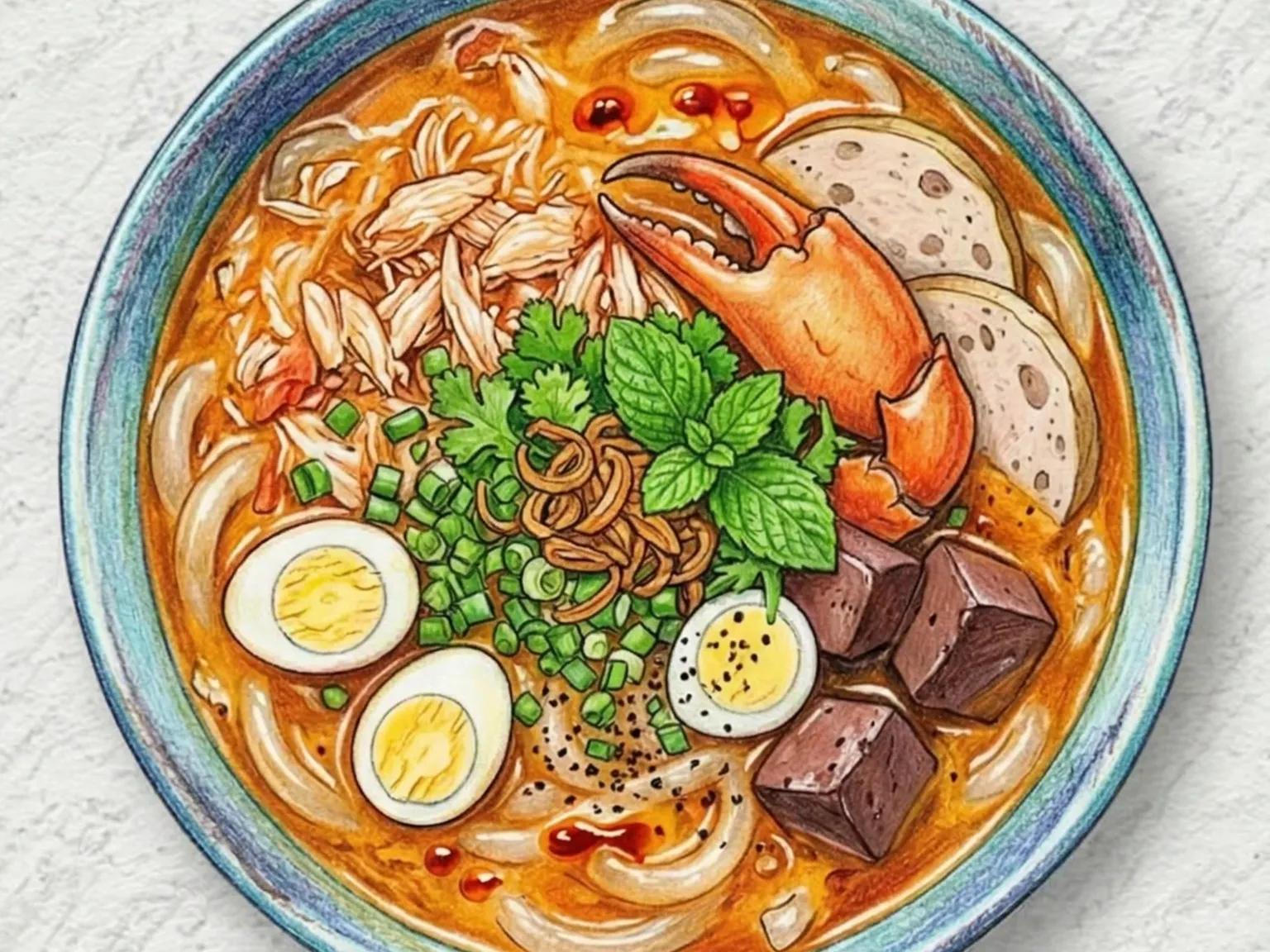
Born in the central Vietnamese city of Hue, this spicy beef noodle soup builds its character from a broth simmered low and slow with beef shank, lemongrass stalks, fermented shrimp paste, and dried chilies. A slick of bright-red chili oil floats on the surface, signaling the heat that follows. Each spoonful delivers the shrimp paste's deep umami alongside the citrusy lift of lemongrass, creating a layered spiciness that lingers without overwhelming. The noodles used are bun, a round rice vermicelli thicker and chewier than the flat strands found in pho, giving each strand enough body to hold up against the robust broth. Bean sprouts, shredded banana flower, and a squeeze of lime are added at the table, introducing crisp texture and acidity that cut through the richness. Adding sliced pork blood sausage brings the bowl closer to the version served on Hue's streets.

🎉 Special Occasion
Prep 30minCook 120min4 servings
Vietnamese Grilled Pork Vermicelli
NoodlesMedium

Vietnamese Grilled Pork Vermicelli

Charcoal-grilled pork sits atop a bed of cool rice vermicelli in this Vietnamese composed noodle bowl. The pork is marinated in fish sauce, sugar, and garlic before hitting the grill, where the sugars caramelize into a smoky-sweet crust while the interior stays moist. Fresh mint, cilantro, and crushed roasted peanuts are scattered over the top, building layers of herbal fragrance and crunch. A drizzle of nuoc cham, the sweet-sour-salty dipping sauce anchored by fish sauce and lime, ties every component together. Even without broth, the bowl feels generous and refreshing, thanks to the temperature contrast between the warm meat and the chilled noodles. Pickled daikon and carrot add a final note of acidity that keeps the palate engaged to the last strand.

🎉 Special Occasion
Prep 20minCook 15min2 servings
Korean Spicy Mixed Glass Noodles
NoodlesEasy

Korean Spicy Mixed Glass Noodles

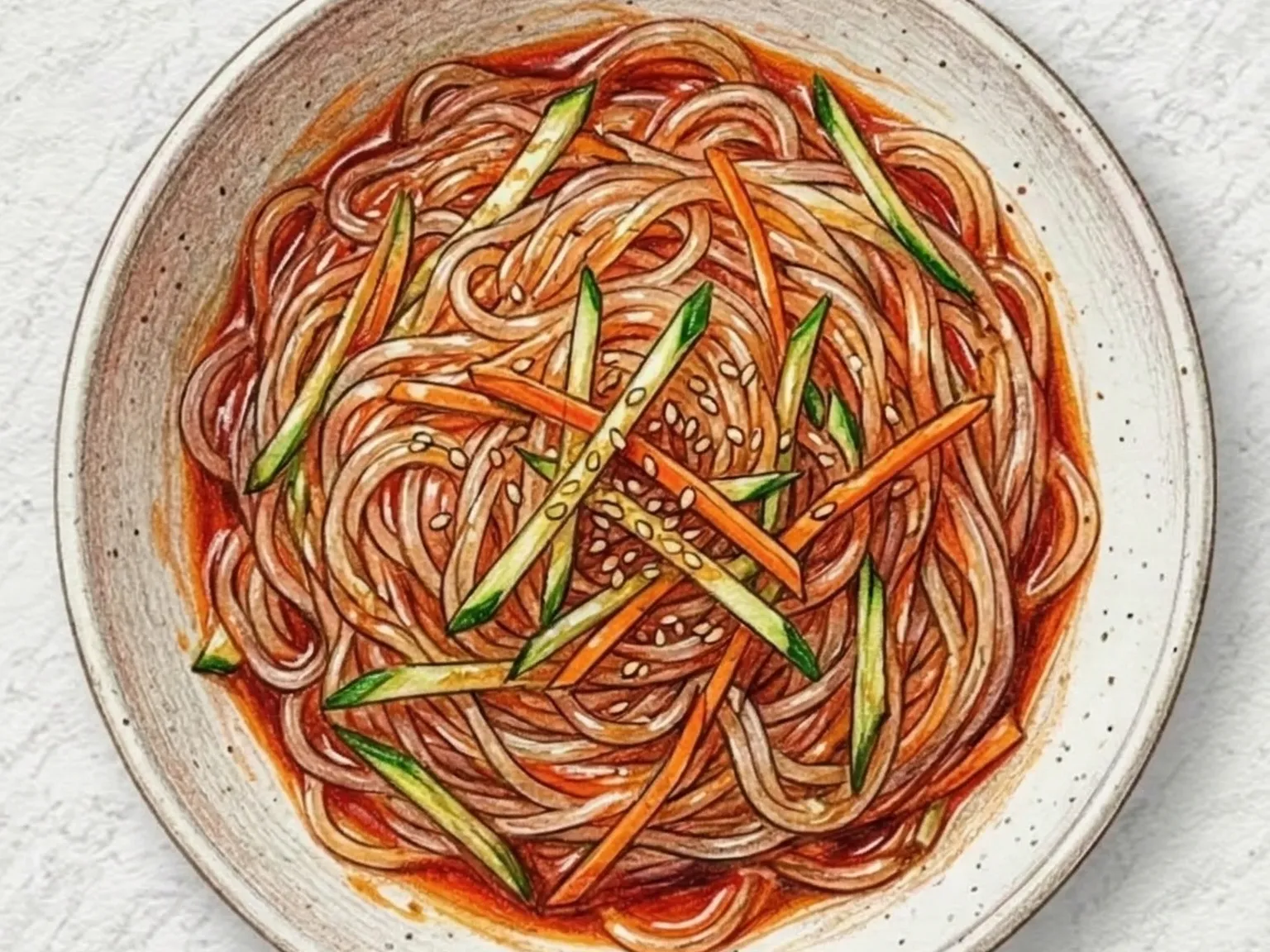
A Busan street-food staple, this dish tosses springy sweet-potato glass noodles with sliced fish cake and crisp vegetables in a bold chili dressing. The translucent noodles cling to every drop of the spicy-sweet sauce, so each forkful carries concentrated flavor. Fish cake contributes a mild, savory backbone, while shredded cabbage and cucumber provide crunch that offsets the noodles' elastic chew. A finish of sesame oil and toasted sesame seeds adds a nutty warmth to the aftertaste. Because the noodles only need boiling and a quick toss with the prepared sauce, the dish comes together in minutes, making it a practical weeknight option. It captures the lively, no-frills spirit of Busan's market food stalls in a single bowl.

🏠 Everyday🌙 Late Night
Prep 20minCook 10min2 servings
Korean Beef Brisket Jjolmyeon
NoodlesEasy

Korean Beef Brisket Jjolmyeon

Seared beef brisket crowns a bowl of chewy jjolmyeon noodles dressed in a spicy gochujang sauce. The brisket is cooked fast over high heat so the outside crisps while the marbled fat inside renders just enough to leave each slice rich and fragrant. That beefy aroma mingles with the sweet-spicy dressing, elevating what is already a bold noodle dish. Jjolmyeon's signature rubbery chew traps sauce in every crevice, ensuring consistent flavor from the first bite to the last. Julienned cucumber and a halved boiled egg are the standard accompaniments, adding cool crunch and mild richness. Bean sprouts or perilla leaves can be tossed in for extra texture. The dish works equally well as a refreshing summer meal or a satisfying late-night bowl.

🌙 Late Night
Prep 15minCook 12min2 servings
Korean Beef Brisket Soybean Paste Noodles
NoodlesMedium

Korean Beef Brisket Soybean Paste Noodles

Knife-cut wheat noodles swim in a soybean paste broth enriched by thin slices of beef brisket that release their marbled fat into the simmering liquid. The doenjang lends the broth a fermented, earthy depth, while the brisket fat adds body and a gentle richness that rounds out each spoonful. Because the noodles are hand-rolled and sliced with a knife, their uneven thickness creates varied textures, with thinner edges going silky and thicker centers retaining a satisfying chew. Zucchini, potato, and onion cook alongside the noodles, contributing natural sweetness that tempers the saltiness of the paste. Minced garlic and sliced scallion stirred in at the end lift the aroma. The broth thickens as it reduces, so starting with extra liquid ensures a generous, soupy finish.

🏠 Everyday
Prep 15minCook 20min2 servings
Beef Brisket Perilla Cream Fettuccine
NoodlesMedium

Beef Brisket Perilla Cream Fettuccine

This fusion pasta brings together Italian cream sauce, Korean beef brisket, and the distinctive fragrance of perilla leaves. The brisket is seared until its edges crisp and its rendered fat is drained, then folded back into a sauce of heavy cream and milk so that its savory depth permeates every drop. Perilla leaves, when briefly heated, release a mellow herbal aroma that lifts the heaviness of the cream and introduces a flavor note absent from any European herb. Fettuccine's broad, flat surface catches the sauce generously, ensuring each bite is fully coated. A shower of grated Parmigiano adds salt and sharpness, while a crack of black pepper provides a spicy punctuation. The result is a cross-cultural plate where Korean aromatics and Italian technique meet without competing.

🎉 Special Occasion
Prep 15minCook 18min2 servings
Chogye Guksu (Korean Cold Chicken Noodles)
NoodlesMedium

Chogye Guksu (Korean Cold Chicken Noodles)

Shredded poached chicken and julienned cucumber top thin wheat noodles served in an icy mustard-vinegar chicken broth. The broth starts as a clear chicken stock, then gains its signature punch from dissolved mustard powder and rice vinegar, delivering a sharp nasal tingle followed by bright acidity that revives the appetite on sweltering days. The chicken, torn along the grain into thin strips, provides lean protein without heaviness, while sliced Korean pear adds a crisp, subtly sweet counterpoint. Mustard heat flares briefly and fades, leaving behind the clean savory finish of well-made stock. Keeping the broth thoroughly chilled is essential: it prevents the noodles from going soft and preserves the refreshing temperature contrast. Floating a few ice cubes in the bowl ensures the dish stays cold through the last bite.

🎉 Special Occasion
Prep 20minCook 25min2 servings
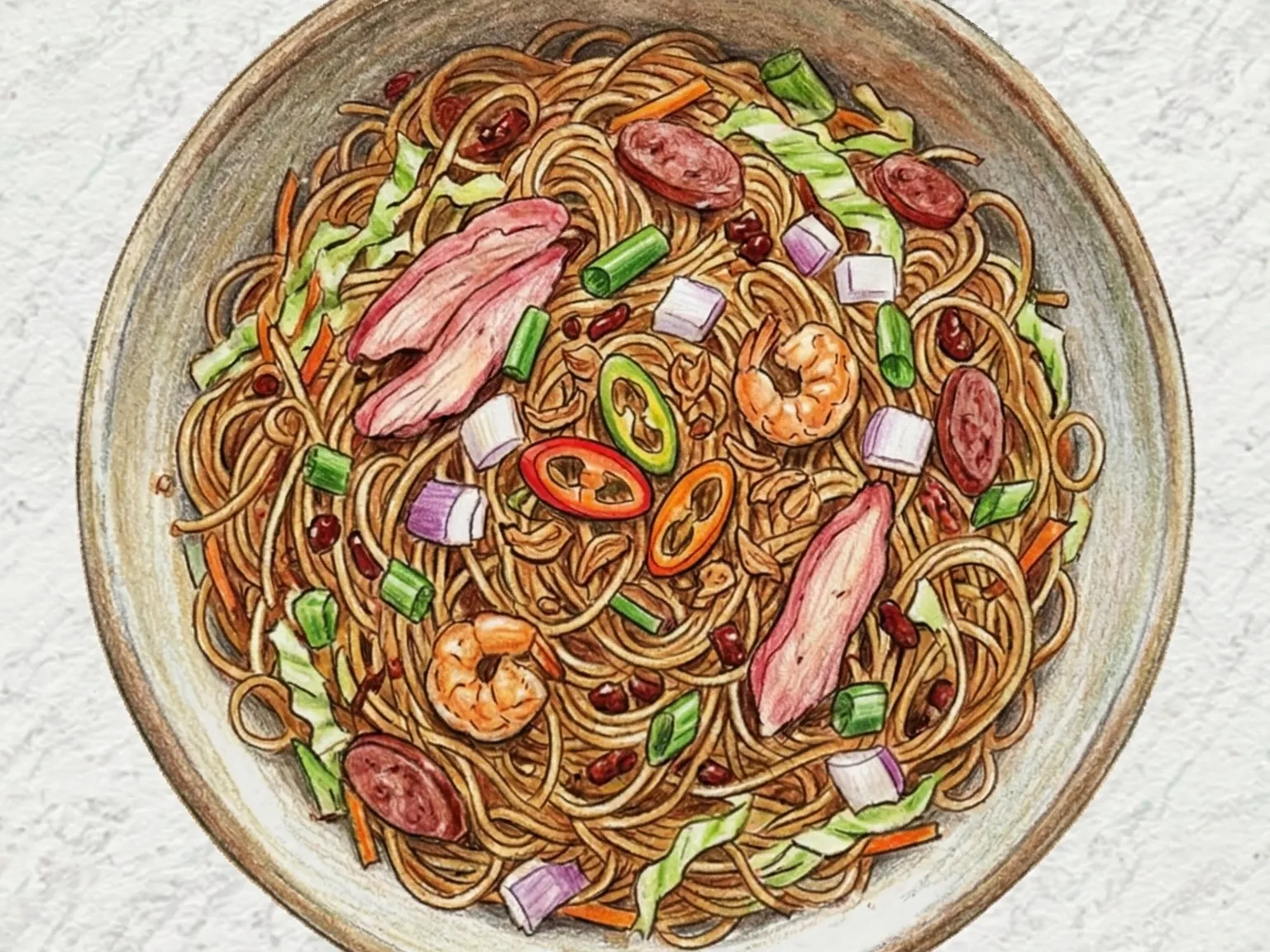
Chinese Chow Mein
NoodlesEasy

Chinese Chow Mein

Chinese chow mein stir-fries boiled noodles with vegetables and protein over fierce wok heat. The noodles are parboiled, lightly oiled, then tossed in a screaming-hot wok until the exterior crisps while the interior stays chewy. A sauce of soy, oyster sauce, and sesame oil lacquers each strand with salty depth and umami, while bean sprouts, cabbage, and carrot contribute crunch. The hallmark smoky flavor, known as wok hei, comes only from sustained high heat, so home cooks achieve the closest result by working in small batches and letting the pan recover between additions. Chicken, shrimp, or beef can replace one another as the main protein, making chow mein endlessly adaptable. A squeeze of lime at the table brightens the overall flavor.

🏠 Everyday🌙 Late Night
Prep 15minCook 12min2 servings
Crossing the Bridge Noodles
NoodlesHard

Crossing the Bridge Noodles

This iconic Yunnan rice noodle soup arrives as a bowl of searingly hot, clear chicken broth topped with a thin layer of oil that insulates the heat, alongside plates of paper-thin raw meats, vegetables, tofu skin, and rice noodles. Diners add ingredients to the broth in a specific sequence: items that need the most cooking go in first, followed by quicker-cooking greens and, finally, the noodles. The meat, sliced so thin it is nearly translucent, turns opaque within seconds of touching the broth. This tableside cooking method ensures every component reaches the bowl at its ideal texture rather than overcooking in a pot. The oil cap preserves the broth's temperature throughout the meal, keeping the last bite as hot as the first. The name refers to a legend about a wife who carried soup across a bridge to her studying husband, using the oil layer to keep it warm.

🎉 Special Occasion
Prep 25minCook 30min2 servings
Korean Chicken Janchi Guksu
NoodlesEasy

Korean Chicken Janchi Guksu

This variation of Korean janchi guksu places generous shreds of poached chicken breast on top of thin wheat noodles in a clear anchovy-kelp broth. The chicken adds a layer of lean protein that makes the bowl more filling than the classic version, while the broth retains its light, clean character. Julienned zucchini, shredded dried seaweed, and thin egg crepe strips bring color and varied texture. A small dish of soy-based dipping sauce on the side lets diners adjust the seasoning to taste. The noodles are boiled separately, rinsed in cold water to maintain their chew, and then placed in the hot broth just before serving, so they stay firm rather than turning mushy. Because the recipe scales easily, it remains a go-to choice for gatherings and celebrations where a warm, comforting noodle dish is needed.

🏠 Everyday
Prep 15minCook 20min2 servings
Korean Chicken Knife-Cut Noodle Soup
NoodlesMedium

Korean Chicken Knife-Cut Noodle Soup

A whole chicken is simmered with scallion, garlic, and ginger until the broth turns cloudy and rich, then hand-cut wheat noodles are cooked directly in that liquid. As the noodles release their starch into the pot, the broth takes on a silky body that coats the palate, and the noodles themselves absorb the concentrated chicken flavor at every surface. Shredded chicken meat, pulled along the grain, is piled on top just before serving. Potato and zucchini chunks, added during the final minutes, contribute gentle sweetness and soft texture. A generous grind of black pepper over the steaming bowl sharpens the chicken aroma and adds a subtle warmth. On a cold day, this noodle soup delivers the kind of deep, lasting comfort that lighter broths cannot match.

🏠 Everyday
Prep 25minCook 40min4 servings
Korean Stir-Fried Udon with Spicy Chicken
NoodlesMedium

Korean Stir-Fried Udon with Spicy Chicken

Gochujang-marinated chicken, cabbage, sweet potato, and rice cakes are stir-fried together before thick udon noodles join the pan and absorb the spicy-sweet sauce. The dakgalbi seasoning clings to the udon's broad surface, loading every bite with bold, smoky flavor. Cabbage and scallion wilt quickly in the high heat, releasing natural sugars that balance the chili paste's punch, while sweet potato chunks mellow the spice further with their starchy sweetness. Udon noodles, thicker than ramen or somyeon, stand up to the heavy sauce without going limp, delivering a satisfying chew throughout the meal. Melting a layer of cheese over the top just before serving adds a creamy, salty contrast to the heat. A sprinkle of sesame seeds and shredded seaweed finishes the dish. It scales well for groups sharing a large pan or griddle.

🌙 Late Night
Prep 20minCook 18min4 servings
Dan Dan Mian (Sichuan Spicy Noodles)
NoodlesMedium

Dan Dan Mian (Sichuan Spicy Noodles)

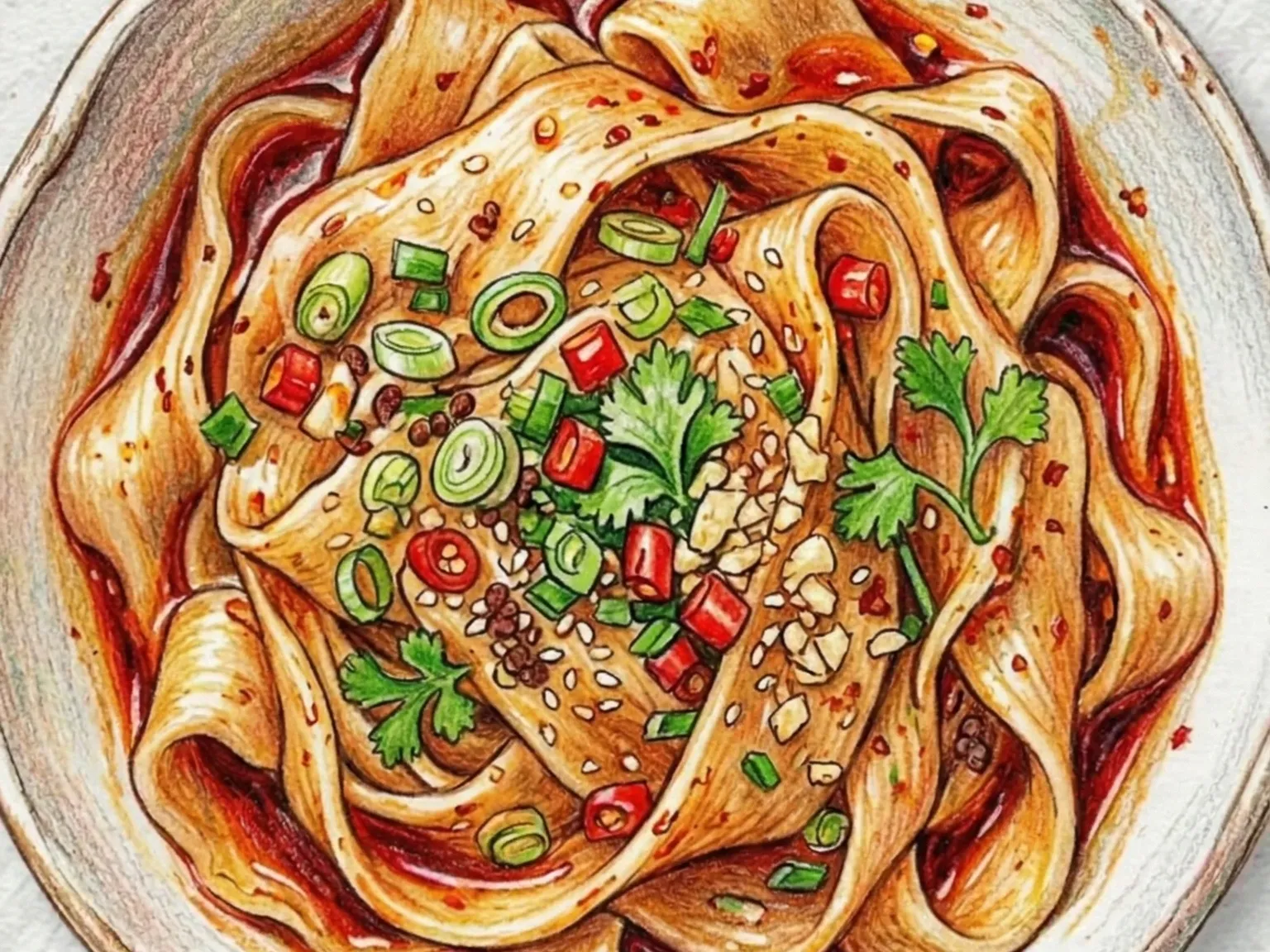
Dan dan mian is a Sichuan noodle dish that layers wheat noodles and browned ground pork over a thick sauce built from sesame paste, soy sauce, chili oil, and vinegar. Ground Sichuan peppercorn delivers its signature tingling numbness on the tongue, while the chili oil brings a direct, lingering heat that melds with the rich sesame base. Stir-frying the pork until well-browned develops a roasted meatiness that deepens the sauce's complexity. Blanched bok choy tucked alongside the noodles provides a clean, green crunch against the oily intensity. The peppercorn's numbing effect builds quickly, so adding it in small increments allows precise control.

🍺 Bar Snacks🎉 Special Occasion
Prep 15minCook 20min2 servings
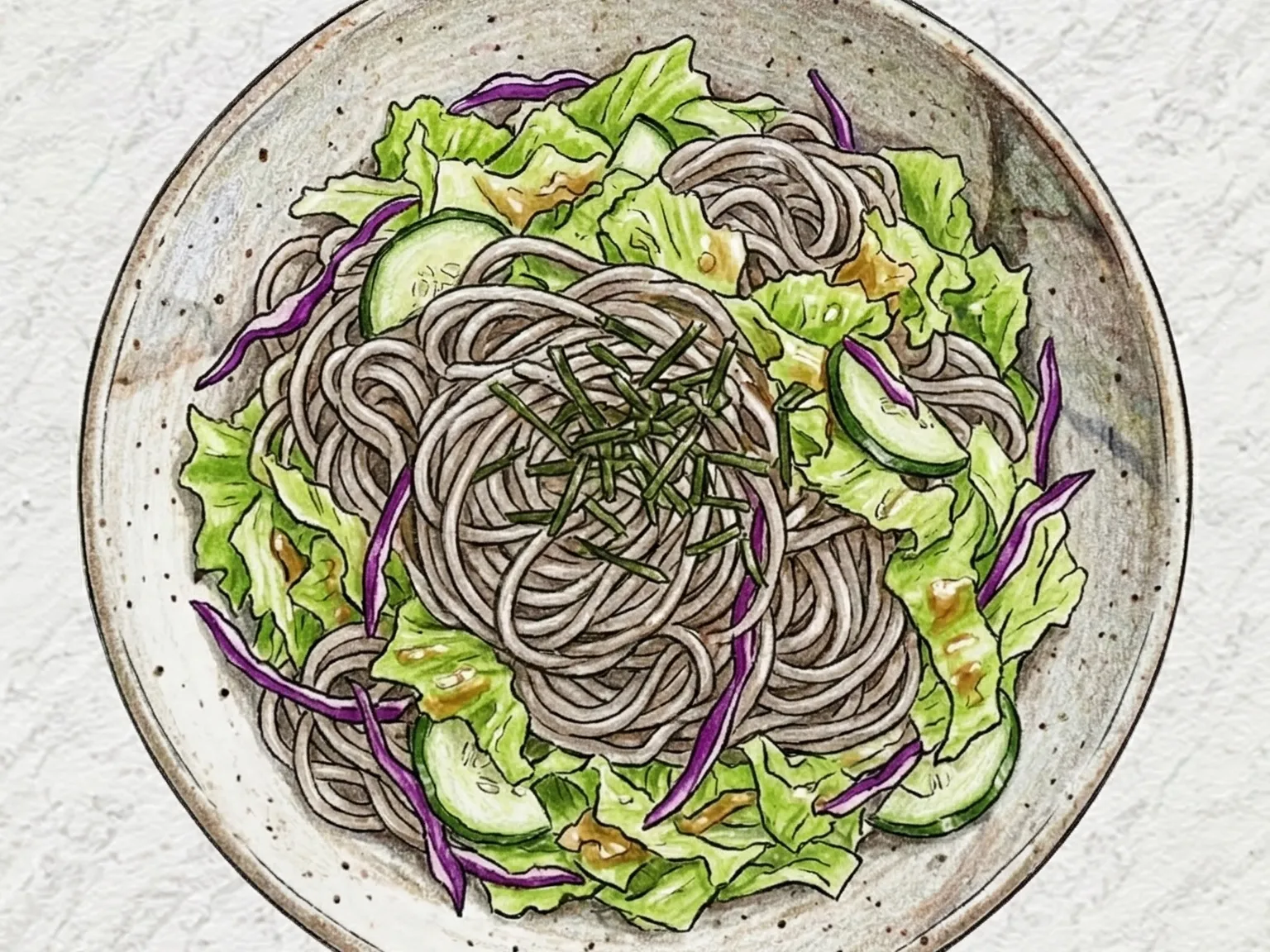
Korean Perilla Oil Noodles
NoodlesEasy

Korean Perilla Oil Noodles

Deulgireum guksu is a Korean noodle dish where boiled somyeon are rinsed in cold water to strip away surface starch, tossed first in a soy sauce seasoning, then finished with a generous pour of perilla oil. The oil coats each strand in a roasted, nutty fragrance that is distinctly different from sesame - earthier and more aromatic. Shredded roasted seaweed adds a crisp, briny layer, and sesame seeds contribute a quiet crunch. The entire preparation takes under ten minutes, which makes it a practical late-night or solo meal. A fried egg on top is a common addition; the runny yolk breaks into the dressed noodles, enriching the texture with its own fat.

🌙 Late Night Quick
Prep 10minCook 7min2 servings
Korean Warm Perilla Mushroom Rice Noodles
NoodlesEasy

Korean Warm Perilla Mushroom Rice Noodles

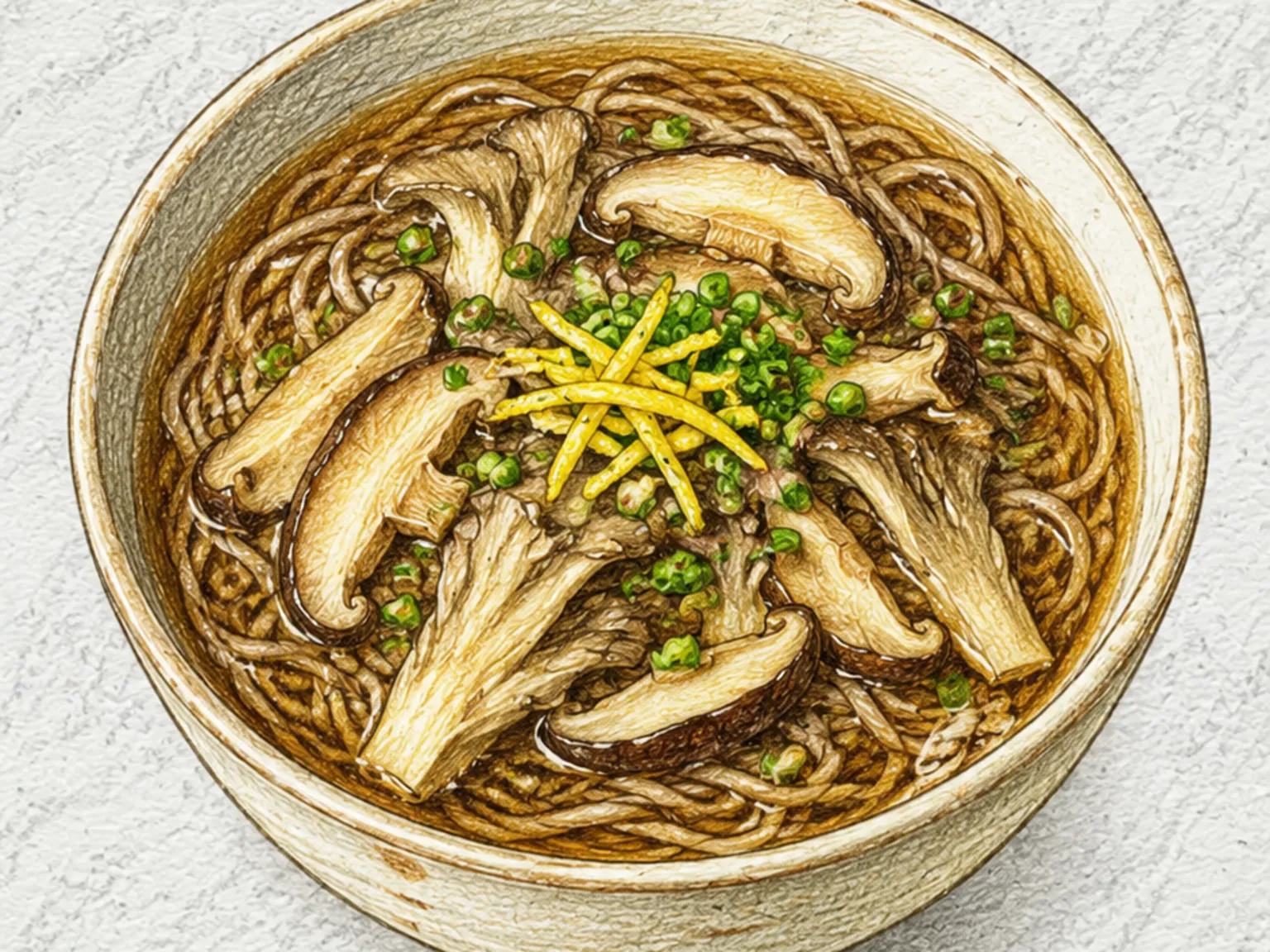
Deulkkae beoseot on ssalguksu is a warm Korean noodle soup built on kelp stock simmered with oyster and shiitake mushrooms, then thickened with ground perilla seeds into a creamy, opaque broth. Rice noodles are smoother and more slippery than wheat varieties, sliding through the rich liquid with ease, while the mushrooms provide a chewy counterpoint. Adding the perilla powder at the very end preserves its roasted, nutty fragrance on the surface of each spoonful. Soup soy sauce seasons the broth cleanly without the weight of soybean paste. This is a warming bowl suited for cold weather, filling enough to serve as a standalone meal.

🥗 Light & Healthy🏠 Everyday
Prep 20minCook 20min4 servings
Korean Fermented Soybean Paste Noodle Soup
NoodlesEasy

Korean Fermented Soybean Paste Noodle Soup

Doenjang kalguksu is a Korean noodle soup of knife-cut wheat noodles in an anchovy broth flavored with fermented soybean paste. Straining the doenjang through a sieve as it dissolves prevents lumps and yields a smooth, deeply savory liquid where fermented depth - not raw salt - leads the taste. Zucchini half-moons and sliced shiitake mushrooms add sweetness and aroma to the broth, and cubed tofu brings a soft textural contrast. Timing is important: the final seasoning goes in just before the noodles, because extended boiling can push doenjang toward bitterness.

🏠 Everyday
Prep 10minCook 20min2 servings