Korean Soy Braised Quail Eggs

Korean Soy Braised Quail Eggs

Quick answer

Al-jorim - soy-braised quail eggs - is one of Korea's most universal banchan, appearing in school cafeteria trays, packed office lunchboxes, and home refrigerators as a r...

What makes this special

  • Quail eggs simmered on low heat develop a dark-amber color and firm, savory white.
  • Rolling eggs on low heat for 10 minutes ensures even dark-amber color
  • Final 2-minute high heat creates a glossy soy glaze on the surface
Total time
25 min
Level
Easy
Servings
2 servings
Ingredients
8
Calories
185 kcal
Protein
12 g

Key ingredients

quail eggssoy saucewatersugarcooking wine

Core cooking flow

  1. 1 Boil 20 quail eggs in water with a little salt and vinegar until firm.
  2. 2 Put 220ml water, 3 tablespoons soy sauce, 1 tablespoon sugar, 1 tablespoon c...
  3. 3 When the sauce starts boiling, add the peeled quail eggs and lower the heat to medium-low.

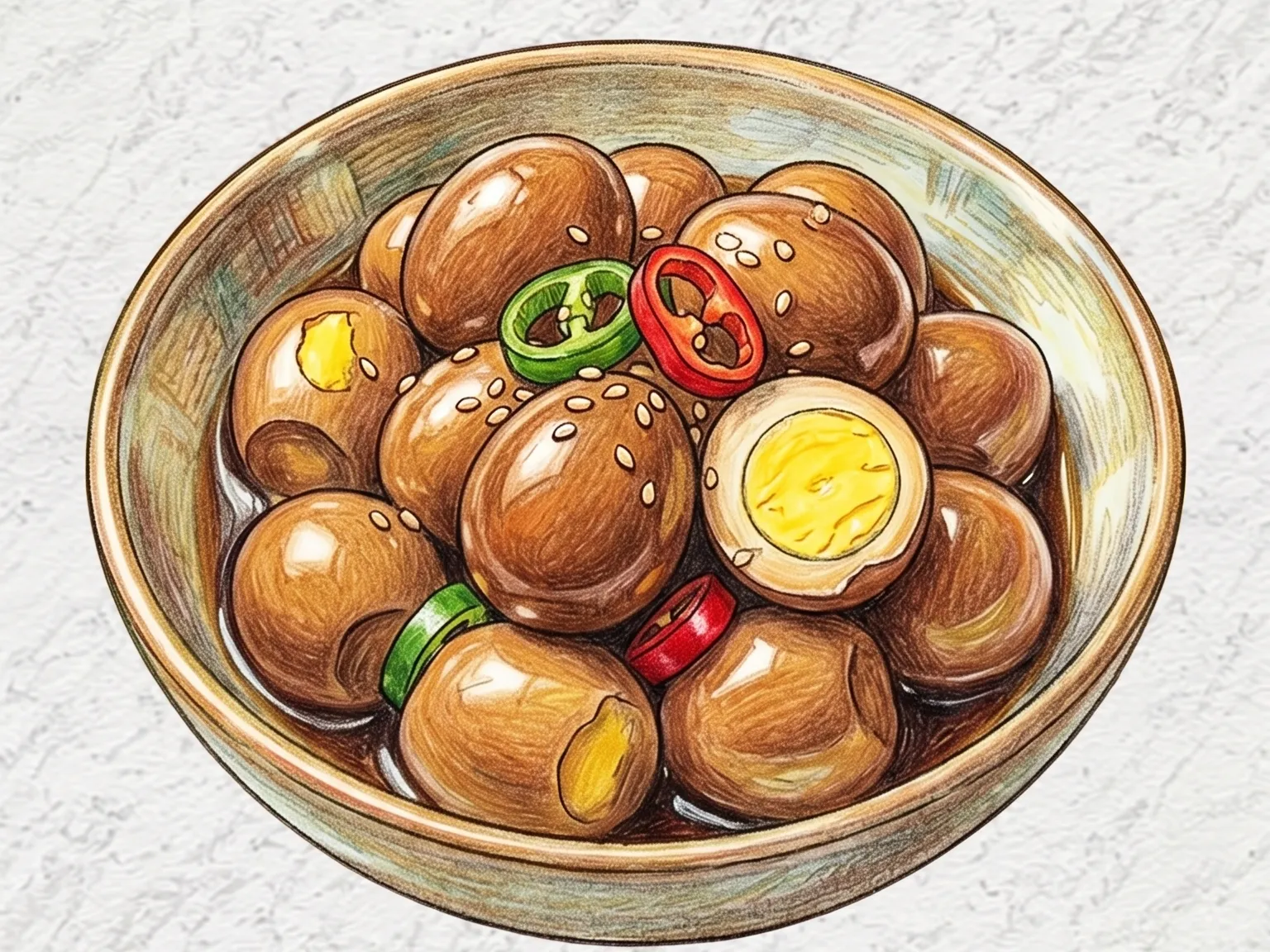
Al-jorim - soy-braised quail eggs - is one of Korea's most universal banchan, appearing in school cafeteria trays, packed office lunchboxes, and home refrigerators as a reliable standby. The dish belongs to the broader Korean jorim tradition of simmering proteins low and slow in a sweetened soy-based liquid until the glaze seeps through to the center. Peeled quail eggs go into a pan with soy sauce, water, sugar, cooking wine, and minced garlic, then simmer over medium-low heat for ten minutes. Turning the eggs occasionally is essential - it ensures the soy stain reaches every surface evenly rather than leaving pale patches. The liquid starts thin and gradually reduces as the eggs cook, concentrating into a sticky, glossy glaze that clings to the surface in the final two to three minutes over higher heat. The outside takes on a deep chestnut brown while the yolk inside stays vivid yellow. A sliced cheongyang chili added near the end introduces a low, slow heat that keeps the sweet-salty profile from becoming monotonous. Sesame oil and toasted sesame seeds scattered over the finished eggs add a nutty note against the soy base. Left overnight in the refrigerator, the seasoning penetrates further and the flavor deepens, making this one of the few banchan that genuinely improves after a day.

Prep 10min Cook 15min 2 servings

Instructions

Read the steps as a cooking flow: prep, heat, seasoning, doneness control, and finish.

6 steps
  1. 1
    Season

    Boil 20 quail eggs in water with a little salt and vinegar until firm.

    Cool them fully in cold water, then peel carefully so the whites stay smooth and do not chip.

  2. 2
    Control

    Put 220ml water, 3 tablespoons soy sauce, 1 tablespoon sugar, 1 tablespoon cooking wine, and 1 teaspoon minced garlic in a pot.

    Heat over medium heat until the sugar dissolves and the sauce comes to a boil.

  3. 3
    Control

    When the sauce starts boiling, add the peeled quail eggs and lower the heat to medium-low.

    Simmer for about 10 minutes, rolling the eggs occasionally with a spoon so the color sets evenly.

  4. 4
    Control

    When the liquid has reduced by about half and the eggs look chestnut brown, add 1 sliced hot green chili.

    Raise the heat slightly and cook for 2 more minutes to concentrate the sweet, salty, and spicy notes.

  5. 5
    Control

    Turn off the heat when a shallow layer of sauce remains and the eggs look glossy.

    Do not reduce the sauce completely, because the eggs can turn too salty and lose the light coating.

  6. 6
    Finish

    Add 0.5 teaspoon sesame oil and toasted sesame seeds, then toss gently in the residual heat.

    Serve warm or cool completely before refrigerating, where the flavor deepens overnight and keeps well for nearly a week.

After the steps

Pick a recipe that fits this dish.

Continue with shared ingredients, meal pairings, or a similar method.

Recipes That Go Well With This

More Stir-fry →

Based on shared ingredients and meal pairing

Korean Soy-Braised Quail Eggs
Shared ingredient: quail eggs Steamed

Korean Soy-Braised Quail Eggs

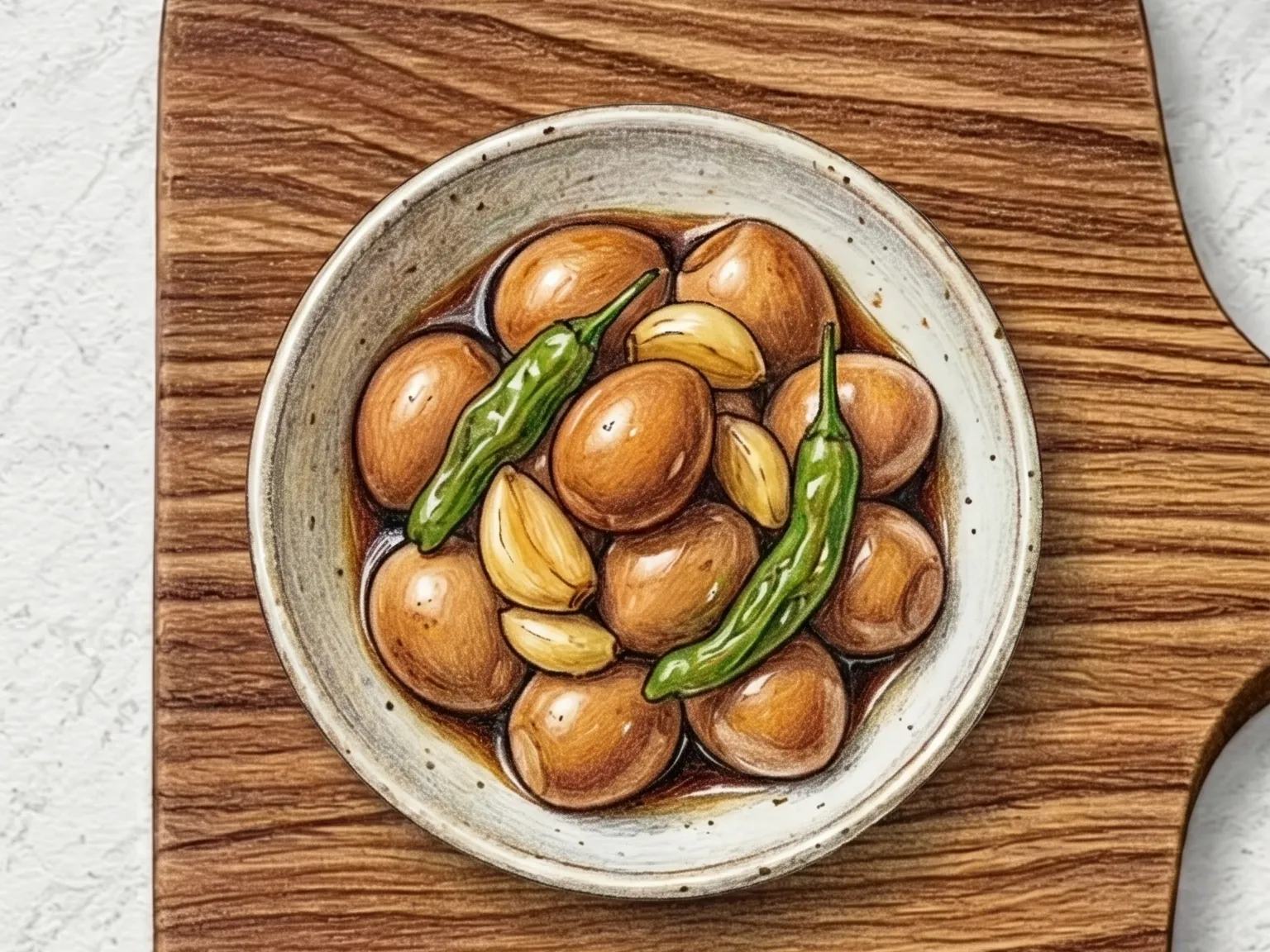
Mechurial-jangjorim is a Korean soy-braised quail egg dish simmered slowly with garlic cloves and shishito peppers in a seasoned soy sauce base. As the eggs steep in the braising liquid, the soy works its way through the egg white and gradually into the yolk, staining the exterior a deep mahogany brown and seasoning the interior evenly throughout. The braising liquid is built from a measured ratio of water, soy sauce, sugar, and cooking wine to keep the saltiness in check and the glaze balanced. Whole garlic cloves soften gently in the liquid and release a mellow, savory depth that enriches the overall flavor without sharpness. Shishito peppers are added partway through rather than at the start so they retain some snap and their mild green aroma, preventing them from going completely soft. The liquid is reduced until just a small amount remains, coating each egg in a glossy, concentrated glaze. Each egg is a single self-contained bite, which makes this banchan a staple in lunchboxes and a popular snack for children, and it remains one of the most recognizable everyday Korean side dishes.

Korean Soy-Braised Fish Cake
Shared ingredient: cheongyang chili Side dishes

Korean Soy-Braised Fish Cake

Eomuk-jorim is a braised Korean fish cake banchan in which triangles or rectangles of eomuk are simmered in a mixture of soy sauce, rice syrup, garlic, and water. Korean eomuk is a processed fish product made by grinding white fish flesh with starch and shaping the paste into flat sheets or molded forms -- denser and chewier than Japanese kamaboko, with a texture that holds its structure through the long braise without turning soft. As the liquid reduces by roughly half over ten minutes of steady simmering, the sauce concentrates into a thick, sticky glaze that adheres to each piece. Adding a sliced cheongyang chili near the end of cooking introduces a subtle heat that cuts through the sweetness of the rice syrup and gives the banchan a sharper edge that pairs well with plain rice. One of the most practical side dishes in the Korean repertoire, eomuk-jorim keeps in the refrigerator for up to a week and, like many braised preparations, deepens in flavor as the soy seasoning continues to penetrate the fish cake over subsequent days. Its low cost and the ease of making large batches in a single pan explain its decades-long presence in school cafeterias, packed lunchboxes, and the everyday home kitchen.

Korean Cheesy Dakgalbi Rice Bowl
Serve together Rice

Korean Cheesy Dakgalbi Rice Bowl

Cheese dakgalbi deopbap is a rice bowl built on the flavors of Chuncheon-style spicy chicken stir-fry, finished with a blanket of melted mozzarella. Chicken thighs are marinated in gochujang, gochugaru, soy sauce, and sugar for at least thirty minutes, then stir-fried in a ripping-hot pan with rough-cut cabbage and onion until the sauce reduces and coats every surface. The heat must be high enough to evaporate moisture quickly; if the pan is too cool, the ingredients steam and the sauce turns thin. Thigh meat stays moist throughout cooking because of its higher fat content, making it far more forgiving than breast meat in a fast stir-fry. Cabbage cooked at high heat for a short time keeps enough crunch to stand against the richness of the cheese and sauce. Mozzarella laid over the top melts in the residual heat into long, stretchy strands that soften the chili sharpness with every bite. The whole dish comes together in under fifteen minutes with pantry staples, which makes it a natural choice for a quick solo dinner or late-night meal.

Korean Soy Braised Eggplant
Similar recipe Stir-fry

Korean Soy Braised Eggplant

Gaji-jorim is a Korean braised eggplant dish where the eggplant is simmered in a soy sauce-based seasoning until the flesh becomes thoroughly tender and saturated with flavor throughout. Eggplant has a sponge-like cellular structure that draws in liquid as it cooks, and the longer it simmers in the seasoning, the deeper the sweet-salty flavor penetrates into each piece. The sauce reduces as the eggplant cooks, concentrating around the flesh rather than pooling at the bottom of the pan, which means every bite carries the full seasoning. A finishing drizzle of sesame oil and a scattering of sesame seeds add a nutty aroma that rounds out the savory base. Despite using only eggplant as the main ingredient, the slow braising process concentrates the flavors into a compelling side dish that makes plain rice easy to eat in quantity. The seasoning adheres to the eggplant even after cooling, making it a practical addition to a packed lunch as well as a fresh rice accompaniment.

Serve with this

Manduguk (Korean Dumpling Clear Broth Soup)
Soups Easy

Manduguk (Korean Dumpling Clear Broth Soup)

Manduguk is a Korean dumpling soup in which hand-folded dumplings stuffed with ground pork, tofu, scallion, and garlic are dropped into a clear, simmering broth, typically anchovy-kelp stock or beef broth, and cooked until they float. As the dumplings cook, their thin wheat-flour wrappers release a subtle starch that gives the broth a barely perceptible body, while the filling leaks savory juices that enrich the liquid gradually. A thin drizzle of beaten egg stirred in near the finish creates silken wisps on the surface of the broth and gives the bowl a more finished appearance. Shredded egg strips and crumbled dried seaweed scattered on top add a pleasant contrast in color and a faint oceanic note to the flavor. Many Korean households serve manduguk on Lunar New Year as an alternative to tteokguk, and some combine the two by adding sliced rice cakes alongside the dumplings. Dumplings can be made in large batches and frozen raw, which means this soup can be pulled together quickly on weeknights without sacrificing any of the flavor that comes from homemade filling. A small dish of soy-vinegar dipping sauce served alongside lets each person adjust the seasoning at the table, and the light acidity of the sauce cuts through the mild broth in a way that makes the contrast between the two worth trying.

🏠 Everyday 🎉 Special Occasion
Prep 10min Cook 15min 4 servings
Korean Seasoned Radish Greens
Side dishes Medium

Korean Seasoned Radish Greens

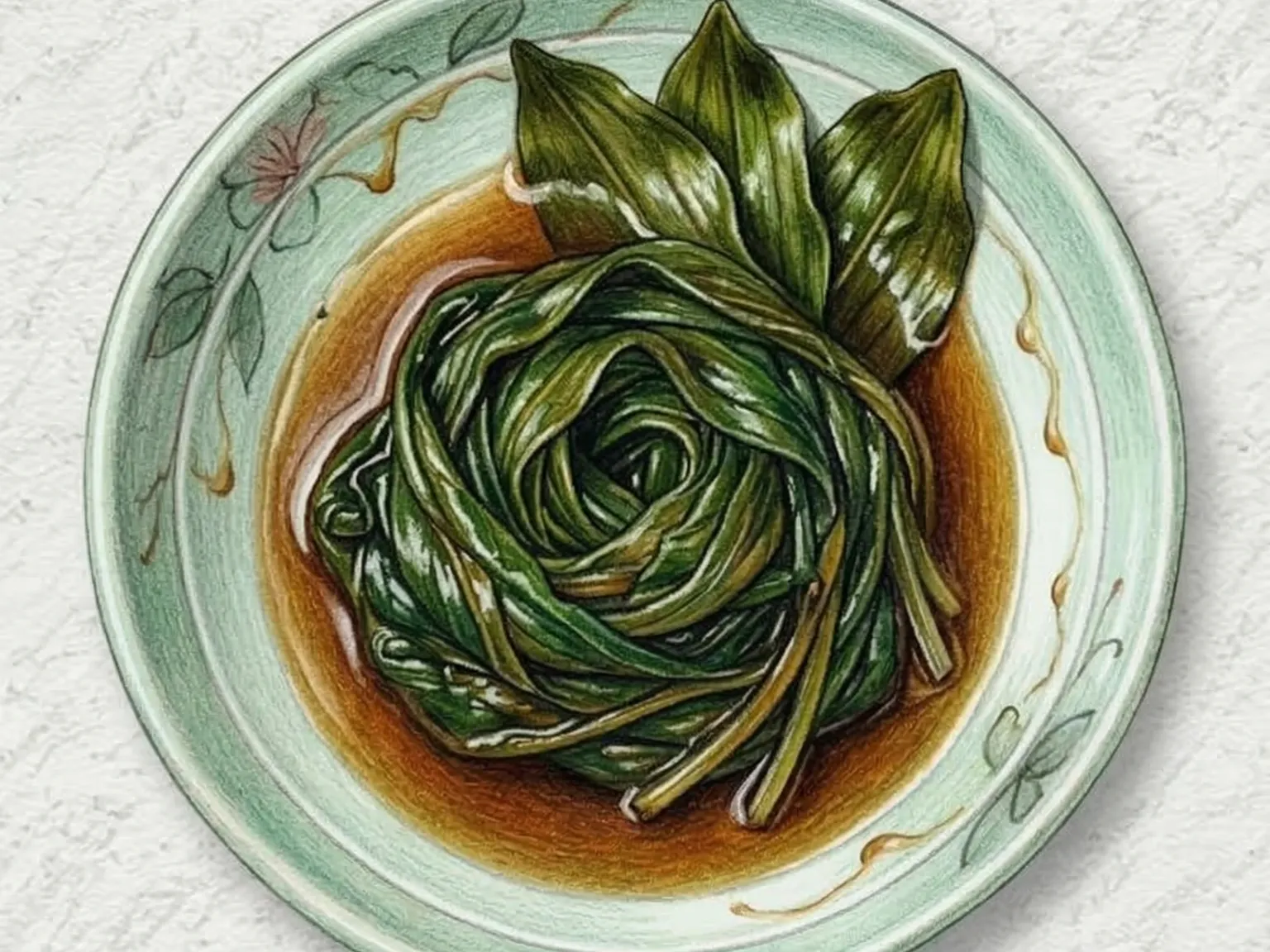
Mucheong-namul is a Korean banchan made from the leafy stems attached to daikon radish, blanched and dressed with doenjang and perilla oil. Unlike fully dried siraegi, fresh or semi-dried mucheong retains a grassy vitality that carries through to the finished dish. Radish greens emerge as a byproduct of the autumn kimjang harvest, when whole radishes are pulled from the ground, and rural Korean kitchens have long turned these tops into namul or hung them to dry for winter. Fresh mucheong requires at least five minutes of boiling to break down its tough stem fibers so they soften properly. A thorough rinse in cold water follows, washing away the bitter, astringent edge that develops during cooking. Seasoning with doenjang and soup soy sauce layers the fermented paste's earthy depth over the greens' faintly bitter, grassy character, creating a contrast that makes each bite more interesting than either ingredient alone. Perilla oil is preferred over sesame because its lighter, quieter fragrance complements the greens' natural flavor rather than overpowering it. Stirring in ground perilla seeds at the end thickens the dressing and wraps each strand of mucheong in a nutty coating, producing a noticeably deeper-flavored version than mucheong-namul made without them. A hearty, clean-tasting winter banchan tied to the rhythm of the radish harvest.

🏠 Everyday 🍱 Lunchbox
Prep 20min Cook 15min 4 servings
Korean Kimchi Mandu Jjigae (Kimchi Dumpling Stew)
Stews Easy

Korean Kimchi Mandu Jjigae (Kimchi Dumpling Stew)

Kimchi mandu jjigae drops whole frozen kimchi dumplings straight into a simmering pot of aged kimchi, tofu, and anchovy stock. The dumpling wrappers absorb the broth as they cook, swelling plump and moist, while the kimchi filling inside echoes the stew's tangy base and doubles the fermented depth. Gochugaru and soup soy sauce add a clean chili heat, and firm tofu cubes absorb the spiced broth for a softer textural contrast. Because the dumplings themselves carry seasoning, it is better to start with less sauce and adjust after tasting the broth. This is a filling, no-fuss meal that needs nothing more than a bowl of steamed rice alongside it.

🏠 Everyday ⚡ Quick
Prep 8min Cook 15min 2 servings

Similar recipes

Korean Braised Potatoes and Quail Eggs
Steamed Easy

Korean Braised Potatoes and Quail Eggs

Gamja-mechu-rial-jorim is a Korean braised side dish of potatoes and hard-boiled quail eggs cooked together in a soy-based seasoning. What makes this banchan interesting is the way the two main ingredients absorb flavor differently: quail eggs, with their smooth, porous surface, drink in the soy liquid and turn a deep brown throughout the long simmer, while potato pieces soak up the sauce while simultaneously releasing starch that thickens the glaze. Oligosaccharide syrup adds natural shine and a gentle sweetness, and the combination of sesame seeds and sesame oil provides a nutty finish that rounds out the savory, sticky sauce. The result is a banchan that hits several textural notes at once -- firm quail eggs, yielding potato, and a reduced sauce that coats every surface. It has been a mainstay of Korean children's lunchboxes for decades, practical to prepare in large batches and flavorful enough to eat with plain white rice day after day.

🎉 Special Occasion 🧒 Kid-Friendly
Prep 15min Cook 25min 4 servings
Korean Braised Shiitake Mushrooms
Stir-fry Easy

Korean Braised Shiitake Mushrooms

Pyogo-beoseot-jorim braises whole shiitake mushrooms in soy sauce with oligosaccharide syrup and minced garlic over low heat until glossy. The mushrooms' natural umami intensifies as they absorb the soy-based braising liquid, while the syrup caramelizes into a lacquer-like sheen on the surface. Each mushroom releases a burst of salty-sweet juice when bitten. A finishing touch of sesame oil and toasted sesame seeds adds a layer of nuttiness to the earthy base.

🏠 Everyday 🍱 Lunchbox
Prep 12min Cook 15min 2 servings
Korean Braised Tofu and Mushrooms
Stir-fry Easy

Korean Braised Tofu and Mushrooms

Dubu-beoseot-jorim is a Korean braised side dish of firm tofu and oyster mushrooms simmered in a soy-based sauce until the liquid reduces to a glossy, clinging coat. The tofu is pan-fried first in a lightly oiled skillet to form a firm outer crust before braising begins, which allows it to absorb the seasoned liquid without crumbling or losing its structure during cooking. The result is a cube with a slightly firmer exterior and a soft, custardy interior that holds together through each bite. Oyster mushrooms, torn along their natural grain rather than cut, contribute a pleasantly chewy texture and release their inherent umami into the braising liquid as they cook, adding depth without the need for separate stock. The sauce requires only soy sauce, water, garlic, gochugaru, and sesame oil, making this a straightforward braise that rewards careful heat management over elaborate preparation. When the sauce has reduced to just a small pool at the bottom of the pan, the dish is ready, well-seasoned enough to serve alongside plain rice or pack into a lunchbox.

🏠 Everyday 🍱 Lunchbox
Prep 15min Cook 18min 3 servings

Tips

It tastes better after resting overnight.
Leave a little sauce instead of reducing completely.

Nutrition (per serving)

Calories
185
kcal
Protein
12
g
Carbs
8
g
Fat
11
g