Korean Napa Cabbage Perilla Stir-fry
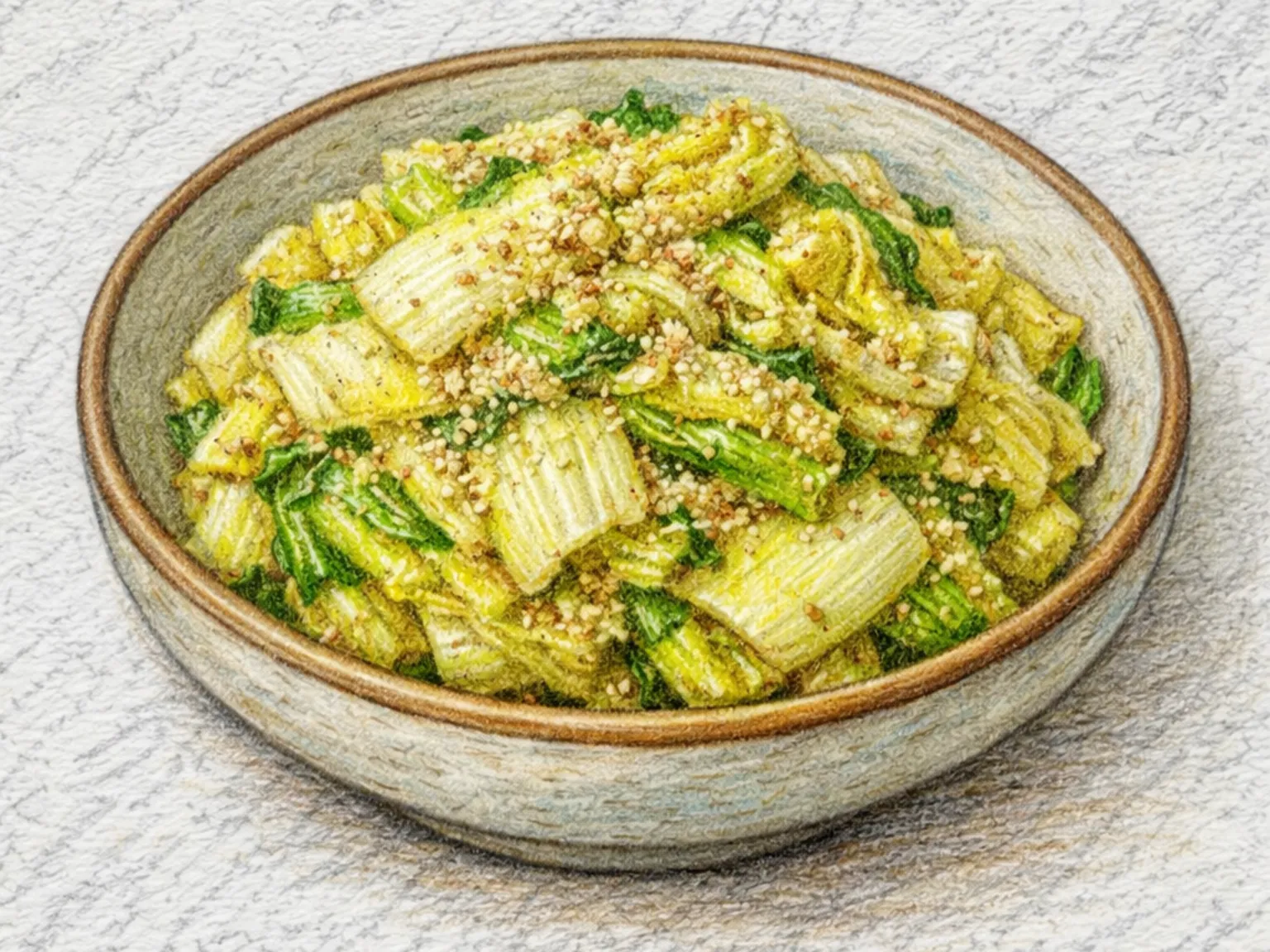
A Korean home-cooking staple found on family dinner tables far more often than in restaurants. Napa cabbage is tossed in perilla oil over high heat until wilted, then braised briefly with soup soy sauce until the leaves turn silky while stems keep a slight bite. Ground perilla seeds dissolve into the liquid at the end, forming a creamy, pale-tan coating with an earthy, seed-forward taste. Saucy enough to soak into steamed rice, it also travels well cold in lunchboxes.
Adjust Servings
Instructions
- 1
Cut napa cabbage into 3 cm pieces and thinly slice the onion.
- 2
Heat perilla oil in a pan and sauté garlic and onion for 1 minute.
- 3
Add napa cabbage and stir-fry on high heat for 2 minutes to coat with oil.
- 4
Add water and soy sauce, cover, and cook for 3 minutes to soften the cabbage.
- 5
Stir in ground perilla, simmer for 2 minutes, then season with salt and pepper.
- 6
Turn off heat while slightly saucy, rest for 2 minutes, then serve.
As an Amazon Associate, we may earn from qualifying purchases.
Tips
Nutrition (per serving)
More Recipes

Korean King Oyster Mushroom Stir-fry with Perilla
This stir-fry combines 250 grams of julienned king oyster mushrooms with onion, cooked rapidly over high heat in a blend of perilla oil and cooking oil to prevent the mushrooms from releasing too much water. Garlic is sauteed for 20 seconds first to infuse the oil, followed by onion for one minute to draw out its natural sweetness. The mushrooms then go in for a quick two-minute toss before soup soy sauce and a splash of water are added to create a light braising liquid. One and a half tablespoons of ground perilla seeds are stirred in during the final minute, thickening the sauce into a creamy coating without becoming pasty. Scallion is added off heat for a finishing touch of color and freshness.

Korean Yangbaechu Kkae Bokkeum (Sesame Cabbage Stir-fry)
Shredded cabbage, onion, and carrot are stir-fried over high heat with soup soy sauce and finished with sesame oil and a generous handful of toasted sesame seeds. Cabbage benefits from fast, hot cooking: the edges char lightly and caramelize while the interior retains its crisp bite, and the heat unlocks a gentle natural sweetness hidden in the raw leaves. Soup soy sauce seasons the vegetables with depth while keeping the finished dish pale and clean-looking, and minced garlic stirred in early fills the pan with fragrance. Carrot goes into the pan first to draw out its sugar, and as the onion softens, its moisture deglazes the surface and adds another layer of mellow sweetness. Sesame oil drizzled off-heat coats the vegetables in a nutty sheen, and the sesame seeds scattered on top provide a crunchy, aromatic punctuation with every bite. The dish is lean and uncomplicated, relying on the quality of fresh vegetables and precise timing rather than heavy seasoning, making it a banchan suited to daily meals.

Korean Deulkkae Aehobak Beoseot Bokkeum (Perilla Zucchini Mushroom Stir-fry)
Deulkkae-aehobak-beoseot-bokkeum is a Korean stir-fry of zucchini and oyster mushrooms finished with ground perilla seeds. The perilla powder dissolves into the cooking liquid to form a creamy, nutty coating over the vegetables. Mushrooms provide natural umami while the zucchini adds moisture and mild sweetness. It is a staple home-style side dish that achieves depth of flavor without any strong spices or heavy seasoning.

Korean Stir-fried Radish Greens with Perilla
Siraegi deulkkae-bokkeum is a Korean stir-fry of pre-boiled dried radish greens seasoned with soup soy sauce and garlic, then cooked in perilla oil and finished with generous perilla powder. The greens are first tossed in the seasoning to let the flavors penetrate, stir-fried for three minutes, then simmered briefly with water and perilla powder until a thick, nutty sauce coats every strand. Green onion added at the end provides a fresh aromatic lift. Compared to the doenjang-based siraegi jorim, this version leans lighter and more distinctly nutty from the perilla.

Stir-fried Korean Radish Namul
Mu-namul-bokkeum is a foundational Korean namul made by stir-frying julienned daikon radish in perilla oil until the root's natural sweetness emerges. Cutting the radish into matchstick-sized strips and salting for five minutes draws out excess moisture, which is essential - without this step, the pan steams rather than sears, and the namul turns watery. Garlic goes into the perilla oil first to build an aromatic base, then the radish strips are tossed over medium heat for three to four minutes. During this process, heat converts the radish's starch into sugars, replacing the raw pungency with a mellow sweetness. Soup soy sauce seasons without muddying the color the way regular soy sauce would. A brief two-minute rest with the lid on finishes softening the radish while keeping moisture in check. This namul serves as one of the five-color toppings in bibimbap and is a required dish on ancestral rite tables (jesa). A final sprinkle of sesame seeds adds a toasted nuttiness.

Korean Kkaennip Gamja Bokkeum (Perilla Potato Stir-fry)
Kkaennip gamja bokkeum is a Korean side dish of matchstick-cut potatoes stir-fried with garlic and onion, seasoned with soy sauce, then finished with shredded perilla leaves and perilla oil. Soaking the potatoes beforehand removes excess starch so they cook without sticking, yielding translucent edges with a slight crispness at the core. Perilla oil brings a nutty warmth and the perilla leaves add a grassy herbaceous note that layers over the mild potato base. Sesame seeds scattered on top provide a final textural accent.