Korean Crisp Chili Pepper Salad
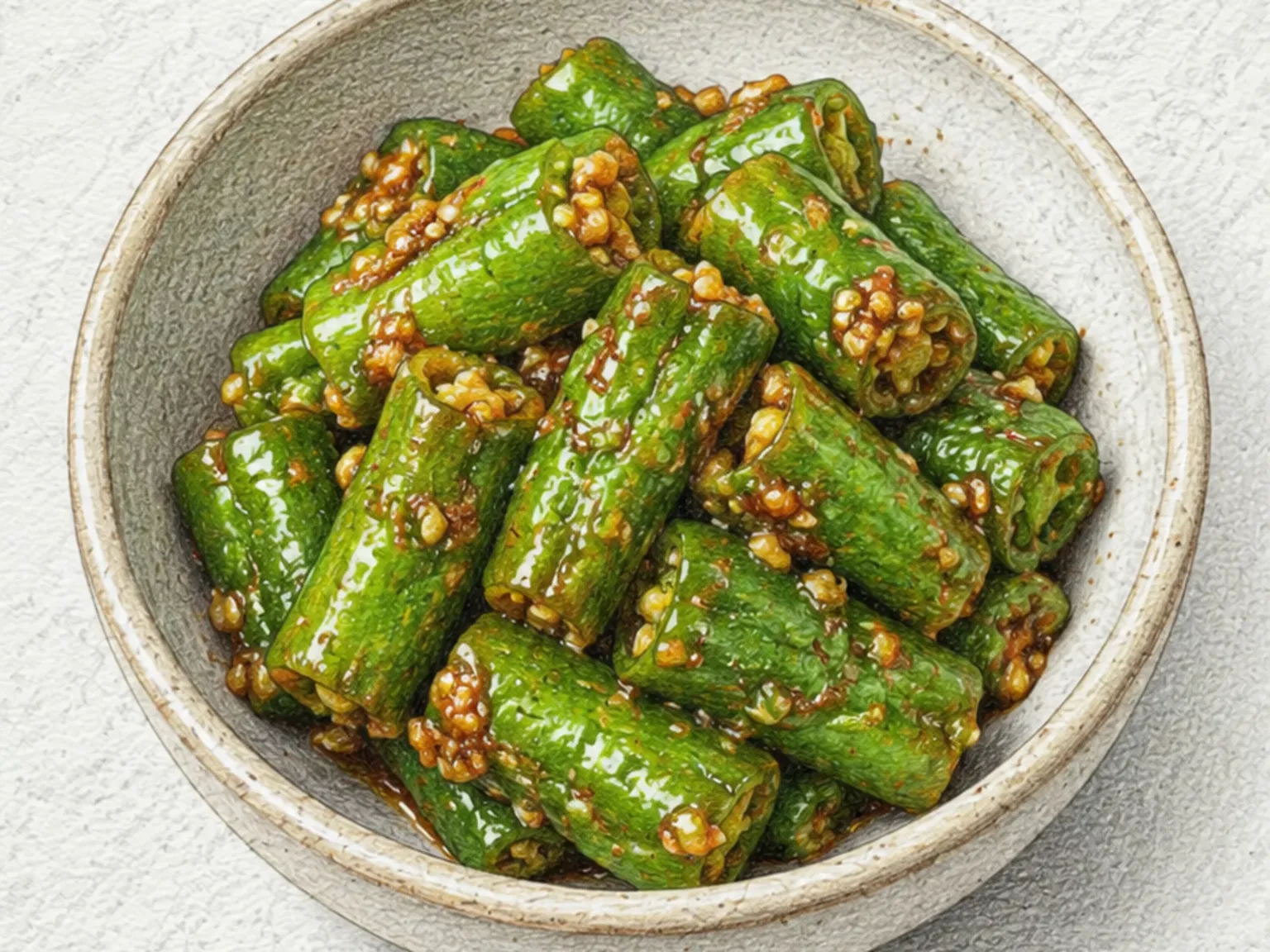
Asakigochu is a thick-walled Korean pepper bred for crunch, not heat. A 20-second blanch strips the grassy edge while preserving its satisfying snap. The peppers are then dressed in a paste of fermented doenjang and gochujang, brightened with vinegar and oligosaccharide syrup. This banchan is built on textural contrast - crisp, cool vegetables against a thick, pungent coating. Best eaten within hours, before the dressing pulls moisture from the peppers.
Adjust Servings
Instructions
- 1
Remove stems from the peppers, cut into 4 cm pieces, and lightly shake out some seeds.
- 2
Blanch the peppers in boiling water for 20 seconds, then cool in cold water and drain well.
- 3
Mix doenjang, gochujang, minced garlic, syrup, and vinegar in a bowl until smooth.
- 4
Add the drained peppers and toss gently so the seasoning coats evenly.
- 5
Add sesame oil and sesame seeds, toss once more, and rest for 5 minutes before serving.
As an Amazon Associate, we may earn from qualifying purchases.
Tips
Nutrition (per serving)
More Recipes

Korean Konjac Noodle Salad
Silgonyak-chae-muchim tosses 250 grams of blanched konjac noodles with julienned cucumber, carrot, and onion in a gochujang-based dressing spiked with vinegar, sugar, soy sauce, and garlic. Blanching the noodles for two minutes removes their faint alkaline smell and softens their rubbery chew to a pleasant springiness. The vegetables provide crisp contrast - cucumber adds a cool snap, carrot a mild sweetness, and onion a sharp bite. The dressing clings to the translucent noodles, turning them a vivid reddish hue. At only 95 calories per serving, this banchan relies on texture and bold seasoning rather than fat for its appeal. Chilling for 10 minutes before serving firms up the noodles and intensifies the tangy-spicy flavor profile.

Korean Broccoli Doenjang Salad
Blanched broccoli in doenjang dressing - a modern Korean banchan bridging Western ingredients with traditional seasoning logic. Florets and thinly sliced stems blanch ninety seconds, then are shocked in cold water for vivid green and a firm bite. The dressing combines doenjang with vinegar and oligosaccharide syrup - fermented salt, acidity, and gentle sweetness that lifts mild bitterness. Ready in under ten minutes and keeps refrigerated for days.

Korean Cucumber Doenjang Salad
Oi-doenjang-muchim dresses cucumber in a doenjang-based seasoning - a milder alternative to the gochugaru-forward oi-muchim, foregrounding the fermented soybean paste's savory depth over spicy heat. Cucumber is sliced into half-moons or diagonal cuts and salted for five minutes to draw out moisture; skipping this step dilutes the dressing into a watery puddle. The seasoning blends doenjang, soup soy sauce, minced garlic, sesame oil, and sesame seeds, with the doenjang quantity being the critical ratio - too much and the dish is aggressively salty, too little and the cucumber's blandness dominates. Roughly one tablespoon of doenjang to two cucumbers is the working proportion. The cucumber's cool moisture meets doenjang's deep umami to produce a combination that is refreshing yet substantial enough to anchor a rice meal, especially in summer. This banchan must be eaten promptly after assembly - over time, osmotic pressure draws water from the cucumber and collapses its crunch. Served alongside grilled meat, the doenjang's savoriness complements the char while cleansing the palate.

Korean Tofu and Bell Pepper Salad
Paprika-dubu-muchim combines 300 grams of blanched firm tofu, crumbled coarsely by hand, with julienned red and yellow bell peppers, cucumber, and onion in a soy-vinegar dressing. Blanching the tofu for just one minute removes any raw bean flavor while preserving a soft, creamy texture that contrasts with the crisp, sweet snap of the peppers. The onion is soaked in cold water for three minutes to tame its bite before joining the bowl. Sesame oil and minced garlic round out the dressing, adding depth without heaviness. Chilling the finished dish for 10 minutes before serving sharpens the vegetable flavors and makes the tofu firmer to the bite.

Korean Spicy Braised Tofu
Spicy dubu-jorim pan-sears firm tofu slabs cut 1.5 centimeters thick until golden on both sides, then braises them in a sauce of soy sauce, gochugaru, garlic, and sugar. Searing first firms the tofu so it holds its shape through the eight-minute simmer, during which onion and green onion cook alongside in the reducing liquid. The chili flakes deliver a direct, persistent heat that penetrates the tofu as the sauce thickens, balanced by the sugar's sweetness. A final circle of sesame oil ties the flavors together with a roasted, nutty aroma.

Korean Cheongyang Gochu Doenjang Jangajji (Doenjang Pickled Cheongyang Peppers)
Cheongyanggochu doenjang jangajji is a Korean pickle where Cheongyang chili peppers are pierced with a fork so a brine of doenjang, soy sauce, rice syrup, and vinegar can penetrate to the core. Soy sauce is boiled with kelp to build an umami-rich base, then the heat is turned off and doenjang is dissolved in, layering the nutty, fermented depth of soybean paste over the salty soy foundation. Rice syrup softens the raw edge of the chili heat, and vinegar sharpens the finish. Edible after one day of refrigeration, the pickle reaches its full expression at around day three when the doenjang flavor has saturated each pepper completely. A single pepper on a spoonful of rice delivers a concentrated burst of savory, funky heat.