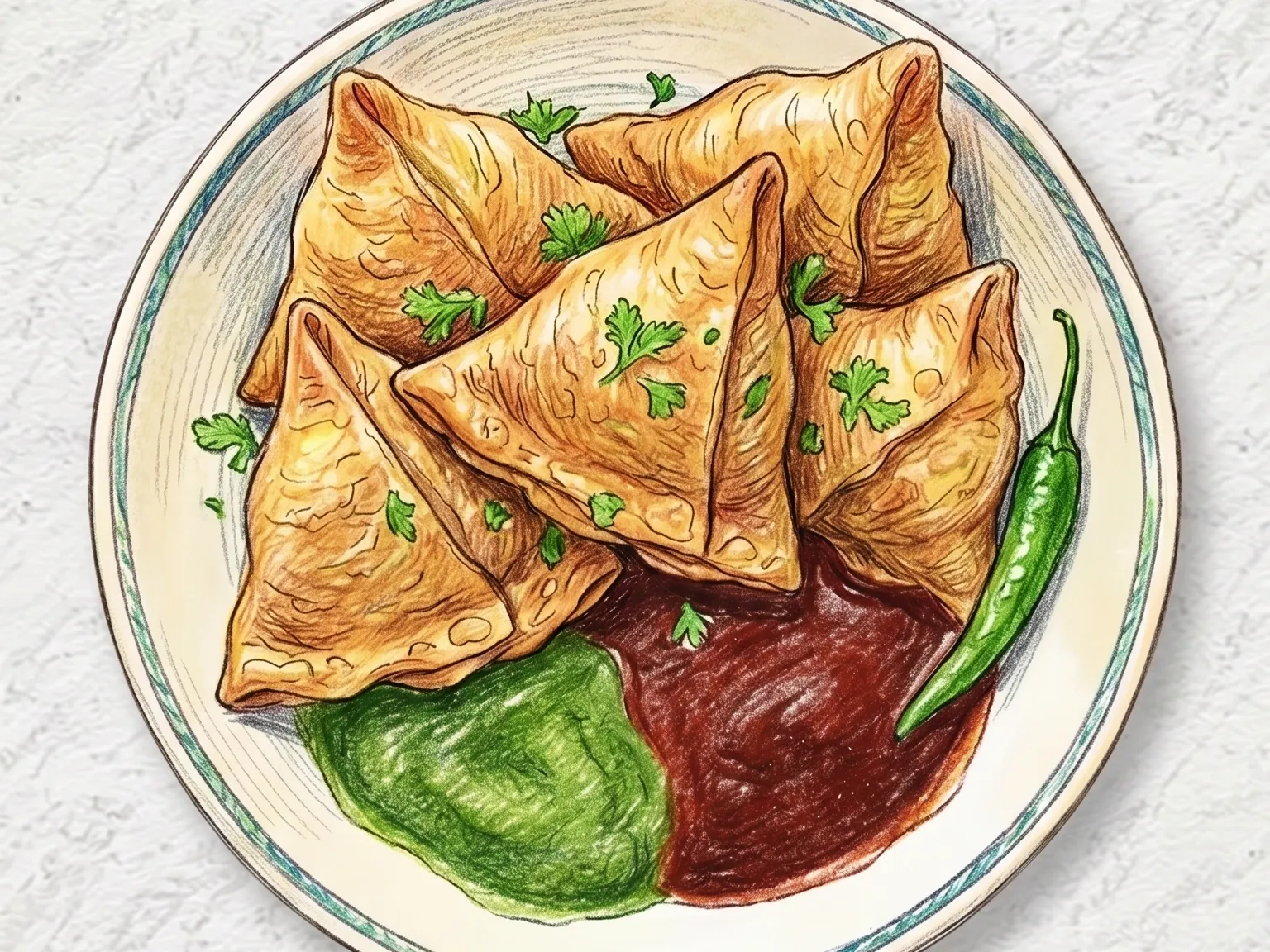
Aloo Samosa (Indian Crispy Potato-Filled Fried Pastry)
Quick answer
Samosa first appears in written form in a 10th-century Central Asian cookbook under the name sambosa, then follows trade routes westward into Persia and east into the Ind...
What makes this special
- Cumin and garam masala-spiced potato filling is tucked inside a crisp, triangular fried pastry.
- Cumin and garam masala-spiced potato filling in crisp triangular pastry
- Stiff dough kneaded firm to keep oil from penetrating during frying
Key ingredients
Core cooking flow
- 1 Rub 220g flour with 1 tsp salt and 2 tbsp oil until the mixture resembles co...
- 2 Boil 300g potatoes until tender, peel and mash well, then combine with 60g p...
- 3 Divide the rested dough into 12 portions and roll each into a thin 15cm circle.
Samosa first appears in written form in a 10th-century Central Asian cookbook under the name sambosa, then follows trade routes westward into Persia and east into the Indian subcontinent, where it settled into street-food culture so thoroughly that chai stalls sell hundreds before noon each morning. The dough is stiff - flour, water, and oil kneaded until firm - and rolled thin. Too soft a dough absorbs oil during frying and turns greasy rather than crisp. The filling is boiled potato mixed with cumin, fresh green chili, and cilantro; the cumin's earthy fragrance permeates the potato during the mixing. The dough folds into a cone, filling goes in, air is pressed out carefully before sealing - trapped air expands in the hot oil and splits the crust. Fried at the correct temperature, the layered shell blisters outward, turns golden brown, and shatters audibly on first bite. Inside is a warm, lightly spiced potato that has absorbed all that cumin. Mint chutney and tamarind sauce are served alongside, their sourness and sweetness doing what the filling alone cannot.
Instructions
Read the steps as a cooking flow: prep, heat, seasoning, doneness control, and finish.
- 1Season
Rub 220g flour with 1 tsp salt and 2 tbsp oil until the mixture resembles coarse sand, then gradually add 90ml water and knead into a stiff, smooth dough. Wrap and rest at room temperature for 20 minutes.
- 2Season
Boil 300g potatoes until tender, peel and mash well, then combine with 60g peas, 1 tsp garam masala, 0.5 tsp ground cumin, 0.5 tsp chili powder, and a pinch of salt. Mix thoroughly until the spices are evenly distributed.
- 3Prep
Divide the rested dough into 12 portions and roll each into a thin 15cm circle.
Cut each circle in half, wet the straight edge with water, and fold into a cone shape, pressing the seam firmly to seal.
- 4Step
Fill each cone with about 2 tbsp of filling, brush water along the open edges, press out any trapped air, and seal into triangles.
Press the seams firmly with your fingers - any gaps will burst open in the hot oil.
- 5Control
Heat oil to 170C - when a wooden chopstick inserted shows slow, small bubbles, the temperature is right.
Add samosas and fry over medium-low heat for 5 to 6 minutes, turning occasionally, until deep golden brown.
- 6Finish
Drain on a wire rack for 30 seconds and serve while hot.
Pair with mint chutney or tamarind sauce to balance the crispy crust against the spiced potato filling.
After the steps
Pick a recipe that fits this dish.
Continue with shared ingredients, meal pairings, or a similar method.
Recipes That Go Well With This
More Street food →Based on shared ingredients and meal pairing
Pav Bhaji (Mumbai Street Food Spiced Mashed Vegetable Curry with Bread)
Pav bhaji is a street-food staple born on the pavements of Mumbai. A medley of boiled potatoes, cauliflower, peas, and carrots is mashed together on a hot griddle, then cooked down with generous amounts of butter and a proprietary spice blend called pav bhaji masala. Tomatoes and onions form the aromatic base, while the masala contributes warm, earthy heat that deepens with each pass of the spatula. The accompanying soft bread rolls are split and toasted on a buttered griddle until golden on the cut side. Raw onion rings, a wedge of lemon, and a knob of extra butter placed on top of the simmering bhaji are the traditional garnish. The dish is designed to be eaten fast and hot, scooped directly from the communal pan.
Aloo Paratha (Punjabi Spiced Potato Stuffed Flatbread)
Aloo paratha is a cornerstone of Punjabi breakfast culture - pulled hot off the tawa and served with a knob of butter melting on top, thick yogurt, and tangy mango pickle on the side. The technique involves wrapping spiced mashed potato inside a whole wheat dough ball, then rolling the stuffed parcel flat on a floured surface without letting the filling puncture through. The spice mix includes garam masala, finely chopped green chili, fresh coriander leaves, and minced ginger, giving the filling a warmth that builds as you eat. On a dry, very hot griddle, the paratha develops golden brown patches on each side when oil or ghee is brushed over the surface, and the steam trapped inside from the potato pushes the dough layers apart slightly, creating a flaky interior texture. The more generous the filling, the better the flavor, but it also raises the risk of tearing - draining the mashed potato of excess moisture and calibrating the filling-to-dough ratio is where the skill lies. Street vendors in Delhi and Amritsar stack them high on charcoal-heated tawas, selling them wrapped in newspaper to morning commuters.
Masala Chai
Masala chai is an Indian spiced milk tea made by simmering crushed ginger, cinnamon, and cardamom in water until the spices release their oils fully, then adding black tea leaves and whole milk and continuing to heat gently over low flame. The spices build aromatic depth that wraps around the tea's tannins, transforming them into warm, rounded complexity rather than raw astringency. Stirring in sugar during the final minutes of simmering softens the spice's sharpness and allows the milk's creaminess to come forward. Using whole spices rather than ground powders keeps the brew free of gritty residue and produces a cleaner, more transparent aroma in each cup.
Aloo Tikki Chaat (Indian Fried Potato Patty Street Snack)
Aloo tikki chaat is one of India's most structurally layered street foods, originating from the chaat stalls of Uttar Pradesh and now found across the subcontinent. The foundation is a shallow-fried mashed potato patty: the exterior forms a deep golden crust, the interior stays soft. The real complexity arrives after frying, when cold whisked yogurt, sweet tamarind chutney, sharp green mint chutney, raw diced onion, and a dusting of chaat masala are piled onto the hot tikki at once. The temperature contrast is stark - warm and crunchy underneath, cold and creamy on top - and the chutneys deliver sweet, sour, and herbal in the same bite. The crust softens quickly under the sauces, so this must be assembled and eaten without delay.
Serve with this
Candied Sweet Potato
Goguma mattang is a Korean candied sweet potato snack made by cutting peeled sweet potatoes into large chunks and deep-frying them at 170 degrees Celsius until the interior turns floury and soft. A syrup of sugar, corn syrup, water, and a measured splash of soy sauce is cooked separately until large, foamy bubbles form - the visual cue for adding the fried sweet potatoes. Everything must be coated within thirty seconds to lock in a thin, glass-like caramel shell that crisps and turns translucent as it cools. The soy sauce shifts the flavor from purely sweet to a rounded, slightly savory depth. Pre-draining surface moisture from the cut sweet potatoes reduces oil splatter during frying and helps the syrup grip the pieces evenly. Black sesame seeds are scattered over the finished pieces for a toasted, nutty note, and each piece is spread individually on parchment paper while still warm so they cool without sticking together.
Guilin Rice Noodles (Silky Rice Noodles in Beef Brisket Broth)
Guilin rice noodles are the signature noodle dish of Guilin in Guangxi, China, built on a clear beef brisket broth that has been simmered until the collagen fully dissolves and the liquid turns deeply savory without becoming heavy. The slender rice noodle strands are smooth and slightly springy, and they absorb the broth as the bowl sits. Soy sauce seasons the soup with a salty, round undertone rather than any sharp edge. Pickled daikon radish is added as a topping for its crisp bite and vinegary tang, which cuts through the richness of the beef broth and resets the palate between mouthfuls. A drizzle of chili oil introduces a warm, slow-building heat that spreads through the soup. Fresh cilantro placed on top at the end adds a bright, citrus-forward herbal fragrance that ties the Southeast Asian-influenced profile of the bowl together. The combination of broth, noodles, and contrasting toppings is what makes Guilin rice noodles a dish people return to repeatedly.
Korean Stir-fried Balloon Flower Root
Doraji -- balloon flower root -- has been cultivated in Korea for centuries, valued in cooking and herbal medicine alike. The raw root carries a pronounced bitterness from saponins, so it must be shredded into thin strips, rubbed vigorously with salt, left for ten minutes, then rinsed twice in cold water. The salt scrub draws out the saponins while preserving the root's firm, snappy bite. A base of green onion goes into the pan first to build a fragrant oil, then the prepared doraji stir-fries for two minutes before gochujang, soy sauce, and oligosaccharide syrup go in for another three minutes. The heat is raised at the end to drive off moisture, so the sauce tightens and clings to each strip rather than pooling in the pan. The result is a glossy, sweet-spicy banchan with a distinctly chewy pull.
Similar recipes
Aloo Gobi (Indian Cauliflower Potato Curry)
Aloo gobi is the kind of North Indian dish that appears in both roadside dhabas along Punjab highways and home kitchens across Uttar Pradesh, eaten by people with very different relationships to food. It is a dry preparation - no gravy, no broth - just potatoes and cauliflower coated in cumin, turmeric, and chili powder that forms a thin spice crust as the vegetables cook. Cumin seeds go into hot oil first, blooming their fragrance before the vegetables are added and turned to coat them evenly in the spiced fat. The lid goes on, trapping steam to cook the interiors while the base stays dry enough for browning to develop. Flipping once or twice is enough - too much movement breaks the crust and stews the vegetables instead of roasting them. The result: cauliflower edges that carry a faint char and a nutty depth, potato cubes that hold their structure with a floury, tender interior. Roti or plain steamed rice are the natural companions, and the spice notes actually sharpen as the dish cools, which makes it equally good packed for lunch the next day.
Korean Dalgona Candy (Caramel Honeycomb Baking Soda Sugar Candy)
Dalgona is a Korean street candy made by melting sugar slowly over low heat until it reaches a light amber caramel, then removing the pan from heat and adding salt and milk powder before stirring in baking soda. The baking soda must be incorporated within five seconds of adding it -- any longer and the carbon dioxide escapes unevenly, producing large irregular bubbles instead of the fine, honeycomb-like structure the candy needs. Once the mixture is dropped onto lightly oiled parchment and pressed flat with a mold or spatula, it cools into a thin, brittle disc that shatters cleanly with a sharp bite. The flavor sits in the range of gentle caramel sweetness layered with the milky richness of the powder, and the salt added before the baking soda gives the sweetness a grounded quality that keeps the taste from going flat. Timing the removal from heat before the caramel darkens too far is the single most critical step -- over-cooked sugar turns bitter, and no amount of adjustment recovers the flavor after that point.
Korean Crispy Kimchi Fried Dumplings
Kimchi gun mandu are pan-fried dumplings filled with finely chopped kimchi, squeezed tofu, ground pork, and green onion seasoned with soy sauce and garlic, shaped into half-moons. The bottoms are first crisped in oil, then water is added and the pan is covered for four minutes to steam the tops, achieving a contrast of crunchy base and moist upper wrapper. The kimchi's acidity and heat permeate the pork fat to create a more assertive umami than plain dumplings, and the tofu smooths out the filling's texture. A splash of vinegar in the soy dipping sauce cuts any greasiness.