Cheese Arepa (Venezuelan Griddled Cornmeal Cheese Pocket)
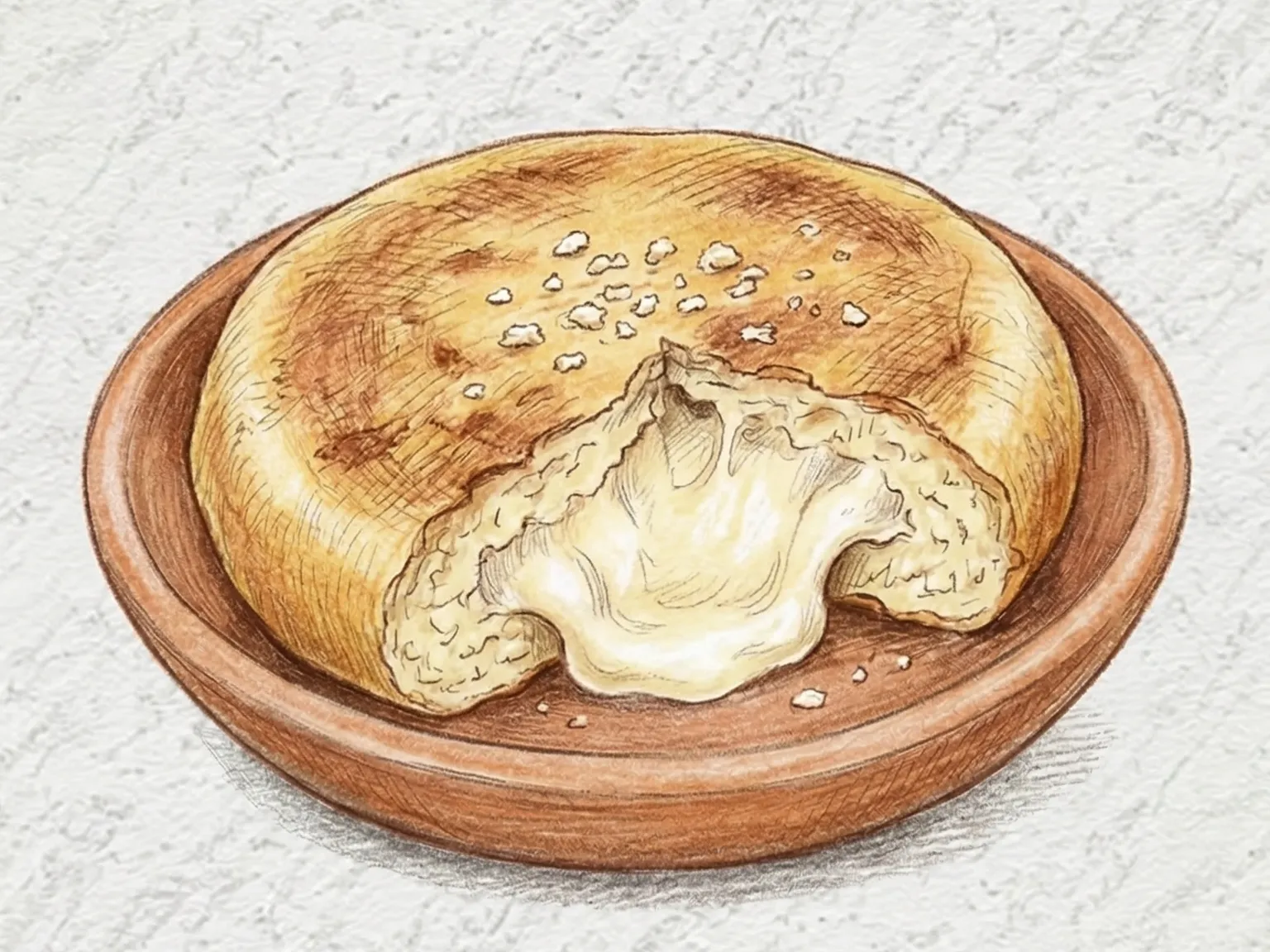
Arepas are a cornerstone of Venezuelan and Colombian daily eating, with roots stretching back to pre-Columbian indigenous cultures who ground maize on stone metates. The dough is nothing more than pre-cooked cornmeal (masarepa), water, and salt, shaped by hand into thick discs and cooked on a budare - a flat griddle - until a golden crust forms on both sides while the interior stays soft and slightly doughy. For cheese arepas, queso blanco or mozzarella is either mixed directly into the dough before grilling or stuffed inside after cooking, so the cheese melts into stretchy, salty pockets within the warm corn shell. The corn flavor is clean, toasty, and naturally sweet, with the cheese providing a counterpoint of fat and salt. Street vendors across Caracas and Bogota serve them from dawn through midnight, split open and filled with everything from black beans to shredded beef.
Adjust Servings
Instructions
- 1
Combine warm water, salt, and butter in a bowl.
- 2
Add cornmeal, mix for 3 minutes, and rest for 5 minutes.
- 3
Divide into 8 pieces and form thick discs.
- 4
Pan-cook over medium heat for about 4 minutes per side.
- 5
Split open, stuff with cheese, and return to pan until melted.
As an Amazon Associate, we may earn from qualifying purchases.
Tips
Nutrition (per serving)
More Recipes

Korean Cheese Balls (Mozzarella-Stuffed Glutinous Rice Fried Ball)
Cheese ball bunsik is a Korean street snack of glutinous rice flour dough wrapped around a cube of mozzarella and deep-fried at 170 degrees Celsius. The dough is kneaded with hot water to activate the sticky starch, and frying turns the exterior golden and crisp while the interior stays chewy like rice cake. Pulling one apart while hot reveals a dramatic mozzarella stretch, and the mild sweetness of the dough contrasts with the salty cheese. The cheese firms up as it cools, so eating them straight from the fryer is essential.

Grilled Cheese Sandwich
Grilled cheese sandwich is made by buttering the outer sides of bread slices, filling them with cheddar and mozzarella cheese, and toasting both sides in a pan until golden and crisp. Combining cheddar's sharp saltiness with mozzarella's stretchy pull gives the sandwich both depth of flavor and satisfying texture. A thin layer of Dijon mustard spread on the inner bread adds a subtle, peppery bite that cuts through the richness of the melted cheese. Cooking over medium-low heat is essential - it gives the cheese enough time to melt completely before the bread surface burns. Pressing the sandwich lightly while flipping ensures the bread and cheese bond tightly, producing a clean cross-section when the sandwich is sliced in half.

Korean Kimchi Cheese Gimbap
Kimchi cheese gimbap rolls seasoned rice, stir-fried kimchi, mozzarella cheese, and pickled radish in seaweed sheets. Stir-frying the kimchi concentrates its tangy flavor and removes excess moisture that would otherwise make the roll soggy and prone to tearing. The cheese's mild fat wraps around the kimchi's spice, and the pickled radish adds a sweet-tart crunch that breaks up the richness. Keeping the cheese in a single line along the center is key to rolling the gimbap tightly without splitting.

Tuna Melt
Tuna melt mixes drained canned tuna with finely diced celery and mayonnaise, spreads the mixture on sandwich bread, tops it with cheddar cheese, butters the outside, and grills in a pan until both sides are crisp and golden. Draining the tuna thoroughly is the first priority - excess moisture soaks into the bread and prevents it from crisping no matter how long it cooks. The celery adds a textural crunch that contrasts with the soft, creamy tuna filling. Using several thin slices of cheese rather than one thick piece ensures more even melting and full coverage across the bread. Medium-low heat is essential: it gives the cheese enough time to melt completely before the bread burns, which high heat makes nearly impossible. The sandwich is best served immediately after cutting in half, while the cheese is still stretchy and warm.

Korean Grilled Jjondeugi (Sweet Spicy Glazed Wheat Cracker Snack)
Jjondeugi-gui is a nostalgic Korean snack made by lightly grilling thin pressed-wheat sheets (jjondeugi) over low heat until pliable, then brushing them with a sauce of gochujang, soy sauce, sugar, oligosaccharide syrup, garlic, and sesame oil and grilling again. Heating transforms the rigid sheets into a chewy texture, while the sauce caramelizes on the surface to create a sweet-spicy glaze. The sauce must be applied in thin layers across multiple passes to avoid burning. The finished sheets are cut into bite-size pieces with scissors and served immediately.

Korean Sausage Skewers
Sosiji-kkochi are Korean sausage skewers made by scoring Vienna sausages and threading two or three onto wooden sticks, then pan-frying until golden brown on all sides. The score marks open up during cooking, allowing heat to penetrate evenly and creating slightly caramelized, crispy edges. Ketchup and mustard are served alongside, with the tomato sweetness and sharp mustard bite complementing the salty sausage. The dish takes under 15 minutes from start to finish, and threading rice cakes between the sausages turns it into a sotteok-sotteok variation.