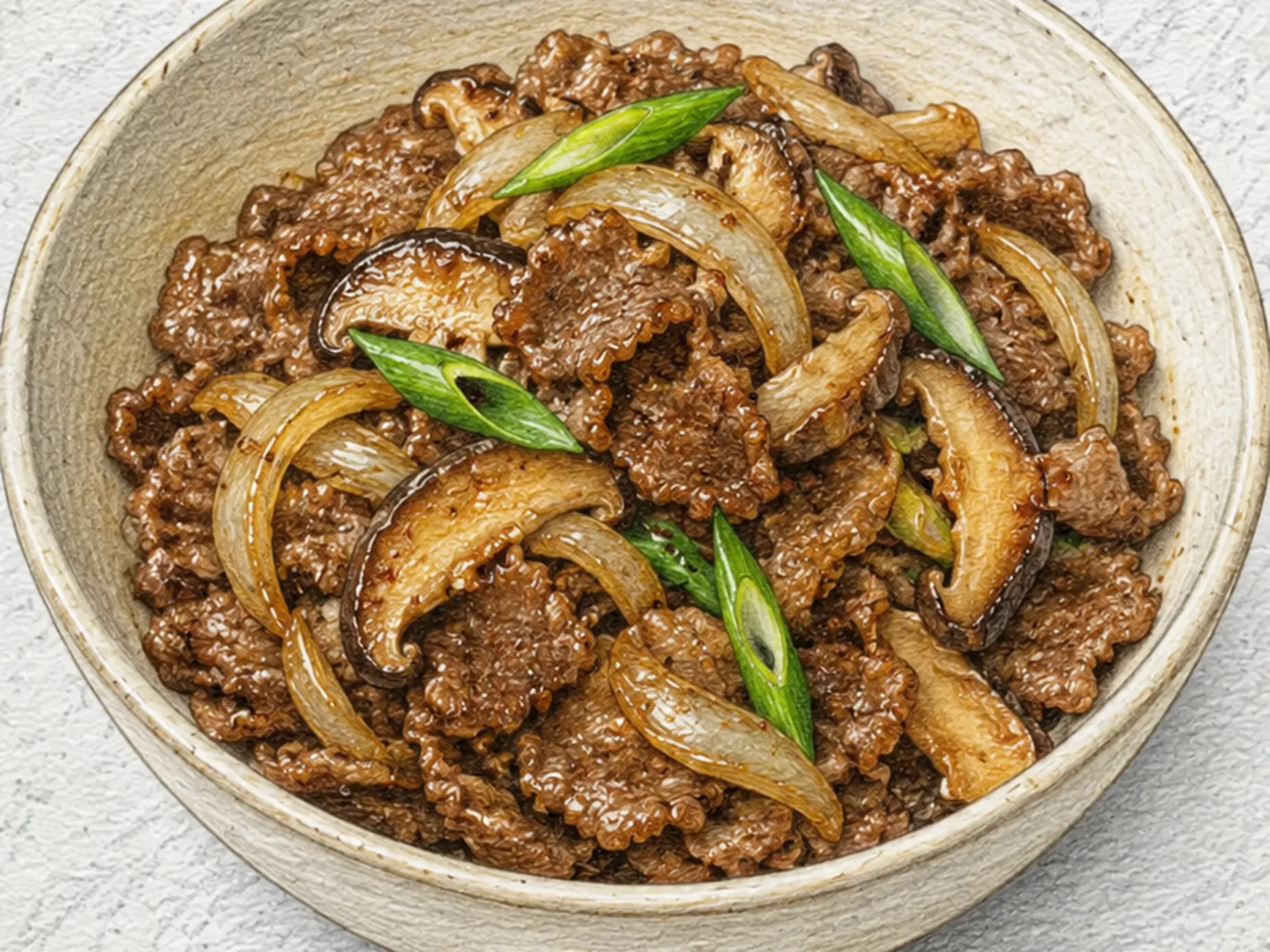
Korean Andong-style Soy Bulgogi
Stir-fry Medium

Korean Andong-style Soy Bulgogi

Quick answer

Andong-style bulgogi departs from the Seoul version in one essential way: the beef is not grilled but braised in its marinade.

What makes this special

  • Traditional Andong-style beef braised in its own marinade for a moist, savory finish.
  • Simmered in sauce rather than grilled, the Andong regional method
  • Glass noodles absorb the reduced sauce, becoming the richest bite
Total time
37 min
Level
Medium
Servings
4 servings
Ingredients
10
Calories
430 kcal
Protein
31 g

Key ingredients

Thin-sliced beefOnionShiitake mushroomGreen onionSoy sauce

Core cooking flow

  1. 1 Combine 500g thin-sliced beef with 3 tbsp soy sauce, 3 tbsp pear juice, 1 tb...
  2. 2 Slice 150g of onion into consistent 0.5cm strips and cut 100g of shiitake mu...
  3. 3 Preheat a wide, flat pan over high heat.

Andong-style bulgogi departs from the Seoul version in one essential way: the beef is not grilled but braised in its marinade. In Andong, a city in North Gyeongsang Province that has carefully preserved Joseon-era culinary customs, thinly sliced beef is first marinated in soy sauce, sugar, sesame oil, garlic, and pear juice, then layered in a wide, flat pan with glass noodles, onion, scallion, and mushroom. The pan goes over heat and simmers until the liquid reduces; as it does, the sweet soy marinade thickens into a glaze that coats every ingredient with a lacquered sheen. Glass noodles absorb the concentrated braising liquid, taking on a deeply seasoned richness. The finished dish is noticeably wetter and more intensely flavored than grilled bulgogi, and spooning it over steamed rice turns it into a complete bowl. In Andong, this dish has long appeared at ancestral rite ceremonies and family gatherings, where the pan itself is brought to the table and diners serve themselves directly. The preparation reflects the inland Gyeongbuk preference for soy sauce as the primary seasoning agent rather than gochujang or doenjang.

Prep 25min Cook 12min 4 servings

Instructions

Read the steps as a cooking flow: prep, heat, seasoning, doneness control, and finish.

6 steps
  1. 1
    Season

    Combine 500g thin-sliced beef with 3 tbsp soy sauce, 3 tbsp pear juice, 1 tbsp sugar, minced garlic, and pepper.

    Mix thoroughly and let it marinate for 20 minutes to tenderize the meat.

  2. 2
    Finish

    Slice 150g of onion into consistent 0.5cm strips and cut 100g of shiitake mushrooms into 1cm thick pieces to preserve their chewy texture and prevent them from shrinking too much during cooking.

  3. 3
    Control

    Preheat a wide, flat pan over high heat.

    Add the marinated beef and spread it out evenly, then stir-fry rapidly over medium-high heat until the surface of the meat is no longer pink.

  4. 4
    Heat

    Once the beef is about 70% cooked and turning light brown, add the prepared onion and shiitake mushrooms.

    Continue stir-frying until the vegetables release their juices and begin to soften into the meat.

  5. 5
    Control

    Add one sliced green onion and simmer the mixture over medium heat until the braising liquid reduces by half.

    Ensure the sweet soy glaze thickens enough to coat every ingredient with a glossy sheen.

  6. 6
    Finish

    Turn off the heat and stir in 1 tbsp of sesame oil using the residual heat to preserve its aroma.

    The finished dish should be moist and intensely flavored, perfect for serving over rice.

After the steps

Pick a recipe that fits this dish.

Continue with shared ingredients, meal pairings, or a similar method.

Recipes That Go Well With This

More Stir-fry →

Based on shared ingredients and meal pairing

Korean Soy Bulgogi with Mushrooms
Shared ingredient: thin-sliced beef Stir-fry

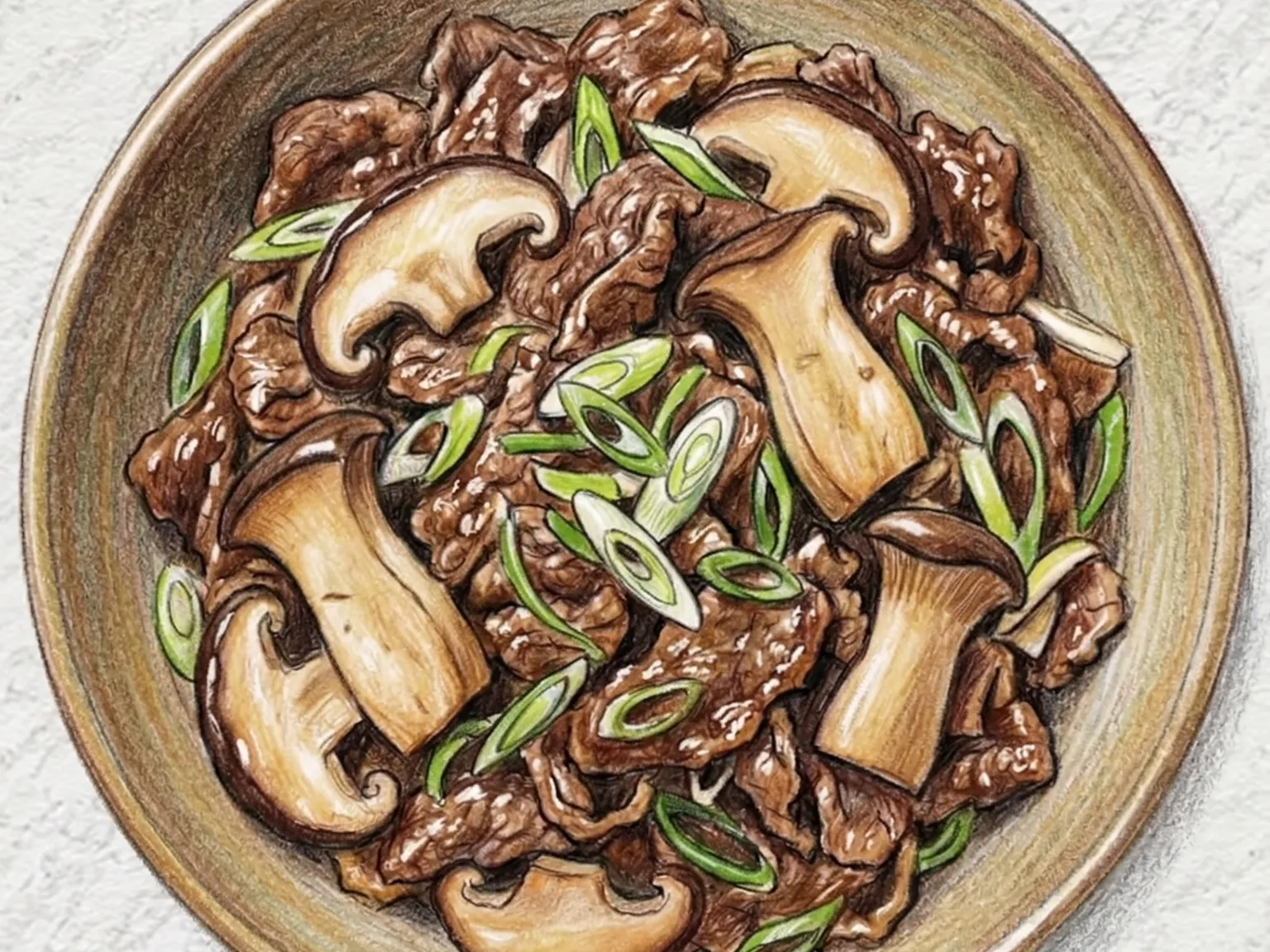
Korean Soy Bulgogi with Mushrooms

Thinly sliced beef is marinated in soy sauce, Korean pear juice, and sesame oil, then stir-fried over high heat together with shiitake and king oyster mushrooms. Pear juice acts as a natural tenderizer: its enzymes break down muscle proteins so each slice pulls apart along the grain instead of resisting the tooth, and its fructose tempers the salt of the soy sauce into a balanced sweet-salty base. The two mushroom varieties are not interchangeable in role - shiitake brings a firm, chewy bite while king oyster delivers a thick, clean meatiness that holds its shape through the heat. Crowding the pan is the single most common mistake: when too much goes in at once, the temperature drops and the ingredients steam rather than sear, resulting in gray, soft pieces instead of the glazed, caramelized coating the dish depends on. Work in small batches over sustained high heat so the marinade reduces against the hot pan surface. Green onion added in the final minute retains its sharp, fresh character and cuts through the sweet richness, providing the finishing contrast the dish needs.

Korean Gangwon-Style Soy Bulgogi
Shared ingredient: thin-sliced beef Stir-fry

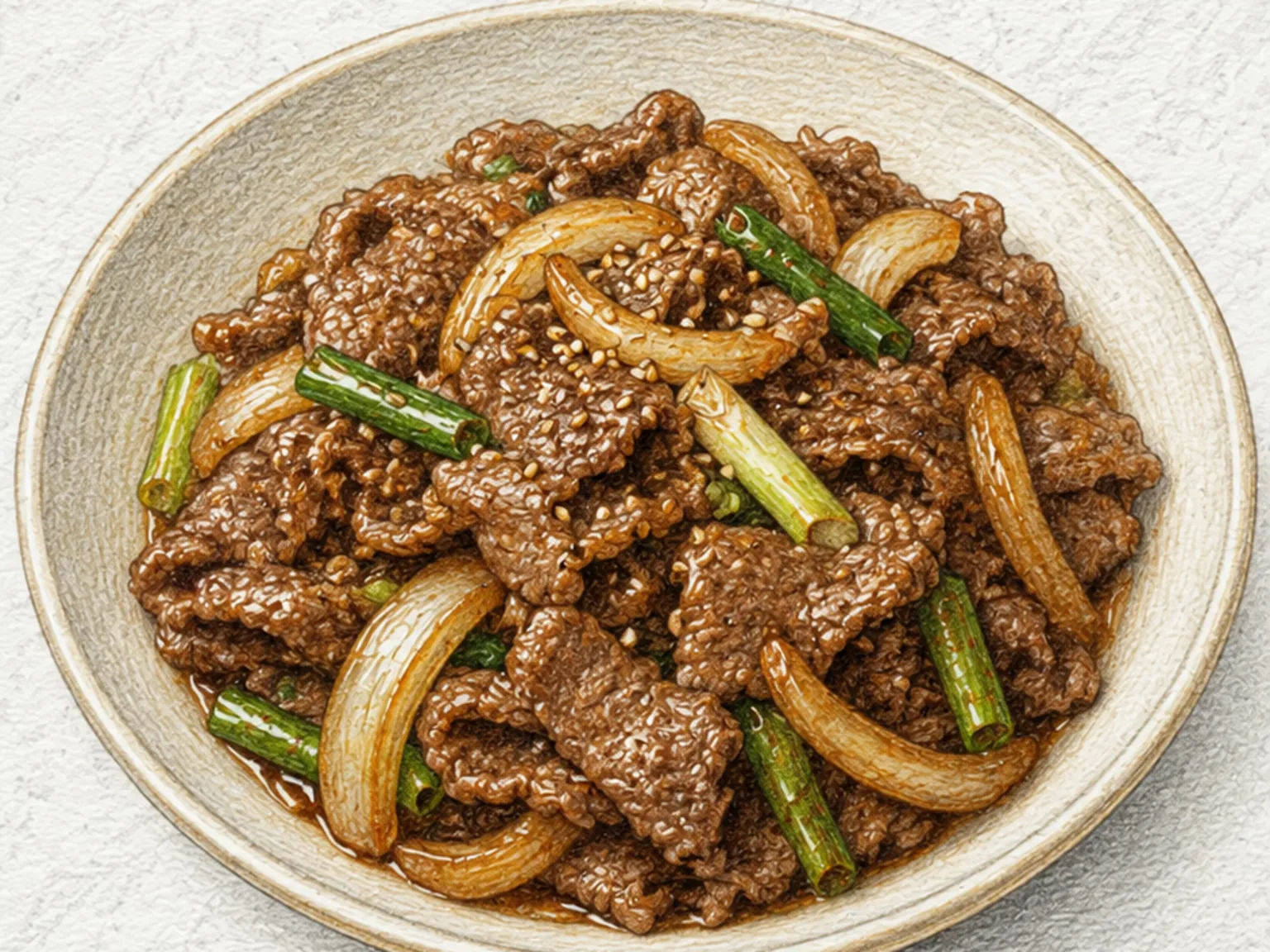
Korean Gangwon-Style Soy Bulgogi

Gangwon-style soy bulgogi represents a regional variation of the traditional Korean grilled beef dish specifically associated with the Gangwon Province. Unlike the bulgogi styles commonly found in the Seoul metropolitan area, which often lean heavily into sweet and fruit-driven marinades, this version prioritizes the clean and savory profile of soy sauce. The preparation begins by marinating thinly sliced beef in a mixture composed of soy sauce, sugar, minced garlic, and toasted sesame oil, along with the addition of fresh pear juice. The inclusion of pear juice serves a dual purpose in the recipe. The natural enzymes within the juice work to tenderize the muscle fibers of the beef, while its sugars provide a subtle and restrained sweetness that complements the salty foundation of the soy sauce without becoming the dominant flavor. When the meat is ready, it is cooked in a preheated pan over high heat. Sliced shiitake mushrooms and onions are added to the pan during this stage, allowing them to absorb the liquid marinade as they soften. This process integrates the flavors of the vegetables with the primary taste of the beef. Maintaining a high temperature is a critical step in the cooking process to ensure that moisture evaporates rapidly. This prevents the dish from taking on the texture of a braised stew and instead produces a slight char and a smoky quality on the edges of the meat. Just before the heat is turned off, diagonally sliced green onions are tossed into the pan. They are cooked only until they begin to wilt, preserving a bright and sharp contrast that balances the finished dish. The result is a soy-focused flavor profile that is clear and direct. Because it avoids being overly aggressive or excessively sweet, this bulgogi serves as a consistent accompaniment for steamed rice that remains palatable through frequent consumption.

Manduguk (Korean Dumpling Clear Broth Soup)
Serve together Soups

Manduguk (Korean Dumpling Clear Broth Soup)

Manduguk is a Korean dumpling soup in which hand-folded dumplings stuffed with ground pork, tofu, scallion, and garlic are dropped into a clear, simmering broth, typically anchovy-kelp stock or beef broth, and cooked until they float. As the dumplings cook, their thin wheat-flour wrappers release a subtle starch that gives the broth a barely perceptible body, while the filling leaks savory juices that enrich the liquid gradually. A thin drizzle of beaten egg stirred in near the finish creates silken wisps on the surface of the broth and gives the bowl a more finished appearance. Shredded egg strips and crumbled dried seaweed scattered on top add a pleasant contrast in color and a faint oceanic note to the flavor. Many Korean households serve manduguk on Lunar New Year as an alternative to tteokguk, and some combine the two by adding sliced rice cakes alongside the dumplings. Dumplings can be made in large batches and frozen raw, which means this soup can be pulled together quickly on weeknights without sacrificing any of the flavor that comes from homemade filling. A small dish of soy-vinegar dipping sauce served alongside lets each person adjust the seasoning at the table, and the light acidity of the sauce cuts through the mild broth in a way that makes the contrast between the two worth trying.

Korean Seoul-style Soy Bulgogi
Similar recipe Stir-fry

Korean Seoul-style Soy Bulgogi

Seoul-style soy bulgogi marinates thin-sliced beef in a straightforward combination of soy sauce, pear juice, garlic, sesame oil, and a measured amount of sugar, producing a clean sweet-savory flavor without the heavy spicing of regional variations. Pear juice serves two functions simultaneously: the natural enzymes in fresh pear tenderize the muscle fibers while the fruit's mild sweetness rounds out the saltiness of the soy sauce. Onion and green onion are stir-fried together with the meat so their sugars caramelize slightly into the sauce. Cooking on a fully preheated pan over high heat is essential because the meat needs to sear quickly rather than steam in its own released liquid. If the pan is not hot enough when the beef goes in, the moisture from both the meat and the marinade creates a braising effect that dulls both the smoky wok flavor and the final texture. Apple juice is an acceptable substitute for pear juice when pear is unavailable and produces a similar tenderizing result. Because the seasoning holds up well even after cooling, Seoul-style soy bulgogi is a reliable lunchbox side dish.

Serve with this

Handmade Scorched Rice
Rice Easy

Handmade Scorched Rice

Crispy and savory handmade scorched rice that is easy to make at home.

🔥 Trending Now ⚡ Quick
Prep 5min Cook 20min 2 servings
Korean Mushroom Dumpling Hot Pot
Stews Easy

Korean Mushroom Dumpling Hot Pot

Mandu jeongol is a generous hot pot of twelve large dumplings simmered with napa cabbage, shiitake mushrooms, oyster mushrooms, and bok choy in anchovy-kelp stock. The two varieties of mushroom add layers of umami to the clear broth, while the cabbage and bok choy soften and release their natural sweetness as they cook. The dumplings cook directly in the simmering stock, their wrappers gradually turning chewy as the filling flavors seep into the surrounding liquid. Soup soy sauce and garlic provide a clean, understated seasoning that keeps the broth from overshadowing any single ingredient. The right moment to eat is when the vegetables have wilted and the dumplings float to the surface, signaling they are cooked through. The absence of any spice or strong seasoning makes this one of the more universally approachable hot pots, suited for all ages. Leftover broth absorbs cooked rice or soaked glass noodles easily, turning what remains into a satisfying finish to the meal.

🏠 Everyday 🎉 Special Occasion
Prep 15min Cook 20min 4 servings
Korean Potato Salad (Creamy Mashed Potato Ham Cucumber)
Side dishes Easy

Korean Potato Salad (Creamy Mashed Potato Ham Cucumber)

Korean potato salad arrived through Japan's yoshoku tradition but developed its own distinct identity in Korean home kitchens. Potatoes are boiled until tender and mashed while still hot, but not to a perfectly smooth consistency - leaving some lumps gives the salad a dual texture of creamy mashed potato and soft, intact chunks that hold together when eaten. Diced ham is pan-seared briefly to render out excess fat before being incorporated, preventing the finished salad from becoming greasy. Cucumber is salted and squeezed to remove water, which keeps the salad from turning watery as it sits. Boiled carrot is mixed in for color and a mild sweetness. The dressing is mayonnaise adjusted with sugar and salt, resulting in a distinctly sweet-creamy profile that is noticeably different from Western versions of the dish. Chilling the assembled salad for at least one hour before serving allows the seasoning to equalize throughout the mixture, improving the flavor considerably compared to eating it straight away. The salad is served as a banchan alongside rice, and it is also commonly spread inside sandwiches.

🏠 Everyday 🍱 Lunchbox
Prep 20min Cook 15min 4 servings

Similar recipes

Korean Soy Sauce Bulgogi (Soy-Pear Marinated Thinly Sliced Beef)
Stir-fry Easy

Korean Soy Sauce Bulgogi (Soy-Pear Marinated Thinly Sliced Beef)

Ganjang bulgogi is one of Korea's most enduring home-cooked main dishes, built around thinly sliced beef marinated in soy sauce, pear juice, sugar, garlic, and sesame oil. Pear juice acts as a natural tenderizer while adding a subtle sweetness that offsets the salt-forward depth of the soy. Onion, carrot, and green onion are stir-fried together with the beef over high heat, developing caramelized edges while keeping the center moist. Slicing the beef thin is essential: the short cooking time only penetrates marinade fully into thin cuts, and the pan must be properly preheated before the meat goes in to seal the juices. The soy-based seasoning is milder and less assertive than gochujang-marinated bulgogi, making it broadly appealing across ages and a consistent presence on both everyday dinner tables and guest menus.

🏠 Everyday 🎉 Special Occasion
Prep 18min Cook 10min 4 servings
Korean Mushroom Bulgogi Jeongol
Stews Medium

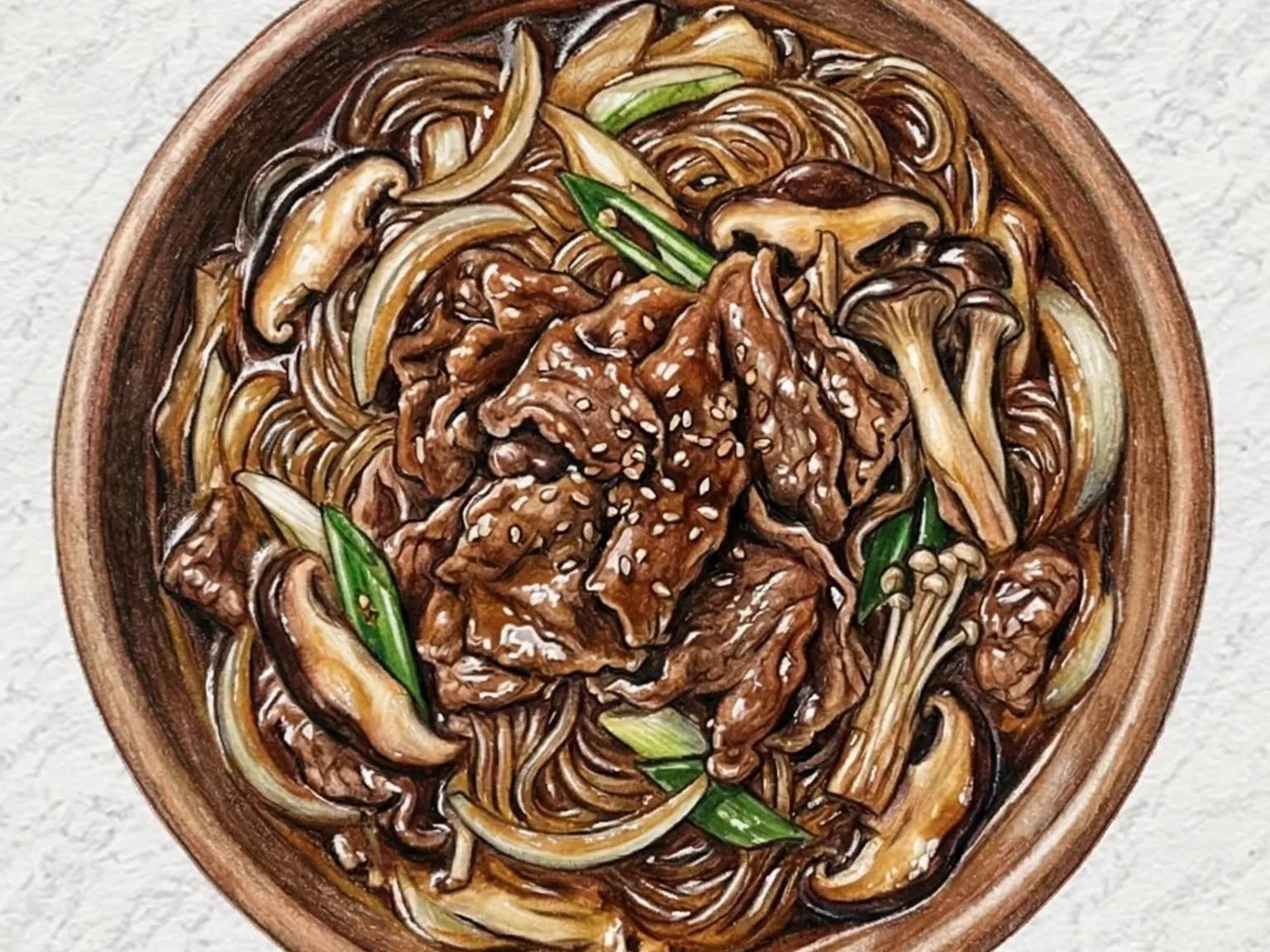
Korean Mushroom Bulgogi Jeongol

Soy sauce-marinated beef and a mix of shiitake and enoki mushrooms simmer together in a generous broth, with the beef's umami and the shiitake's deep, earthy scent building into the stock as the jeongol cooks. Sweet potato noodles absorb that concentrated broth, picking up its full flavor in every chewy strand. Onion's natural sweetness moderates the saltiness of the soy-based stock, and the garlic-infused liquid makes the dish work equally well as a rice accompaniment or a drinking table side. The jeongol is typically left on a portable burner at the table and eaten continuously as it cooks.

🎉 Special Occasion 🍺 Bar Snacks
Prep 20min Cook 20min 4 servings
Korean-Style Sirloin Steak
Grilled Medium

Korean-Style Sirloin Steak

Deungsim steak-gui is a Korean-style sirloin steak marinated in soy sauce, sesame oil, sugar, minced garlic, and Korean pear juice, then seared on a hot pan or grill until done. Pear juice contains enzymes that break down surface proteins to tenderize the meat, though marinating beyond thirty minutes risks turning the texture mushy, so timing matters. The flavor base departs from Western steak fundamentals - soy sauce and sesame oil define the savory character here, and the sugar caramelizes at high heat into a sweet-salty crust on the exterior. Coarsely cracked black pepper goes on last, adding heat and sharpness that pushes the result toward a midpoint between bulgogi and a conventional grilled steak.

🍺 Bar Snacks 🎉 Special Occasion
Prep 30min Cook 10min 2 servings

Tips

Apple juice can replace pear juice if needed.
Leave a little sauce for mixing with rice.

Nutrition (per serving)

Calories
430
kcal
Protein
31
g
Carbs
13
g
Fat
27
g