Korean Andong Braised Chicken
Quick answer
Andong jjimdak is said to have taken its modern form in Andong's old market during the 1980s, though soy-braised chicken has been a Gyeongsang Province tradition for far longer.
What makes this special
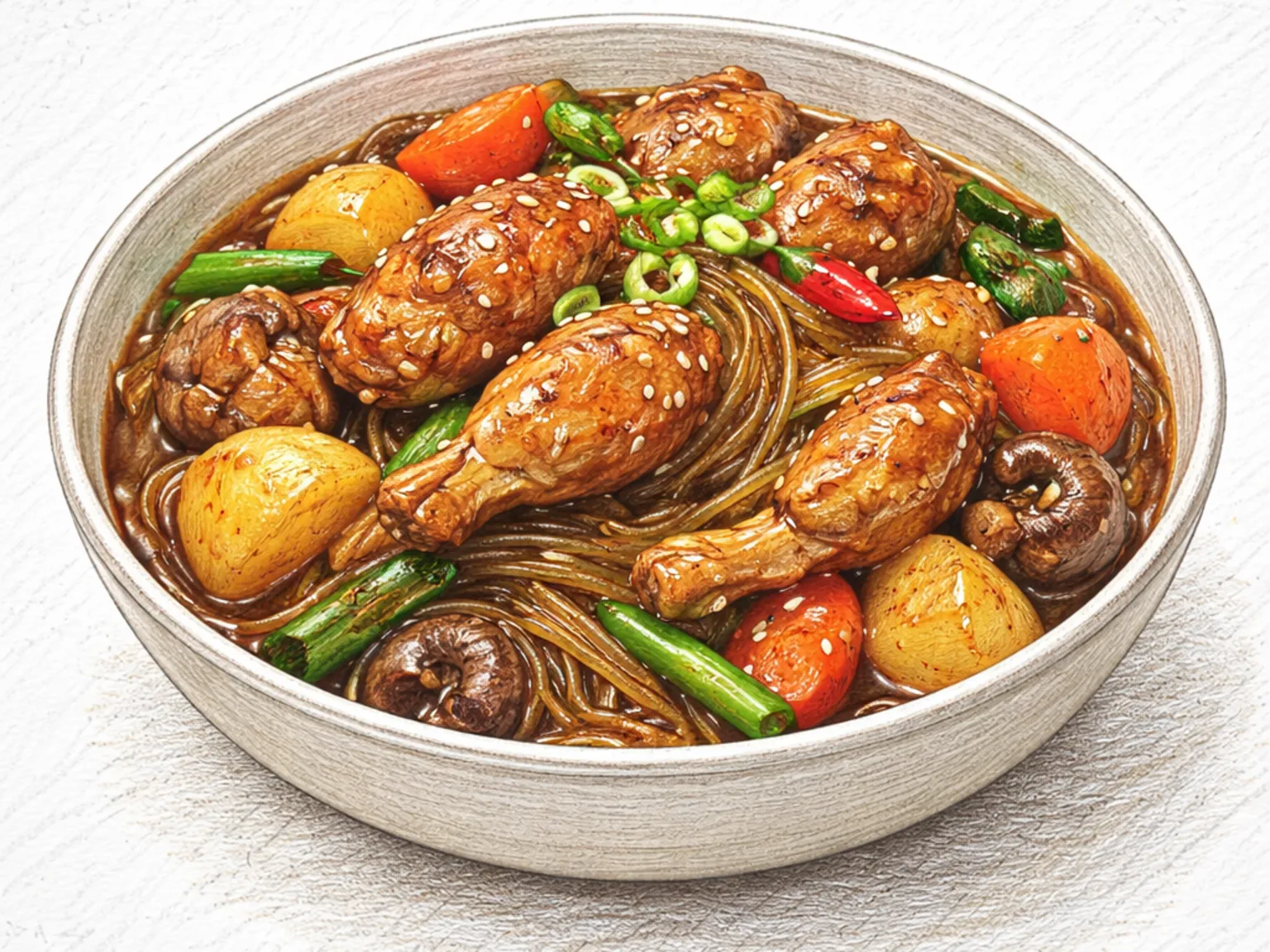
- Andong jjimdak combines chicken and glass noodles that absorb a dark, savory soy braise.
- Glass noodles added last absorb the dark soy braise and turn translucent
- Dried and fresh chilies build layered heat at different cooking stages
Key ingredients
Core cooking flow
- 1 Rinse 1 kg chicken under running water and trim off large pieces of fat.
- 2 Put the chicken in a wide pot with 3 cups water, 8 tablespoons soy sauce, 2...
- 3 When the liquid boils, skim off the foam and lower the heat to medium.
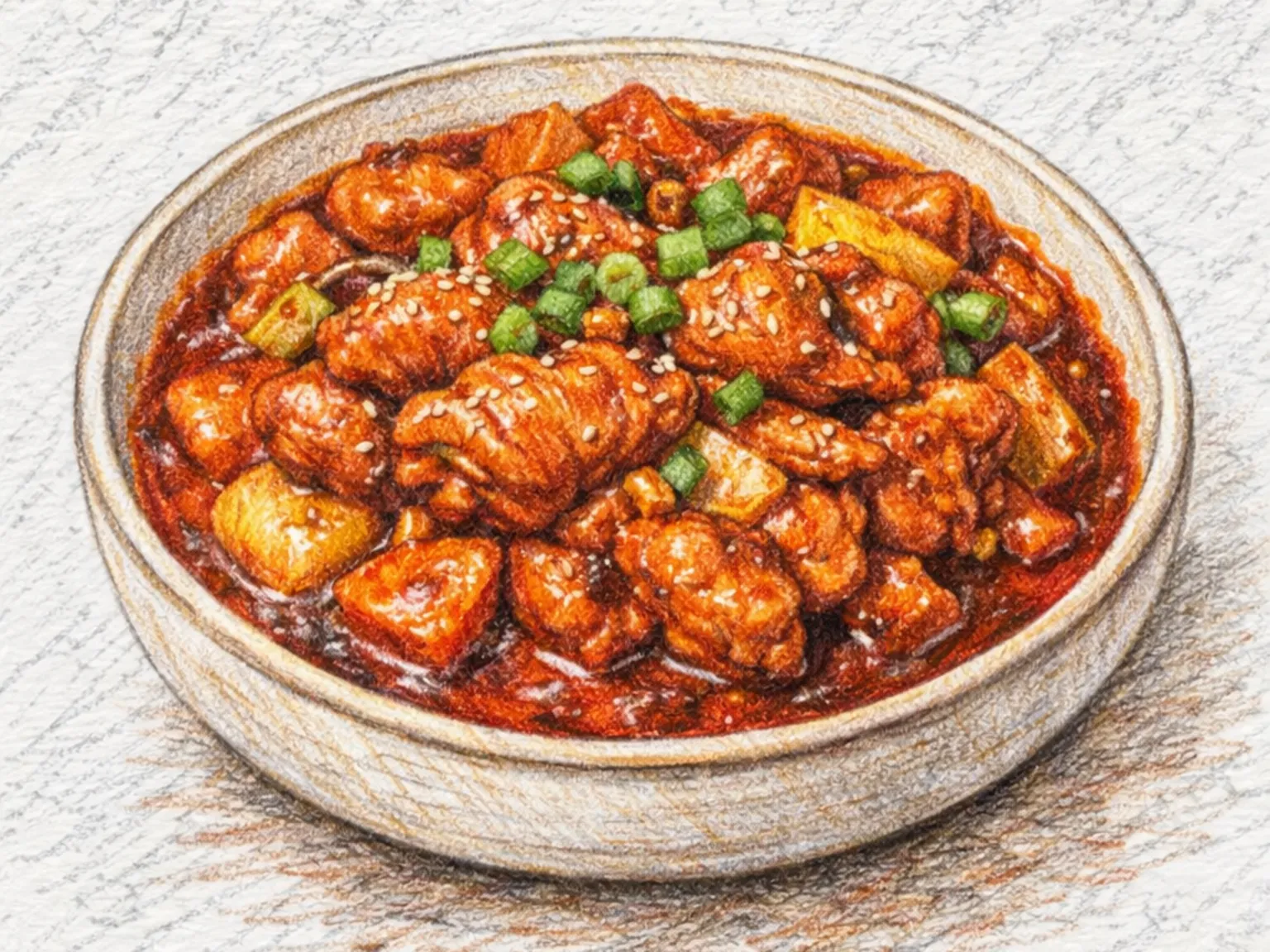
Andong jjimdak is said to have taken its modern form in Andong's old market during the 1980s, though soy-braised chicken has been a Gyeongsang Province tradition for far longer. Chicken pieces braise in a concentrated sauce of soy sauce, sugar, gochugaru, garlic, and ginger until the meat nearly separates from the bone. Glass noodles, dangmyeon, are added toward the end and absorb the braising liquid until they turn translucent and deeply stained with the sauce, becoming the most sought-after component. Potatoes and carrots provide bulk and sweetness, while dried red chilies and sliced cheongyang pepper build a layered heat that develops gradually. The finished dish arrives at the table in a wide, shallow pot, every component coated in the reduced soy glaze. It became a nationwide phenomenon in the early 2000s and remains one of Korea's most popular communal dishes, typically shared between two or three people over steamed rice.
Instructions
Read the steps as a cooking flow: prep, heat, seasoning, doneness control, and finish.
- 1Control
Rinse 1 kg chicken under running water and trim off large pieces of fat.
Blanch it in boiling water for 2 minutes, then rinse with cold water to reduce impurities and any strong smell.
- 2Control
Put the chicken in a wide pot with 3 cups water, 8 tablespoons soy sauce, 2 tablespoons sugar, and 1.5 tablespoons minced garlic.
Bring it to a full boil over high heat before reducing the heat.
- 3Control
When the liquid boils, skim off the foam and lower the heat to medium.
Add 250 g potato and 120 g carrot, then braise uncovered for about 15 minutes so the broth reduces without turning cloudy.
- 4Season
When a chopstick goes halfway into the potato, add 180 g onion and 2 hot green chilies.
Braise for 8 more minutes, until the onion turns translucent and the heat blends into the sauce.
- 5Control
Add 180 g soaked glass noodles only near the end and turn them so they sit in the sauce.
Cook over medium heat for about 5 minutes, just until they turn translucent and stay springy.
- 6Finish
Turn off the heat when the sauce thickens and coats the chicken and vegetables with a glossy glaze.
If it tastes too salty, loosen it with a little water, then serve it hot with steamed rice.
After the steps
Pick a recipe that fits this dish.
Continue with shared ingredients, meal pairings, or a similar method.
Recipes That Go Well With This
More Steamed →Based on shared ingredients and meal pairing
Korean Soy Braised Chicken
Dak-jjim is bone-in chicken braised with potato, carrot, and onion in a sauce of soy sauce, sugar, and garlic. Juices released from the bones meld with the soy seasoning to form a glossy, concentrated gravy, and the vegetables absorb this liquid so they are seasoned all the way through. Sugar tempers the saltiness of the soy into a clear sweet-salty balance that coats every piece. Cooking with the lid on over medium heat first, then removing the lid to reduce the sauce, is what creates the glossy coating that defines a well-made dak-jjim. Served in a hot stone pot at the center of the table, it is one of the most familiar home-cooked dishes in Korean cuisine, well-suited for a shared family meal.
Korean Dak Ganjang Jorim (Soy Braised Chicken)
Dak ganjang-jorim is chicken thigh braised with potato in a soy sauce glaze enriched with oligosaccharide syrup, garlic, and ginger juice. As the thighs simmer, the soy base works its way between the muscle fibers, leaving the meat deeply seasoned with a glossy brown finish. Potato chunks break down slightly at the edges and soak up the braising liquid, turning starchy and satisfying. A single cheongyang chili added to the pot gives a mild, lingering kick that keeps the sweet-salty profile from becoming one-note. Patting the chicken thighs thoroughly dry before searing them in the pan builds a Maillard-browned surface that adds another layer of savory depth, and removing the lid for the final five minutes lets the sauce reduce into a thick, clingy glaze.
Korean Beef Trotter Soup (Silky Collagen-Rich Slow-Cooked Broth)
Ujok-tang is a slow-cooked Korean soup made from beef trotters, prized for the extraordinary amount of collagen packed into the bones, tendons, and skin of the cut. The trotters are first soaked for hours in cold water to purge blood and any off-flavors, then placed in a deep pot and simmered at a gentle roll for four to six hours. During that time, the collagen gradually dissolves into the cooking liquid, transforming it from plain water into a milky, opaque broth with a viscous body that coats the spoon and sets firm when chilled. Regular skimming of fat and foam throughout the process ensures the final broth tastes clean rather than greasy. The trotter meat itself falls into two distinct textures: the skin and tendons turn gelatinous and springy, offering a bouncy chew, while the small pockets of muscle between the bones are meltingly soft. Traditional seasoning is limited to coarse salt and freshly ground pepper, allowing the broth's natural richness to speak. A dab of hot mustard or a spoonful of salted shrimp paste on the side provides a sharp contrast that keeps each mouthful interesting. Ujok-tang has long been regarded as a restorative food, particularly valued for its supposed benefits to joints and skin.
Korean Soy Braised Chicken with Glass Noodles
Jjimdak is a Korean braised chicken dish originating from the Andong region of North Gyeongsang Province, where competing chicken stalls in the Andong Old Market during the 1980s each developed their own version, eventually producing the dish now associated with the city. Bone-in chicken pieces, potatoes, and glass noodles are simmered together in a soy sauce glaze built from soy sauce, sugar, garlic, and corn syrup. The sauce penetrates the chicken and potatoes fully during the braise, delivering salty-sweet depth in every piece. Glass noodles swell as they absorb the reducing liquid, turning chewy and deeply flavored by the end of cooking, while the potatoes soften to a floury, starchy texture that holds sauce on every surface. As the liquid reduces further, the glaze thickens and turns glossy, coating each ingredient in a lacquered layer. Served over rice with the sauce poured across, it is easy to finish the bowl without noticing. Cheongyang chilies are often added for a spicier version, and sliced rice cakes folded in at the end are a popular addition.
Serve with this
Korean Bracken Fern Namul with Perilla
This perilla-scented bracken fern namul begins by pre-seasoning 250 grams of boiled bracken with soup soy sauce, minced garlic, and half the perilla oil for five minutes so the flavor seeps into the chewy fibers. Green onion is sauteed briefly in the remaining perilla oil to build an aromatic base before the seasoned bracken joins the pan for a two-minute stir-fry that drives off excess moisture. Adding water and ground perilla seeds, then simmering gently for five minutes, transforms the dish into a lightly sauced namul where every strand carries a nutty, earthy depth. Sesame seeds scattered at the end add a visual accent and a faint crunch that complements the bracken's dense chew.
Korean Ssamjang Hwe Deopbap
This variation on hoe-deopbap replaces the standard cho-gochujang with a dressing of ssamjang mixed with vinegar and sesame oil, shifting the dominant flavor away from sweet heat and toward fermented bean depth. The doenjang component in ssamjang works against the rawness of the fish rather than masking it with chili, producing a rounded, earthy complexity that deepens with each bite. Vinegar cuts through ssamjang's thick, pungent weight and introduces a clean acidity that keeps the overall flavor from feeling heavy. Flounder sashimi is cut into bite-sized pieces and kept refrigerated, while the rice is served at room temperature so the two elements neither clash nor blend into an indistinct warmth. Julienned carrot and perilla leaves provide a crisp, juicy resistance that contrasts directly with the chewy elasticity of the fish. Dressing the vegetables in advance draws out moisture that would soften the rice, so all the components are placed in the bowl separately and tossed together only at the moment of eating to preserve every texture.
Korean Lettuce Kimchi (Quick Leaf Gochugaru Dressed)
Sangchu kimchi is a quick Korean lettuce kimchi that starts with leaf lettuce torn into bite-sized pieces, salted lightly for ten minutes to relax the leaves without fully collapsing them, then tossed in a seasoning of gochugaru, sand lance fish sauce, minced garlic, vinegar, and sugar. As the lettuce absorbs the dressing it softens, but eating it before it fully wilts keeps a faint crispness at the leaf edges along with the lettuce's characteristic mild bitterness. The fermented depth of the fish sauce adds weight to the lettuce's grassy, clean flavor, while vinegar contributes a bright, tangy finish that cuts through the richness. Sesame seeds scattered through the mix give a faintly toasted crunch with each bite. Drying the leaves thoroughly after salting is the step that most directly controls flavor: any residual water dilutes the seasoning rapidly and turns the kimchi watery and dull within an hour or two. This kimchi is best made moments before serving and eaten immediately while the textures are still distinct. A small amount of ssamjang folded in adds a deeper, earthy fermented note for variation.
Similar recipes
Korean Soy-Braised Chicken Wings
Korean soy-braised chicken wings are simmered in a glaze of soy sauce, sugar, garlic, and ginger until the sauce reduces to a thick, shiny coating. Scoring the wings beforehand allows the seasoning to reach the meat, and twenty minutes of covered braising followed by ten minutes of uncovered reduction concentrates the liquid into a sticky lacquer. Ginger keeps the flavor clean by neutralizing any gamey notes, and a finishing drizzle of sesame oil adds warmth. The wings come out so tender that the meat slides off the bone easily, making this a crowd-pleasing dish for children and adults alike.
Korean Spicy Braised Chicken
Dakdoritang is a Korean braised chicken dish where bone-in pieces are simmered with potato, carrot, and onion in a sauce built from gochujang, gochugaru, soy sauce, garlic, and sugar. As the chicken cooks, it releases juices into the sauce that blend with the gochujang to create a thick, glossy braising liquid that coats every surface it touches. The potato breaks down gradually over the cooking time, adding starch that thickens the sauce further without any additional effort. Carrot and onion absorb the braising liquid and take on its full flavor, making them as central to the meal as the chicken itself. Sugar moderates the sharp heat of the chilies into a warm, rounded spice that lingers rather than burns. A finishing touch of sesame oil and sliced green onion added just before serving adds a nutty fragrance and fresh brightness that lifts the richness of the braise.
Korean Braised Chicken with Burdock
Ueong dak jorim is a Korean braised dish that simmers boneless chicken thigh and burdock root together in soy sauce, sugar, and ginger juice until the liquid reduces and the glaze thickens around each piece. Soaking the burdock in vinegar water draws out the astringent bitterness that raw burdock carries, and marinating the chicken in cooking wine and ginger beforehand removes any lingering gamey odor. Once both are added to the pot, low heat does the work over at least eighteen minutes, bringing the braising liquid down by half and building a glossy, clinging sauce. A final drizzle of sesame oil at the end ties the aroma together and rounds out the flavor. The finished dish sets the crisp yet slightly chewy texture of burdock against the moist tenderness of chicken thigh, with a sweet-savory profile that makes it a reliable companion to steamed rice.