Anmitsu (Japanese Agar Jelly Red Bean Fruit Dessert)
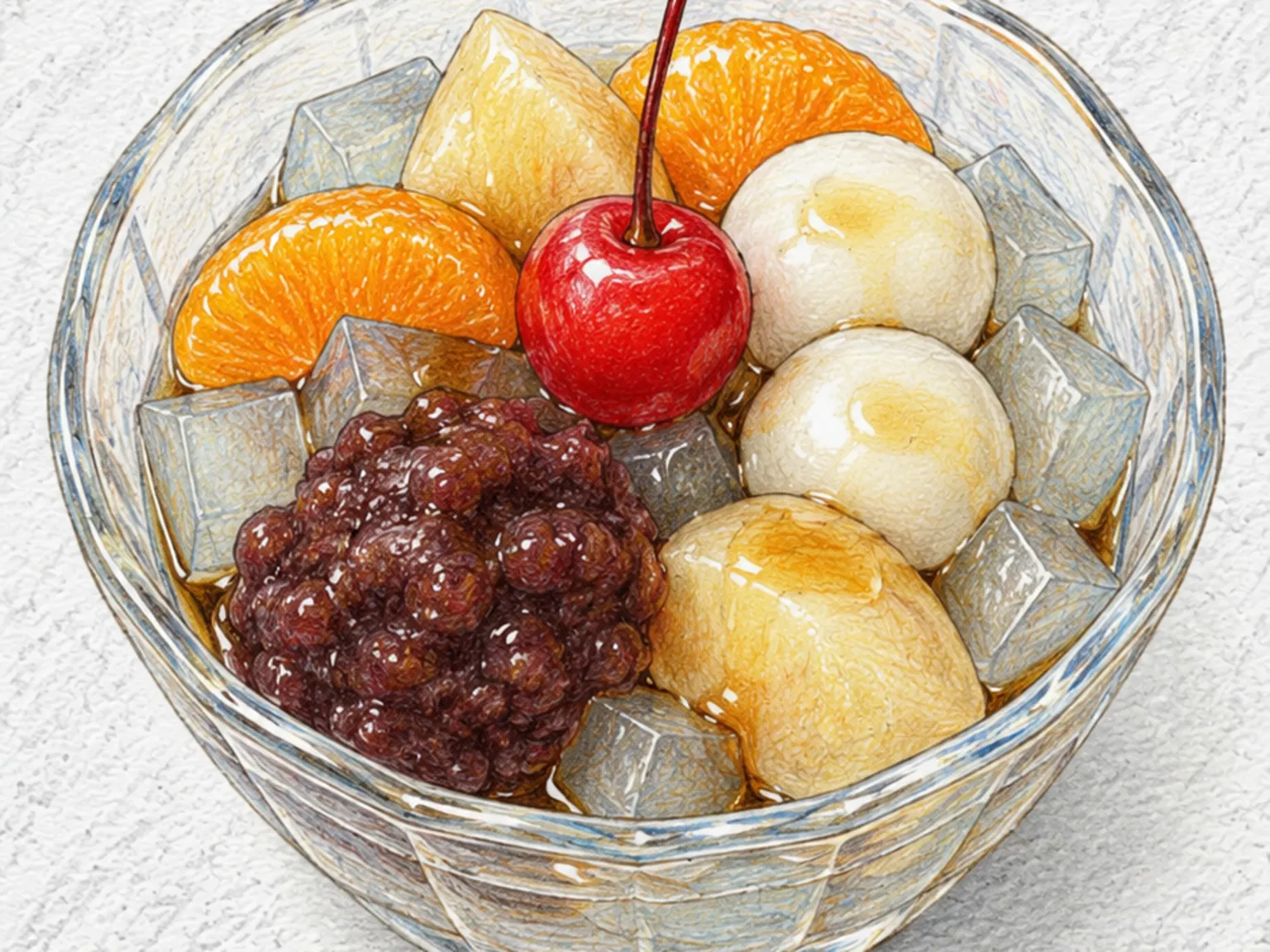
Anmitsu is a Japanese dessert with roots in the Meiji era, evolving from mitsumame - a simpler dish of agar cubes and boiled peas - when sweet azuki bean paste was added to create a more substantial treat. The base is kanten jelly, made from agar-agar dissolved in water, set into a firm, translucent block, and cut into cubes that have a clean snap unlike gelatin's wobble. Around the jelly, the bowl is arranged with seasonal fruits - mandarin segments, peach slices, cherries - alongside a mound of tsubuan (coarsely mashed sweet red beans) and small balls of shiratama mochi that are chewy and glutinous. A separate pitcher of kuromitsu - dark brown sugar syrup from Okinawa - is poured over at the table, its deep molasses-like sweetness tying the disparate elements together. Each spoonful brings a different combination of textures: crisp jelly, soft fruit, sticky mochi, and grainy bean paste.
Adjust Servings
Instructions
- 1
Boil water with agar powder and sugar for 2 minutes until dissolved.
- 2
Pour into a tray, cool, and chill until set.
- 3
Cut jelly into cubes and prepare fruits and mochi.
- 4
Arrange jelly, fruits, mochi, and red bean paste in bowls.
- 5
Drizzle syrup and serve immediately.
As an Amazon Associate, we may earn from qualifying purchases.
Tips
Nutrition (per serving)
More Recipes

Mochi Daifuku (Soft Rice Cake Stuffed with Red Bean Paste)
Glutinous rice flour is mixed with water and sugar, steamed or microwaved until it becomes a translucent, stretchy mass, then dusted with starch and wrapped around a ball of sweet red bean paste. The outer mochi shell is soft and pliable, yielding to the teeth with a slow, elastic pull before giving way to the dense sweetness of the filling inside. Because the dough begins to firm and lose its characteristic chew within hours, daifuku is best eaten the day it is made. Swapping the red bean for fresh strawberry or ice cream produces popular seasonal and modern variations. The starch coating - typically potato or cornstarch - serves a dual purpose: preventing the pieces from sticking to each other and adding a dry, powdery contrast to the otherwise tacky surface.

Warabi Mochi (Japanese Bracken Starch Jelly with Kinako)
Warabi starch is dissolved in water with sugar and cooked in a saucepan, stirred constantly, until the mixture turns translucent and pulls away from the sides in a glossy, elastic mass. Once poured into a mold and chilled, it sets into a wobbly, jelly-like confection that is soft and springy on the tongue. Cut into bite-sized pieces and rolled generously in kinako - roasted soybean powder - each piece gains a toasty, nutty coating that contrasts with the clean sweetness inside. A drizzle of dark brown sugar syrup over the top adds a deep, molasses-like sweetness that layers with the kinako. Continuous stirring during cooking is non-negotiable, as the starch scorches quickly on the bottom of the pan. The mixture must reach full translucency; stopping too early leaves a raw starch taste. Pressing plastic wrap directly onto the surface while cooling prevents a dry skin from forming. Warabi mochi is at its most supple and appealing within hours of being made.

Anpan (Japanese Sweet Red Bean Filled Soft Milk Bun)
Anpan was created in 1874 by Kimuraya bakery in Tokyo's Ginza district, making it one of Japan's first fusion foods - Western bread technique meeting Japanese bean-paste confection. The dough is enriched with milk, butter, and egg, producing a soft, pillowy crumb that tears apart in cottony layers. Inside, a generous ball of anko - sweet red bean paste made by simmering azuki beans with sugar until they collapse into a smooth or chunky filling - provides a concentrated sweetness with an earthy, bean-forward taste. A single pickled cherry blossom petal pressed into the top of the bun before baking is the traditional Kimuraya signature, adding a faint saltiness and floral note. The bun became so popular that it was presented to Emperor Meiji in 1875, cementing its status as a national snack. Today it is found in every Japanese convenience store and bakery, unchanged in concept for over 150 years.

Dorayaki (Sweet Red Bean Pancake Sandwich)
Dorayaki is a Japanese confection consisting of two small, round pancakes sandwiching a filling of sweet red bean paste. The batter is made from eggs, sugar, honey, and flour, then cooked on a griddle over low heat on one side only, producing pancakes with a smooth top surface and an evenly browned underside. Honey in the batter adds moisture retention, keeping the pancakes soft and springy even after cooling, and lending a subtle floral sweetness that complements the red bean filling. The sweetness of the pancakes themselves is deliberately modest, allowing the dense, earthy sweetness of the anko to take center stage. Each dorayaki is palm-sized, making it a convenient handheld snack.

Chestnut Sweet Jelly (Korean Agar-Set Chestnut White Bean Confection)
Bam yanggaeng is a Korean jelly confection that combines chestnut puree with white bean paste, set firm using agar powder. Boiled chestnuts are mashed until fine and mixed with the bean paste base, then dissolved agar, sugar, and honey are stirred in before the mixture is brought to a brief boil. Once poured into a mold and left to cool at room temperature, the agar solidifies the mixture into a sliceable block with a clean, firm bite distinct from gelatin-based desserts. The starchy quality of chestnuts gives the jelly a smoother, denser grain than plain bean-paste yanggaeng. A tiny amount of salt sharpens the overall sweetness. The finished confection stores well in the refrigerator for about a week and is often prepared as a holiday gift.

Pan-Fried Sweet Rice Cake
Bukkumi is a traditional Korean pan-fried rice cake made from glutinous rice flour dough filled with sweet red bean paste seasoned with cinnamon and sugar. Using hot water to form the dough partially gelatinizes the starch, creating a pliable skin that stretches without cracking, though it must stay covered with a damp cloth during assembly to prevent surface drying. Folding the dough into half-moon shapes around the cinnamon-laced bean paste adds a warm spice note that lifts the dense sweetness of the red bean. Pan-frying on low heat builds a golden crust on each side while keeping the filling warm and molten inside.