Baking Recipes
250 recipes. Page 1 of 11
Baking transforms flour, butter, sugar, and eggs into breads, cookies, cakes, muffins, and more. The aroma of something freshly baked is one of the great pleasures of cooking at home.
Affogato
Affogato means drowned. A scoop of vanilla gelato, one shot of espresso pulled fresh, and that is the recipe. Its origins are placed in Milan's coffee bars around the mid-20th century, though the logic behind it is older - hot poured over frozen, bitter cut with sweet. What makes it work is physics as much as flavor: near-boiling espresso hits frozen cream and immediately begins melting the contact layer, creating a rapidly shifting border where coffee and vanilla blend before the temperatures equalize. The window for that state - two things at once, neither fully dominant - lasts roughly two minutes. The espresso must be poured at the table while the crema is still intact and the heat at its peak; a shot left sitting a minute loses both. Dark chocolate shaved on top introduces a dry cocoa note. Toasted almond slices give a crunch that holds briefly before the melting ice cream claims them too. Once everything is warm and uniform, it has become a coffee drink. The dessert lives in the transition.
Alfajores (Argentine Dulce de Leche Sandwich Cookies)
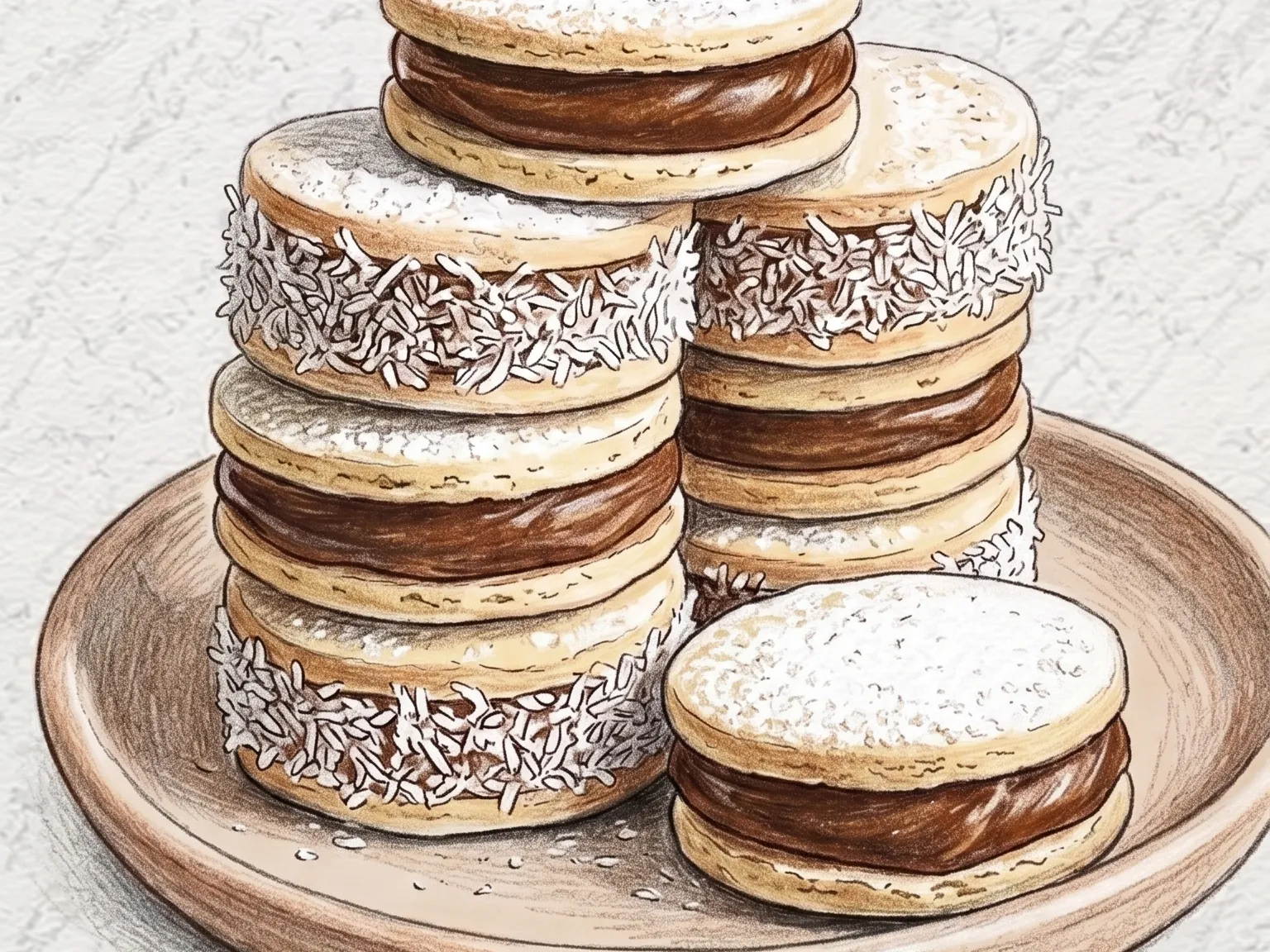
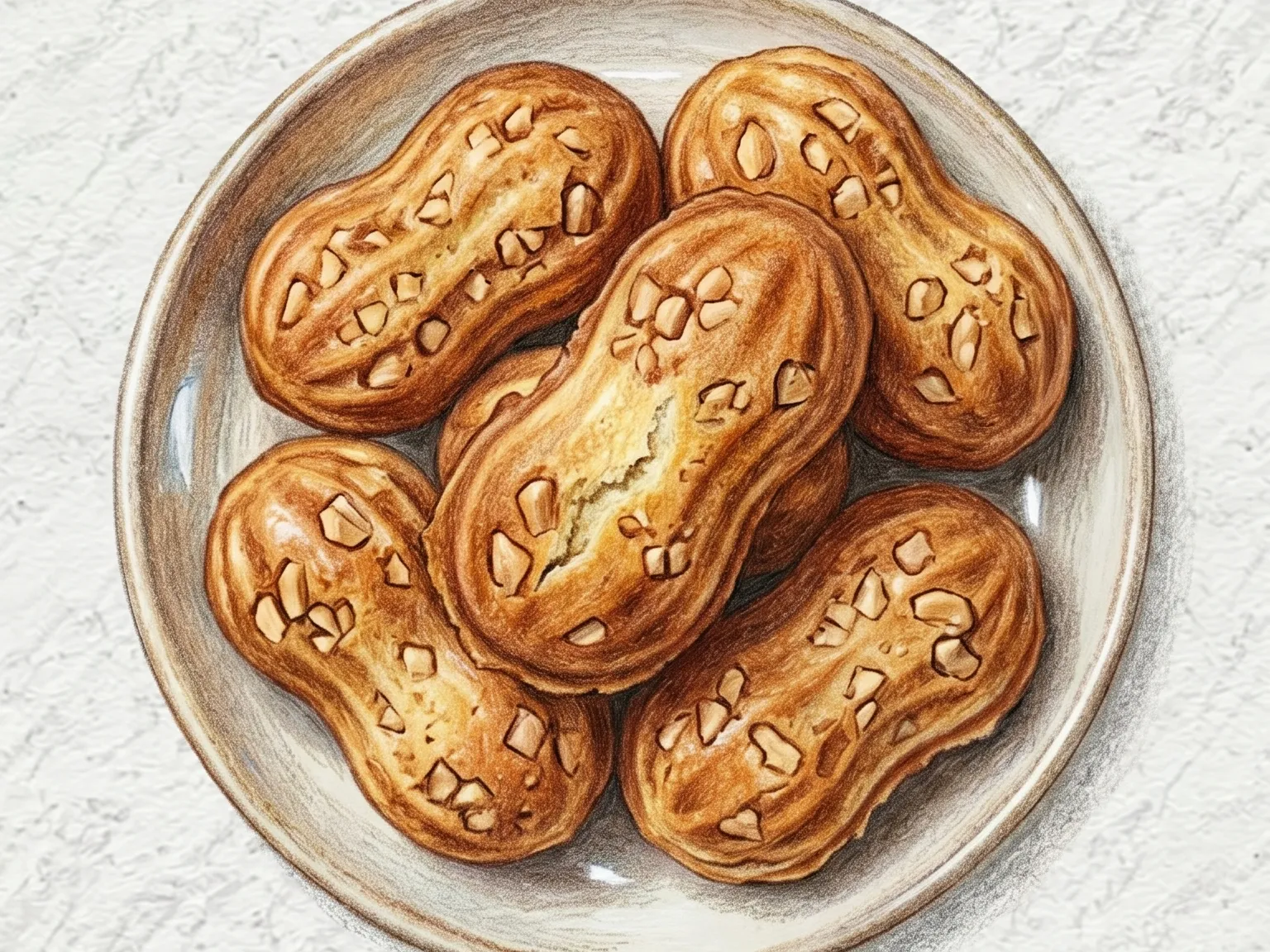
Alfajores began as a medieval Andalusian sweet brought to Spain by Moorish confectioners, but the round, pillowy sandwich-cookie form that people recognize today was shaped in 19th-century Argentina and Uruguay, where the recipe drifted far enough from its origins to become its own thing. The defining characteristic is the dough: heavily weighted with cornstarch relative to flour, it produces a cookie that does not snap or crunch but dissolves the moment it meets the tongue. Two rounds sandwich a thick layer of dulce de leche - slow-cooked milk caramel with a toffee depth and a consistency somewhere between fudge and butter - and the cookie itself is deliberately made plain so it does not compete with the filling. Rolling the exposed dulce de leche along the edge in shredded coconut adds a dry, fibrous contrast to the sticky center. A dusting of powdered sugar on top provides a brief, clean sweetness before the caramel asserts itself with each bite. In Buenos Aires, bakery windows stack them into towers, and the debate over which brand makes the best alfajor is treated with the seriousness Argentines reserve for football and steak.
Almond Biscotti
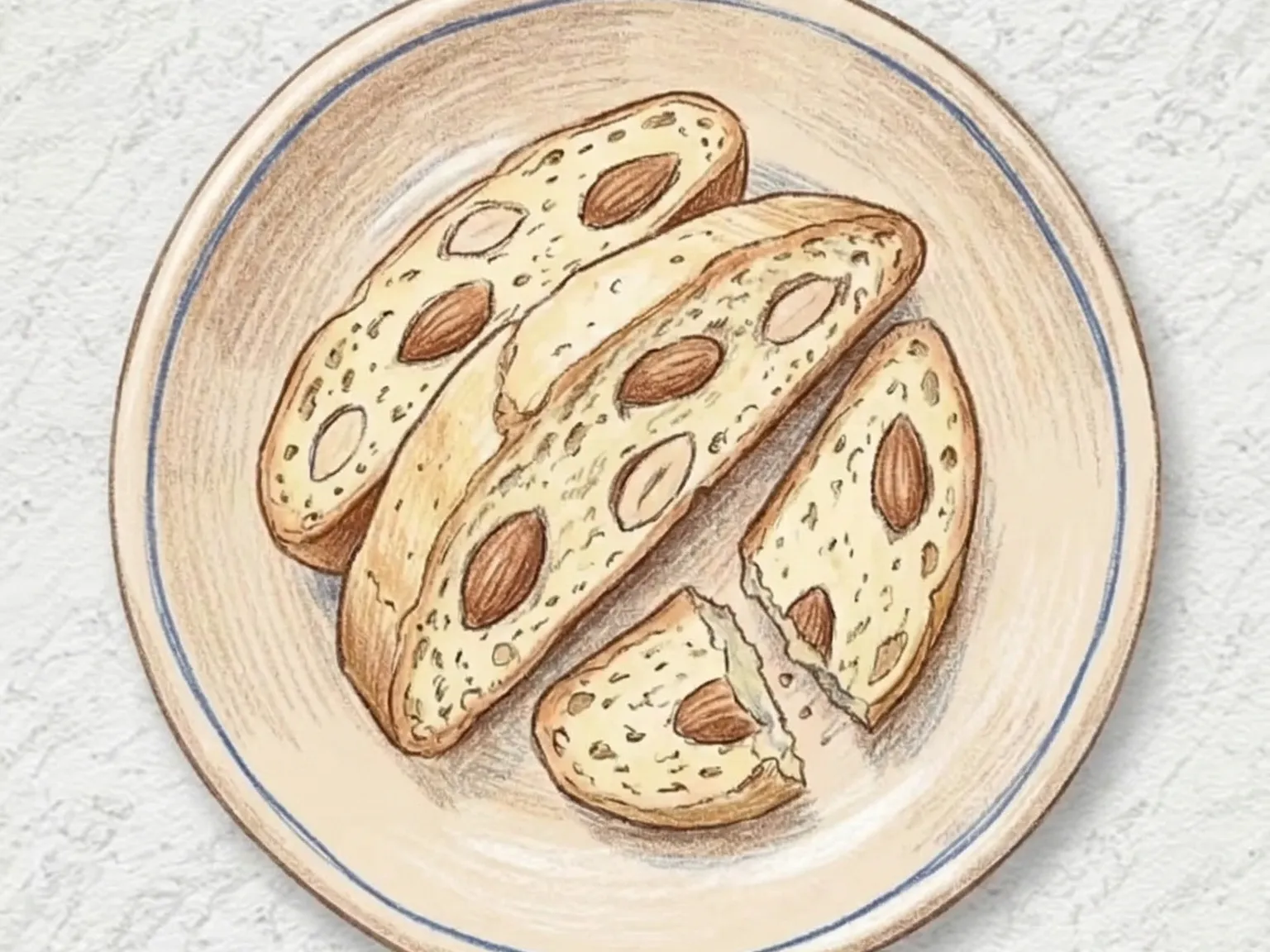
Biscotti - meaning 'twice-cooked' in Italian - originated in the Tuscan city of Prato, where they have been produced since at least the 14th century. They were originally designed as provisions for long sea voyages: the double baking drives out nearly all moisture, producing a cookie that resists spoilage for weeks without refrigeration. The dough is shaped into a flat log and baked once until firm throughout, then sliced on the diagonal and returned to the oven at a lower temperature until each piece is completely dry and hard. Whole almonds embedded in the crumb provide a contrasting crunch and a toasted, slightly bitter quality that plays against the vanilla-scented dough. The result is deliberately too hard to eat comfortably on its own - biscotti are made to be dipped. Dunked into espresso, Vin Santo, or strong black coffee, the outer layer softens immediately while the dense interior holds its structure, creating a texture that alternates between giving and crisp with each bite. In Prato, where the cookie is also called 'cantuccini' or 'pratesi,' the traditional pairing is with locally produced Vin Santo dessert wine.
Almond Croissant
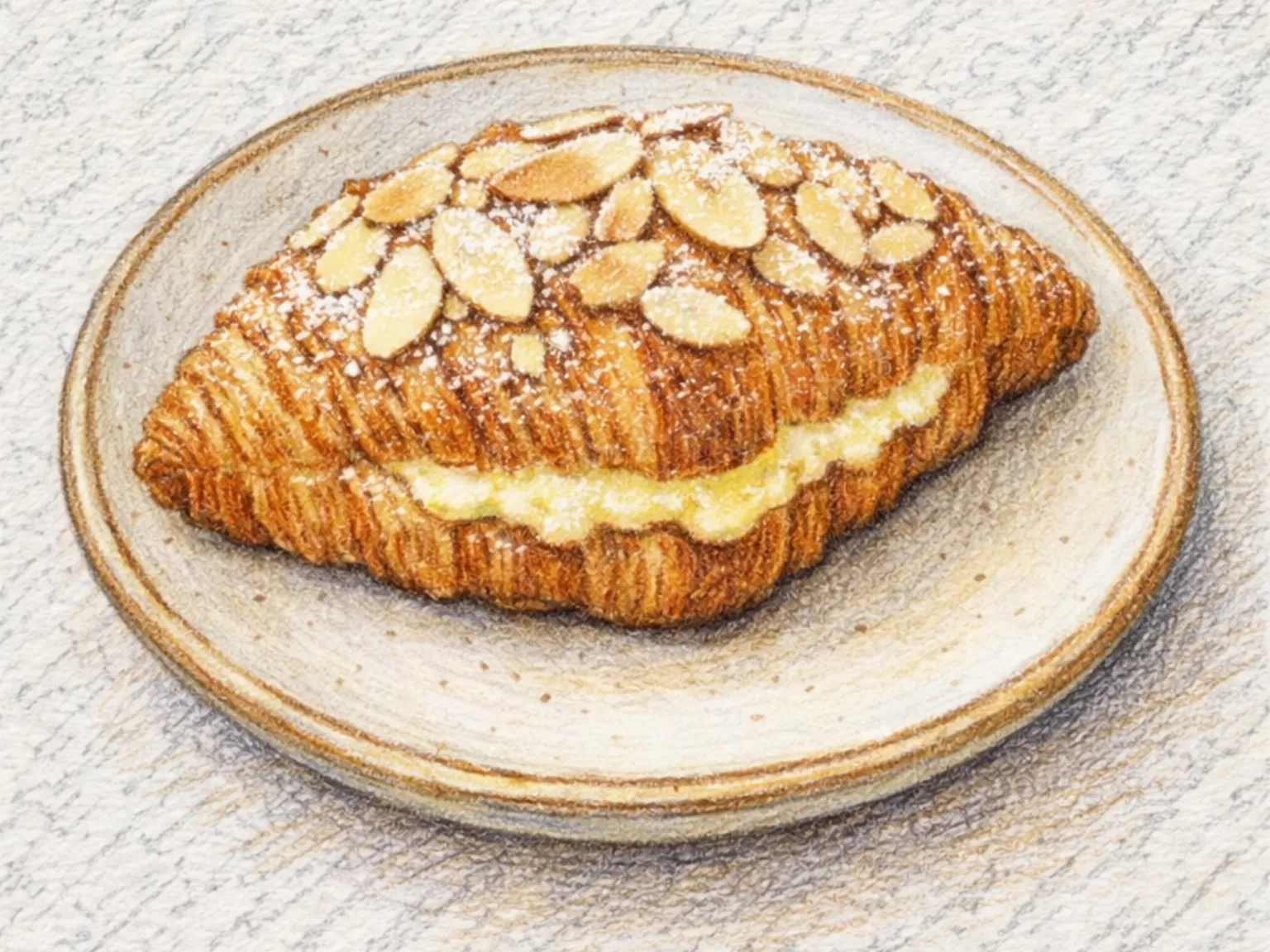
The almond croissant was born in French bakeries as a practical solution to leftover stock - day-old croissants soaked in almond syrup, filled with frangipane, and baked again until golden. What started as waste reduction became the most requested item in the pastry case. The syrup soak - typically simple syrup infused with almond extract or a splash of amaretto - revives the dried, compressed layers and adds sweetness before the second bake even begins. Frangipane, made from butter, sugar, ground almonds, and egg, is piped or spread generously inside the halved croissant. During the second bake, the cream melts and sets into the hollow interior, creating a dense, marzipan-like filling that is richer than anything in the original pastry. Sliced almonds pressed onto the surface toast in the oven, providing a brittle, crunchy contrast to the soft interior. The base of the croissant, where syrup pools during baking, caramelizes into a sticky, deeply sweet layer. A dusting of powdered sugar over the finished pastry adds a cool sweetness against the warm butter. Many Parisian bakeries now bake almond croissants fresh from current stock rather than leftovers because demand far exceeds the supply of day-old pastries.
Angel Food Cake
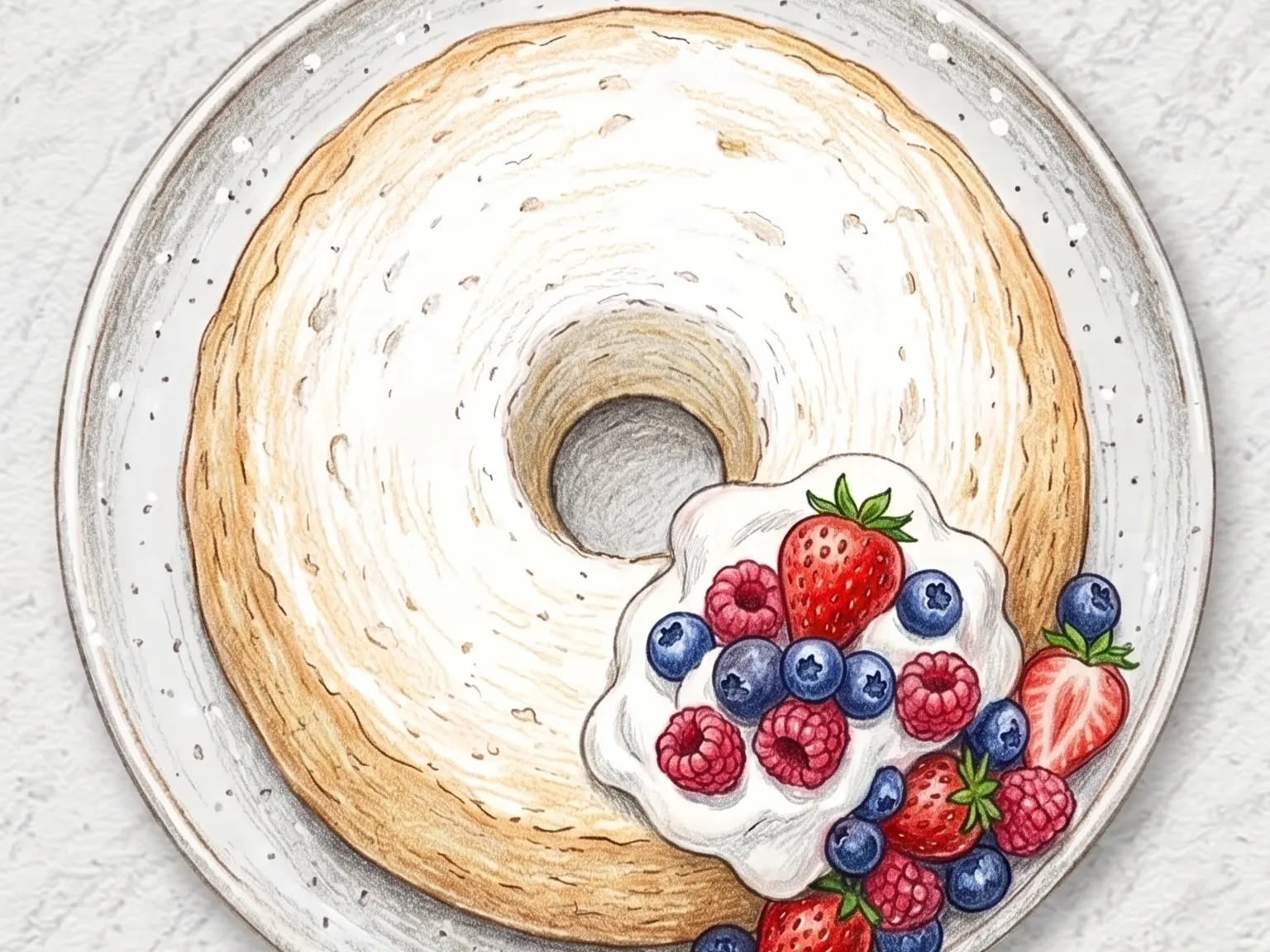
Angel food cake appeared in the United States in the late 19th century, most likely as a way to use the egg whites left over after making yolk-rich custards. The formula is unusually restrained: no butter, no oil, no yolks. Structure comes entirely from whipped egg whites stabilized with cream of tartar, folded into a mixture of cake flour and sugar. Baking produces a tall white ring with a snow-white crumb and a slightly chewy top crust that behaves like the skin of a marshmallow. After baking, the pan must be inverted and allowed to cool upside-down; leaving it right-side up allows the delicate foam structure to collapse under its own weight. The flavor is clean and vanilla-forward, without any of the richness that butter introduces into a conventional layer cake. Traditionally served with fresh berries and whipped cream, it has long been a fixture at American church socials and summer gatherings.
Anmitsu (Japanese Agar Jelly Red Bean Fruit Dessert)
Anmitsu is a Japanese dessert with roots in the Meiji era, developed from mitsumame - a simpler preparation of agar cubes and boiled peas - when sweet azuki bean paste was added to create a more fully composed treat. The structural foundation is kanten jelly: agar-agar dissolved in water, set into a firm translucent block, and cut into cubes that have a clean, rigid snap distinct from the soft wobble of gelatin. Around the jelly, the bowl holds seasonal fruits - mandarin segments, peach slices, cherries - alongside a mound of tsubuan, which is coarsely mashed sweet red beans that retain some grain and texture, and small balls of shiratama mochi whose sticky, glutinous chew contrasts with everything else in the bowl. A small ceramic pitcher of kuromitsu - dark sugar syrup made from Okinawan black sugar - arrives separately and is poured over at the table, its molasses-deep sweetness acting as a unifying sauce across the disparate elements. No single spoonful of this dessert tastes the same as the last: the ratio of crisp jelly, soft fruit, sticky mochi, and grainy bean paste shifts with every bite.
Anpan (Japanese Sweet Red Bean Filled Soft Milk Bun)
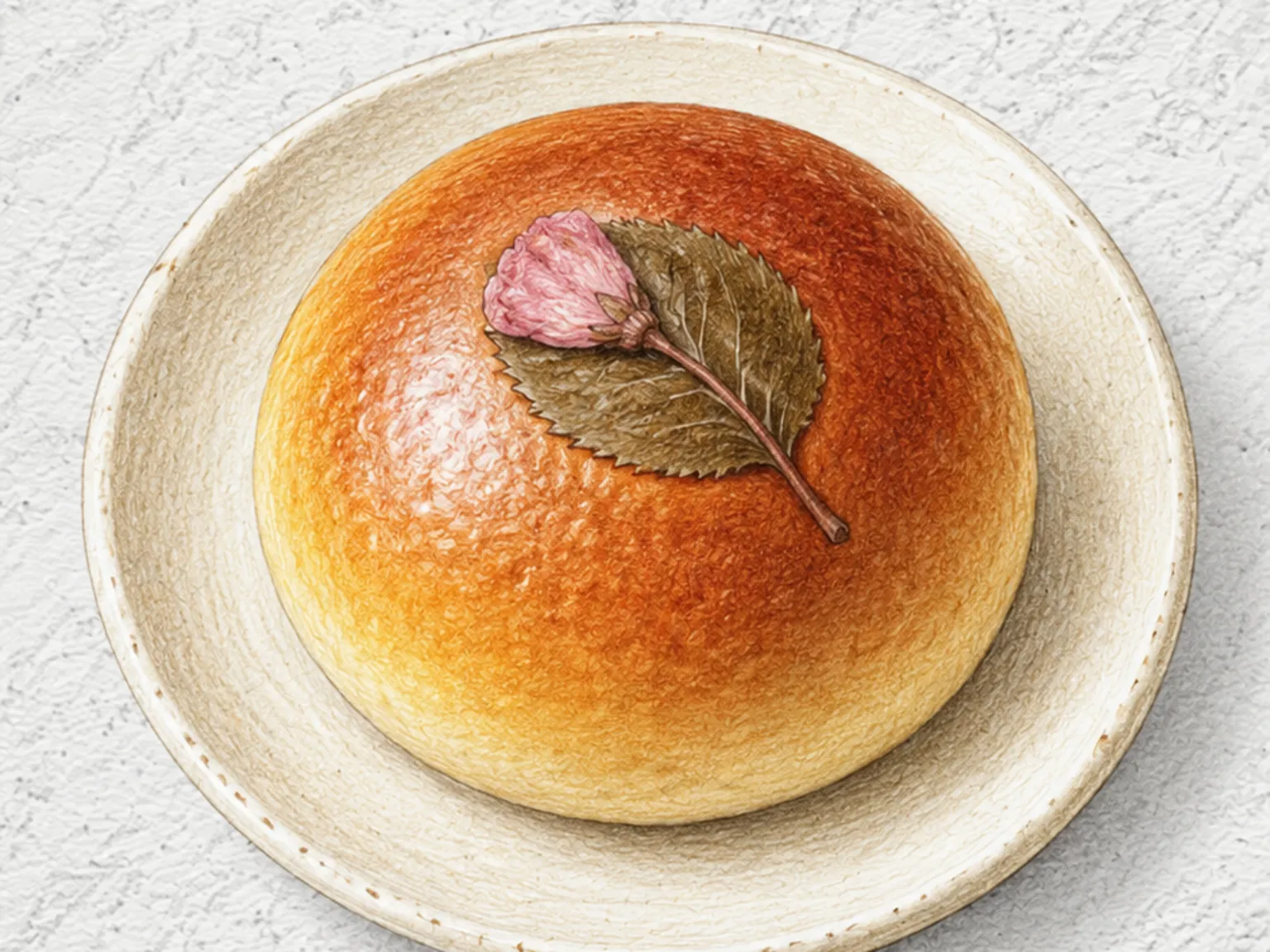
Anpan was created in 1874 at Kimuraya bakery in Tokyo's Ginza district, making it one of Japan's first truly successful fusion foods - a meeting of Western bread technique and the Japanese tradition of sweet bean-paste confection. Kimuraya's founders solved the challenge of making bread palatable to Japanese tastes by replacing commercial yeast with sakadane, a fermented starter made from Japanese sake lees, which gave the dough a subtle rice-fermentation fragrance that yeast-risen bread cannot replicate. The enriched dough - made with milk, butter, and egg - produces a crumb that is cottony soft and tears apart in loose, pillowy layers. Inside, a generous portion of anko provides concentrated sweetness backed by the earthy, slightly mineral depth that azuki beans carry even after long cooking. Anko itself comes in two forms: koshian, strained to a smooth paste with the skins removed, and tsubuan, which retains the whole beans for a more textured bite; Kimuraya's original style uses the finer koshian. A single salted cherry blossom petal pressed into the top before baking is the bakery's signature touch, contributing a faint floral saltiness that sits against the sweetness without overpowering it. The bun was presented to Emperor Meiji in 1875, which established its reputation as a national snack almost overnight. More than 150 years later, it remains essentially unchanged in concept and is found in every Japanese convenience store and artisan bakery alike.
Apple Cinnamon Rolls (Soft Yeast Dough with Apple Cinnamon Filling)
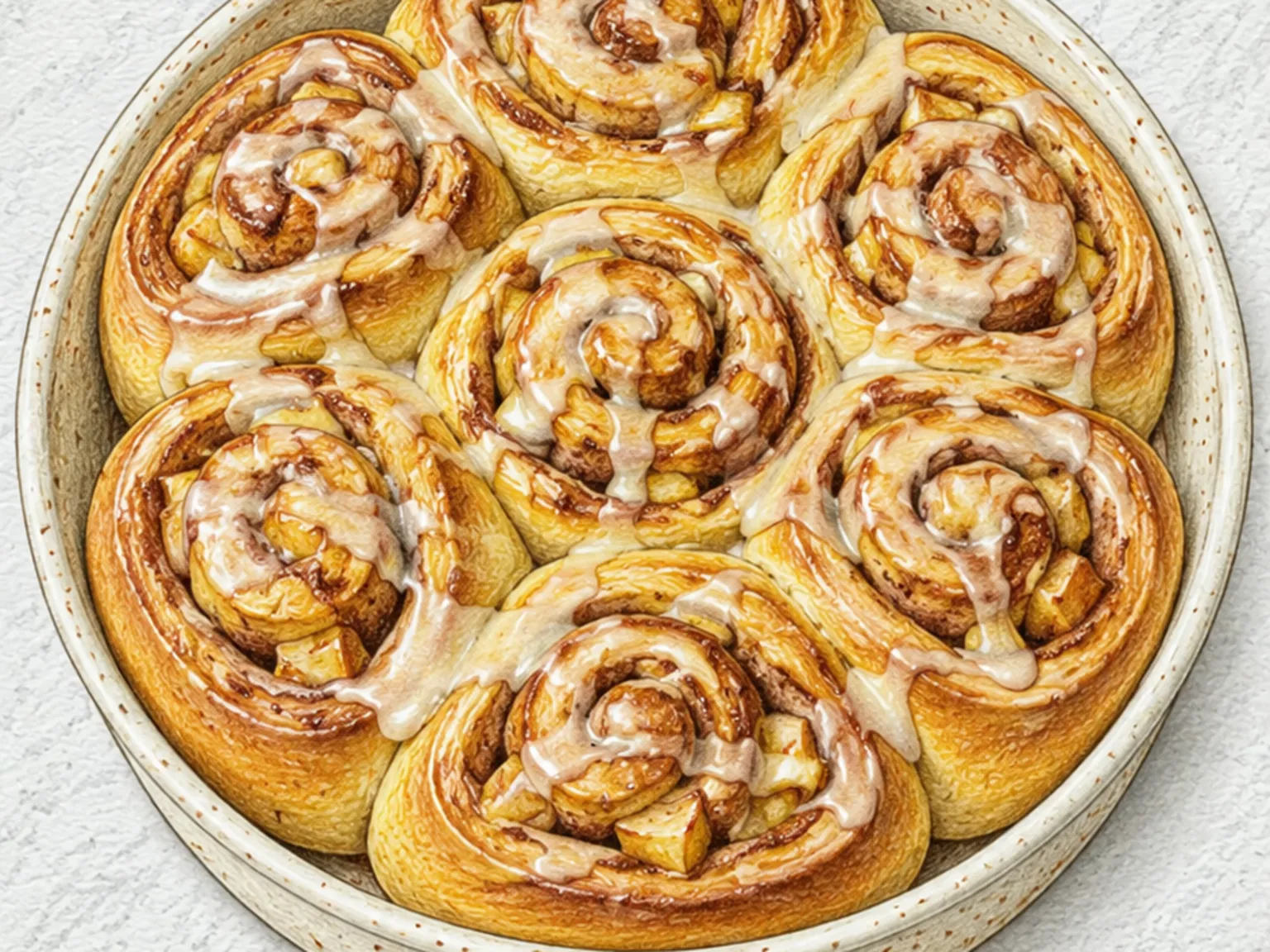
Apple cinnamon rolls build on the Scandinavian kanelbulle tradition of enriched yeast dough rolled with spiced brown sugar, adding a layer of fresh apple that transforms the filling from dry to fruity and moist. The dough is softened with butter and milk, then rolled flat, spread with a paste of brown sugar, cinnamon, and softened butter, and scattered with diced apple that has been tossed in lemon juice to prevent browning during baking. Rolling, slicing, and proofing the cut spirals in a buttered pan lets them expand until they press together, creating soft sides where the rolls meet and a slightly caramelized bottom where they contact the pan. During baking, apple pieces release juice that seeps into the surrounding dough layers, forming pockets of moist, cinnamon-scented fruit that a plain cinnamon roll cannot replicate. A cream cheese glaze drizzled while the rolls are hot melts into the crevices between spirals, coating the interior as well as the surface. The quantity of apple matters - too much makes the dough soggy, so a measured amount ensures the fruit contributes moisture without destabilizing the structure. The aroma of butter, cinnamon, and baked apple that fills the kitchen during baking is half the appeal of making these rolls.
Apple Crumble
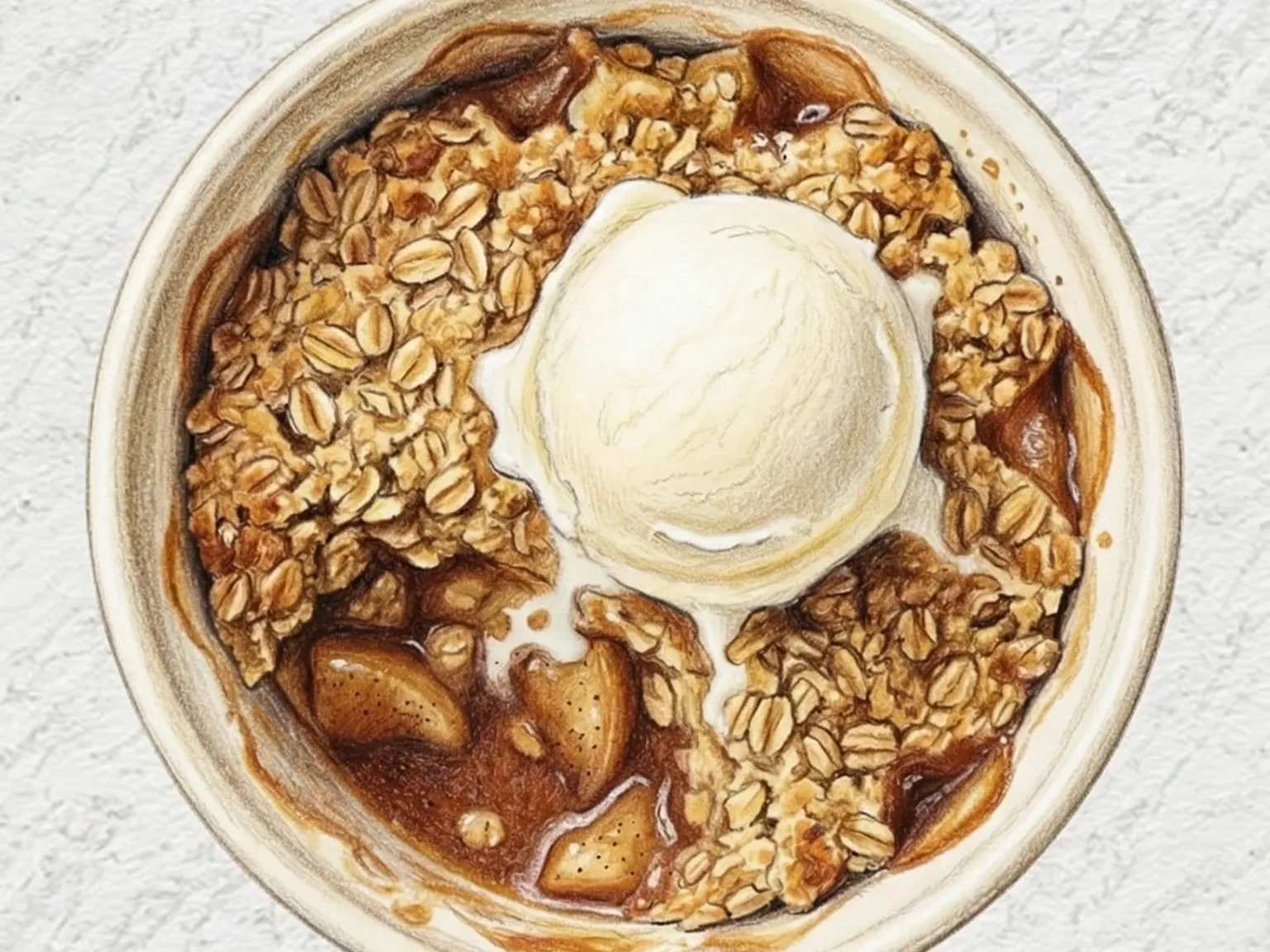
Apple crumble was born from wartime constraint: during World War II, butter and sugar rationing in Britain made traditional double-crust pastry impractical, and bakers found that rubbing a far smaller amount of fat into flour and oats produced a topping that required none of the skill or rolling that pastry demanded. Sliced apples are tossed with sugar, lemon juice, and cinnamon, then spread into a baking dish and covered with the rough, breadcrumb-like mixture. In the oven, the fruit collapses into a thick, bubbling sauce while the topping bakes unevenly: the peaks turn deeply crisp and golden, while the underside where the topping meets the fruit juices becomes slightly sticky and chewy. Tart apple varieties such as Granny Smith hold up better under oven heat than sweet ones, turning into a fragrant sauce that contrasts with the sandy crumble overhead. The tension between the hot, yielding apple beneath and the crunchy, butter-scented rubble on top is the structural logic of the dish. Served with cold vanilla ice cream or warm pouring custard, the contrast multiplies further as cold cream melts into the steaming fruit. It remains the default British home dessert precisely because it needs nothing beyond what a reasonably stocked cupboard can supply and comes together in under an hour.
Classic Apple Pie
Apple pie has been baked in America since the colonial era, though its origins lie in 14th-century English and Dutch recipes where apples were enclosed in pastry as a way to cook fruit without a proper oven. The filling is built from tart baking apples - Granny Smith or Braeburn - tossed with sugar, cinnamon, nutmeg, a squeeze of lemon, and a spoonful of flour or cornstarch to thicken the juices as they cook. The double crust is made from cold butter cut into flour until the dough resembles wet sand, producing flaky, shattering layers when baked. As the pie bakes, the apples soften and release their juice, which the starch captures into a syrupy glaze that holds the filling together when sliced. The top crust turns deep golden and pulls away slightly from the filling, creating a hollow where steam escapes. Served warm with a scoop of vanilla ice cream - a la mode - or a slice of sharp cheddar in the New England tradition, apple pie is as much a cultural symbol as it is a dessert.
Apple Turnover
Apple turnovers trace back to the medieval European practice of encasing fruit in pastry - a portable format that became a fixture at French and English market stalls by the 17th century. Puff pastry is rolled thin and cut into squares, then topped with apples briefly cooked down with cinnamon, sugar, and lemon juice to concentrate their flavor and reduce excess moisture. Folding the square into a half-moon and crimping the edges seals in steam during baking, which forces apart the laminated layers into a shatteringly crisp, deep-golden shell. Inside, the apples have collapsed into a jammy, soft mass. Cinnamon amplifies the fruit's sweetness, while lemon juice maintains enough acidity to prevent the filling from turning cloying. An egg wash brushed on before baking produces the lacquered, caramelized surface. The contrast between the brittle, flaking crust and the hot, syrupy interior is at its most vivid in the first few minutes out of the oven, before the pastry begins to soften.
Baba au Rhum (French Rum-Soaked Yeast Cake)
Baba au rhum originates from 18th-century Poland, where King Stanislaw Leszczynski is said to have soaked a dry kugelhopf cake in rum, naming it after Ali Baba from One Thousand and One Nights. The dessert traveled from Poland to Naples and then to Paris, where French patissiers reshaped it into the small, cylindrical, individual-portion yeast cakes recognized today. The dough is heavily enriched with butter and eggs, which produces a tender, porous crumb riddled with open air pockets. After baking, the cakes are submerged in a hot syrup of sugar, water, and dark rum in substantial proportion until those air pockets drink up the liquid and the cakes swell to close to double their baked size. The syrup must penetrate all the way to the center - soaking time cannot be rushed - and the finished texture is dense, spongy, and completely saturated, releasing a burst of warm rum with each bite as the crumb is compressed. A rosette of creme chantilly sits on top, made from lightly sweetened whipped cream with a vanilla note, and its cold, airy quality sits in direct contrast to the dense, alcohol-soaked base beneath. The rum is not a background flavor here but the primary one, which makes baba au rhum an unambiguously adult dessert.
French Baguette
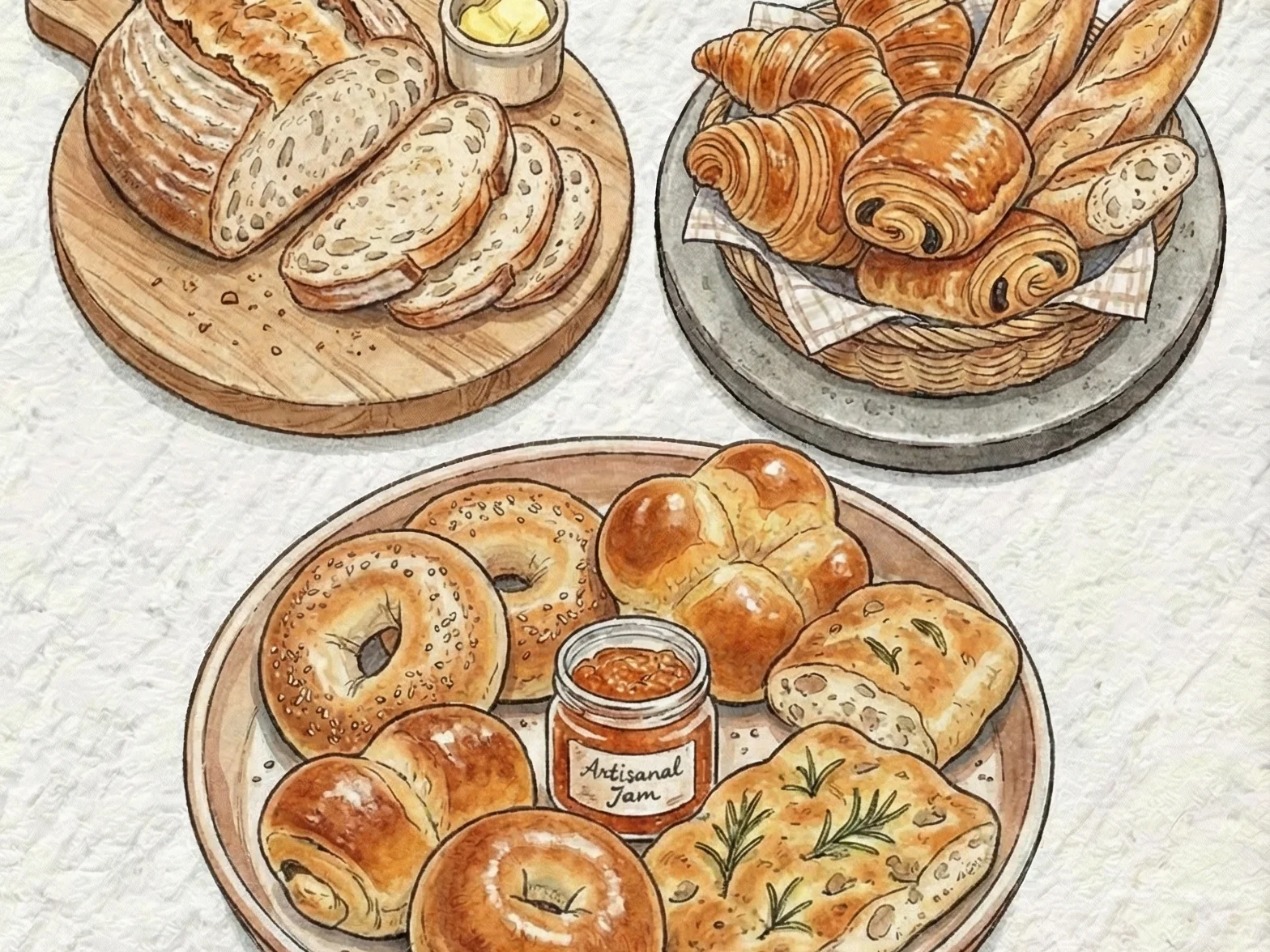
A baguette is a traditional French bread made from only four ingredients: bread flour, water, yeast, and salt. Because the formula strips away every variable beyond technique, the final quality is determined almost entirely by the precision of fermentation management and the confidence of the baker at each stage. A hydration level of seventy percent or higher is required to develop the open, irregular crumb structure that defines the interior; dough that is too dry will close up in the oven and produce a dense, uniform crumb with none of the characteristic airy pockets. A long first fermentation builds layers of acidity and deep wheat flavor that a short rise simply cannot provide, and during shaping the dough should be handled with restraint, using only gentle folds that preserve the large gas bubbles rather than pressing them out. Scoring lines, known as coupes, cut along the top surface control the direction of oven spring; the blade must be sharp enough and the movement decisive enough that the dough does not drag and tear beneath it. Introducing steam into the oven during the first ten to fifteen minutes of baking prevents the crust from setting prematurely, giving the loaf room to expand fully before the surface dries and crisps into its signature crackling shell. A well-made baguette crackles audibly when squeezed and, when sliced, reveals an interior cross-section showing holes of varied sizes scattered unevenly through the crumb. The day it is baked is the day it should be eaten; once the crust begins to soften as it cools, something irreplaceable is lost.
Baked Alaska
Baked Alaska is a dessert where sponge cake and ice cream are encased in Italian meringue without any gaps, then baked briefly at high heat. The meringue acts as an insulating shell, preventing the oven's intense heat from reaching the frozen core. For this to work reliably, the meringue must be applied thickly and cover every part of the surface. The ice cream needs at least four hours in the freezer before assembly so it stays solid through the brief bake, and the finished dome should go back into the freezer immediately after construction and stay there until just before browning. Egg whites whipped with sugar to stiff peaks form the meringue shell, which is then torched or placed in a 250-degree oven for two to three minutes until the surface turns golden brown. Adding vanilla extract to the meringue releases its aroma during browning. When sliced, three distinct layers become visible in cross-section: charred meringue, frozen ice cream, and moist sponge cake beneath. The contrast between the scorched, warm exterior and the frozen core is the defining quality of this dessert, and the visual reveal when the knife cuts through makes it as much a performance as a dish.
Baklava
Baklava is a historical pastry dessert consisting of multiple layers, which holds a significant place in the culinary cultures of the Middle East, Turkey, and the Mediterranean region. The preparation involves taking extremely thin sheets of phyllo dough and stacking them one by one inside a baking pan that has been coated with grease. To achieve a uniform golden color and a crunchy consistency, every single layer of the dough is brushed thoroughly with a generous amount of melted butter. Between these stacked phyllo sheets, a mixture made of finely chopped walnuts and pistachios is distributed at specific intervals. This nut filling is typically seasoned with ground cinnamon to add a specific aromatic quality to the internal layers of the pastry. Before the assembled pastry is placed into the oven, it is carefully cut into diamond or square shapes. This scoring process is essential because it creates paths for the syrup to flow deep into every individual piece later. The baking process occurs at a temperature of approximately 175 degrees Celsius, continuing until the pastry reaches a deep golden hue across its entire surface. While the pastry is still hot from the oven, a liquid syrup consisting of sugar, honey, water, and a small amount of fresh lemon juice is poured over the whole pan. The crisp layers of the dough absorb this liquid over a period of several hours. This gradual absorption results in a specific final texture where the pastry remains both extremely brittle and noticeably moist at the same time. The inclusion of ground cinnamon within the nut layers provides a warm spice profile that helps to provide a contrast to the high level of sweetness from the honey syrup. In traditional settings, baklava is often presented on a plate next to a cup of unsweetened Turkish coffee or a serving of bitter tea. These beverages are chosen because their natural bitterness helps to balance the heavy richness of the dessert. When stored in an airtight container at room temperature, this pastry maintains its quality for more than a week.
Banana Bread
Banana bread is a quick bread leavened with baking soda rather than yeast, which means no rising time and a straightforward one-bowl process. The most important variable is the banana: heavily blackened, overripe fruit is essential because the starches have converted to sugar, the flesh mashes effortlessly, and the concentrated banana aroma permeates every part of the crumb. Melted butter adds richness without creaming, a single egg provides structure, and vanilla extract amplifies the banana's fragrance. The batter mixes in one bowl and goes directly into the oven at 170 degrees Celsius for roughly sixty minutes. A toothpick inserted into the center should come out clean. The bread is good warm from the oven, but the flavor is measurably deeper the following day as banana sugars continue to penetrate the interior. Walnuts or chocolate chips folded into the batter add textural contrast without changing the essential character of the loaf.
Banana Pudding
Banana pudding is an American Southern dessert built from repeating layers of vanilla custard, sliced banana, and vanilla wafer cookies. The custard cooks on the stovetop by whisking milk, sugar, cornstarch, and egg yolks until the mixture thickens enough to coat a spoon. Layering begins while the custard is still warm, alternating banana rounds and wafers before topping with whipped cream. Refrigeration transforms the wafers as they absorb moisture from the custard, turning from crisp cookies into something resembling soft sponge cake. Fully ripe bananas are essential since underripe ones carry an astringent edge that stands out against the sweet custard. The entire dessert is stovetop-only, no oven required, making it approachable for most kitchens. Overnight refrigeration stabilizes the layers and deepens the overall flavor considerably.
Banana Walnut Bread
As a quick bread, this loaf relies on baking soda instead of yeast for its structure. The process begins by mashing bananas that have developed dark spots or turned entirely black on the outside. This level of ripeness indicates that the starches have shifted into sugars, providing a natural sweetness to the batter. Combining these bananas with melted butter, eggs, and brown sugar creates the base. When adding the flour and baking soda, it is important to fold the mixture gently. Overworking the dough leads to gluten development, which results in a tough, dense crumb instead of the intended soft texture. Ground cinnamon provides a warm aromatic layer that complements the fruit. Roughly chopped walnuts are stirred in last; their irregular sizes ensure that every bite offers a different level of crunch. During the fifty-minute bake in a 9 by 5 inch pan, the walnuts toast within the crumb and release their natural oils. Slicing the bread while warm can cause a sticky interior, so the loaf should reach room temperature before being cut. It yields roughly eight slices and stays fresh for two to three days when wrapped. Reheating a slice in a toaster helps the exterior regain its crisp texture and brings out the scent of the toasted nuts.
Banoffee Pie
Banoffee pie is a British no-bake dessert whose name compresses banana and toffee, the two ingredients that define its character. A base of crushed digestive biscuits bound with melted butter is pressed firmly into a pan and chilled until set. Sweetened condensed milk is heated slowly over low heat, stirring constantly, until it darkens into a thick, amber-colored toffee that spreads over the biscuit base in a dense layer. Ripe bananas are sliced thickly and layered on top of the toffee, then the whole assembly is finished with a generous dome of softly whipped cream and a dusting of cocoa powder or grated dark chocolate. Each forkful delivers four textures in sequence: the sandy crunch of the biscuit base, the dense caramel pull of the toffee, the soft sweetness of banana, and the cool, airy lightness of cream.
Basbousa (Middle Eastern Semolina Syrup-Soaked Cake)
Basbousa is a Middle Eastern semolina cake soaked in fragrant syrup, producing a texture nothing like a Western flour-based cake. Semolina is combined with yogurt, sugar, and melted butter to form a dense, grainy batter that bakes into a golden slab with a coarse, sandy crumb. The moment it comes out of the oven, hot sugar syrup sharpened with lemon juice is poured over the surface. The porous semolina pulls it in rapidly - the top retains a faint crispness while the interior becomes moist all the way through. Before baking, the batter is scored into diamond portions and a blanched almond is pressed into each one for a nutty accent. Across the Arab world, basbousa is among the most common desserts served during Ramadan, made in large trays and shared among families.
Basque Burnt Cheesecake
Basque burnt cheesecake originates from La Vina bar in San Sebastian, Spain, and is defined by a deliberately scorched top and an intentionally underset center. Cream cheese, sugar, eggs, heavy cream, and a small amount of flour are blended smooth, poured into a parchment-lined pan, and baked at above 220 degrees Celsius until the surface reaches a deep, near-black caramelization. That blackened layer contributes a pronounced bittersweet edge that cuts through the richness underneath. The interior remains loose and custardy - closer in texture to a very dense panna cotta than to a conventional baked cheesecake. Served at room temperature, the contrast between the firm, caramelized shell and the barely-set, creamy core is at its sharpest and most satisfying.
Beignet (New Orleans Square Fried Dough with Powdered Sugar)
Beignets are square fried dough pastries that arrived in Louisiana with French colonists and became a defining food of New Orleans. A yeast-leavened dough of flour, milk, sugar, egg, and butter rises until airy, then is rolled and cut into rough squares before being dropped into hot oil. Each piece puffs up rapidly as it fries - the center becomes pillow-soft while the outside sets into a thin, light golden shell. Pulled from the oil, the beignets are immediately buried under a heavy dusting of powdered sugar that begins to melt against the warm surface. At Cafe du Monde in the French Quarter they have been served three to a plate with chicory coffee for over a century. In New Orleans, beignets are eaten at any hour of the day, morning through midnight.
Bienenstich (German Bee Sting Cake) - Caramelized Almond and Custard Recipe
Bienenstich, German for bee sting, is a traditional German bakery cake built on enriched yeasted dough topped with caramelized sliced almonds cooked in butter and sugar before baking. The almond layer sets into a crunchy golden crust in the oven while the dough below stays pillowy and soft. Once the cake has cooled completely, it is split horizontally and filled generously with vanilla custard or whipped cream. A single bite moves through three distinct layers: the shattering almond topping, the tender yeasted bread, and the cool, smooth cream within. Pressing the almond topping firmly onto the dough before baking prevents it from sliding off during the bake. If making custard from scratch, chilling it completely before filling keeps the bread from turning soggy.
Black Forest Cake
Black Forest cake is a layered chocolate cake from the Schwarzwald region of southwestern Germany. Dark, moist chocolate sponge layers are stacked with alternating fillings of tart cherry compote and lightly sweetened whipped cream. In the traditional preparation, each sponge layer is brushed with Kirschwasser, a clear cherry brandy, which carries the cherry flavor deep into the crumb and adds a quiet warmth throughout the cake. The bitterness of the cocoa, the acidity of the cherries, and the neutral creaminess of the whipped cream create a clear contrast that repeats with each layer, so every bite delivers the same balance of flavors. The cake is finished with whipped cream rosettes, dark chocolate shavings, and whole cherries arranged on top. It must be chilled thoroughly before slicing so the layers hold their shape and the cross-section comes out clean.
About Baking
Precise measurements are the key to successful baking. Each recipe here includes detailed ingredient ratios and oven temperatures, so even beginners can achieve consistent results. From simple scones to layered cakes, this collection covers a wide range of baking projects.