Korean Aseuparageoseu Dak Ganjang Bokkeum (Asparagus Soy Chicken Stir-fry)
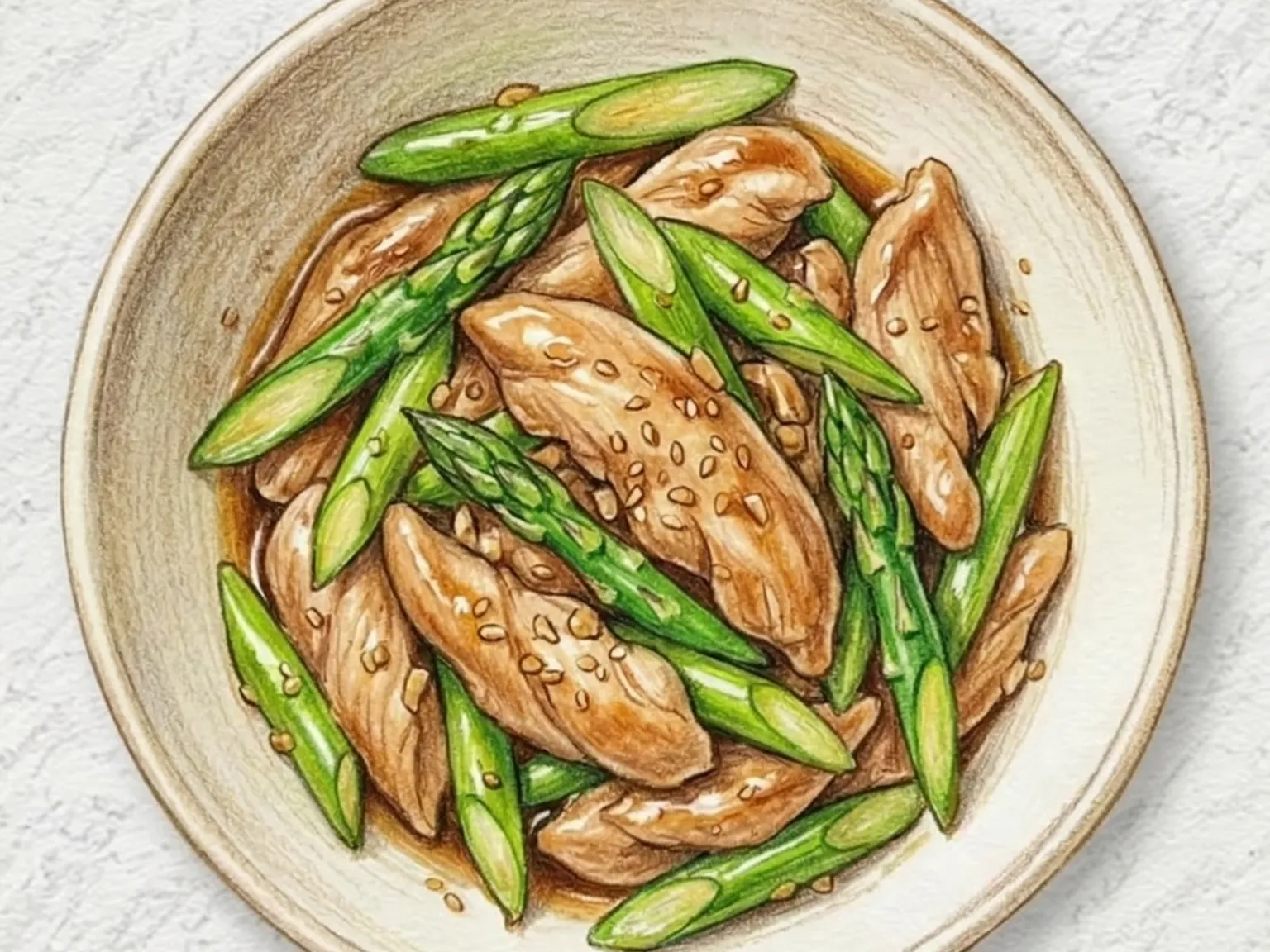
This Korean stir-fry marries chicken tenderloin with asparagus in a soy-based glaze - a modern home-cooking creation that balances lean protein with a vegetable that arrived in Korean kitchens only in the last few decades. The chicken is sliced thin against the grain and marinated briefly in soy sauce, garlic, and sesame oil so it stays moist during the fast stir-fry. Asparagus is cut on a sharp diagonal to expose maximum surface area for the sauce to cling to, and its woody ends are snapped off rather than cut. High heat is essential: the chicken sears quickly without releasing moisture, and the asparagus retains its bright green color and crisp snap. A finishing glaze of soy sauce, sugar, and oyster sauce caramelizes lightly in the pan, coating both ingredients in a thin, glossy layer. The dish is deliberately light - clean soy saltiness and vegetal freshness without the heaviness of a gochujang-based sauce.
Adjust Servings
Instructions
- 1
Cut chicken tenderloin into bite-size pieces and marinate with 1/2 tbsp soy sauce, ginger juice, and garlic for 10 minutes.
- 2
Trim woody ends of asparagus and cut into 4 cm pieces.
- 3
Heat oil and stir-fry chicken over medium-high heat for 3 minutes until lightly browned.
- 4
Add onion and asparagus, then stir-fry 2 more minutes to keep crunch.
- 5
Add remaining soy sauce and syrup, toss 1-2 minutes until glossy, then sprinkle sesame seeds.
As an Amazon Associate, we may earn from qualifying purchases.
Tips
Nutrition (per serving)
More Recipes

Korean Chicken Breast & Mugwort Stir-fry
Dakgaseumsal-mugwort-bokkeum is a Korean stir-fry that pairs thinly sliced chicken breast with young spring mugwort. The lean chicken provides a clean protein base, while the mugwort contributes a distinctive herbal fragrance with gentle bitterness. Light soy sauce and minced garlic season the dish without masking the natural flavors. It is a low-fat, aromatic dish popular during early spring when fresh mugwort is in season.

Korean Lotus Root Chicken Breast Stir-fry
Yeongeun-dakgaseumsal-bokkeum stir-fries soy-and-wine-marinated chicken breast with lotus root, bell pepper, and onion. The lotus root is sliced 3mm thick and soaked in vinegar water to prevent browning and keep its crunch, while the chicken is cooked quickly over medium-high heat to avoid drying out. Oligosaccharide syrup mixed with soy sauce creates a glossy glaze that coats the ingredients, and bell pepper adds color and sweetness. The crisp, starchy bite of the lotus root paired with the lean chicken makes this a protein-rich banchan that stays grease-free and packs well for lunches.

Korean Selleri Sogogi Bokkeum (Celery Beef Stir-fry)
Selleri sogogi-bokkeum stir-fries soy-marinated lean beef round with celery, onion, and bell pepper over high heat. The beef is seared first for about two and a half minutes then set aside, and the vegetables are cooked separately in the same pan to keep them crisp before everything is combined. Oyster sauce and soy sauce give the beef a deep umami character, while celery's herbal freshness and firm crunch lighten the overall dish. Adding celery leaves at the very end intensifies the aromatic, almost grassy fragrance.

Korean Garlic Scape Chicken Breast Stir-fry
Maneuljjong dakgaseumsal bokkeum is a stir-fry of soy-marinated chicken breast cooked with ginger and garlic, then combined with garlic scapes cut to 5 cm and julienned carrot, finished in a glaze of oyster sauce and soy sauce. Chicken breast is naturally lean, and the oyster sauce compensates for its low fat by adding concentrated umami. The garlic scapes' crisp texture and the carrot's mild sweetness break up the chicken's plainness, while ginger neutralizes any poultry odor. The high-protein, low-fat profile makes this a practical option for meal prep and calorie-conscious eating.

Korean Steamed Tofu with Soy Sauce
Dubu-jjim is firm tofu steamed and topped with a seasoning sauce of soy sauce, gochugaru, chopped green onion, garlic, and sesame oil. Cutting the tofu into thick slabs before steaming lets heat penetrate evenly, producing a surface with slight resistance and a silky interior. The soy-chili sauce drizzled on top seeps into the warm tofu, delivering salty and mildly spicy flavors in each bite. Sesame oil and seeds finish the dish with a toasted aroma. Cooked without any added oil, it is a clean, protein-rich banchan that works well on a vegetarian spread.

Korean Dak Ganjang Jorim (Soy Braised Chicken)
Dak ganjang-jorim is chicken thigh braised with potato in a soy sauce glaze enriched with oligosaccharide syrup, garlic, and ginger juice. As the thighs simmer, the soy base works its way between the muscle fibers, leaving the meat deeply seasoned with a glossy brown finish. Potato chunks break down slightly at the edges and soak up the braising liquid, turning starchy and satisfying. A single cheongyang chili added to the pot gives a mild, lingering kick that keeps the sweet-salty profile from becoming one-note.