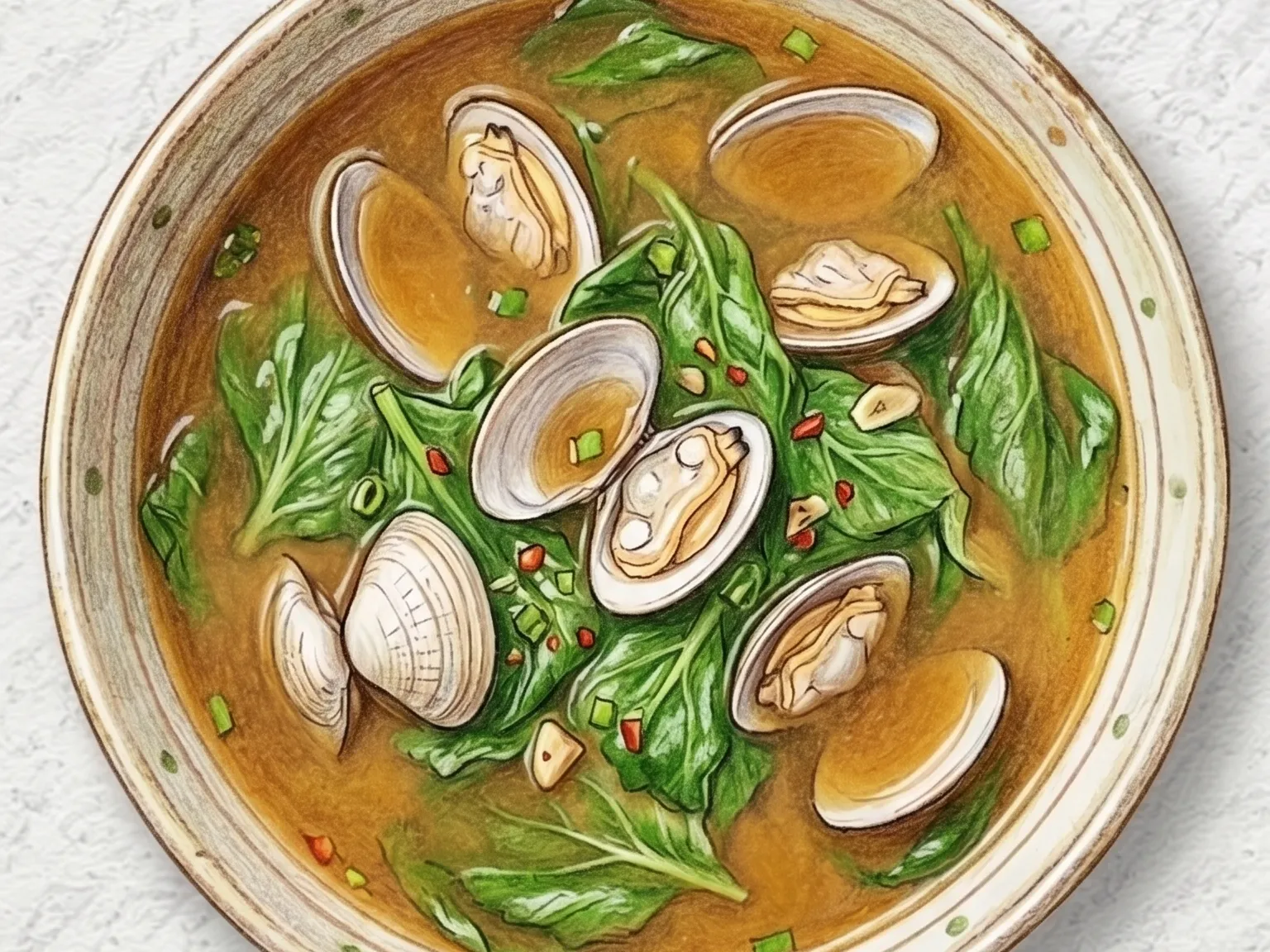
Korean Mallow Clam Soup (Doenjang Mallow and Clam Broth)
Auk-bajirak-guk combines two ingredients Koreans have paired in soups for generations - mallow greens and littleneck clams - in a doenjang-based broth that draws depth from both land and sea. The clams are soaked in salted water to purge sand, then simmered until they open and release their briny liquor into the pot. That liquor becomes the oceanic foundation of the broth, over which doenjang is dissolved to add fermented earthiness. Mallow leaves go in last, wilting in under a minute into a silky, slightly mucilaginous texture that thickens the soup naturally. The combination is greater than its parts: clam brininess sharpens the doenjang's funk, while the mallow's gentle sweetness softens both. A staple of Korean coastal home cooking, particularly along the southern and western shores where both ingredients are locally abundant.
Adjust Servings
Instructions
- 1
Purge clams, then rinse several times.
- 2
Remove tough stems and rub-wash mallow to reduce grassy taste.
- 3
Bring anchovy broth to a boil and dissolve doenjang through a strainer.
- 4
Add mallow and garlic, then simmer 6 minutes until tender.
- 5
Add clams and cook until shells open.
- 6
Add chili and green onion, then finish seasoning with salt.
As an Amazon Associate, we may earn from qualifying purchases.
Tips
Nutrition (per serving)
More Recipes

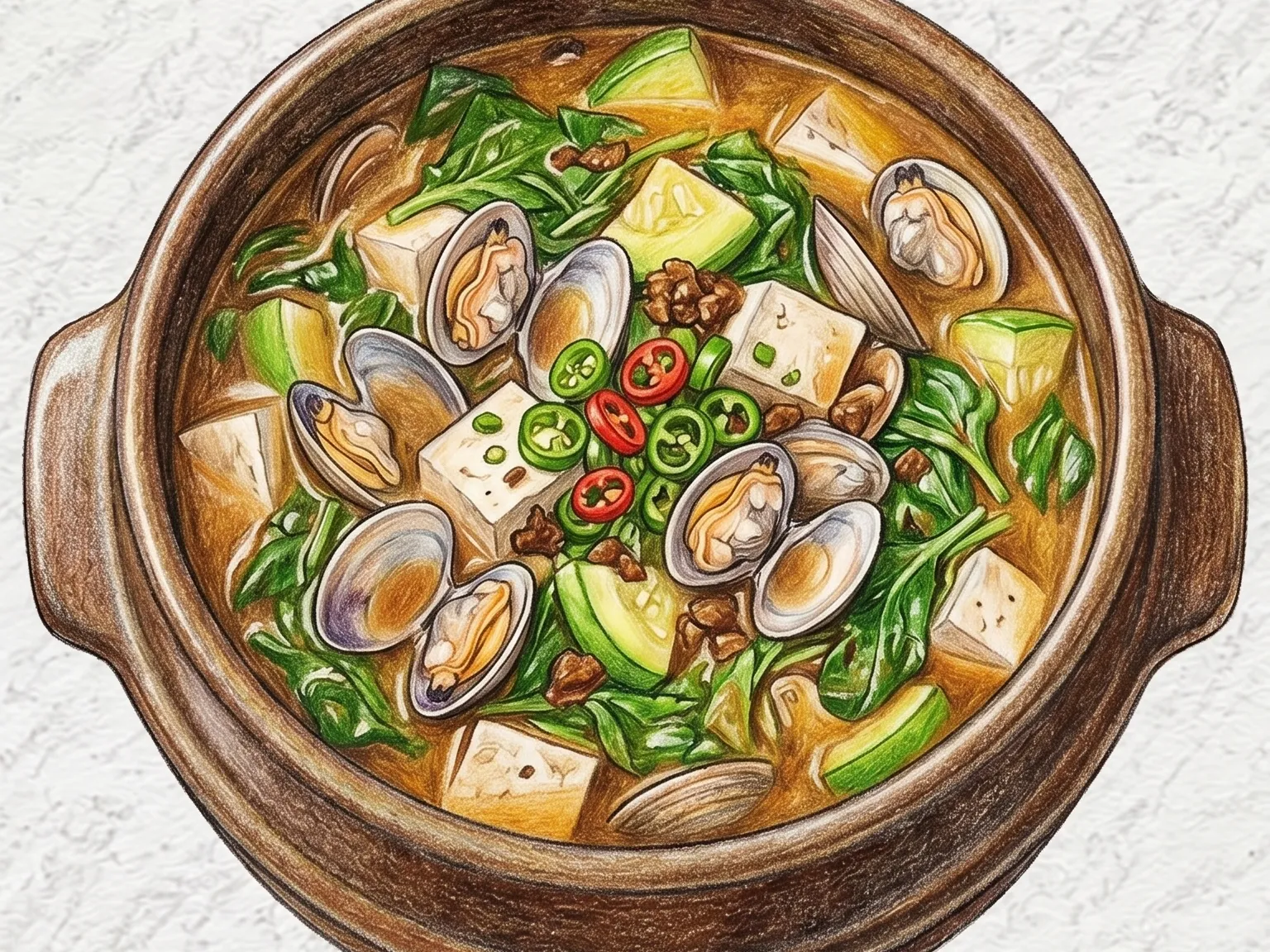
Korean Mallow & Clam Stew
Where auk-bajirak-guk is a mild, brothy soup, this jjigae version intensifies every element - more doenjang, denser ingredients, and a spicier edge from sliced cheongyang chili. The clams open first in boiling water, releasing concentrated sea juice. Doenjang and a spoonful of gochugaru dissolve into the broth, building a base that is simultaneously earthy, briny, and warm with chili heat. Cubed tofu and sliced zucchini add body and substance, turning the soup into a stew that can anchor a meal. Mallow leaves fold in at the end, their mucilaginous quality giving the broth a velvety body that clings to the spoon. Cheongyang chili slivers on top deliver a sharp, clean heat that cuts through the richness. This jjigae sits at the intersection of comfort and intensity - thick, warming, and deeply layered, meant to be eaten with steamed rice on cold evenings.

Korean Mallow Soup (Joseon-Era Doenjang Mallow Soup)
Auk-guk - mallow doenjang soup - has been part of Korean home cooking since the Joseon era, when auk (mallow) was one of the most commonly grown leafy greens in household gardens. The soup starts with an anchovy-kelp stock that provides a clean umami foundation. Doenjang is pushed through a sieve into the simmering broth to dissolve evenly without lumps, and garlic adds a quiet pungency beneath the fermented paste. Mallow leaves, torn by hand into rough pieces, wilt into the broth in under a minute. What sets auk-guk apart from other doenjang-guks is the mallow's distinctive texture - the leaves have a natural mucilage that gives the soup a slightly thickened, slippery quality on the tongue, unlike the clean broth of a spinach or radish version. Traditionally associated with nursing mothers in Korean folk wisdom, who ate it to promote milk production. The soup is at its best in early summer when fresh mallow is at peak tenderness.

Korean Spinach Clam Soup (Light Shellfish and Greens Broth)
Sigeumchi-bajirak-guk pairs spinach and manila clams in a light, transparent broth that showcases the natural flavor of both ingredients with minimal interference. The clams are purged of sand, placed in cold water, and brought to a boil; as each shell opens, it releases a briny, mineral-rich liquor that becomes the soup's foundation without any need for additional stock. Spinach is added only in the final minute so the leaves wilt just enough to soften while retaining their vivid green color and nutritional content. Soup soy sauce and a touch of garlic round out the seasoning, and the restraint is intentional - anything heavier would mask the delicate sweetness of the clam broth. The spinach's mild, grassy undertone quietly absorbs any seafood sharpness, leaving the overall flavor clean and balanced. Nutritionally, the pairing is notable: spinach is rich in iron, and clams are high in taurine and zinc, making this a soup frequently recommended for children and pregnant women in Korean households. From start to finish, the whole process takes about fifteen minutes, which explains why it appears so often on weeknight dinner tables.

Korean Young Radish Clam Soup
Yeolmu-bajirak-guk is a clear soup that draws its flavor from manila clams purged in salt water and simmered with thinly sliced radish. As the clam shells open, they release a briny, mineral-rich liquid that forms the broth's backbone. Young radish greens and a cheongyang chili are added in the final three minutes to keep the greens vibrant and slightly crunchy. Soup soy sauce and salt adjust the seasoning, though the clams provide enough natural salinity that only a light hand is needed.

Korean White Kimchi Clam Soup
Baekkimchi bajirak guk is a clear Korean soup that unites the gentle fermented acidity of white kimchi with the briny depth of manila clams. Purged clams are simmered in water until they open, then removed while the broth is strained to catch any grit. Chopped white kimchi is added to the clean clam stock, where its lactic tang dissolves into the liquid and produces a flavor profile that is both refreshing and layered. Including the white kimchi brine deepens the acidity, though its salt content means additional seasoning should follow a taste check. Thick-cut tofu slabs absorb the surrounding broth while contributing substance, and a single diagonally sliced cheongyang chili introduces a controlled heat into the otherwise mild soup. Scallion goes in at the end and should not overcook to preserve its fresh aroma. Unlike red kimchi soups, this version has no gochugaru, keeping the broth clear and letting the white kimchi's clean sourness sharpen the clam umami rather than competing with it.

Korean Seasoned Mallow Greens
Mallow greens have appeared in Korean cooking since the Joseon era, typically in doenjang-guk. For this namul, they are blanched just 40 seconds - supple but not collapsed. After squeezing dry, they are rubbed gently with doenjang, soup soy sauce, and garlic so the fermented paste penetrates the porous leaves. A finish of sesame oil adds a glossy coating. The distinctive mucilaginous quality - slightly slippery on the tongue - sets this apart from other Korean greens.