Korean Mallow Soup (Joseon-Era Doenjang Mallow Soup)
Auk-guk - mallow doenjang soup - has been part of Korean home cooking since the Joseon era, when auk (mallow) was one of the most commonly grown leafy greens in household gardens. The soup starts with an anchovy-kelp stock that provides a clean umami foundation. Doenjang is pushed through a sieve into the simmering broth to dissolve evenly without lumps, and garlic adds a quiet pungency beneath the fermented paste. Mallow leaves, torn by hand into rough pieces, wilt into the broth in under a minute. What sets auk-guk apart from other doenjang-guks is the mallow's distinctive texture - the leaves have a natural mucilage that gives the soup a slightly thickened, slippery quality on the tongue, unlike the clean broth of a spinach or radish version. Traditionally associated with nursing mothers in Korean folk wisdom, who ate it to promote milk production. The soup is at its best in early summer when fresh mallow is at peak tenderness.
Adjust Servings
Instructions
- 1
Tear auk into stem-and-leaf pieces and rinse in salted water.
- 2
Bring anchovy broth to a boil and dissolve the doenjang.
- 3
Add the mallow and simmer.
- 4
Season with garlic and salted shrimp.
As an Amazon Associate, we may earn from qualifying purchases.
Tips
Nutrition (per serving)
More Recipes

Korean Clam Doenjang Soup
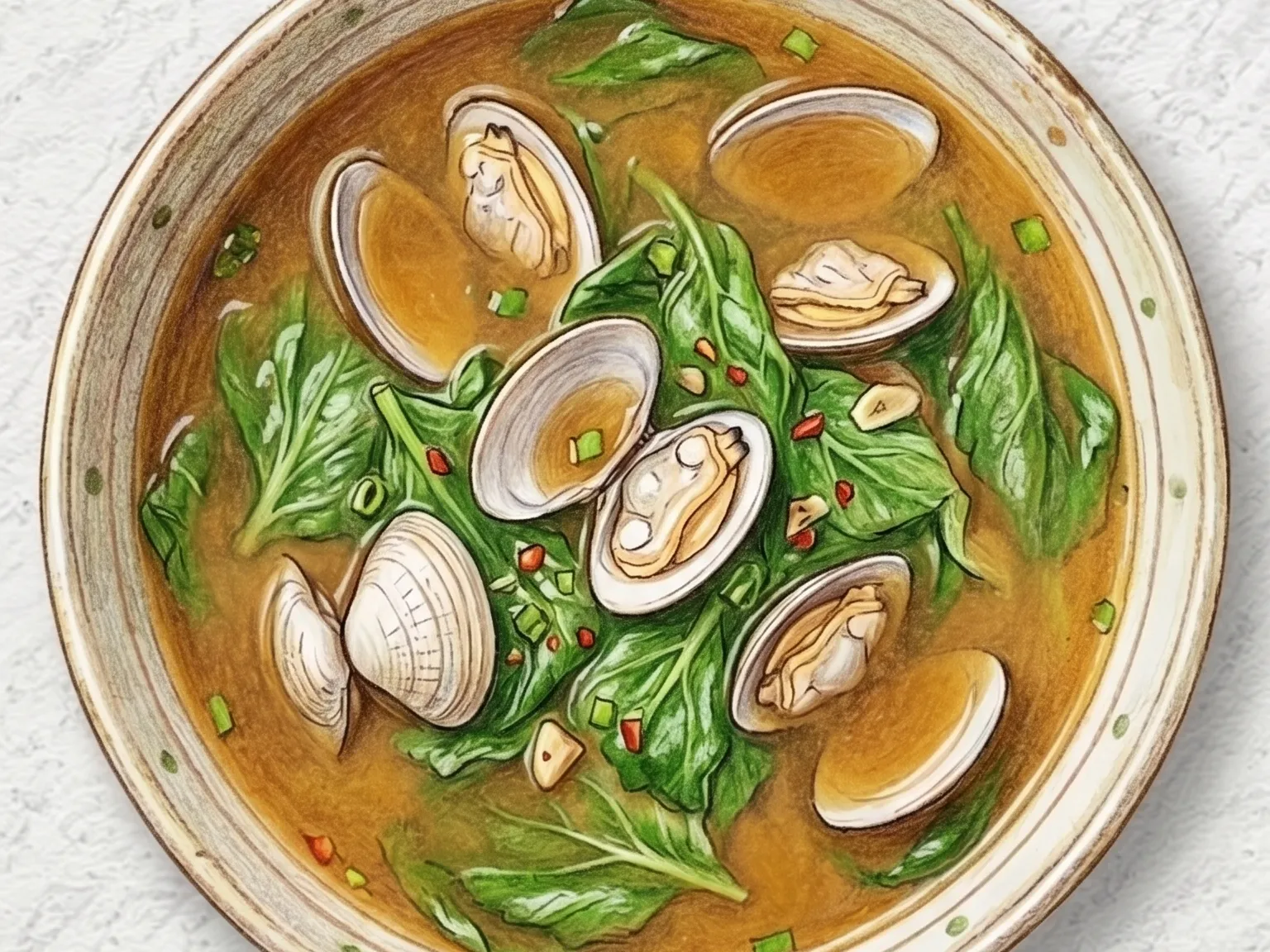
Bajirak doenjang guk is a Korean home-style soup where manila clams and doenjang combine to layer oceanic umami with fermented soybean depth. Starting the clams in cold water and bringing it to a boil draws their flavor out gradually, building a rich stock base as the temperature rises. The doenjang is dissolved through a strainer to keep the broth smooth and free of grainy particles, and its amount should be reduced from the usual quantity because the clams themselves contribute significant saltiness. Tofu and Korean zucchini add soft textures; the zucchini releases a gentle sweetness into the broth as it cooks through. Minced garlic harmonizes with the fermented aroma of the doenjang, and scallion added in the final minute preserves its fresh sharpness. No separate anchovy or kelp stock is needed because the clams provide enough umami on their own, making the soup's approach deliberately simple: just water, clams, and doenjang produce a broth with surprising depth.

Korean Spicy Chicken Soup
Dakgaejang is a spicy Korean chicken soup modeled on the classic beef yukgaejang, using a whole chicken boiled and shredded as the protein base. The shredded meat, rehydrated bracken fern, and bean sprouts are tossed in a seasoning of gochugaru, soy sauce, and sesame oil, then simmered in the reserved chicken broth. As the chili flakes dissolve into the oil, they create a broth that is simultaneously fiery and layered rather than one-dimensionally hot. Bracken adds a chewy, almost meaty resistance alongside the snappy bean sprouts, and making chili oil separately before stirring it in deepens the heat with a roasted, smoky undertone.

Geundae-guk (Swiss Chard Doenjang Tofu Soup)
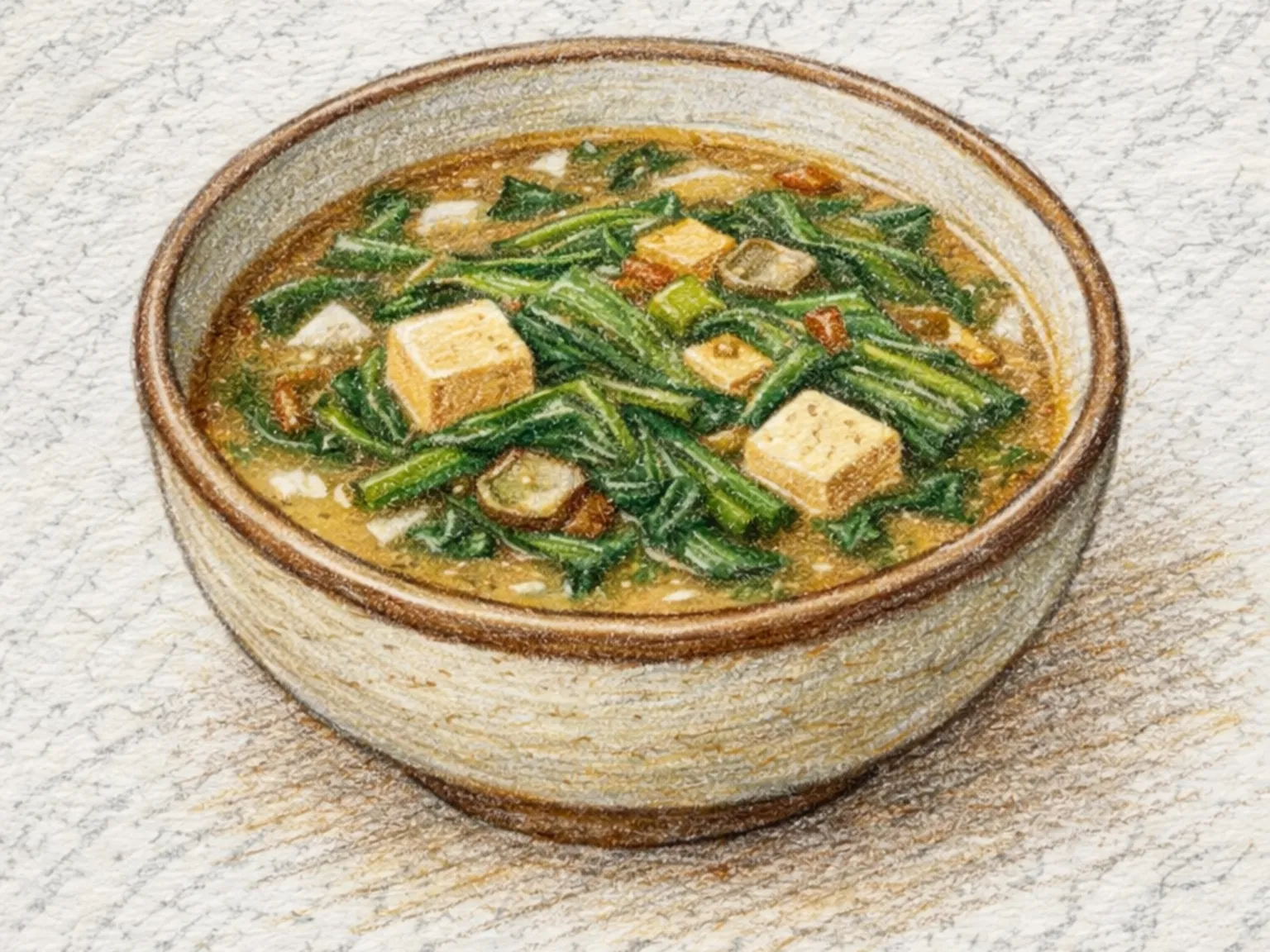
Geundae-guk is a homestyle Korean soup made by simmering Swiss chard leaves and stems in a doenjang-based broth. Swiss chard, called geundae in Korean, has broader leaves and thicker stalks than spinach, giving the soup a more substantial bite. The slight bitterness of the greens pairs naturally with the fermented depth of doenjang, creating a flavor that is earthy and grounding. Anchovy stock forms the base, and cubed tofu is typically added for protein and a soft contrast to the chewy greens. Minced garlic rounds out the aroma. The entire cooking process takes barely ten minutes once the stock is boiling, making it one of the fastest doenjang soups to prepare. In Korean households, this soup appears most often in spring and autumn when fresh chard is in season, though it works year-round with any available leafy greens.

Korean Flounder Seaweed Soup
Gajami miyeok-guk is a seaweed soup centered on a whole flounder. Rehydrated seaweed is stir-fried in sesame oil first to deepen its fragrance, then the fish is added with water and simmered until the broth turns milky from the gelatin in the bones. Soy sauce and garlic are the only seasonings, keeping the focus on the flounder's mild sweetness and the mineral taste of the seaweed. Blanching the fish briefly before adding it to the pot removes any lingering fishiness, leaving a clean, nourishing bowl.

Korean Crab Doenjang Stew
This crab stew uses a whole blue crab simmered with doenjang in an anchovy broth base. The crab shell and meat release a concentrated seafood essence that melds with the fermented soybean paste. Tofu and zucchini absorb the rich broth, making every component flavorful. Built on just five core ingredients, the stew lets the natural sweetness of the crab take center stage.

Korean Ox Bone Broth (Milky Collagen-Rich Marrow Soup)
Sagol-guk is a Korean beef bone broth made by simmering marrow bones for hours until the liquid turns milky white from dissolved collagen and marrow. The seasoning is minimal - just green onion, garlic, and a touch of salt - letting the bone's natural richness speak for itself. The bones can be reboiled three or four times, each batch yielding progressively lighter broth. It is traditionally served piping hot with rice, seasoned to taste at the table.