Ayam Lemak Cili Padi (Malay Coconut Chicken with Bird's Eye Chili)
Quick answer
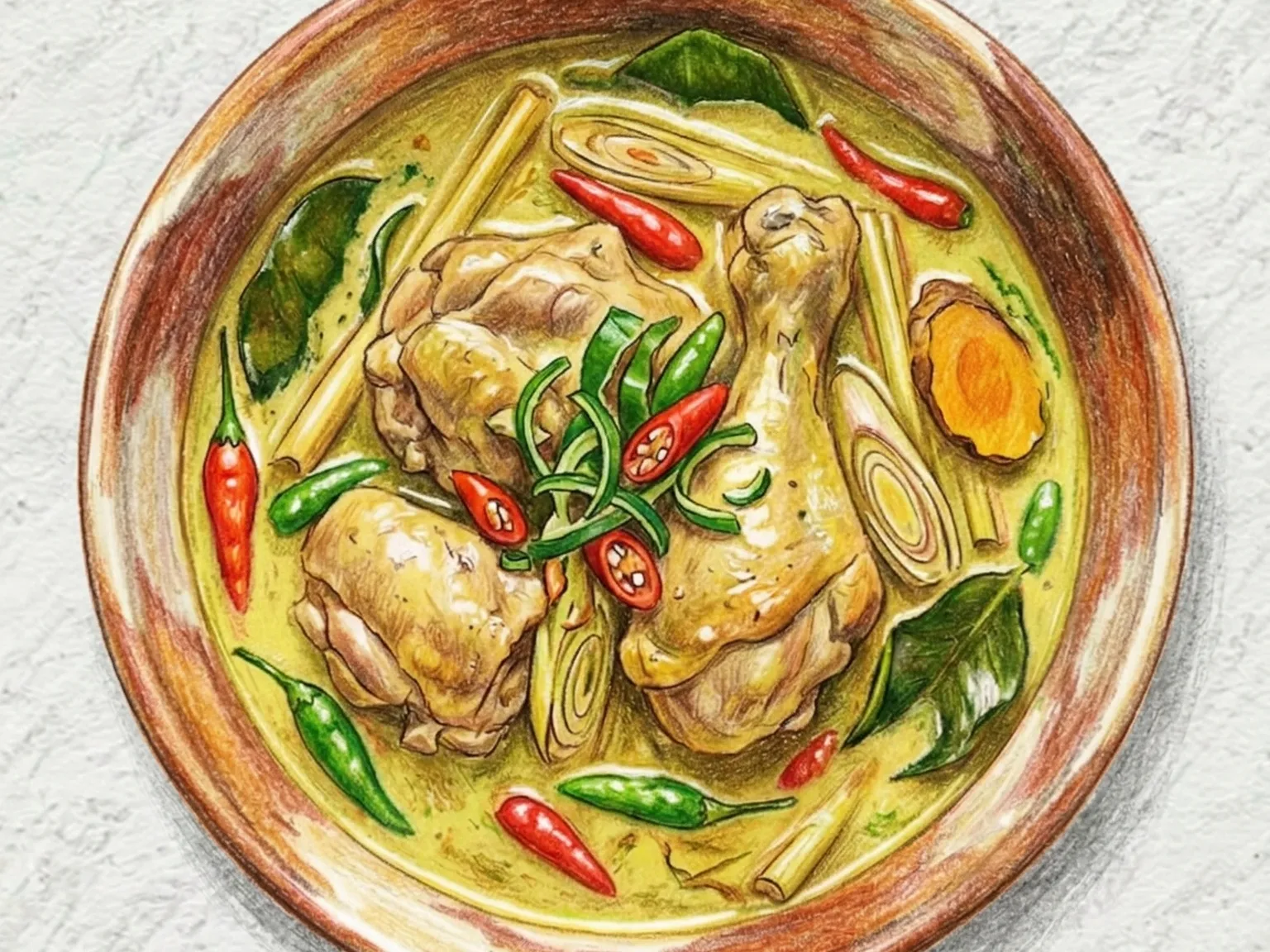
Ayam lemak cili padi is a kampung staple from Malaysia's east coast states, built on a simple formula of chicken simmered in thin coconut milk with bird's eye chilies, tu...
What makes this special
- Ayam Lemak Cili Padi features chicken simmered in light coconut milk with sharp bird's eye chilies.
- Broth stays light and un-reduced, designed to pool over steamed rice
- Bird's eye chili delivers sharp, immediate heat that lingers after the meal
Key ingredients
Core cooking flow
- 1 Combine 80g of shallots, 8 bird's eye chilies, and 20g of fresh turmeric in a blender.
- 2 Place the paste in a deep pan or pot over medium-low heat.
- 3 Add 700g of chicken thigh pieces and stir to coat them thoroughly with the golden paste.
Ayam lemak cili padi is a kampung staple from Malaysia's east coast states, built on a simple formula of chicken simmered in thin coconut milk with bird's eye chilies, turmeric, lemongrass, and shallots. Unlike richer curries where coconut milk is reduced to a thick gravy, the broth here stays deliberately soupy and light, designed to be spooned over steamed rice. Bird's eye chilies hit with an immediate, sharp heat the moment they touch the tongue - a quality distinct from the slow-building burn of dried chili pastes - and the heat lingers well past the last spoonful. Turmeric turns the broth a pale gold and contributes an earthy bitterness that runs beneath the coconut sweetness, keeping the overall flavor from tipping too rich. The dish requires no elaborate technique: the same pot holds everything from raw chicken to finished broth, and the short ingredient list reflects the rural economy it came from.
Instructions
Read the steps as a cooking flow: prep, heat, seasoning, doneness control, and finish.
- 1Prep
Combine 80g of shallots, 8 bird's eye chilies, and 20g of fresh turmeric in a blender.
Process until the mixture becomes a completely smooth, bright yellow spice paste without any visible lumps.
- 2Control
Place the paste in a deep pan or pot over medium-low heat.
Sauté while stirring continuously until the raw smell disappears and the earthy, bitter aroma of turmeric begins to fill the kitchen.
- 3Heat
Add 700g of chicken thigh pieces and stir to coat them thoroughly with the golden paste.
Cook until the exterior of the chicken loses its pink color and becomes opaque and white.
- 4Step
Pour in 400ml of coconut milk and add one bruised lemongrass stalk.
Stir the bottom of the pan to integrate the spice paste into the liquid until the broth turns a consistent pale gold.
- 5Control
Reduce the heat to low and simmer gently for 25 minutes without a lid.
Ensure the broth remains light and soupy rather than thickening into a heavy gravy while the chicken becomes soft.
- 6Finish
Season with 1 teaspoon of salt and 1 teaspoon of sugar to balance the sharp heat.
Remove the lemongrass stalk and serve the chicken with plenty of the fragrant, spicy broth over steamed rice.
After the steps
Pick a recipe that fits this dish.
Continue with shared ingredients, meal pairings, or a similar method.
Recipes That Go Well With This
More Asian →Based on shared ingredients and meal pairing
Nasi Kandar (Penang Indian-Muslim Rice with Mixed Curries)
Nasi kandar is a Penang-born rice dish rooted in the culinary traditions of Malaysia's Indian-Muslim community. A mound of steamed white rice is doused with multiple curry gravies and accompanied by a choice of protein and vegetable sides. The defining technique is kuah campur - the deliberate mixing of different curry sauces so they pool together and soak into the rice, creating a layered complexity no single curry could achieve alone. Coconut milk lends a gentle richness, curry powder supplies aromatic depth, and chili brings lingering warmth. Diners select their own combination from a counter full of dishes, making each plate unique.
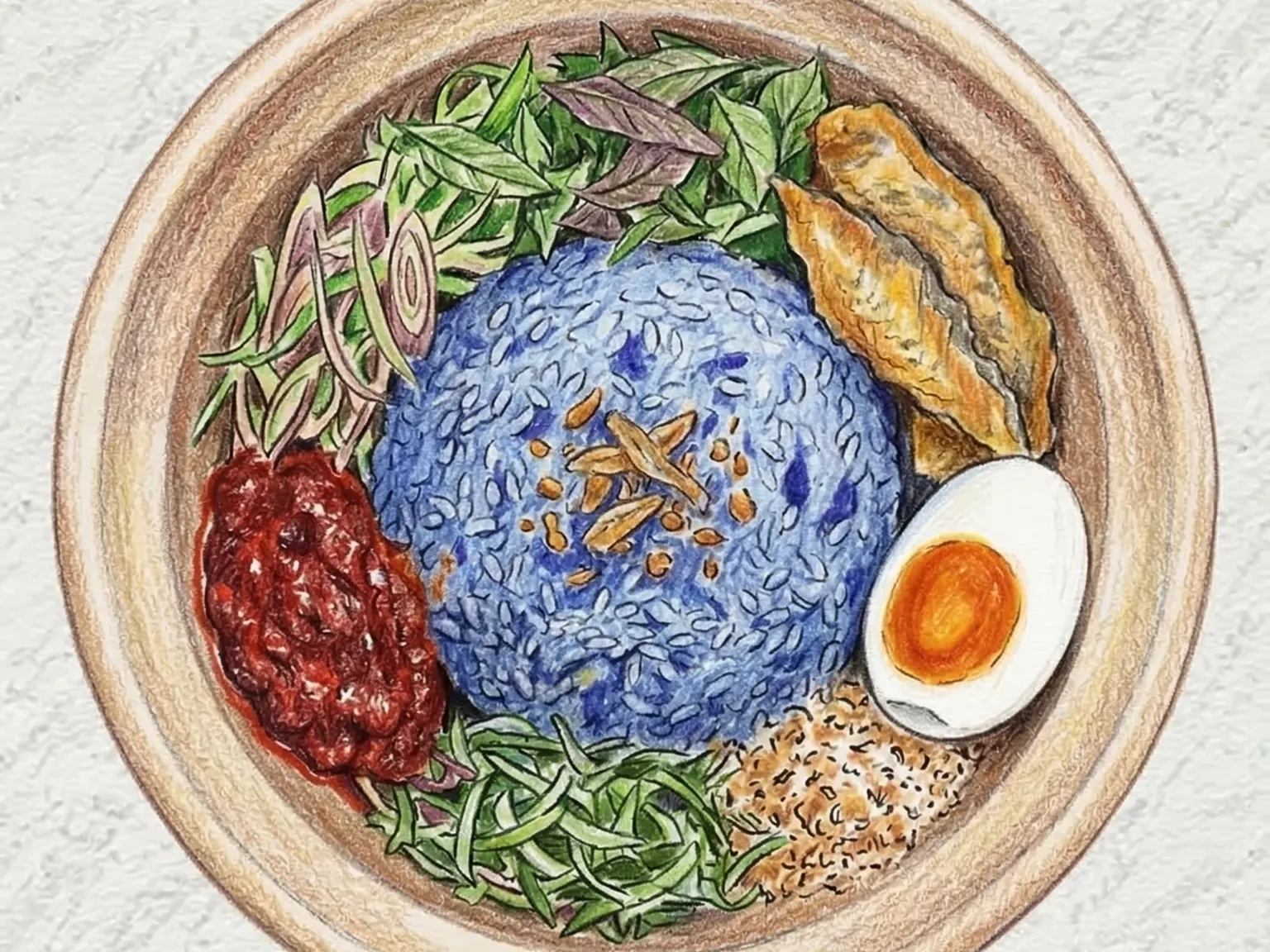
Nasi Kerabu (Malaysian Blue Herb Rice with Coconut and Vegetables)
Nasi kerabu is a traditional rice dish from Malaysia's east coast that commands attention with its striking blue-tinted rice. The color comes from butterfly pea flowers, which stain the grains a vivid indigo without altering the taste. Rice is cooked with coconut milk and lemongrass, then served alongside grilled fish, julienned cucumber, blanched bean sprouts, and finely chopped fresh herbs. Sambal provides a spicy counterpoint that ties the plate together. The proper way to eat it is to mix everything by hand, combining herbs, rice, protein, and chili paste in each bite so no two mouthfuls taste the same. Fresh mint and cilantro give the dish a bright, herbaceous character.
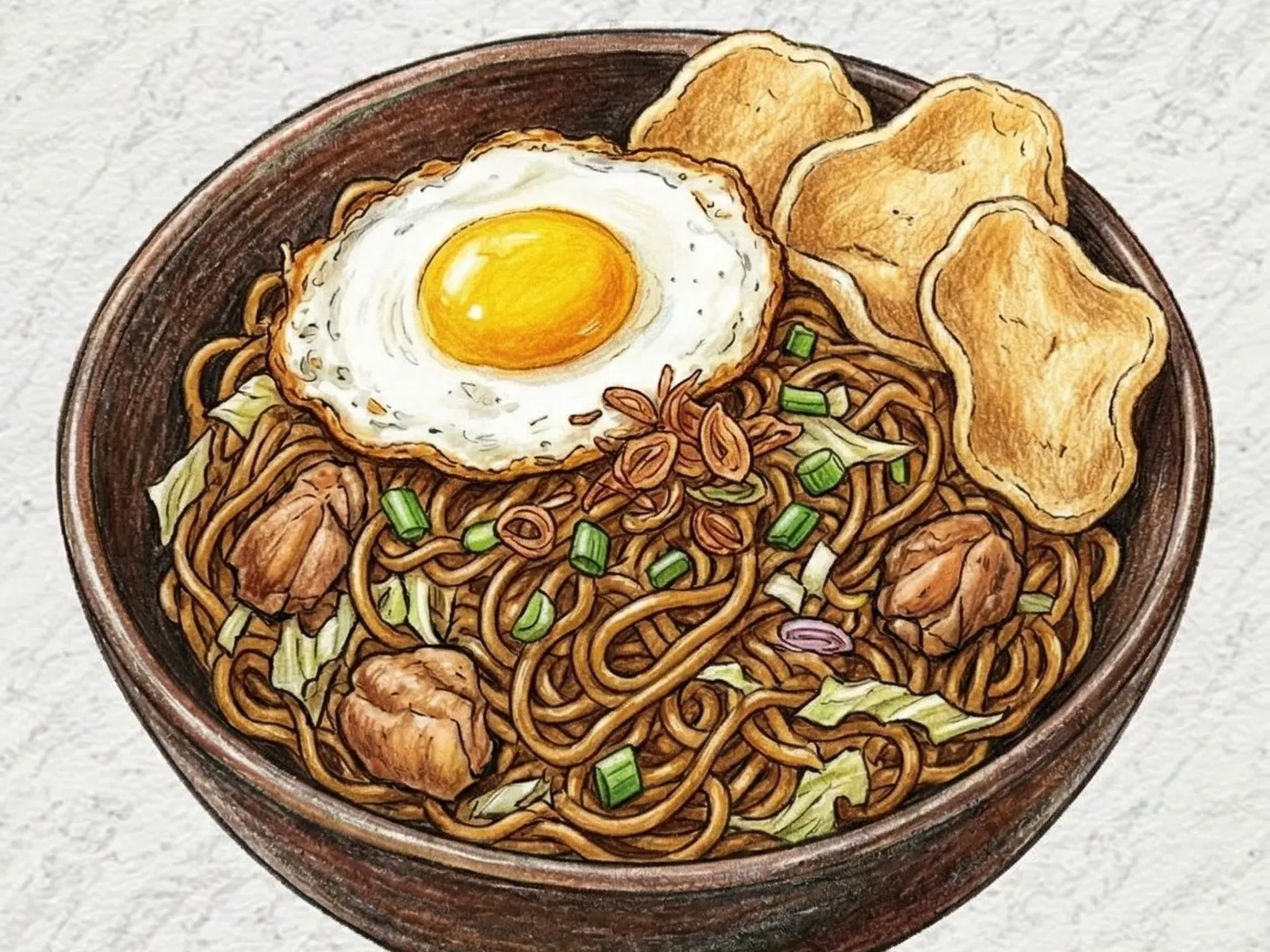
Mee Rebus (Noodles in Sweet Potato Curry Gravy)
Mee rebus is a Malaysian noodle dish where springy yellow noodles are topped with a thick gravy built from mashed sweet potato, curry powder, peanut butter, and chicken stock. The sweet potato dissolves into the stock to form a naturally thick base, and the curry powder and peanut butter contribute layers of spice and nuttiness that make the sauce unlike any other noodle topping. Soy sauce adds fermented depth and ties the sweetness and spice together. If the gravy becomes too thick during cooking, extra stock loosens it without diluting the flavor. A halved boiled egg and a squeeze of fresh lime just before eating cut through the richness, bringing the bright acidity that is a hallmark of Southeast Asian noodle dishes.
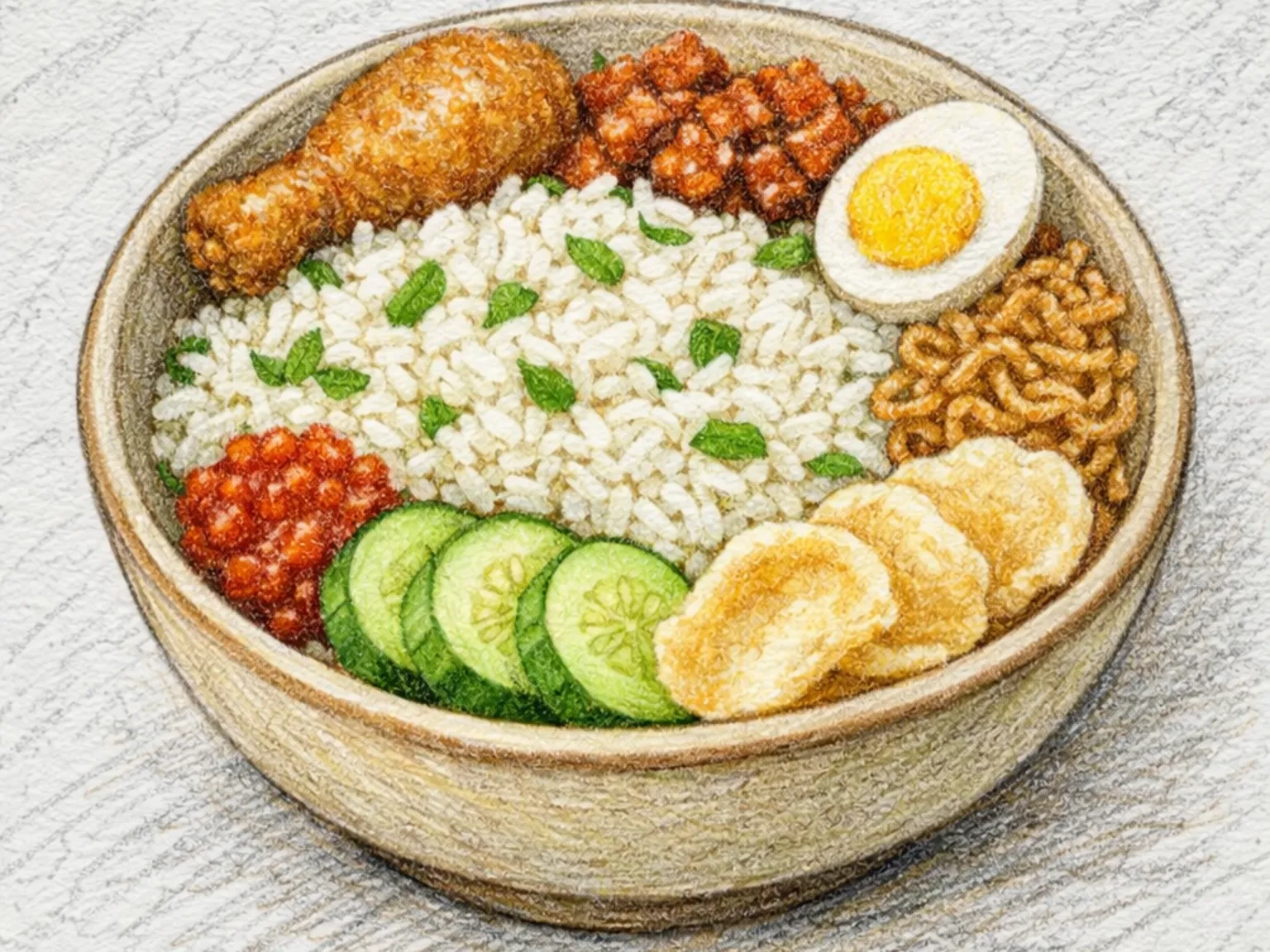
Nasi Lemak (Malaysian Coconut Pandan Rice with Anchovy Sambal)
Nasi lemak is Malaysia's definitive national dish, built on a foundation of rice cooked in coconut milk with pandan leaves. The rice alone carries a subtle richness and a faint vanilla-like fragrance from the pandan, making it flavorful even before any accompaniment. The essential sambal is a cooked chili paste built on shrimp paste and tamarind, delivering sweetness and slow-building heat in equal measure. Crispy fried anchovies and roasted peanuts contribute crunch, while a halved boiled egg and fresh cucumber slices balance the richness. In its simplest form, nasi lemak is wrapped in a banana leaf for a quick breakfast.
Serve with this
Roasted Kabocha Miso Nut Salad
Kabocha squash is sliced into half-moons and roasted in a hot oven until the cut surfaces caramelize and the flesh turns chestnut-soft and dry in the best possible way. The dressing combines white miso, rice vinegar, and maple syrup into a mixture where salt, acid, and a restrained sweetness reinforce each other and amplify the roasted squash underneath. Arugula provides the peppery, slightly bitter base that keeps the salad from tipping too sweet. Chickpeas add lean protein and a firm, satisfying chew that holds up against the tender squash. Walnuts, crushed roughly rather than chopped fine, contribute crunch and a deep, roasted nuttiness that layers well with the soft squash in each forkful. The contrast between textures, tender squash against resistant walnut, is what makes this salad interesting across every bite. Autumn kabocha, at the peak of its natural sugar content, delivers the most pronounced sweetness, and the dish is filling enough to stand as a vegetarian main course with nothing else alongside it. If using refrigerated squash, adjust oven time and temperature to ensure even caramelization.
Korean Makgeolli Punch (Rice Wine Yuja Citrus Bowl)
Makgeolli punch is a fruity Korean rice wine cocktail that combines makgeolli with yuja marmalade, lemon juice, and lemon-lime soda in a large bowl over plenty of ice. The creamy grain character of makgeolli merges with the bright citrus of yuja to create a light, festive drink. Thinly sliced apple floated in the bowl adds crisp bites of fruit between each ladle. A single gentle stir just before serving keeps the carbonation intact and the flavors evenly distributed. The main ingredients are makgeolli, lemon-lime soda, yuja marmalade, and lemon juice, and the recipe depends on careful handling of chilling time and sweetness.
Korean Blue Crab Doenjang Pot Rice
Cleaned blue crab sits atop soaked rice in a heavy pot, cooked in anchovy-kelp stock that has been infused with dissolved doenjang. Garlic and vegetables are sauteed first in perilla oil to build an aromatic base before the stock-doenjang mixture is poured in and brought to a boil. The crab goes on top and the pot is covered for five minutes on high heat, fifteen minutes on low, then ten minutes off the heat to rest and steam through. The crab's briny sweetness and the doenjang's fermented, earthy depth soak into every grain of rice during the long, slow cook. Zucchini and shiitake mushrooms add a mild sweetness that tempers the saltiness and rounds out the bowl. One additional minute on low heat after resting creates a golden, nutty nurungji crust at the bottom, a prized texture in Korean pot rice. Doenjang saltiness varies by brand, so tasting the diluted stock before adding rice lets you calibrate without oversalting. A few slices of cheongyang chili on top cut through the fermented richness and add a sharp finishing heat.
Similar recipes
Otak-Otak (Southeast Asian Grilled Fish Paste in Banana Leaf)
Otak-otak represents a traditional method of preparing grilled fish paste that is prevalent throughout various regions of Southeast Asia. It maintains particularly deep roots within the culinary heritage of Malaysia and Singapore. The process begins by taking fresh white fish and processing it into a very smooth consistency. This fish base is combined with coconut milk, egg whites, and red curry paste to create a uniform mixture. Once the paste is ready, it is spread out in thin layers onto prepared sections of banana leaves. These leaves are then folded to secure the contents before being placed over a charcoal fire for grilling. As the charcoal heat causes the edges of the banana leaves to char, a subtle smoky quality is transferred through the leaf directly into the soft fish mixture contained within. Finely sliced kaffir lime leaves are incorporated into the paste to provide a distinct citrus profile, which serves to balance the inherent fat content of the coconut milk. In terms of its final consistency, this preparation differs significantly from the dense structure typically associated with Western-style fish cakes. It possesses a texture that is more comparable to a firm custard, being notably smooth and moist while remaining soft when bitten into.
Singaporean Spicy Noodle Soup
Laksa is a spicy coconut curry noodle soup from Singapore and Malaysia, assembled from a laksa paste of lemongrass, galangal, dried shrimp paste, and chili that is stir-fried in oil until deeply fragrant and the raw aroma of the shrimp paste cooks off. Coconut milk and shrimp stock are added to build the thick, aromatic broth that defines the dish, and fish sauce seasons it to a savory depth. Shrimp and fried tofu puffs simmer briefly in the completed broth, long enough to heat through but not so long that the shrimp toughens. Rice vermicelli, softened in hot water until pliable, goes into each bowl, and the broth is ladled over generously. Bean sprouts, halved soft-boiled eggs, and a wedge of lime are arranged on top - the lime is squeezed in at the table to cut the coconut richness with bright acidity. Store-bought laksa paste is a practical shortcut that produces a solid result, but homemade paste, with its layers of fresh lemongrass, galangal, fried shallots, and fermented shrimp, delivers a noticeably more complex and fragrant broth. Full-fat coconut milk is essential - reduced-fat versions thin out the broth and undercut the characteristic creaminess that sets laksa apart. A well-reduced shrimp stock intensifies the umami of the base considerably.