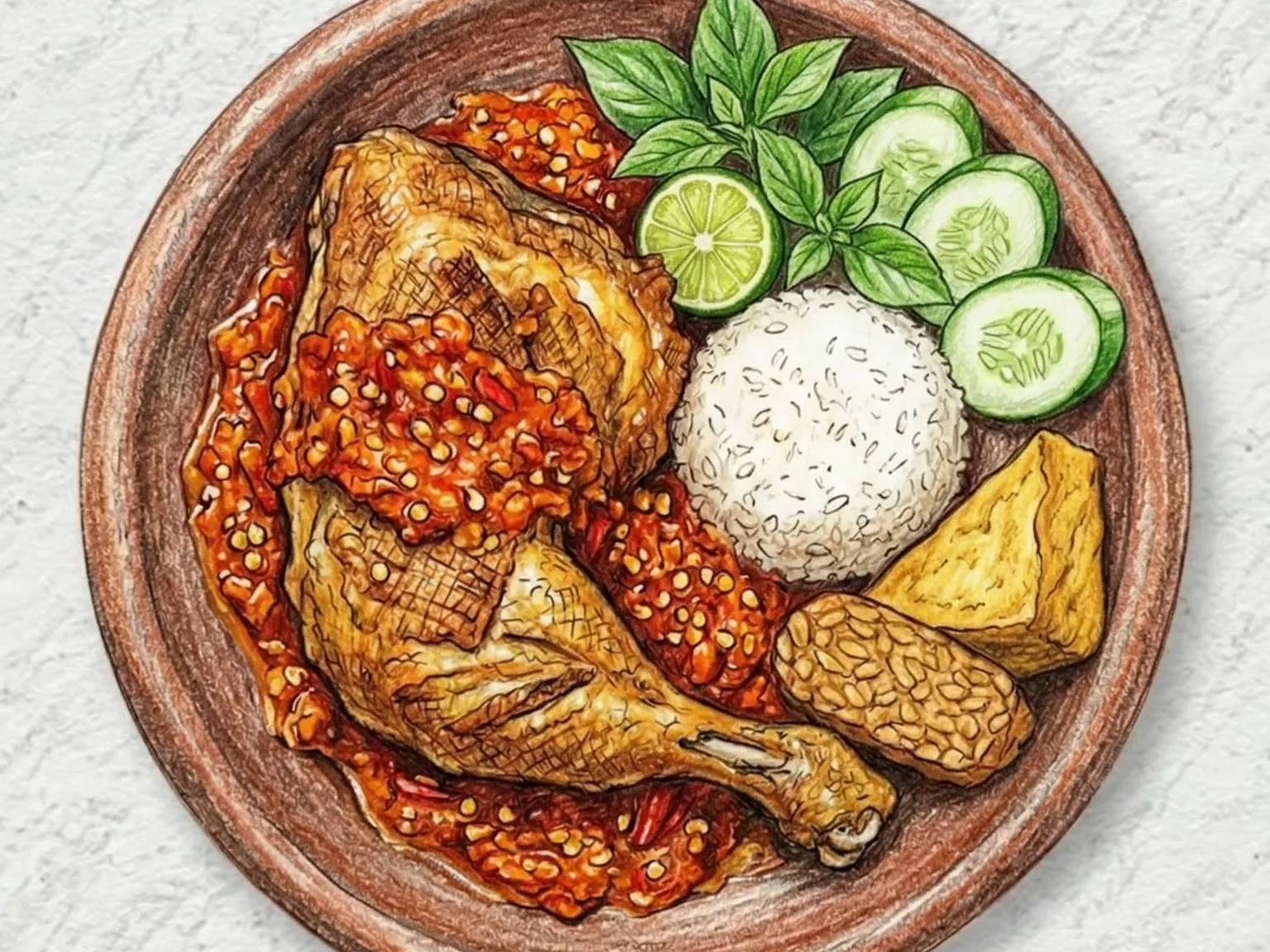
Ayam Penyet (Javanese Smashed Fried Chicken with Sambal)
Ayam penyet - meaning 'smashed chicken' in Javanese - is an East Javanese street dish where the chicken is deliberately flattened with a pestle after frying. First braised in turmeric-galangal water until cooked through, then deep-fried until the skin blisters and turns mahogany. The final smash on a stone mortar cracks the crust open, exposing the moist interior and creating irregular surfaces that catch the sambal. That sambal - pounded fresh from bird's eye chili, shallot, tomato, and shrimp paste - is the true centerpiece, fiercely hot and funky. Served on a banana leaf with steamed rice, fried tofu, and raw vegetables, it is a full meal assembled in street-stall speed.
Adjust Servings
Instructions
- 1
Simmer chicken legs with salt, ginger, and garlic for 15 minutes.
- 2
Drain and pat dry the par-cooked chicken.
- 3
Deep-fry chicken at 180°C until crisp and golden.
- 4
Pound chili, garlic, salt, and lime juice into sambal.
- 5
Lightly smash the fried chicken and serve with sambal.
As an Amazon Associate, we may earn from qualifying purchases.
Tips
Nutrition (per serving)
More Recipes

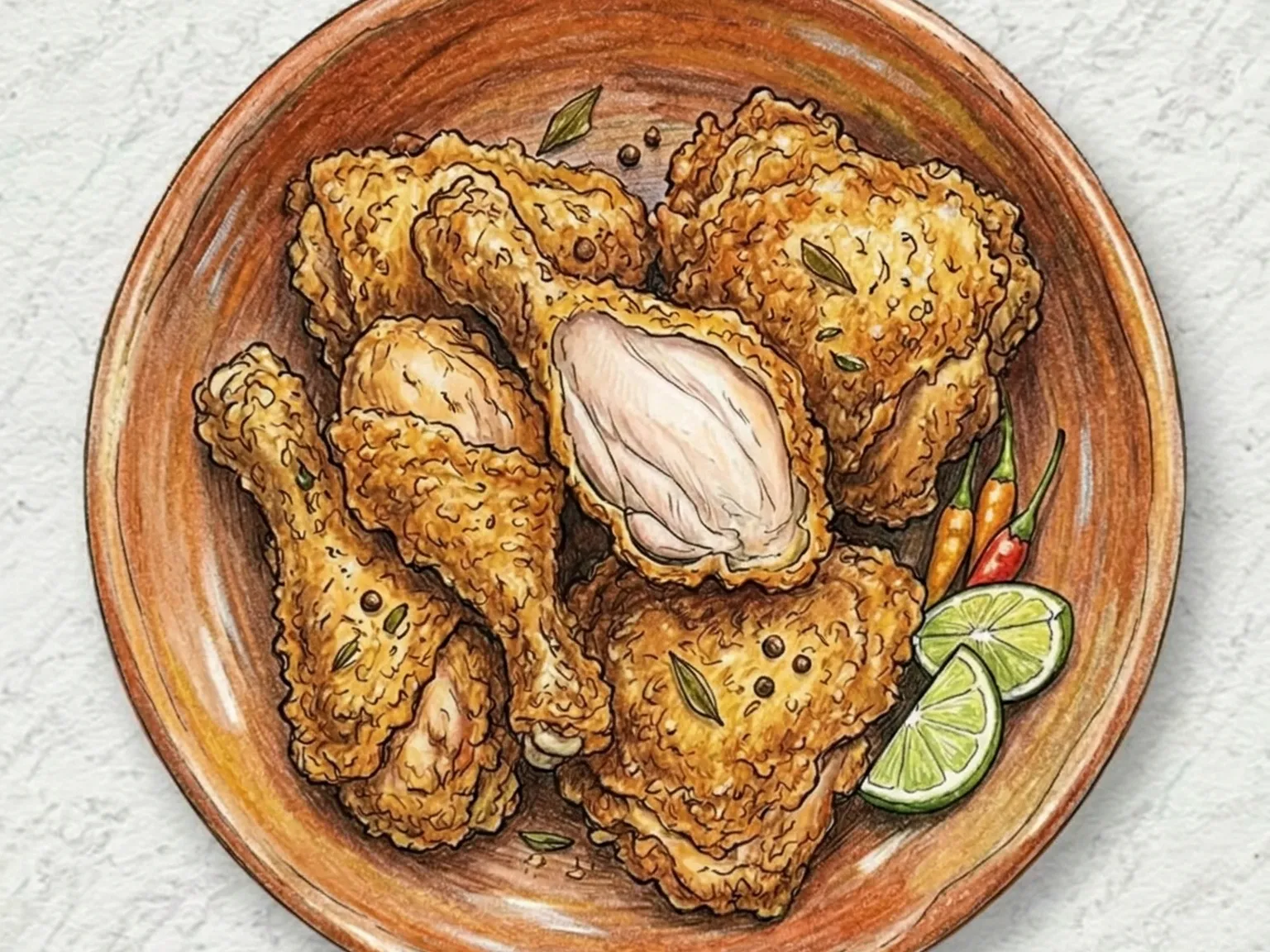
Ayam Goreng (Indonesian Spiced Fried Chicken Without Coating)
Ayam goreng is Indonesia's answer to fried chicken, but the technique diverges sharply from Western versions - there is no flour coating. Instead, chicken pieces are simmered in a paste of garlic, ginger, coriander, turmeric, and coconut milk until the liquid reduces to almost nothing and the spices have permeated the meat to the bone. Only then does the chicken hit hot oil, where the coconut-milk residue on the skin fries into a thin, uneven crust with a deep golden hue. The flavor is aromatic rather than salty, with turmeric's earthiness and coriander's citrus notes layered into every bite. Street stalls across Jakarta and Yogyakarta serve it with sambal, lalapan (raw vegetables), and steamed rice.

Soto Ayam (Indonesian Golden Turmeric Chicken Noodle Soup)
Soto ayam is Indonesia's beloved chicken soup, recognizable by its vivid golden broth colored with turmeric. The flavor base is a paste of garlic, turmeric, and galangal, fried until fragrant and then simmered with chicken pieces and lemongrass stalks for at least thirty minutes to build a deeply aromatic stock. The chicken is removed, shredded by hand, and returned to the bowl along with rice noodles, halved boiled eggs, and a handful of fresh bean sprouts. Each component adds its own texture-the silky noodles, the springy sprouts, the tender chicken-while the broth ties everything together with its warm, earthy spice profile. A squeeze of lime at the table brightens the bowl and lifts the heavier notes of galangal and turmeric. Soto ayam appears at breakfast stalls, family dinners, and celebrations across the Indonesian archipelago.

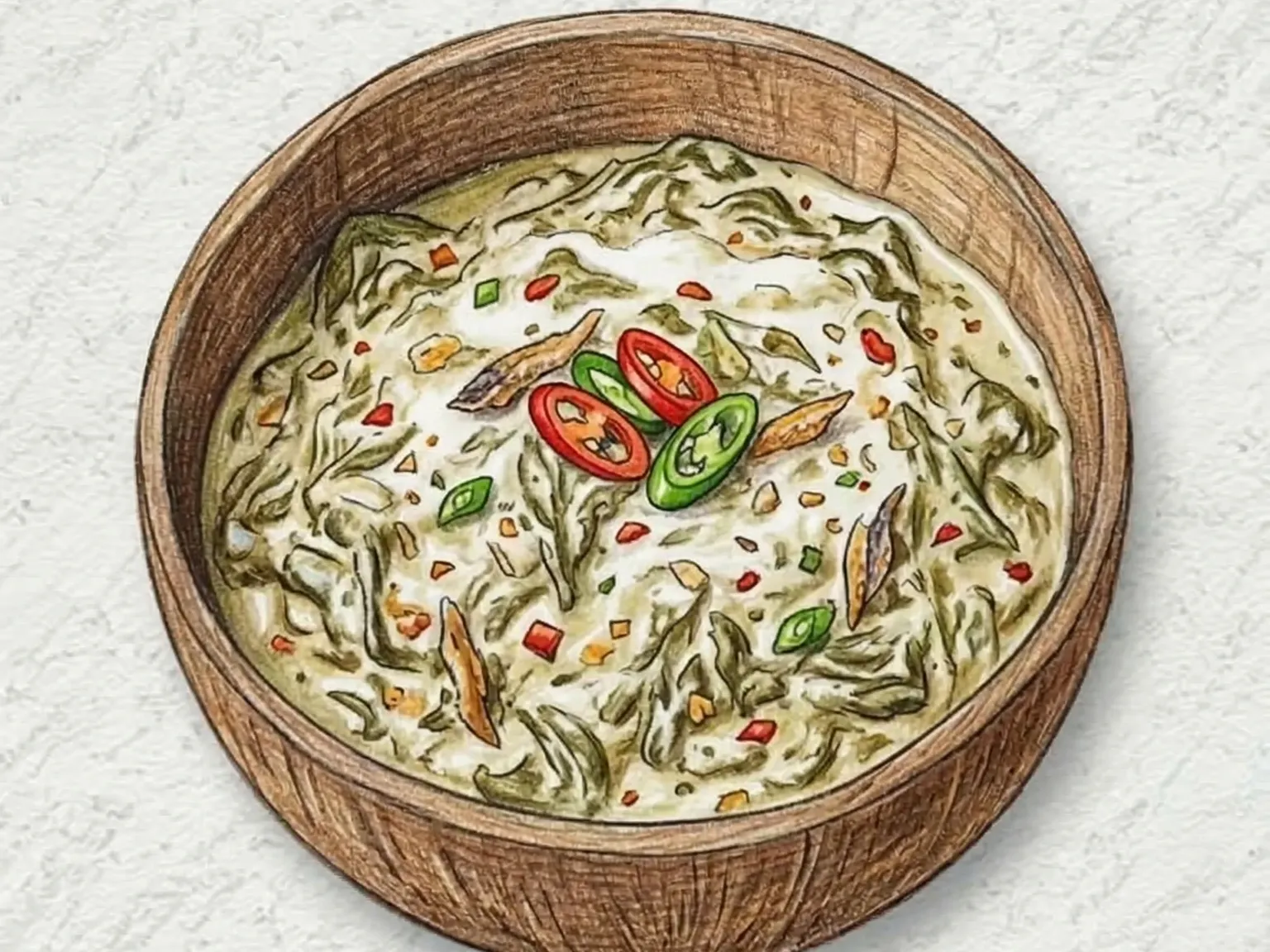
Ayam Gulai (Indonesian Spiced Coconut Chicken Curry)
Ayam gulai is a Minangkabau curry from West Sumatra, where coconut milk and a complex spice paste define the regional cuisine known as Padang food. The base - a rempah of shallots, garlic, ginger, galangal, turmeric, and candlenuts - is fried low and slow until oil separates, signaling that the paste is properly cooked. Chicken pieces braise in this spiced coconut sauce for thirty minutes or more, until the meat nearly falls off the bone and the gravy thickens to a bright yellow, oily consistency. The flavor is rich and layered: turmeric and galangal provide warmth, kaffir lime leaves add a citrus top note, and the coconut fat carries everything across the palate. In Padang restaurants, it sits in a stack of small plates brought to the table, and you pay only for what you eat.

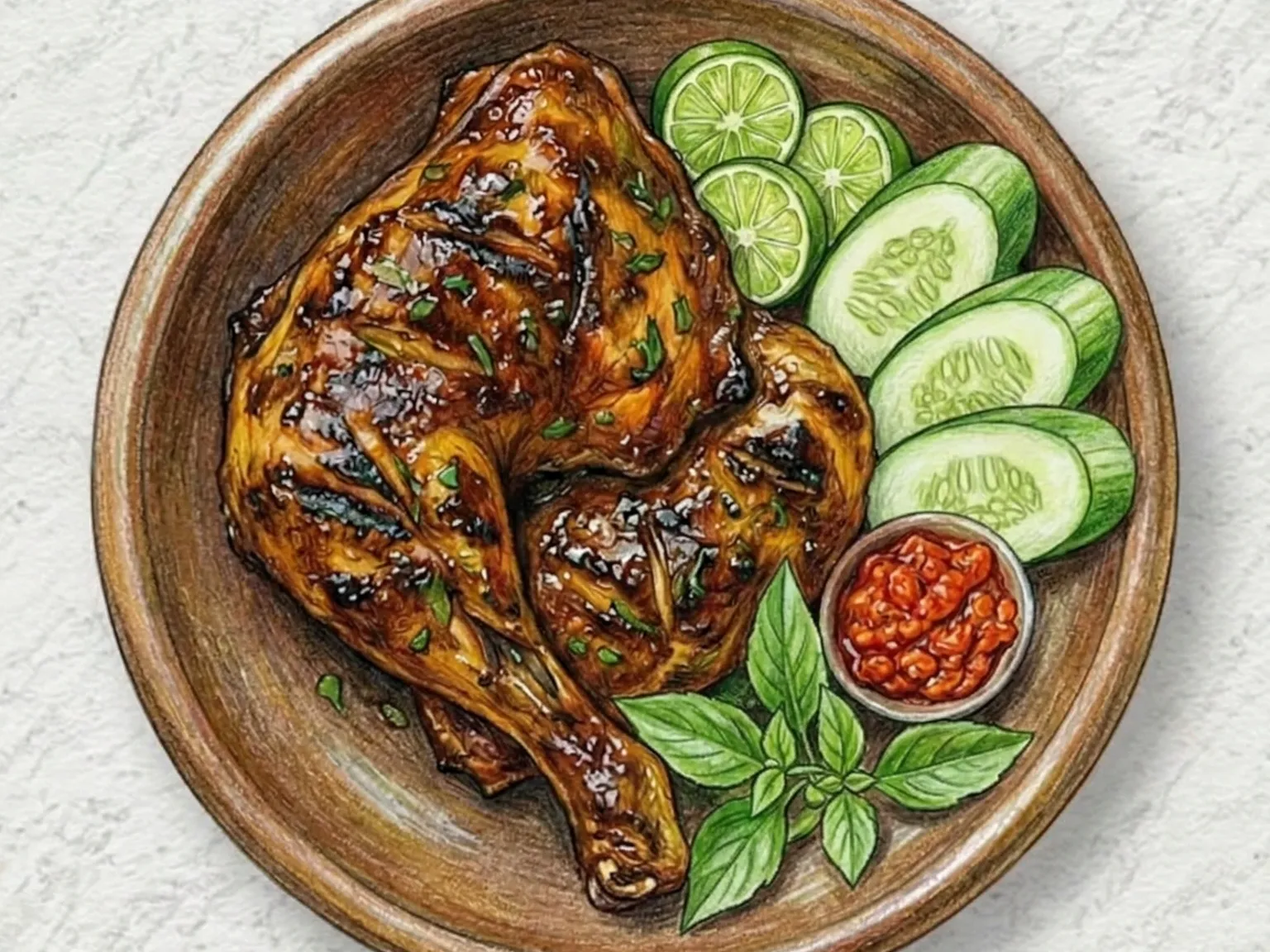
Ayam Bakar (Indonesian Grilled Chicken in Sweet Soy Marinade)
Ayam bakar - literally 'roasted chicken' in Malay-Indonesian - is a staple at warungs and open-air grills across Java, Sumatra, and Bali, where the smoke of coconut-shell charcoal becomes part of the seasoning. The chicken is first simmered in a marinade of sweet soy sauce (kecap manis), garlic, coriander, turmeric, and lime juice until partially cooked and deeply stained. Then it moves to a hot grill where the sugar-heavy glaze caramelizes into dark, lacquered patches with a faint char. The result is sticky-sweet on the surface with a persistent spice warmth underneath, and the meat stays moist because of the pre-cooking step. Often served alongside steamed rice, raw cucumber, and a sambal that brings sharp chili heat to cut through the sweetness.

Korean Sweet Spicy Dakgangjeong
Yangnyeom dakgangjeong is Korean sweet-spicy fried chicken made by cutting boneless thigh meat into bite-sized pieces, coating them in potato starch, and double-frying: first at 170 degrees Celsius to cook through, then at 185 degrees for a second pass that drives off residual moisture and locks the crust. The glaze is a reduction of gochujang, gochugaru, corn syrup, and soy sauce simmered until thick enough to cling without dripping. Tossing the twice-fried chicken in the sauce must happen quickly, off the heat and within twenty seconds, to coat evenly while the crust is still intact. The result is a shell that stays audibly crunchy under a sticky, glossy layer of sweet-spicy glaze even after it cools.

Korean Dakgalbi Fried Rice
Dakgalbi bokkeumbap is a Korean fried rice born from the tradition of stir-frying leftover dakgalbi sauce and ingredients with rice at the end of a Chuncheon-style chicken meal. Boneless chicken thigh marinated in gochujang is cooked with cabbage and onion before day-old rice is added and tossed over high heat until every grain absorbs the sweet-spicy marinade. Cabbage and perilla leaves cut through the richness, keeping the finish clean despite the bold seasoning. The high heat creates slightly charred bits of rice at the bottom of the pan, adding a smoky crunch that contrasts with the saucy grains above. It captures the full intensity of dakgalbi flavor in rice bowl form, delivering the same satisfaction with the convenience of a single dish.