Korean Napa Cabbage Doenjang Soup
Quick answer
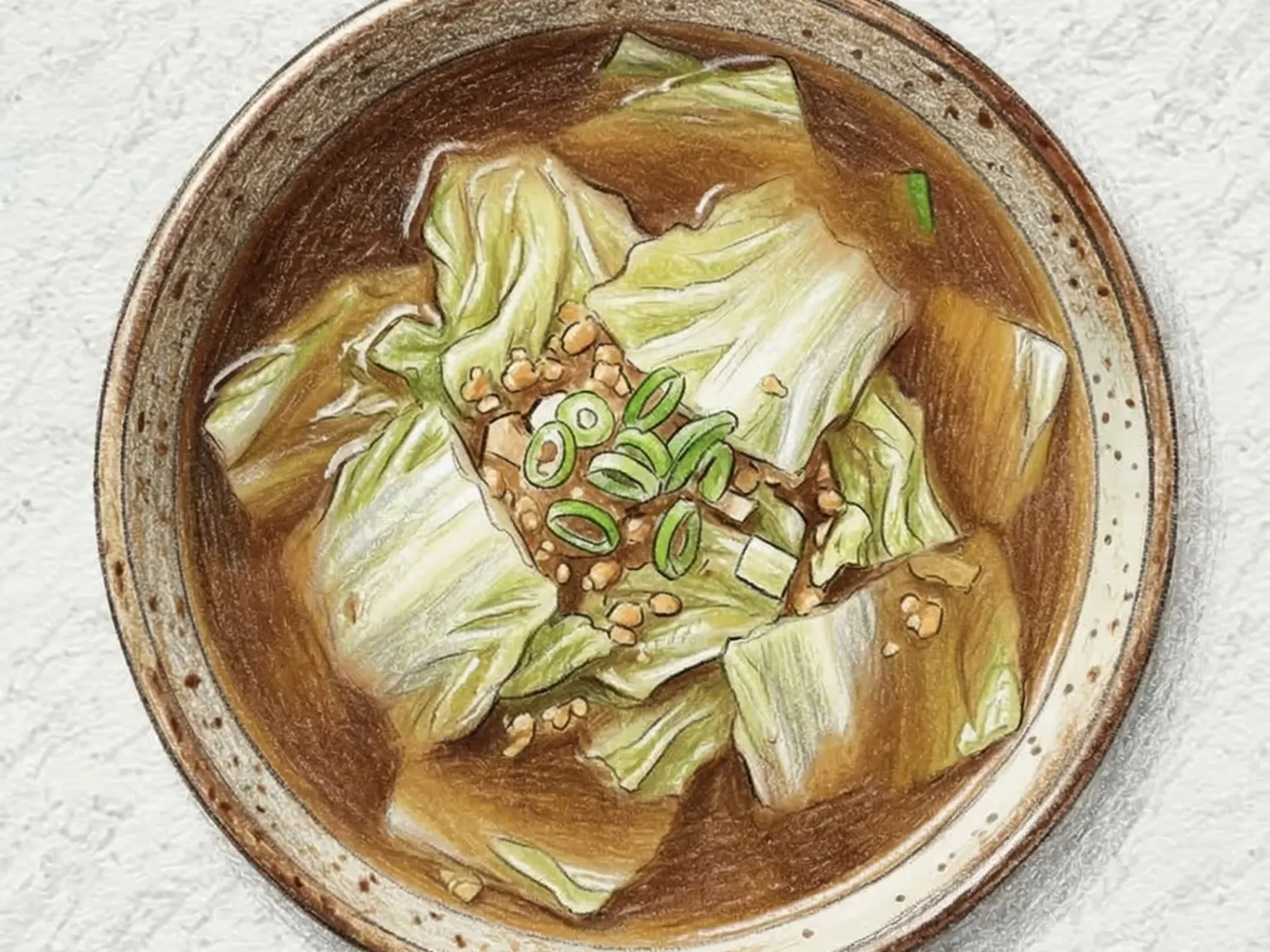
Baechu doenjang guk is a foundational Korean soup built on anchovy-kelp stock seasoned with fermented soybean paste and napa cabbage.
What makes this special
- A small amount of gochujang adds a reddish hue and extra flavor depth beyond doenjang alone.
- A half tablespoon of gochujang adds a reddish hue and extra flavor depth beyond doenjang alone
- Cabbage stems pre-cooked 5 minutes to draw sweetness before adding leaves and tofu
Key ingredients
Core cooking flow
- 1 Cut 350g baby cabbage into 4cm lengths and 180g tofu into 2cm cubes.
- 2 Bring 1.5L anchovy stock to a boil over high heat, then press 2.5 tbsp doenjang through a strainer.
- 3 Add 0.5 tbsp gochujang and 1 tbsp minced garlic.
Baechu doenjang guk is a foundational Korean soup built on anchovy-kelp stock seasoned with fermented soybean paste and napa cabbage. Straining the doenjang through a fine sieve as it dissolves into the hot stock keeps the broth visually clear while extracting the full depth of its fermented, earthy flavor. The cabbage stalks go into the pot first and simmer for five minutes alone, drawing out their inherent sweetness before the leaf sections and cubed tofu are added. A small spoonful of gochujang introduced at this point gives the broth a gentle heat and a reddish cast that adds both visual contrast and flavor complexity beyond doenjang alone. Sliced cheongyang chili and scallion are stirred in during the final two minutes, contributing sharpness and aroma without turning limp. Doenjang saltiness varies significantly between brands and aged batches, so starting with a conservative amount and adjusting by taste prevents over-salting. As the cabbage softens fully, its natural sweetness seeps gradually into the broth, where it finds a natural balance with the deep fermented character of the paste. It is among the most accessible soups in Korean home cooking, requiring only the most common pantry and refrigerator ingredients.
Instructions
Read the steps as a cooking flow: prep, heat, seasoning, doneness control, and finish.
- 1Heat
Cut 350g baby cabbage into 4cm lengths and 180g tofu into 2cm cubes.
Separate the thicker stems from the softer leaves for staggered cooking.
- 2Control
Bring 1.5L anchovy stock to a boil over high heat, then press 2.5 tbsp doenjang through a strainer.
Straining prevents lumps and keeps the broth clear.
- 3Control
Add 0.5 tbsp gochujang and 1 tbsp minced garlic.
Simmer over medium heat for 2 minutes to mellow the paste flavor and develop a subtle red color.
- 4Control
Add the cabbage stems and simmer over medium heat for 8 minutes to draw out natural sweetness.
Once the stems turn translucent, add the leaves.
- 5Heat
Add the tofu and cook 5 more minutes, then add 1 sliced chili pepper and 1 green onion stalk cut on the diagonal.
- 6Finish
Taste and adjust by adding more doenjang or water to balance.
Turn off the heat and serve right away. Saltiness varies by brand, so always taste before serving.
After the steps
Pick a recipe that fits this dish.
Continue with shared ingredients, meal pairings, or a similar method.
Recipes That Go Well With This
More Soups →Based on shared ingredients and meal pairing
Korean Shepherd's Purse Soup
Naengi-guk is a Korean spring soup made with anchovy-kelp stock, doenjang, and fresh shepherd's purse (naengi). Naengi is a cruciferous plant gathered from paddies, field edges, and roadsides in early spring, and both the root and the leaves are used. The root contributes an earthy, mineral fragrance and the leaves carry a slightly bitter green quality that together define the soup's character. The stock is made from dried anchovies and kelp simmered and strained, providing a clean umami base. Doenjang is dissolved through a mesh strainer rather than stirred directly into the pot, which keeps the broth clear rather than murky while still delivering the fermented soybean depth. Diced tofu simmers in the seasoned broth until warmed through. Naengi goes in during the final two to three minutes of cooking: longer exposure to heat breaks down the aromatic compounds in the herb and erases the spring fragrance that makes the soup worth making in the first place. The pairing of naengi's earthy bitterness with the fermented depth of the doenjang and the clean mineral tone of the anchovy stock produces a flavor that is distinctly seasonal and difficult to replicate outside of spring. Soup soy sauce, salt, and a small amount of garlic complete the seasoning. In Korean food culture, naengi-guk on the table is understood as one of the clearest signs that winter is finished.
Korean Turnip Soybean Paste Soup
Sunmu doenjang-guk is a homestyle soybean paste soup that uses turnip as its starring vegetable and rice-rinsing water as its liquid base. The starchy water softens the doenjang's salinity, giving the broth a rounded, almost creamy quality that straight water cannot achieve. Turnips cook faster than daikon and yield a more delicate sweetness, along with a faint peppery edge that adds quiet complexity. As the turnip pieces simmer, a subtle purple blush from the skin tints the broth, making it a shade more elegant than an ordinary doenjang-guk. Cubed tofu is a natural companion, its neutral creaminess absorbing the fermented broth, while sliced scallion adds a final aromatic layer. The soup is at its best between autumn and early winter when turnips are in season, their sugars concentrated by cooler soil temperatures. Because the ingredient list is short, the quality of the doenjang matters more here than in busier soups - a well-aged paste with deep fermentation will carry the bowl, while a mediocre one will leave it flat.
Korean Bok Choy Crab Porridge
Cheonggyeongchae gesal juk is a Korean porridge that begins by sauteing onion and ginger in sesame oil to build an aromatic base, then simmering soaked rice with crab meat until the grains soften into a smooth, flowing consistency. Bok choy goes in near the end to preserve its bright green color and gentle crunch. The crab brings a mild sweetness that spreads evenly through the porridge and adds a refined savoriness, while ginger keeps the flavor clean and free of any fishiness; sesame oil's fragrance lingers subtly throughout. Soaking the rice beforehand allows the grains to break down evenly within a shorter cook time, and stirring regularly prevents sticking at the bottom. Light on the stomach and gently warming, this porridge suits a morning meal, a day when the body needs something easy, or the shift between seasons.
Korean Napa Cabbage Perilla Soup
Baechu deulkkae-guk is a Korean soup built from three foundations: soft-cooked napa cabbage, fermented doenjang, and ground perilla seeds. The cabbage is simmered in anchovy-kelp stock until the white stems turn translucent and the leafy parts nearly dissolve into the broth, releasing a gentle natural sweetness into the liquid. Doenjang dissolved into the stock provides the fermented, earthy backbone that anchors the flavor. Ground perilla seeds, stirred in during the final minutes of cooking, transform the broth from clear to a pale, creamy suspension and introduce a distinctly herbal, nutty aroma that has no close equivalent in sesame or any other common seed. Adding the perilla off high heat prevents it from turning gritty and preserves the volatile aromatic compounds that give it character. This soup belongs to the Korean tradition of deulkkae-guk, a category of perilla-based soups that also includes versions made with dried radish greens, mushrooms, and other cold-weather vegetables. It is among the first dishes Korean home cooks reach for when autumn temperatures drop, and it pairs naturally with plain steamed rice. Perilla has grown wild in Korea's mountains and fields since ancient times and is considered a native ingredient; in this soup, it combines with doenjang to create a flavor pairing that is entirely Korean in character.
Serve with this
Korean Lotus Root Pancakes
Lotus root is sliced into rounds and coated in a light batter of buchim flour and egg before being pan-fried until golden on both sides. The root's characteristic perforations show through the thin batter, creating a lace-like appearance on each piece that makes this jeon visually distinctive. Biting through the crisp exterior reveals the lotus root's dual texture: an initial crunch from the starchy flesh followed by a slightly sticky chew that clings pleasantly to the teeth. Slicing to a thickness of five to six millimeters strikes the right balance between maintaining the crunch and ensuring the center cooks through. The egg-enriched batter adheres evenly to the root's smooth surface and sets immediately upon contact with hot oil, sealing in moisture. Minimal salt in the batter allows the lotus root's faint natural sweetness to emerge, and a dipping sauce of soy sauce and vinegar provides the acidity needed to cut through the fried exterior's richness. Commonly served during Korean holidays, this jeon is simple enough for everyday cooking as well.
Korean Pepper Leaf Kimchi
Gochuip kimchi is a seasonal Korean kimchi made from pepper leaves, prepared during late spring to summer when the leaves are available. Blanching is the essential first step. Fresh pepper leaves contain compounds that produce a raw bitterness, and simply seasoning them without pre-cooking leaves an unpleasant edge. A brief blanch of about 30 seconds collapses the cell structure, removing bitterness while dramatically reducing the volume of the leaves. The softened leaves also accept the seasoning more evenly across their surfaces. Glutinous rice paste added to the gochugaru, anchovy fish sauce, and garlic mixture thickens the coating so it adheres uniformly to each leaf and supports lactic acid fermentation even within the short one-day curing window. The herbaceous quality in pepper leaves survives fermentation, remaining as an undercurrent beneath the spicy coating and producing a green, herb-like character that distinguishes this kimchi from napa cabbage or young radish varieties.
Korean Dried Radish Greens Pancake
Boiled dried radish greens are combined with doenjang and pan-fried into a dense, rustic jeon with deep fermented character. The fibrous texture of the radish greens gives the pancake a satisfying chew, and the soybean paste saturates the batter so thoroughly that no dipping sauce is necessary. Buckwheat flour adds an earthy coarseness that suits the greens well. Cheongyang chili provides a spicy accent throughout. Minced garlic benefits from a brief saute in oil before being mixed into the batter-the raw edge cooks off and the garlic's savory depth integrates fully into the finished pancake. Cooking over low heat lets the inside set without burning the outside, producing a crisp surface and a tender, flavorful center.
Similar recipes
Korean Napa Cabbage Clam Soup
Baechu jogae guk is a clear Korean soup that draws its flavor entirely from clams and napa cabbage without any additional stock ingredients. The clams must be purged in salted water for at least two hours to expel all sand; skipping this step contaminates the broth and ruins the finished dish. Starting from cold water with both the cabbage and clams allows the temperature to rise gradually, coaxing sweetness from the cabbage as it heats alongside the shellfish. Once the clam shells open, the heat is reduced and the broth is seasoned lightly with minced garlic and guk-ganjang. Sliced scallion is added near the end to preserve its fresh, grassy note in the liquid. Since the clam liquor itself carries significant salinity, any additional salt should be added only after tasting, and kept minimal. No anchovy stock or kelp is needed because the marine depth of the clams and the vegetal sweetness of the cabbage together build a clean, layered broth on their own. The soup is mild enough to serve as a restorative meal when appetite is low or digestion is off.
Korean Napa Cabbage Anchovy Stew
Baechu myeolchi jjigae is a homestyle Korean stew that relies on dried anchovy stock as its flavor base, with napa cabbage as the central vegetable. Large dried anchovies and kelp are simmered together for ten minutes to build a stock with pronounced umami, then strained so the broth is clear and clean. Baby napa cabbage cut into long vertical strips releases the natural sweetness of its pale inner stems into the broth as it cooks, providing a counterpoint to the saltiness of the anchovy stock. Thick-cut tofu slabs are placed between the cabbage layers, and thinly sliced onion adds another source of sweetness to the liquid. Diagonally cut cheongyang chili introduces a direct, sharp heat that gives life to what would otherwise be an entirely mild broth. Fifteen to twenty minutes of simmering is sufficient for the cabbage to soften fully and for its sugars to fully dissolve into the stock, creating the natural sweetness that defines this stew. No gochujang, no doenjang, no complicated sauce: the stew demonstrates a principle central to Korean home cooking, which holds that a well-constructed stock and a single honest vegetable can generate depth and satisfaction without further layering.
Korean Doenjang Mushroom Udon
Doenjang mushroom udon is a Korean noodle soup where thick-cut shiitake mushrooms simmer in an anchovy-kelp broth with dissolved soybean paste, building layered depth from two distinct fermented and dried umami sources. The shiitake's aromatic depth stacks on top of the doenjang's fermented, mellow character, while onion adds a quiet sweetness that prevents the broth from tasting one-dimensionally salty. Passing the doenjang through a fine sieve before stirring it into the broth ensures no lumps remain and the paste disperses evenly. Parboiling the udon noodles separately in plain water and rinsing briefly strips away surface starch, keeping the broth clear and clean to the last spoonful. A pinch of gochugaru added during the seasoning stage introduces a faint warmth at the finish that sharpens the overall flavor, and a few thin slices of cheongyang chili on top add color and a sharper bite. Adding silken tofu or sliced zucchini makes the bowl substantial enough to serve as a full meal.
Tips
Nutrition (per serving)
Variations
Shepherd's Purse Soybean Paste Soup
Shepherd's purse and doenjang make a nutty, spring-like soup. Fermented soybean depth pairs nicely with fresh green aroma.
Spinach Doenjang Guk
Simple Korean soup with spinach and tofu simmered in anchovy stock with earthy doenjang paste.
Radish Doenjang Guk
Korean radish doenjang soup where chunks of daikon radish sweeten the anchovy broth while doenjang adds savory depth.
Zucchini Doenjang Guk
Classic Korean summer soup with sliced zucchini and tofu in a savory doenjang broth, simple and comforting.
Tofu Doenjang Guk
The most classic Korean doenjang soup with soft tofu and onion, a staple of everyday Korean home cooking.
Eggplant Doenjang Guk
Korean summer doenjang soup with silky eggplant, savory and comforting with soft, creamy pieces of braised eggplant.
Water Parsley Doenjang Guk
Spring doenjang soup with aromatic water parsley, refreshing and earthy with the herb's distinctive fragrance.
Dried Radish Greens Doenjang Soup
A doenjang soup made with dried radish greens (siraegi). The slightly chewy dried greens absorb the savory fermented paste, creating a deeply satisfying bowl.
Kabocha Squash Doenjang Soup
A doenjang soup featuring sweet kabocha squash. The squash's natural sweetness and creamy texture complement the fermented paste's savory depth.
Chive Doenjang Soup
A simple doenjang soup enriched with Korean chives. The pungent, herbaceous chives add an aromatic dimension to the fermented broth.
Spring Cabbage Doenjang Soup
A spring doenjang soup made with young, sweet cabbage harvested in early spring. Its freshness and mild flavor pair naturally with the savory fermented paste.
Wild Aster Doenjang Soup
Spring wild aster doenjang soup with a distinctive bitter, fragrant herb that pairs beautifully with the savory broth.