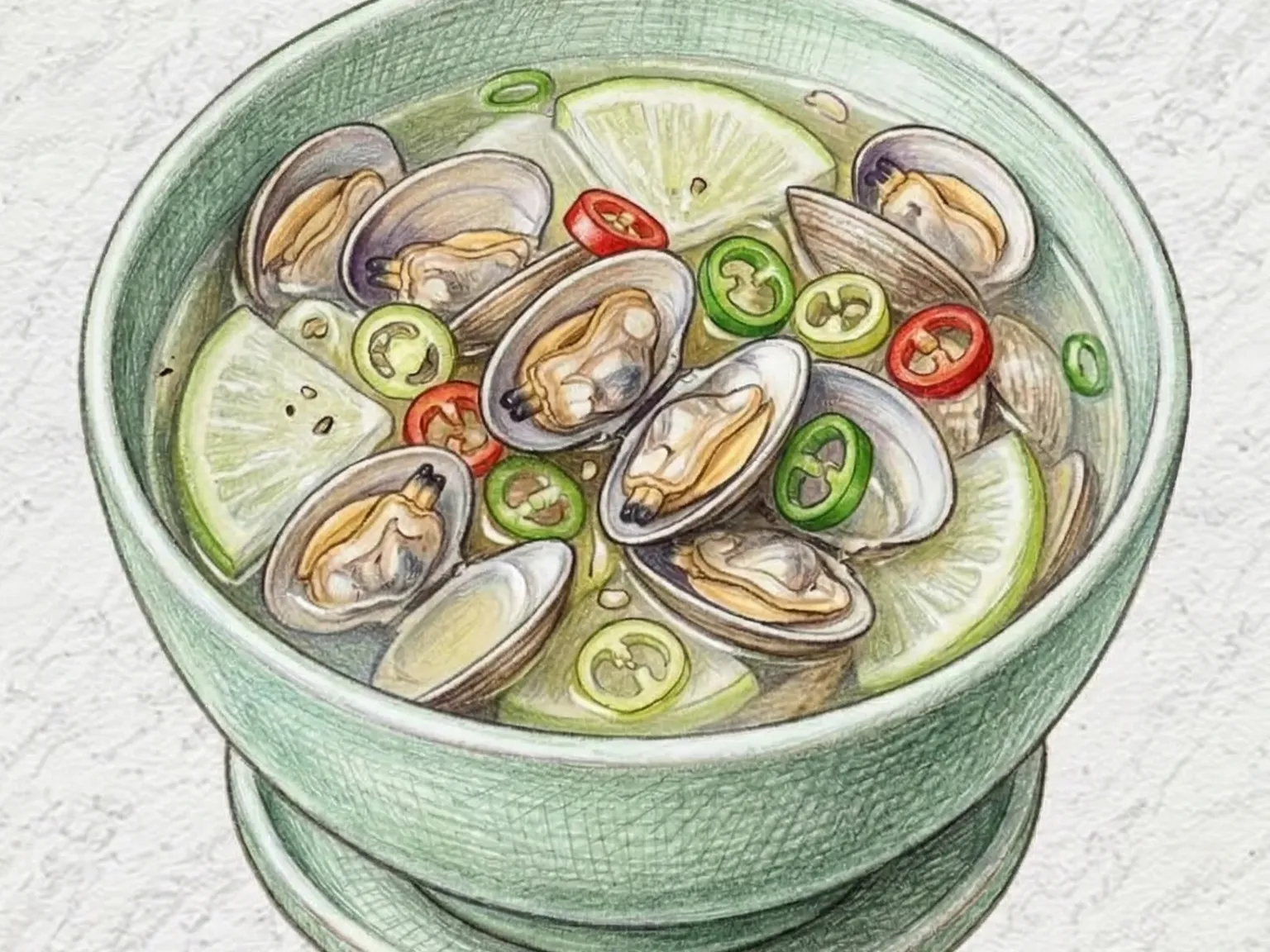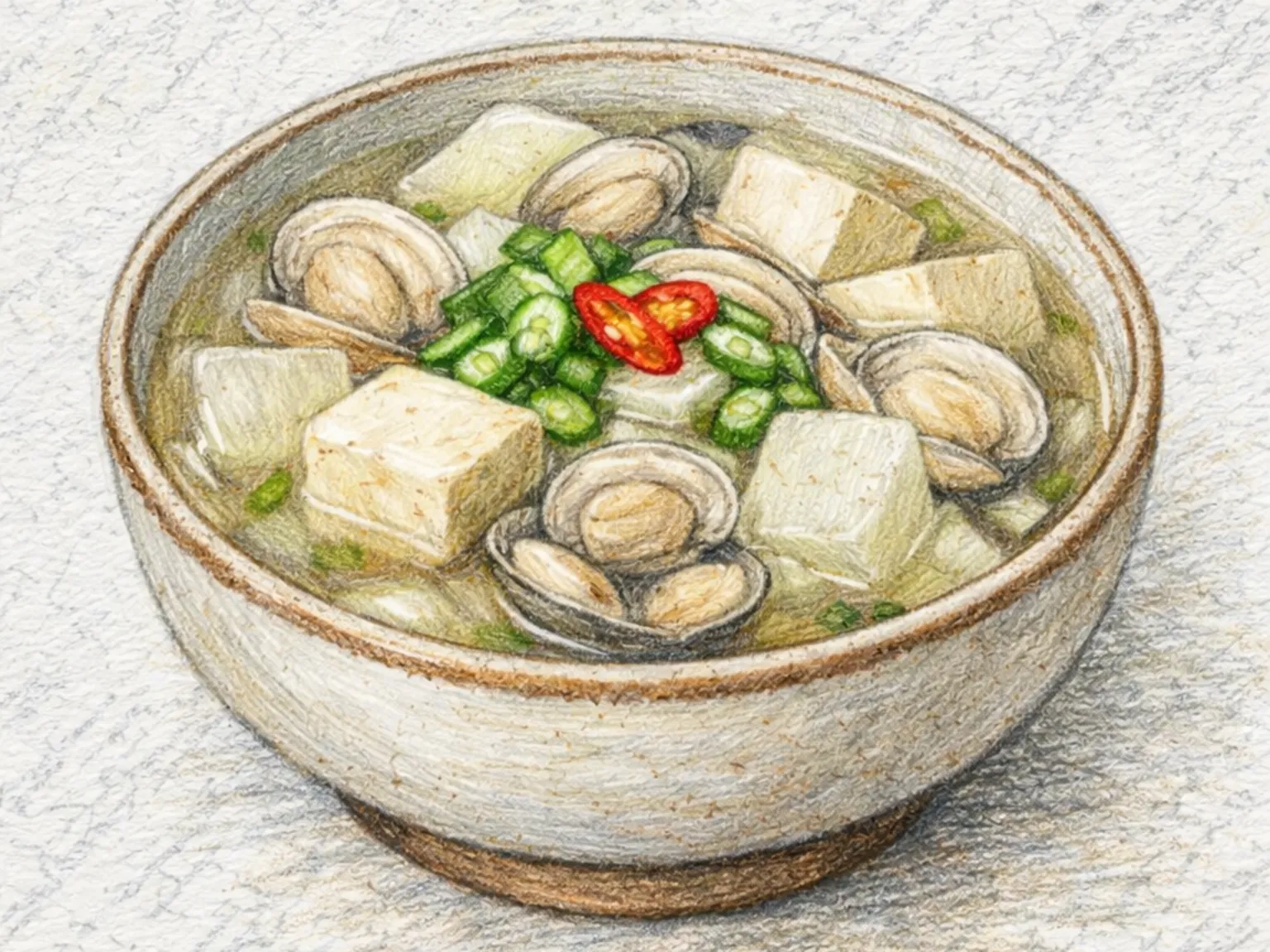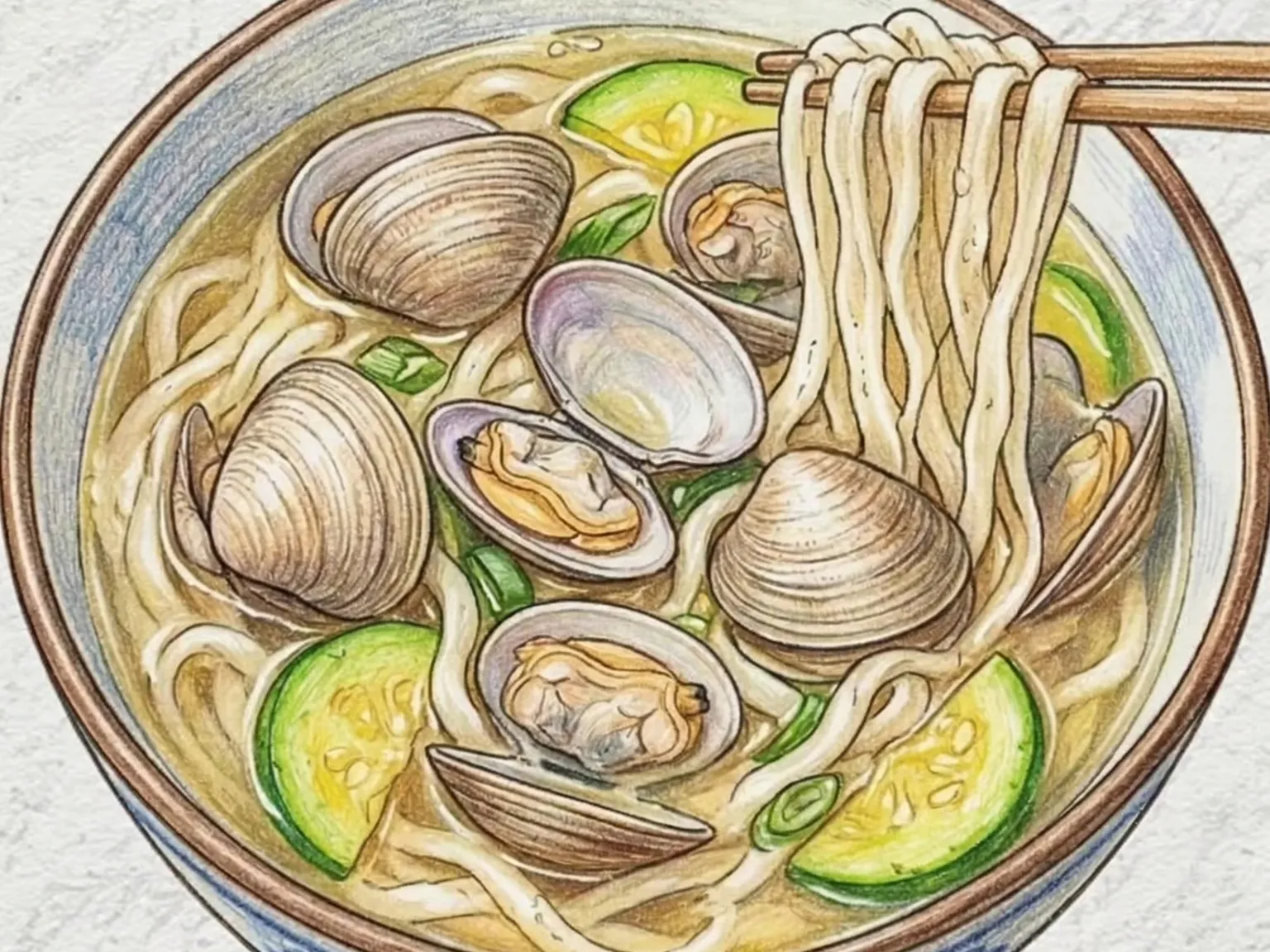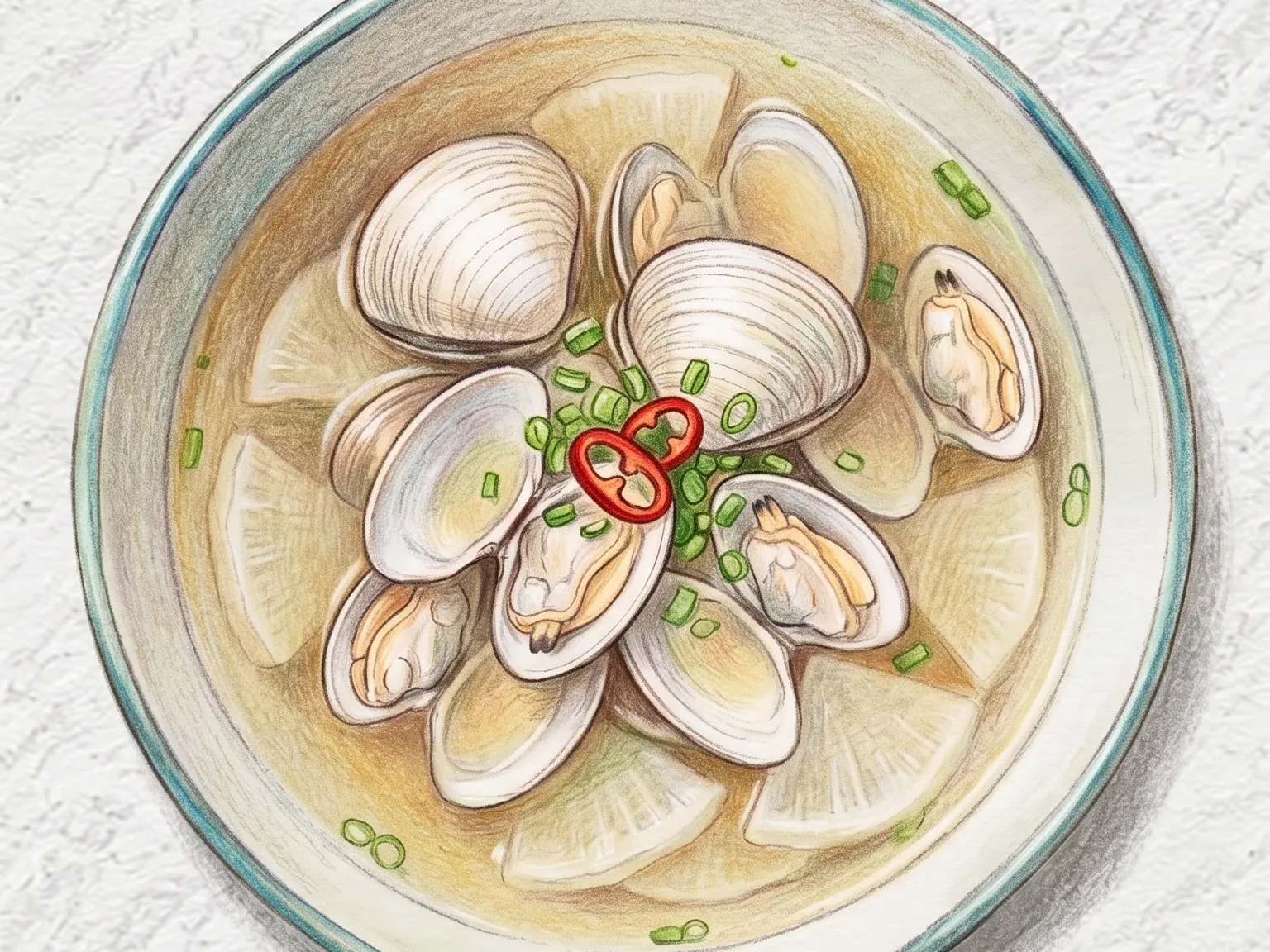
Korean White Clam Clear Soup
Baekhap jogae tang is a clear Korean soup built entirely on the flavor of hard clams simmered in water without additional stock. The clams are soaked in salt water until fully purged of sand, then placed in cold water and heated gradually; this slow temperature rise draws maximum flavor from the shells into the broth. Daikon radish simmers alongside, lending a cool sweetness that tempers the clams' saltiness. A tablespoon of cheongju (clear rice wine) is added to neutralize any briny off-notes and leave a clean finish. Garlic is used sparingly so it does not compete with the shellfish flavor, and scallion and red chili are added at the end for color and fragrance. Salt is kept minimal since the clam liquor itself provides ample seasoning. The soup's entire philosophy rests on a single ingredient doing all the heavy lifting: no anchovy, no kelp, just clams producing a broth that is simultaneously light and deeply flavored.
Adjust Servings
Instructions
- 1
Purge clams in salted water for 20 minutes, then scrub shells clean.
- 2
Slice radish thinly, and diagonally slice green onion and red chili.
- 3
Boil water with radish for 7 minutes to build subtle sweetness.
- 4
Add clams and rice wine; cook on medium-high until shells open.
- 5
Skim foam, then season with garlic and salt.
- 6
Add green onion and red chili, boil for 1 minute, and serve immediately.
As an Amazon Associate, we may earn from qualifying purchases.
Tips
Nutrition (per serving)
More Recipes

Dongjuk-tang (Korean Surf Clam Broth)
Dongjuk-tang is a Korean surf clam soup where purged clams simmer with radish in water to produce a briny, naturally sweet broth with almost no added seasoning. The radish goes in first for six minutes to build a sweet base, and the clams follow for three to four minutes - they are done the moment their shells open, and cooking any longer toughens the meat. Clams that remain shut after cooking must be discarded. Water dropwort stirred in at the end contributes a fresh, herbaceous fragrance, and a single cheongyang chili pepper adds a mild, lingering heat that tempers the ocean flavor without masking it.

Korean Clear Puffer Fish Soup
Cleaned puffer fish is simmered with Korean radish and water dropwort in a clear broth that highlights the fish's clean, delicate flavor. The radish goes in first to build a sweet base, and the puffer fish cooks for ten minutes to release its protein-rich, low-fat essence into the stock. Water dropwort added at the very end provides a fresh herbal lift, and only professionally prepared, food-safe puffer fish should ever be used.

Korean Napa Cabbage Clam Soup
Baechu jogae guk is a clear Korean soup that draws its flavor entirely from clams and napa cabbage without any additional stock ingredients. The clams must be purged in salted water for at least two hours to expel all sand; skipping this step ruins the broth with grit. Starting from cold water with both the cabbage and clams allows the temperature to rise gradually, coaxing sweetness from the cabbage as it heats. Once the clam shells open, the heat is reduced and the broth is lightly seasoned with minced garlic and guk-ganjang. Sliced scallion is added near the end for freshness but is not overcooked. Since the clam liquor itself carries significant salinity, additional salt should be minimal and added only after tasting. The soup's appeal lies in its simplicity: no anchovy stock or kelp is needed because the marine depth of the clams and the vegetal sweetness of the cabbage together produce a clean, layered broth.

Korean White Chili Clam Stew
Baekgochu bajirak jjigae is a clear Korean clam stew where manila clams and daikon radish provide all the broth flavor without additional stock. The clams are purged thoroughly in salted water, then placed in cold water with the radish and brought to a boil. As the water heats, the clams open and release their liquor into the broth; any that remain closed are discarded. Seasoning stays light with minced garlic and guk-ganjang, while diagonally sliced red chili and cheongyang chili add color and layered heat. Scallion goes in at the end for freshness. The radish contributes a cool sweetness that melds with the briny clam liquor, producing a broth that tastes more complex than its simple ingredient list suggests. White chili peppers (baekgochu), milder than standard green ones, lend a soft peppery fragrance rather than sharp heat. The stew's strength is its restraint: clams and radish alone generate the depth that many stews need stock packets to achieve.

Korean Spinach Clam Soup (Light Shellfish and Greens Broth)
Sigeumchi-bajirak-guk pairs spinach and manila clams in a light, transparent broth that showcases the natural flavor of both ingredients with minimal interference. The clams are purged of sand, placed in cold water, and brought to a boil; as each shell opens, it releases a briny, mineral-rich liquor that becomes the soup's foundation without any need for additional stock. Spinach is added only in the final minute so the leaves wilt just enough to soften while retaining their vivid green color and nutritional content. Soup soy sauce and a touch of garlic round out the seasoning, and the restraint is intentional - anything heavier would mask the delicate sweetness of the clam broth. The spinach's mild, grassy undertone quietly absorbs any seafood sharpness, leaving the overall flavor clean and balanced. Nutritionally, the pairing is notable: spinach is rich in iron, and clams are high in taurine and zinc, making this a soup frequently recommended for children and pregnant women in Korean households. From start to finish, the whole process takes about fifteen minutes, which explains why it appears so often on weeknight dinner tables.

Korean Mussel Soup Noodles
Honghap tangmyeon is a mussel noodle soup where a generous amount of mussels is simmered to produce a deeply briny, clear broth. Korean radish cooks alongside the mussels, lending the liquid a natural sweetness and a clean finish. Soup soy sauce and cooking wine adjust the seasoning, while minced garlic and green onion build an aromatic layer that keeps any fishiness at bay. A light dusting of black pepper over the steaming bowl sharpens the broth's marine character and warms the palate.