Korean Clam and Water Parsley Soup
Soups Medium

Korean Clam and Water Parsley Soup

Quick answer

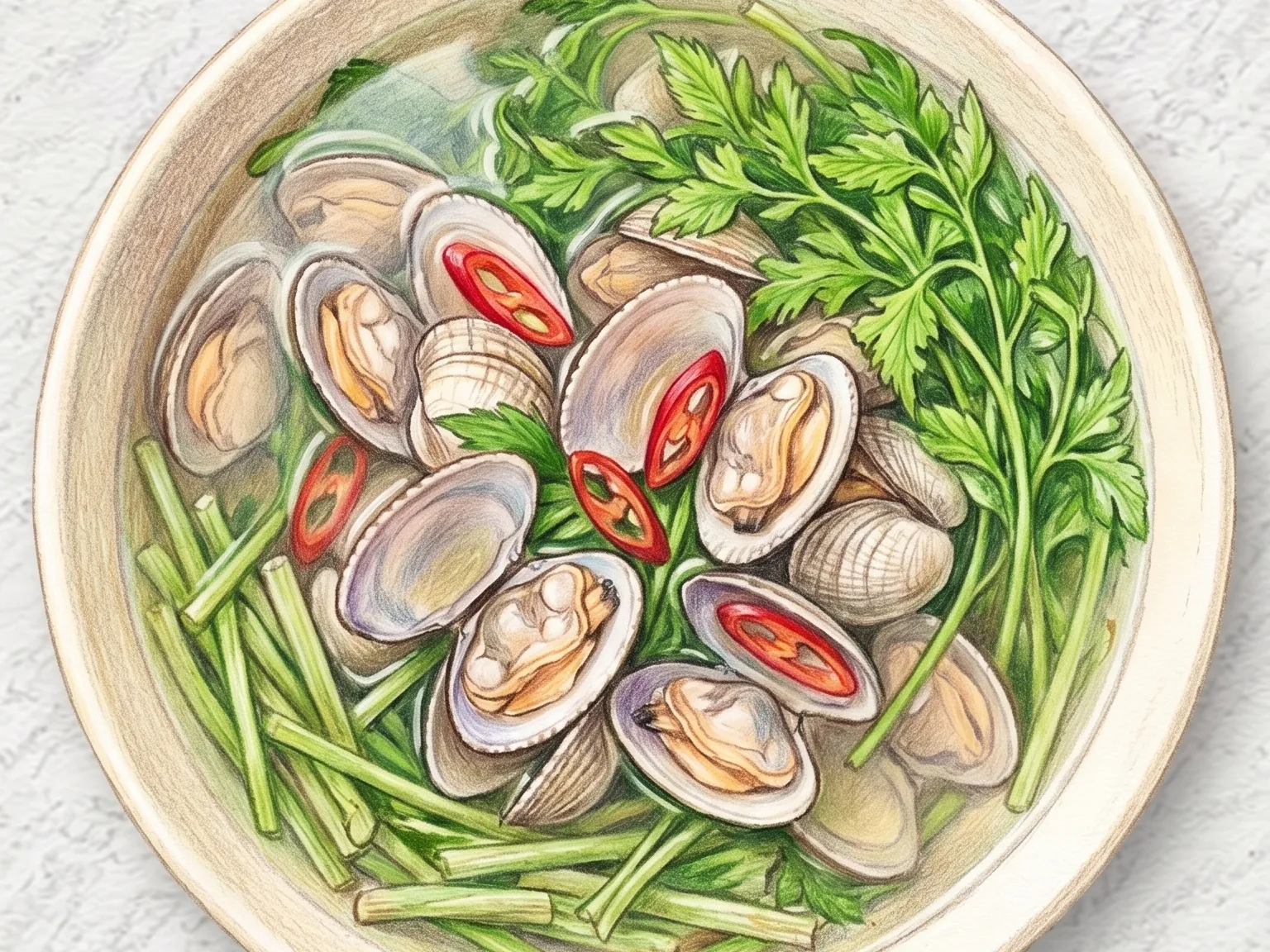
Bajirak minari tang is a clear Korean soup that pairs the marine umami of manila clams with the distinctive herbaceous character of minari, the water parsley native to Ko...

What makes this special

  • Bajirak minari tang features aromatic water parsley and fresh clams in a refreshing, herb-forward clear soup.
  • Water parsley stems and leaves added separately to preserve crunch and herbal aroma
  • Slow cold-start heating draws full clam umami into the broth base
Total time
40 min
Level
Medium
Servings
4 servings
Ingredients
9
Calories
165 kcal
Protein
18 g

Key ingredients

clamswater parsleycooking rice winegarlicred chili

Core cooking flow

  1. 1 Soak 900 g clams in salted water for at least 20 minutes to purge grit.
  2. 2 Wash 120 g water parsley, then separate the stems from the leaves because they cook at different speeds.
  3. 3 Put 1.3 L water, the clams, and sliced garlic in a pot, then set it over medium heat.

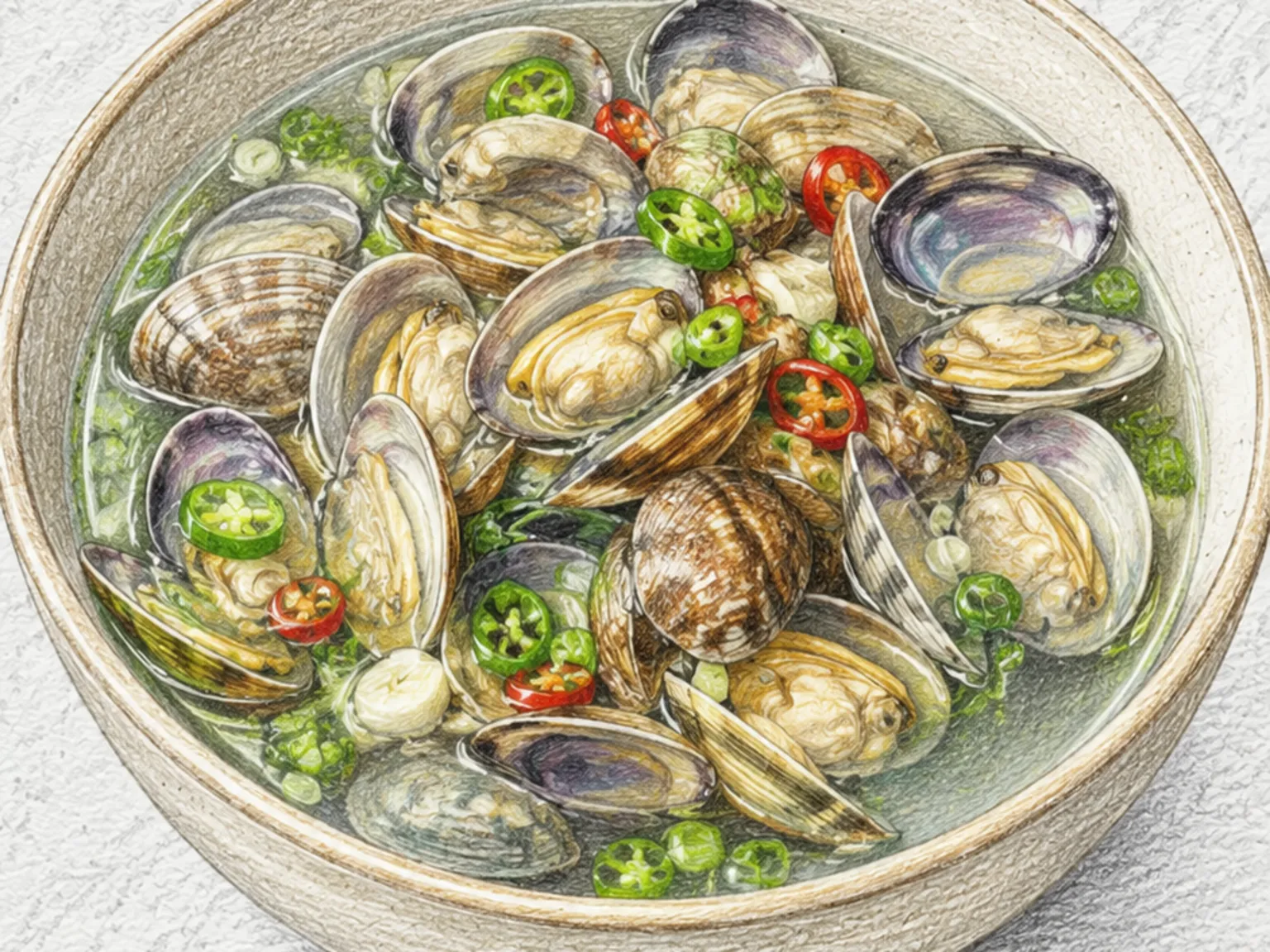
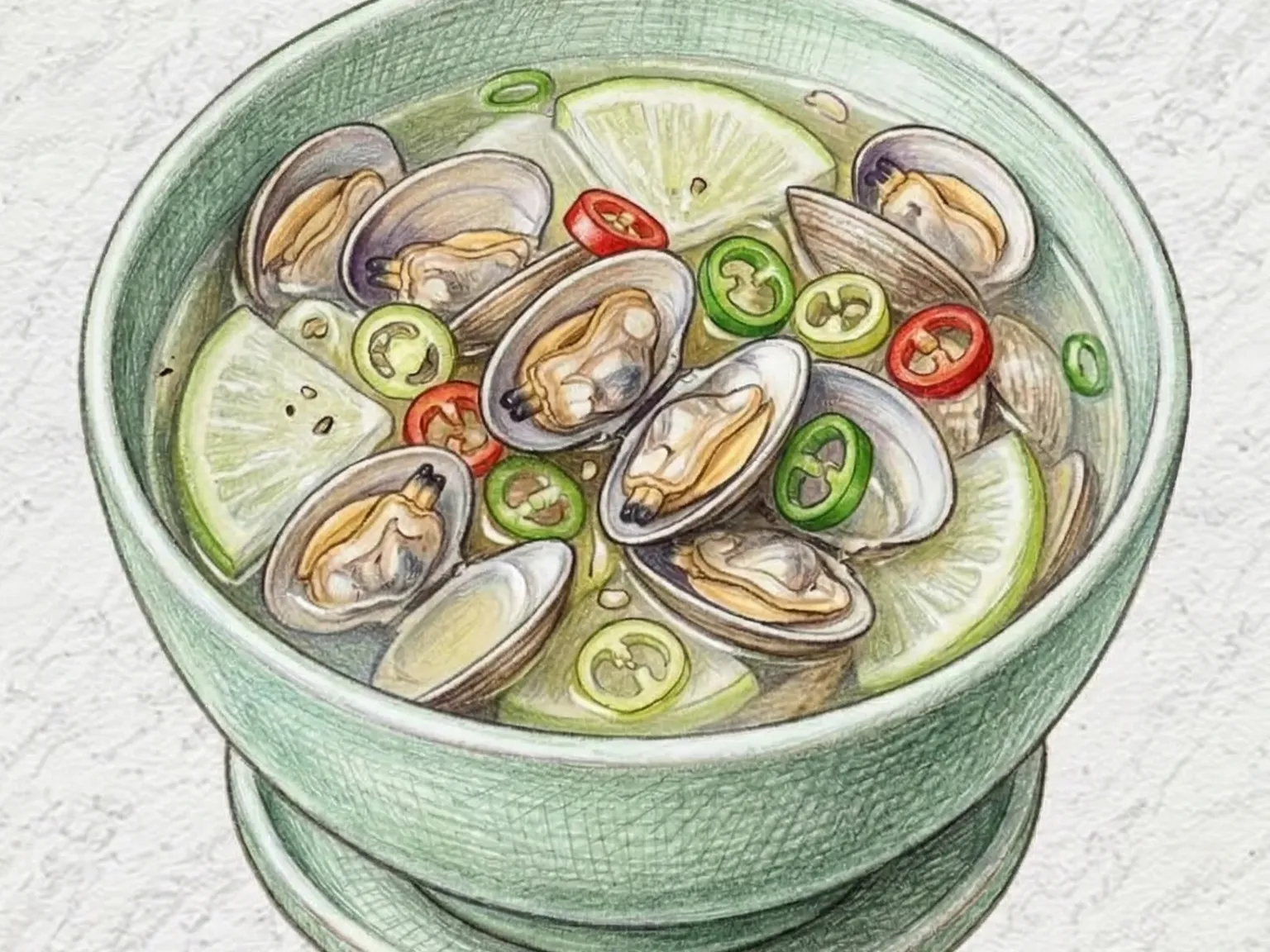
Bajirak minari tang is a clear Korean soup that pairs the marine umami of manila clams with the distinctive herbaceous character of minari, the water parsley native to Korean marshes and riverbanks. Starting the clams in cold water and raising the heat gradually is essential for this soup: the slow temperature increase coaxes maximum flavor from the shells into the liquid rather than seizing them shut before their juices release. Once the clams open, a splash of rice wine goes in to drive off any trace of fishiness, and the broth is seasoned simply with soup soy sauce and minced garlic, keeping the profile clean and uncluttered. Minari demands a two-stage addition that is non-negotiable: the thicker stems go into the pot three minutes before the soup is done to soften slightly while retaining their satisfying crunch, and the more delicate leaves enter in the final minute just before heat is turned off to preserve their vivid green color and the sharp, grassy fragrance that makes minari unmistakable. Adding the leaves any earlier causes them to lose that fragrance entirely and yellow to a dull, unappetizing shade, making this timing the single most important technique in the recipe. Diagonally sliced red chili floating in the clear liquid adds visual brightness to the pale broth without altering its flavor significantly. The interplay between the clams' salty, oceanic depth and minari's cool, herbal distinctiveness is a study in contrast: each component amplifies the other, and together they build a broth of surprising complexity and depth without any anchovy, kelp, or prepared stock of any kind.

Prep 25min Cook 15min 4 servings

Instructions

Read the steps as a cooking flow: prep, heat, seasoning, doneness control, and finish.

6 steps
  1. 1
    Season

    Soak 900 g clams in salted water for at least 20 minutes to purge grit.

    Rub the shells against each other under running water, rinse well, and discard any cracked clams before cooking.

  2. 2
    Heat

    Wash 120 g water parsley, then separate the stems from the leaves because they cook at different speeds.

    Slice the green onion and red chili diagonally, and cut 5 garlic cloves into thin slices.

  3. 3
    Control

    Put 1.3 L water, the clams, and sliced garlic in a pot, then set it over medium heat.

    Starting from cold water helps the clam flavor move into the broth before the shells open.

  4. 4
    Heat

    When the broth begins to boil, skim off the foam and cook for 4 to 5 minutes, until the shells open.

    Add 1 tbsp cooking rice wine after they open to clear away any fishy smell.

  5. 5
    Season

    Season the broth with 1 tbsp soup soy sauce and 0.4 tsp salt, then taste the liquid while it is hot.

    Discard any clams that stay closed after cooking, instead of forcing them open.

  6. 6
    Finish

    Add the water parsley stems and cook for only 2 to 3 minutes, so they soften but keep some crunch.

    Just before turning off the heat, add the leaves, green onion, and red chili, then serve while the greens stay bright.

After the steps

Pick a recipe that fits this dish.

Continue with shared ingredients, meal pairings, or a similar method.

Recipes That Go Well With This

More Soups →

Based on shared ingredients and meal pairing

Korean White Clam Clear Soup
Shared ingredient: red chili Soups

Korean White Clam Clear Soup

Baekhap jogae tang is a clear Korean clam soup built entirely on the flavor of hard clams, with no additional stock of any kind. The clams are soaked in salted water until fully purged of sand, then transferred to cold water in the pot and heated gradually. This slow climb from cold allows the clams to release their maximum flavor into the surrounding liquid before they even open, producing a more richly flavored broth than rapid boiling ever could. Daikon radish simmers in the same water, lending a cool, clean sweetness that tempers the clams inherent saltiness while absorbing broth flavor itself, softening into bite-sized pieces that are worth eating alongside the shellfish. A tablespoon of cheongju, Korean clear rice wine, is added early to neutralize any briny off-notes that might otherwise linger, leaving a cleaner, lighter finish. Garlic appears in small amounts only, deliberately restrained so it does not compete with the delicate shellfish flavor that is the whole point of the dish. Scallion and red chili are placed on top at the very end, contributing color and fragrance rather than direct seasoning. Salt is kept to an absolute minimum since the clam liquor itself provides all the salinity required. The soup is a lesson in simplicity: no anchovy, no kelp, no premade stock. The clams do all the work, and the result is a broth that is simultaneously light and deeply satisfying.

Korean Beef & Water Parsley Soup
Shared ingredient: minari (water dropwort) Soups

Korean Beef & Water Parsley Soup

Minari-soegogi-guk is a clear beef soup that relies on a slow-simmered brisket broth for depth and finishes with a handful of water dropwort for aromatic brightness. The brisket cooks low and long until the stock turns golden and rich with dissolved collagen and beef fat, creating a full-bodied foundation. Radish simmers alongside the meat, contributing a quiet sweetness that rounds out the beefy intensity. When the broth is ready, water dropwort - stems and leaves - is added just before serving so it wilts only slightly, keeping its signature fragrance alive. Green onion and garlic provide the aromatic backbone, while seasoning stays lean: salt or soup soy sauce, nothing more. The boiled brisket is typically sliced thin and returned to the bowl, or pulled aside and served with a soy-vinegar dipping sauce. During spring, when water dropwort is young and fragrant, this soup reaches its peak expression. It is a dish that demonstrates how Korean cooking often pairs a slow, patient stock with a single bright ingredient added at the last moment to transform the entire bowl.

Korean Geomeun Kong Juk (Black Bean Porridge)
Serve together Rice

Korean Geomeun Kong Juk (Black Bean Porridge)

Black beans are soaked for at least four hours, then boiled until the skins wrinkle and the flesh softens through to the center. They are blended with their cooking liquid into a thick, smooth slurry that forms the base of the porridge. This bean puree is combined with separately soaked rice and the mixture is simmered over low heat, stirred regularly to prevent the starch from catching on the bottom of the pot. As the rice breaks down and the starch gelatinizes, the porridge thickens gradually into a smooth, velvety consistency. The anthocyanins in the black bean skins stain the porridge a deep purple-gray, and the flavor is earthy and distinctly nutty, unlike the lighter taste of plain rice porridge. Passing the finished porridge through a sieve removes the bean skins for a cleaner texture. Seasoned with salt alone, it reads as a savory meal; a tablespoon of sugar shifts it toward something gently sweet. Pine nuts and sesame scattered on top layer in additional nuttiness, and the porridge is frequently made as restorative food given the beans nutritional density.

Korean Water Parsley Clam Stew
Similar recipe Stews

Korean Water Parsley Clam Stew

Minari-bajirak-jjigae pairs the clean, briny broth of littleneck clams with the sharp, herbal fragrance of Korean water parsley. Korean radish and zucchini simmer in the base and contribute a gentle natural sweetness, while a whole cheongyang chili and a small measure of gochugaru add a crisp heat that does not overpower the delicate shellfish. The restrained use of chili powder keeps the broth clear and allows the clams' distinct umami to come through without interference. Clams must be thoroughly purged of sand before cooking - any residual grit will ruin the broth. Once the shells open, the clams should be eaten promptly as continued heat toughens the meat. Minari goes in only at the very end, just before the heat is turned off, to preserve its bright green color and volatile fragrance. With prep time dominated by clam purging, the active cooking takes under ten minutes.

Serve with this

Korean Seasoned Sea Grapes Salad
Side dishes Easy

Korean Seasoned Sea Grapes Salad

Kkosiraegi-muchim is a tangy, low-calorie banchan made from kkosiraegi, a red algae seaweed whose thin, noodle-like strands snap with a distinctive crunch that no other seaweed can replicate. Blanching must not exceed twenty seconds, as anything longer collapses the characteristic texture, so a timer is essential. The seaweed goes straight from the boiling water into cold water to stop the heat and lock in elasticity. The dressing brings together gochugaru, soup soy sauce, vinegar, maesil-cheong, garlic, and sesame oil; the green plum extract layering in a fruity acidity that lifts the dish beyond simple sour-spicy flavoring. Julienned cucumber threaded through the seaweed strands provides a crisp, garden counterpoint to the oceanic depth. At roughly 72 kilocalories per serving with high dietary fiber content, this banchan appears frequently in Korean diet meal plans because it satisfies without adding much to the calorie count. Eating it promptly after seasoning prevents the cucumber from releasing water and diluting the dressing. Served cold in summer, it doubles as a refreshing side that pairs well with grilled meat or plain rice.

🥗 Light & Healthy 🏠 Everyday
Prep 10min Cook 2min 4 servings
Korean Water Parsley Kimchi
Kimchi Easy

Korean Water Parsley Kimchi

Minari kimchi is a quick, no-fermentation Korean water parsley kimchi that is ready to eat the moment it is made. The stems are salted for just ten minutes to barely wilt them, preserving their characteristic crunch and cool, clean herbal fragrance. Blended onion is worked into the seasoning paste alongside gochugaru, anchovy fish sauce, and plum syrup, giving the dressing body and a gentle sweetness. Anchovy fish sauce lays a seafood umami foundation under the light vegetable, while plum syrup's fruit acidity softens the chili heat rather than letting it dominate, so the finish is bright and refreshing rather than sharp. Paired with samgyeopsal or boiled pork, the water parsley's aromatics cut directly through the fat, cleansing the palate between bites in a way that heavier banchan cannot. The kimchi is best eaten on the day it is made while the stems still have their full snap.

🏠 Everyday 🍱 Lunchbox
Prep 20min Cook 5min 2 servings
Korean Beoseot Deulkkae Jeon (Mushroom Perilla Pancake)
Pancakes Easy

Korean Beoseot Deulkkae Jeon (Mushroom Perilla Pancake)

Mushroom and perilla seed jeon brings together oyster mushrooms and shiitake, sliced thin and folded into a batter built on perilla seed powder and a splash of soy sauce. Perilla seeds carry a heavier, slightly bitter nuttiness compared to sesame, and that quality anchors the earthy depth of the mushrooms rather than competing with it. Seasoning the batter directly with soy sauce means the pancake holds its own without a dipping sauce, though one on the side does not go amiss. Frying with enough oil gives the exterior a thin, crisp shell while the mushroom filling stays moist inside. Oyster mushrooms torn along their grain develop a pleasantly chewy bite as they cook; shiitake sliced fine distribute evenly so the whole pancake cooks at the same rate. It works as a makgeolli pairing or a straightforward side, and holds up well at room temperature - the perilla aroma actually deepens as it cools.

🍺 Bar Snacks 🏠 Everyday
Prep 18min Cook 14min 2 servings

Similar recipes

Korean Cod and Radish Soup
Soups Medium

Korean Cod and Radish Soup

Daegu mu-tang is a Korean cod and radish soup in which the radish simmers first in anchovy broth for eight minutes to release its natural sweetness before the fish goes in. Cod fillets are briefly marinated in rice wine to neutralize any fishiness, then cooked gently - stirring must be kept to a minimum to keep the flesh in large, intact pieces. The finished broth is remarkably clear and light because cod carries very little fat, and the sweetness of the radish merges with the fish's mild umami to create a clean, layered depth. Crown daisy added in the final thirty seconds of cooking releases a sharp herbal fragrance that lifts the entire bowl. Many Koreans reach for this soup as a hangover remedy, prizing the cool, clean aftertaste it leaves.

🏠 Everyday 🥗 Light & Healthy
Prep 18min Cook 22min 2 servings
Dongjuk-tang (Korean Surf Clam Broth)
Soups Easy

Dongjuk-tang (Korean Surf Clam Broth)

Dongjuk-tang is a Korean surf clam soup where purged clams simmer with radish in plain water to produce a briny, naturally sweet broth that needs almost no added seasoning. The radish goes in first and cooks for six minutes to build a sweet, mild base, then the clams are added for three to four minutes -- they are done the moment their shells open wide, and cooking any longer tightens and toughens the meat. Any clam that remains shut after cooking must be discarded without exception. Water dropwort stirred in at the end contributes a fresh, herbaceous fragrance that lifts the broth, and a single cheongyang chili pepper adds a mild, lingering heat that tempers the ocean flavor without masking it. The combination of clam brine, radish sweetness, and perilla creates a broth that tastes far more complex than its short ingredient list suggests.

🏠 Everyday 🥗 Light & Healthy
Prep 25min Cook 12min 2 servings
Korean Water Parsley Clam Porridge
Rice Easy

Korean Water Parsley Clam Porridge

Minari bajirak juk is a mild seafood porridge made by sauteing onion and garlic in sesame oil until soft and fragrant, then simmering soaked rice and fresh clam meat into a smooth, comforting bowl. The clams release a clean, briny sweetness that diffuses through every spoonful, and water parsley added off the heat at the very end contributes a bright, herbaceous freshness that lifts the overall flavor. Soaked rice is first stirred in the sesame oil until each grain turns translucent, which keeps the porridge from becoming starchy and gluey as it cooks. Water is added and the pot simmers on medium-low heat, stirred steadily so the starch releases gradually and creates a silky, even consistency. Clams are added in the later stages of cooking because prolonged heat makes them rubbery; adding them late keeps them tender. Salt goes in just before the heat is turned off to calibrate the final seasoning, followed by a drizzle of sesame oil for a nutty, rounded finish. The light, easy texture of the finished porridge makes it well suited to early mornings, days when the stomach feels unsettled, or as a restorative after a night of drinking. Water parsley must be added after the heat is off, since its volatile fragrance disappears quickly when exposed to direct heat.

🏠 Everyday
Prep 20min Cook 30min 2 servings

Tips

Discard any clams that remain closed after cooking.
Add minari at the very end to preserve its fresh aroma.

Nutrition (per serving)

Calories
165
kcal
Protein
18
g
Carbs
6
g
Fat
6
g