Korean Napa Cabbage Clam Soup
Soups Easy

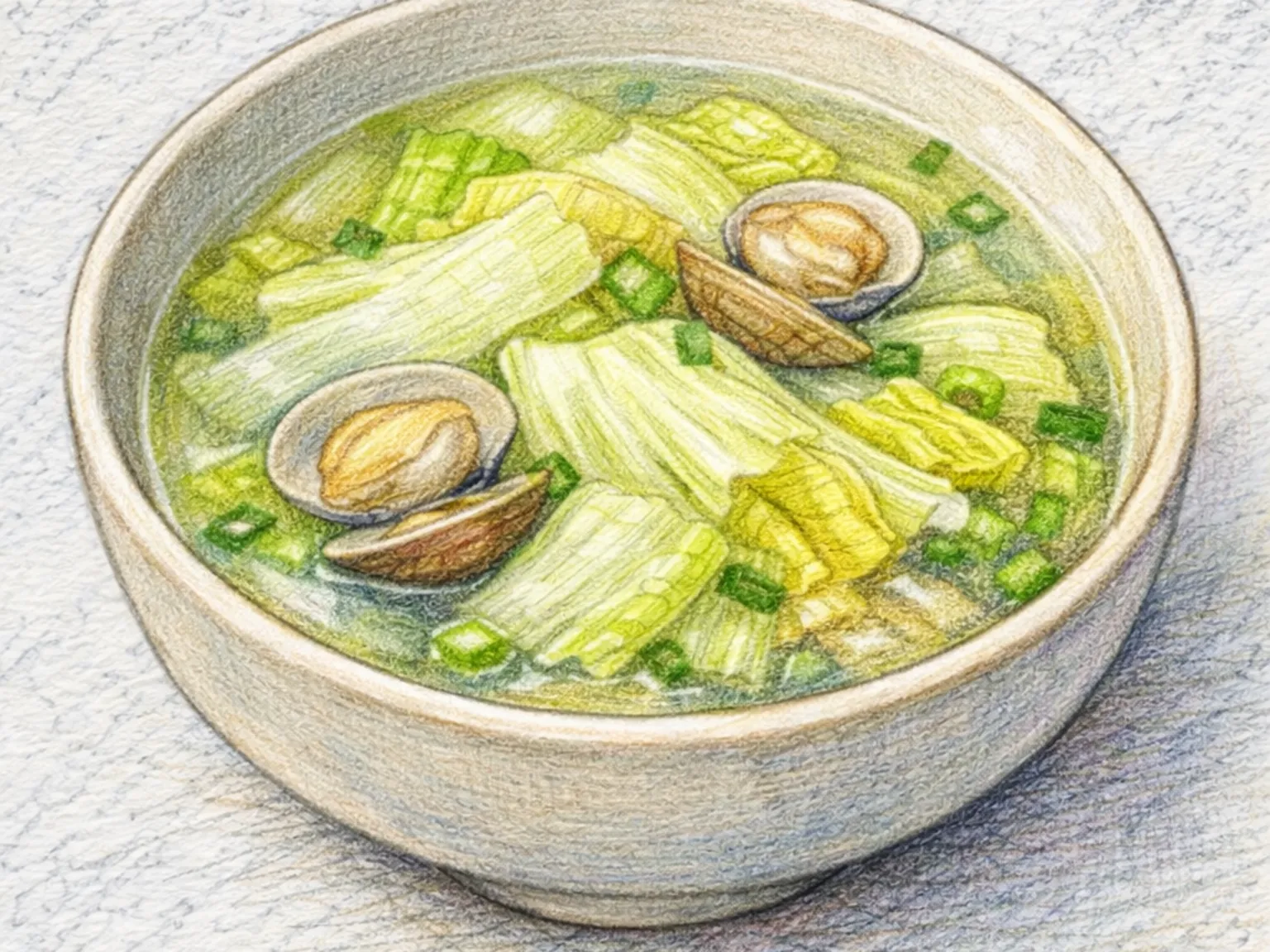
Korean Napa Cabbage Clam Soup

Quick answer

Baechu jogae guk is a clear Korean soup that draws its flavor entirely from clams and napa cabbage without any additional stock ingredients.

What makes this special

  • Baechu jogae guk relies on purged clams and napa cabbage for a refreshing clear soup with pure marine umami.
  • Two-hour clam purging is the essential prep that determines the whole soup's quality
  • Broth built only from clam umami and cabbage sweetness, no anchovy stock needed
Total time
38 min
Level
Easy
Servings
4 servings
Ingredients
7
Calories
150 kcal
Protein
17 g

Key ingredients

clamsnapa cabbagewaterminced garlicsoup soy sauce

Core cooking flow

  1. 1 Soak 500 g clams in salt water made with 1 L water and 1 tablespoon salt for at least 2 hours.
  2. 2 Cut 220 g napa cabbage into 3 cm bite-size pieces and slice 0.5 green onion on the diagonal.
  3. 3 Put 1.5 L water and the purged clams in a pot, then start over medium heat from cold water.

Baechu jogae guk is a clear Korean soup that draws its flavor entirely from clams and napa cabbage without any additional stock ingredients. The clams must be purged in salted water for at least two hours to expel all sand; skipping this step contaminates the broth and ruins the finished dish. Starting from cold water with both the cabbage and clams allows the temperature to rise gradually, coaxing sweetness from the cabbage as it heats alongside the shellfish. Once the clam shells open, the heat is reduced and the broth is seasoned lightly with minced garlic and guk-ganjang. Sliced scallion is added near the end to preserve its fresh, grassy note in the liquid. Since the clam liquor itself carries significant salinity, any additional salt should be added only after tasting, and kept minimal. No anchovy stock or kelp is needed because the marine depth of the clams and the vegetal sweetness of the cabbage together build a clean, layered broth on their own. The soup is mild enough to serve as a restorative meal when appetite is low or digestion is off.

Prep 20min Cook 18min 4 servings

Instructions

Read the steps as a cooking flow: prep, heat, seasoning, doneness control, and finish.

6 steps
  1. 1
    Season

    Soak 500 g clams in salt water made with 1 L water and 1 tablespoon salt for at least 2 hours.

    Treat this as a required prep step, because any remaining sand will make the clear broth gritty.

  2. 2
    Heat

    Cut 220 g napa cabbage into 3 cm bite-size pieces and slice 0.5 green onion on the diagonal.

    Keep the cabbage pieces similar in size so they soften evenly without some pieces collapsing before the rest cook.

  3. 3
    Control

    Put 1.5 L water and the purged clams in a pot, then start over medium heat from cold water.

    Let the temperature rise gradually so the clam liquor flavors the water cleanly instead of turning harsh.

  4. 4
    Heat

    When the water boils and the clam shells open, lift out only the clams right away.

    Leave the broth in the pot, because keeping the opened clams boiling will make the meat tough and rubbery.

  5. 5
    Control

    Add the cabbage and 1 teaspoon minced garlic to the clam broth, then simmer over medium heat for about 7 minutes.

    Stop when the cabbage looks slightly translucent and the thicker stems bend but still hold shape.

  6. 6
    Season

    Return the clams and season first with 1 tablespoon soup soy sauce.

    Taste before adding salt, using only the small amount needed, then add the green onion and boil 1 minute to keep its fresh aroma.

After the steps

Pick a recipe that fits this dish.

Continue with shared ingredients, meal pairings, or a similar method.

Recipes That Go Well With This

More Soups →

Based on shared ingredients and meal pairing

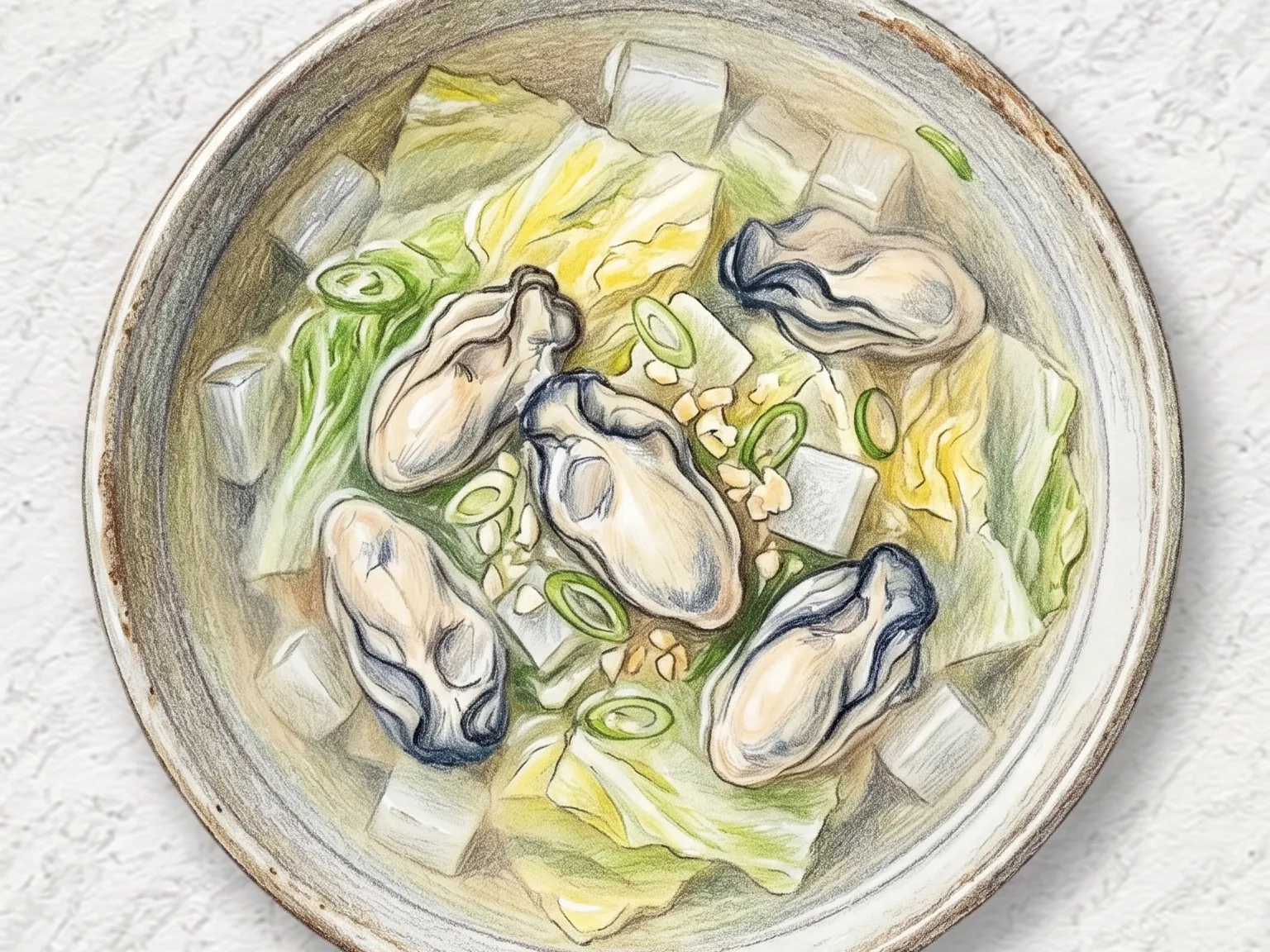
Korean Cabbage Oyster Soup
Shared ingredient: napa cabbage Soups

Korean Cabbage Oyster Soup

Baechu gul guk is a Korean winter soup that pairs seasonal napa cabbage with fresh oysters in a clear, unseasoned broth. Oysters are among the quickest-cooking and most easily overcooked shellfish, which makes their timing the single most critical variable. They are gently rinsed in salted water to remove grit and any briny off-flavors, then dropped in only during the final minute of simmering so they stay plump and custard-soft rather than rubbery. Napa cabbage and daikon radish go in from cold water and simmer together until their natural sugars dissolve into the broth, sweetening it without any added seasoning. Winter cabbage that has been exposed to frost accumulates more cellular sugar, which is why mid-winter specimens produce a noticeably sweeter stock. Seasoning is minimal: minced garlic and a measured amount of guk-ganjang, kept restrained because the oysters carry their own pronounced salinity and oceanic depth. Scallion, sliced thin on the diagonal, goes in last and releases a fresh green fragrance with each spoonful. The finished soup is a study in restraint, placing the soft sweetness of cabbage, the cool clarity of radish, and the deep umami of oyster in careful layers within a single bowl.

Korean Napa Cabbage Perilla Soup
Shared ingredient: napa cabbage Soups

Korean Napa Cabbage Perilla Soup

Baechu deulkkae-guk is a Korean soup built from three foundations: soft-cooked napa cabbage, fermented doenjang, and ground perilla seeds. The cabbage is simmered in anchovy-kelp stock until the white stems turn translucent and the leafy parts nearly dissolve into the broth, releasing a gentle natural sweetness into the liquid. Doenjang dissolved into the stock provides the fermented, earthy backbone that anchors the flavor. Ground perilla seeds, stirred in during the final minutes of cooking, transform the broth from clear to a pale, creamy suspension and introduce a distinctly herbal, nutty aroma that has no close equivalent in sesame or any other common seed. Adding the perilla off high heat prevents it from turning gritty and preserves the volatile aromatic compounds that give it character. This soup belongs to the Korean tradition of deulkkae-guk, a category of perilla-based soups that also includes versions made with dried radish greens, mushrooms, and other cold-weather vegetables. It is among the first dishes Korean home cooks reach for when autumn temperatures drop, and it pairs naturally with plain steamed rice. Perilla has grown wild in Korea's mountains and fields since ancient times and is considered a native ingredient; in this soup, it combines with doenjang to create a flavor pairing that is entirely Korean in character.

Korean Sesame Porridge (Toasted Sesame Silky Rice Porridge)
Serve together Rice

Korean Sesame Porridge (Toasted Sesame Silky Rice Porridge)

Kkaejuk is a traditional Korean porridge made by grinding toasted sesame seeds to a fine powder and simmering them with soaked rice, water, and milk until the mixture reaches a silky, cream-soup consistency. Toasting the seeds before grinding is not optional -- raw sesame lacks the deep, roasted fragrance that defines the dish, and the heat of toasting develops oils and aroma compounds that grinding alone cannot produce. Constant stirring over low heat prevents the mixture from scorching and coaxes the rice grains into breaking down completely, merging with the sesame base so no distinct texture remains. Milk enriches the body beyond what water alone provides and gives the finished porridge a warm ivory color. The simplest version is seasoned with nothing but salt and served with a drizzle of honey or rice syrup, letting the roasted sesame flavor carry the bowl without distraction. Easily digestible and gentle on the stomach, kkaejuk has a long tradition as a morning meal, a recovery food for the sick, and a postpartum nourishment dish in Korean households.

Korean White Clam Clear Soup
Similar recipe Soups

Korean White Clam Clear Soup

Baekhap jogae tang is a clear Korean clam soup built entirely on the flavor of hard clams, with no additional stock of any kind. The clams are soaked in salted water until fully purged of sand, then transferred to cold water in the pot and heated gradually. This slow climb from cold allows the clams to release their maximum flavor into the surrounding liquid before they even open, producing a more richly flavored broth than rapid boiling ever could. Daikon radish simmers in the same water, lending a cool, clean sweetness that tempers the clams inherent saltiness while absorbing broth flavor itself, softening into bite-sized pieces that are worth eating alongside the shellfish. A tablespoon of cheongju, Korean clear rice wine, is added early to neutralize any briny off-notes that might otherwise linger, leaving a cleaner, lighter finish. Garlic appears in small amounts only, deliberately restrained so it does not compete with the delicate shellfish flavor that is the whole point of the dish. Scallion and red chili are placed on top at the very end, contributing color and fragrance rather than direct seasoning. Salt is kept to an absolute minimum since the clam liquor itself provides all the salinity required. The soup is a lesson in simplicity: no anchovy, no kelp, no premade stock. The clams do all the work, and the result is a broth that is simultaneously light and deeply satisfying.

Serve with this

Korean Seasoned Sea Mustard Sporophyll
Side dishes Easy

Korean Seasoned Sea Mustard Sporophyll

Miyeokgwi-muchim is seasoned sea mustard sporophyll - the ruffled, root-adjacent part of the miyeok plant - blanched and tossed in a sweet-sour-spicy dressing. Though it comes from the same seaweed as regular miyeok-muchim, the sporophyll is a distinctly different eating experience. Its thicker, corrugated surface gives a chewy, almost bouncy texture compared to the silky softness of seaweed leaves. This particular part of the plant contains higher concentrations of alginic acid and fucoidan than the leaf portions, which has drawn attention in Korean health-food circles. After rinsing in cold water, blanching for exactly thirty seconds is ideal - going longer turns the texture rubbery. The gochugaru-soy-vinegar-sugar dressing tames the marine saltiness and builds a bright sweet-sour-spicy flavor profile that stimulates appetite alongside rice. Chilling for ten minutes before serving lets the dressing adhere to the bumpy surfaces and leaves a cool finish. At around fifty-two kilocalories per serving, it is a go-to diet banchan. Pre-trimmed miyeokgwi is widely available at Korean markets and online.

🥗 Light & Healthy 🏠 Everyday
Prep 12min Cook 3min 4 servings
Korean Vinegared Bellflower Root Pickle
Kimchi Medium

Korean Vinegared Bellflower Root Pickle

Deodeok chojeolim is a Korean vinegar pickle of bellflower root, made by peeling, splitting, and gently pounding the roots flat before soaking them in a fully cooled brine of vinegar, water, sugar, and salt. A brief ten-minute salting before rinsing draws out the root's inherent bitterness while leaving its earthy, aromatic fragrance completely intact. The brine must be cool before pouring - adding it hot would soften the root and destroy the distinctive chewy, springy texture that makes this pickle worth eating. After one day of refrigeration, the pickle gets a light toss of gochugaru and sesame oil just before serving, adding spicy warmth and a nutty finish. Served cold, it delivers a rare combination of clean acidity and deep root-vegetable aroma that sets it apart from most Korean side dishes.

🍱 Lunchbox 🏠 Everyday
Prep 25min Cook 8min 2 servings
Korean Burdock Matchstick Pancake
Pancakes Easy

Korean Burdock Matchstick Pancake

Burdock root, julienned into thin matchstick strips and pan-fried with onion and cheongyang chili, is a jeon with texture as its main argument. The combination of Korean pancake mix and tempura flour in the batter produces a result that is crispier than standard jeon, particularly at the edges where the thin strips of burdock protrude from the batter and catch the heat. Burdock has an earthy, faintly bitter flavor that holds up in the pan, and the onion provides sweetness alongside it. Cheongyang chili cuts through with a slow-building, lingering heat. Cold water keeps the batter loose and inhibits gluten development, so the finished jeon stays light rather than dense. Hot from the pan, the edges shatter; cooled, they turn chewy.

🍺 Bar Snacks ⚡ Quick
Prep 18min Cook 10min 2 servings

Similar recipes

Gamja Jogae-guk (Potato Manila Clam Soup)
Soups Easy

Gamja Jogae-guk (Potato Manila Clam Soup)

Gamja jogae guk is a clear Korean soup that brings together the briny, umami-rich depth of manila clams and the gentle softness of potato in a light, unpretentious broth. The clams are purged of sand first, then added to a pot with potato cut into thin, flat slabs and sliced onion. As the clams open, they release a natural shellfish liquor that seasons the water without any additional stock, giving the broth a quiet but genuine depth. The potato slices cook down gradually, releasing a slight starchiness into the liquid that softens the broth's texture compared to a pure seafood soup. The moment the clams open is the cue to lower the heat, since leaving them in a boiling pot turns the flesh rubbery. Soup soy sauce adjusts the salt level without darkening the clear broth, and sliced green onion scattered over the top at the end adds a clean, grassy note. Despite having only a handful of ingredients and taking fewer than twenty minutes from start to finish, the pairing of clam and potato builds a layered, refreshing flavor that makes this one of the more satisfying simple soups in everyday Korean cooking.

🏠 Everyday 🥗 Light & Healthy
Prep 15min Cook 20min 2 servings
Korean Napa Cabbage Anchovy Stew
Stews Easy

Korean Napa Cabbage Anchovy Stew

Baechu myeolchi jjigae is a homestyle Korean stew that relies on dried anchovy stock as its flavor base, with napa cabbage as the central vegetable. Large dried anchovies and kelp are simmered together for ten minutes to build a stock with pronounced umami, then strained so the broth is clear and clean. Baby napa cabbage cut into long vertical strips releases the natural sweetness of its pale inner stems into the broth as it cooks, providing a counterpoint to the saltiness of the anchovy stock. Thick-cut tofu slabs are placed between the cabbage layers, and thinly sliced onion adds another source of sweetness to the liquid. Diagonally cut cheongyang chili introduces a direct, sharp heat that gives life to what would otherwise be an entirely mild broth. Fifteen to twenty minutes of simmering is sufficient for the cabbage to soften fully and for its sugars to fully dissolve into the stock, creating the natural sweetness that defines this stew. No gochujang, no doenjang, no complicated sauce: the stew demonstrates a principle central to Korean home cooking, which holds that a well-constructed stock and a single honest vegetable can generate depth and satisfaction without further layering.

🏠 Everyday ⚡ Quick
Prep 10min Cook 20min 2 servings
Korean Dried Pollock Napa Stew
Stews Easy

Korean Dried Pollock Napa Stew

This stew pairs dried pollock strips with napa cabbage for a mild, comforting bowl built on clean, unhurried flavors. The pollock releases a savory, slightly sweet depth into the broth as it rehydrates during cooking. Soaking the pollock briefly in water before adding it loosens the stiff fibers and helps the broth extract faster. The cabbage softens slowly and adds its own natural sweetness, while firm tofu and zucchini round out the ingredients with body and texture. A touch of perilla oil lends a nutty fragrance to the finished bowl. Seasoned simply with soup soy sauce, it works well as a hangover remedy or a light weekday meal that settles the stomach.

🏠 Everyday 🥗 Light & Healthy
Prep 10min Cook 25min 4 servings

Tips

Remove clams once opened and add back later to prevent toughness.
Do not overcook cabbage or it loses sweetness.

Nutrition (per serving)

Calories
150
kcal
Protein
17
g
Carbs
7
g
Fat
4
g