Korean Grilled Cabbage Leaf Wraps
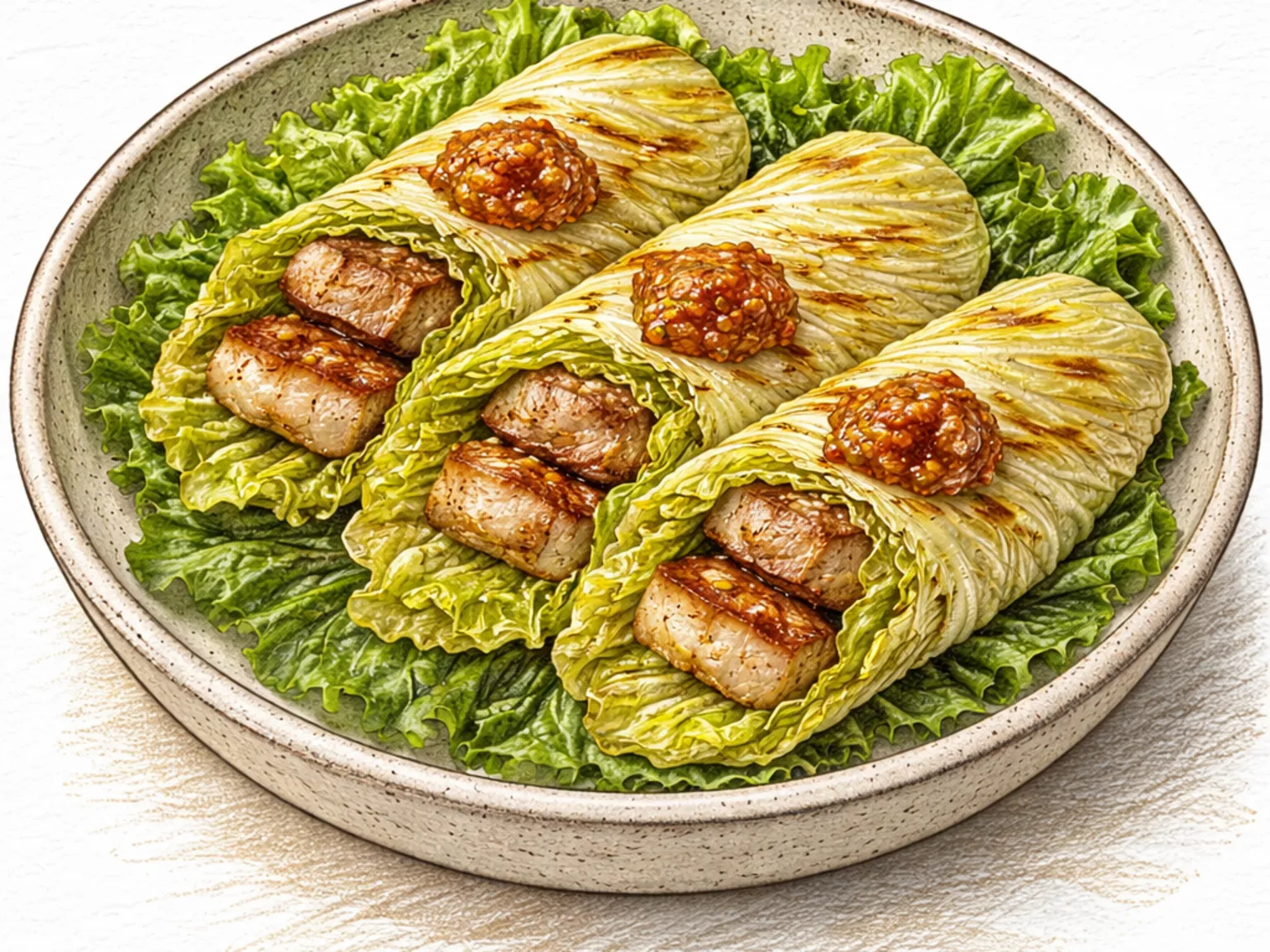
Baechu kimchi gui ssam takes napa cabbage to the grill, charring the leaves before using them as wraps for grilled pork belly and doenjang-based ssam sauce. A whole cabbage head is halved lengthwise, brushed with sesame oil and sprinkled with salt, then grilled over high heat for two to three minutes per side until the outer edges char while the inner layers remain slightly crisp. Pork belly is grilled separately until golden and sliced into bite-sized pieces. The ssam sauce, a blend of doenjang, gochujang, minced garlic, and sesame oil, is spread on a grilled leaf, topped with pork, and rolled into a wrap. Each bite combines the smoky sweetness of the charred cabbage, the fatty richness of pork, and the salty fermented punch of the sauce. Grilled cheongyang chili on the side adds extra heat. The cabbage must not stay on the grill too long, or it loses all structure and cannot function as a wrap.
Adjust Servings
Instructions
- 1
Place cabbage leaves on grill and lightly char both sides.
- 2
Mix doenjang, garlic, sesame oil, and chili for the dipping paste.
- 3
Place grilled pork belly and doenjang paste on the charred cabbage leaf.
- 4
Roll up and eat in one bite.
As an Amazon Associate, we may earn from qualifying purchases.
Tips
Nutrition (per serving)
More Recipes

Korean Salt-Grilled Pork (Pork Belly and Neck BBQ)
Doejigogi-gui is Korea's quintessential salt-grilled pork, made by seasoning thick slices of pork belly or neck with nothing but coarse salt and grilling them over charcoal or on a hot pan. With no marinade to mask it, the quality of the pork itself determines the flavor, and thick-cut belly needs patient cooking over medium heat so the fat layers render fully-rushing over high flame leaves the fat chewy and the exterior burnt. Blotting excess rendered fat with paper towels during cooking ensures the meat grills rather than deep-fries, preserving the smoky char flavor. Garlic slices grilled alongside the pork, a dipping sauce of sesame oil mixed with salt, and fresh lettuce leaves for wrapping create the classic Korean barbecue experience where rich meat meets crisp vegetables in every bite.

Korean Grilled Pork Belly
Samgyeopsal-gui is Korean grilled pork belly, the country's most iconic barbecue dish, where 400 grams of pork belly is cut into ten-centimeter lengths and grilled on a preheated pan or griddle over high heat without added oil-the alternating layers of fat and lean render enough grease to cook the meat in. Flipping only once, after four to five minutes per side, is critical because frequent turning lets juices escape before the fat has properly rendered and crisped. Once golden and cooked through, the meat is cut into bite-sized pieces with scissors, and thinly sliced garlic is toasted on the same surface until lightly browned. Each piece is eaten wrapped in lettuce with ssamjang, grilled garlic, and green onion, and an optional side of green onion oil dip-sesame oil mixed with salt and chopped scallion-adds nutty depth and a sharp allium kick on top of the pork fat's richness.

Korean Grilled Pork Neck (Salt-Seasoned Fatty Neck Cut BBQ)
Dwaeji-moksal-gui is Korean salt-grilled pork neck sliced one centimeter thick and seasoned with nothing more than coarse salt and black pepper before searing on a blazing grill. The neck cut is threaded with fine intramuscular fat that renders during cooking, producing a self-basting effect and a rich, porky flavor that needs no marinade-the best pieces have roughly a seven-to-three fat-to-lean ratio. Each side should cook for under two minutes over maximum heat to develop a dark sear while keeping the interior moist; flipping too often drops the surface temperature and produces a steamed, gray result instead of charred grill marks. The standard Korean barbecue way to eat it is in a lettuce wrap with a roasted garlic clove and a dab of ssamjang.

Korean Grilled Aged Kimchi
Well-aged napa kimchi is shaken free of excess marinade and grilled over medium-high heat until the edges char. The longer the kimchi has fermented, the more its pronounced sourness converts to a caramel-like sweetness when exposed to direct flame. A light dusting of sugar accelerates this reaction. Sesame oil and sesame seeds are the only garnish, making this one of the simplest Korean grilled dishes with just four ingredients.

Korean Beef Cabbage Leaf Soup
Ugeoji soegogi-guk is a spicy, savory Korean beef soup that draws its character from pre-seasoned napa cabbage outer leaves and a brisket-based broth. The ugeoji is rubbed with doenjang and gochugaru before it enters the pot, so when it meets the simmering beef stock, it releases both fermented soybean depth and a steady chili warmth that stains the broth a ruddy brown. The brisket, simmered until the fibers separate easily, is shredded and returned to the pot, adding lean, clean beef flavor throughout. As the ugeoji softens over extended cooking, it absorbs the surrounding liquid like a sponge, so each bite delivers a concentrated burst of the combined seasoning. Daikon radish, if included, tempers the heat with its natural sweetness, while generous amounts of sliced scallion perfume the entire bowl. The overall effect is a soup that is warming and robust without being aggressive - the spice level is calibrated to soothe rather than overwhelm, which makes it a go-to choice on cold days when the body needs both heat and substance.

Korean Jeju Style Pork Suyuk
Dombae-suyuk is a Jeju-style boiled pork dish made by simmering skin-on pork belly with doenjang, green onion, garlic, and ginger. The doenjang in the cooking water absorbs the pork's gaminess, leaving the meat clean-tasting. A long boil renders the skin translucent and chewy with a gelatinous bite, while the inner layers stay soft and fatty. Sliced thick and served at room temperature, each piece offers a contrast between the springy rind and the tender flesh. It is traditionally dipped in salted anchovy or shrimp sauce and remains a staple at Jeju feasts and celebrations.