Korean Pear Bellflower Root Tea
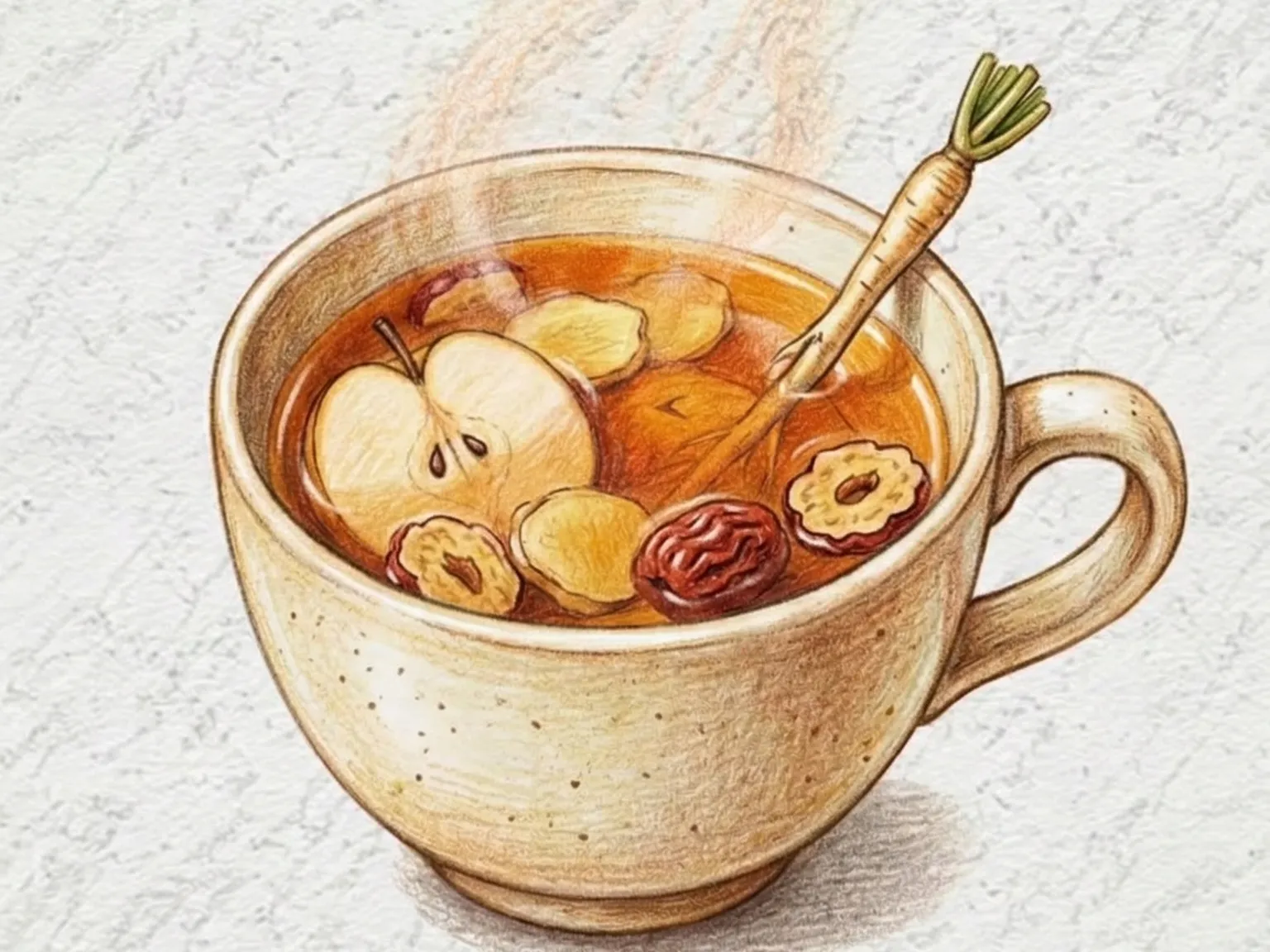
Baedoraji cha is a traditional Korean tea made by slowly simmering pear and bellflower root (doraji) together in water. The bellflower root is peeled and kneaded with salt two to three times to draw out its inherent bitterness, a step that cannot be skipped without the tea turning unpleasantly sharp. The pear is cored, cut into large chunks, and added to the pot where its juice gradually dissolves into the liquid, providing a natural sweetness. Ginger and dried jujubes join the pot: ginger contributes a warm, slightly peppery note that complements the herbal quality of the bellflower root, while jujubes add a subtle fruity depth. The mixture simmers on low heat for thirty to forty minutes so the active compounds in each ingredient fully infuse the water. Sweetness is adjusted with jogcheong (grain syrup) rather than refined sugar. The tea is traditionally served warm during dry or cold weather, when the saponins from the bellflower root are valued for soothing the throat.
Adjust Servings
Instructions
- 1
Core the pear and cut into large chunks with skin on.
- 2
Wash bellflower root and shred thinly.
- 3
Add water, pear, bellflower root, ginger, and jujube to a pot.
- 4
Simmer over medium-low heat for 25 minutes.
- 5
Strain, then stir in rice syrup to finish.
As an Amazon Associate, we may earn from qualifying purchases.
Tips
Nutrition (per serving)
More Recipes

Korean Kudzu Root Tea (Earthy Herbal Root Brew)
Chik-cha is a traditional Korean tea made by slowly simmering dried kudzu root with sliced ginger, scored jujubes, and a cinnamon stick for at least twenty-five minutes on low heat. The kudzu root releases an earthy, starchy depth that forms the tea's backbone, while ginger adds warm pungency and cinnamon contributes a sweet, woody spice layer. Honey is stirred in only after the heat is turned off to preserve its floral aroma, and the jujubes provide a subtle fruity sweetness that ties the flavors together.

Korean Heotgae Tea (Oriental Raisin Tree Hangover Herbal Brew)
Heotgae-cha is a traditional Korean herbal tea made by simmering dried oriental raisin tree fruit with jujubes, ginger, and a cinnamon stick over low heat for thirty-five minutes. The dried heotgae fruit, small and knobby in appearance, releases a deep, earthy sweetness the longer it cooks. Ginger adds a sharp warmth, cinnamon contributes aromatic sweetness, and jujubes layer in a mellow fruit note, giving the tea a complex, multi-layered profile. Honey is stirred in at the end to adjust sweetness, and the tea has been traditionally consumed in Korea as a morning-after drink following alcohol.

Korean Ginseng Tea (Fresh Ginseng Jujube Herbal Brew)
Insam-cha is a traditional Korean ginseng tea made by thinly slicing fresh ginseng (susam) and simmering it with jujubes and ginger over low heat for twenty minutes. Fresh ginseng is milder and less bitter than dried ginseng, but slicing it thin is essential for the active compounds to infuse efficiently, releasing the root's characteristic earthy, herbal aroma during cooking. Jujubes naturally soften the ginseng's bitterness, and ginger introduces a sharp warmth that gives the tea its backbone. Honey balances the flavor, and a few pine nuts floated on the surface add an oily richness that complements the herbal notes.

Korean Bellflower Root Pear Cooler
Deodeok-bae cooler uses a base made by simmering peeled and gently pounded deodeok root with ginger over low heat for ten minutes, then cooling the infusion. Clear pear juice from freshly grated Korean pear, honey, lemon juice, and a pinch of salt are mixed into this base to form a concentrate. Poured over ice and topped with sparkling water, the cooler balances the herbal bitterness of deodeok against the bright, clean sweetness of pear, with carbonation lifting the aromatics.

Baesuk (Korean Poached Pear Punch)
Baesuk is a traditional Korean punch made by slowly simmering whole or large-cut Korean pear with ginger, whole black peppercorns, and dried jujubes. As the pear cooks over low heat, its juice gradually dissolves into the liquid, building a natural sweetness that forms the drink's backbone. Ginger contributes a warm, peppery sharpness that interlocks with the pear's sweetness, producing a flavor that is comforting yet clean. Whole peppercorns are used sparingly; they provide a subtle spice aroma in the background rather than actual heat. Jujubes add a faint reddish tint and a mild fruity undertone to the liquid. Honey is stirred in after the heat is turned off and the temperature has dropped slightly, preserving its fragrance; because the pear already contributes significant sweetness, the honey amount should start small and be adjusted by taste. Overnight refrigeration allows the ginger and pear flavors to meld more fully, rounding out the drink. Pine nuts floated on the surface before serving add a subtle oily richness to the finish of each sip.

Korean Bellflower Root Pickles
Doraji jangajji is a Korean soy-pickled bellflower root dish made by peeling and salting the roots to draw out bitterness, then submerging them in a boiled brine of soy sauce, vinegar, and sugar. The bellflower's characteristic bitter-herbal note softens as it meets the brine's acidity, revealing a fragrant, almost floral flavor that builds with each chew. Ginger in the brine neutralizes any earthy undertone, and the seasoning penetrates the root's fibrous structure as the liquid cools. After two or more days of curing, the pickle reaches a balanced sweet-sour-salty profile that makes it a reliable banchan to keep on hand.