Korean Steamed Monkfish Stomach
Baegoppae jjim is a Korean steamed dish featuring monkfish stomach, valued for its uniquely chewy and springy texture that differs markedly from regular fish flesh. The monkfish stomach is scrubbed with salt and flour to remove any fishy odor, then cut into bite-sized pieces. A seasoning paste of gochugaru, soy sauce, minced garlic, and ginger juice coats the pieces, which marinate for ten minutes to absorb the flavors. The seasoned stomach is placed in a pot with a small amount of water, covered, and steamed at medium heat for fifteen minutes until the sauce reduces and forms a thick glaze on each piece. Water dropwort (minari) is added in the final minute for its herbal fragrance and crisp contrast against the chewy stomach. The texture is the defining feature: each piece requires several deliberate chews, during which the concentrated spicy-savory glaze releases its flavor gradually.
Adjust Servings
Instructions
- 1
Rub monkfish stomach with coarse salt, rinse, and blanch for 2 minutes.
- 2
Cut into bite-size pieces and prep onion and water dropwort.
- 3
Mix chili flakes, soy sauce, garlic, ginger juice, and water for sauce.
- 4
Toss monkfish stomach and onion with sauce, then cook over medium heat for 12 minutes.
- 5
Add water dropwort and steam-braise 2–3 more minutes.
As an Amazon Associate, we may earn from qualifying purchases.
Tips
Nutrition (per serving)
More Recipes

Korean Spicy Steamed Squid
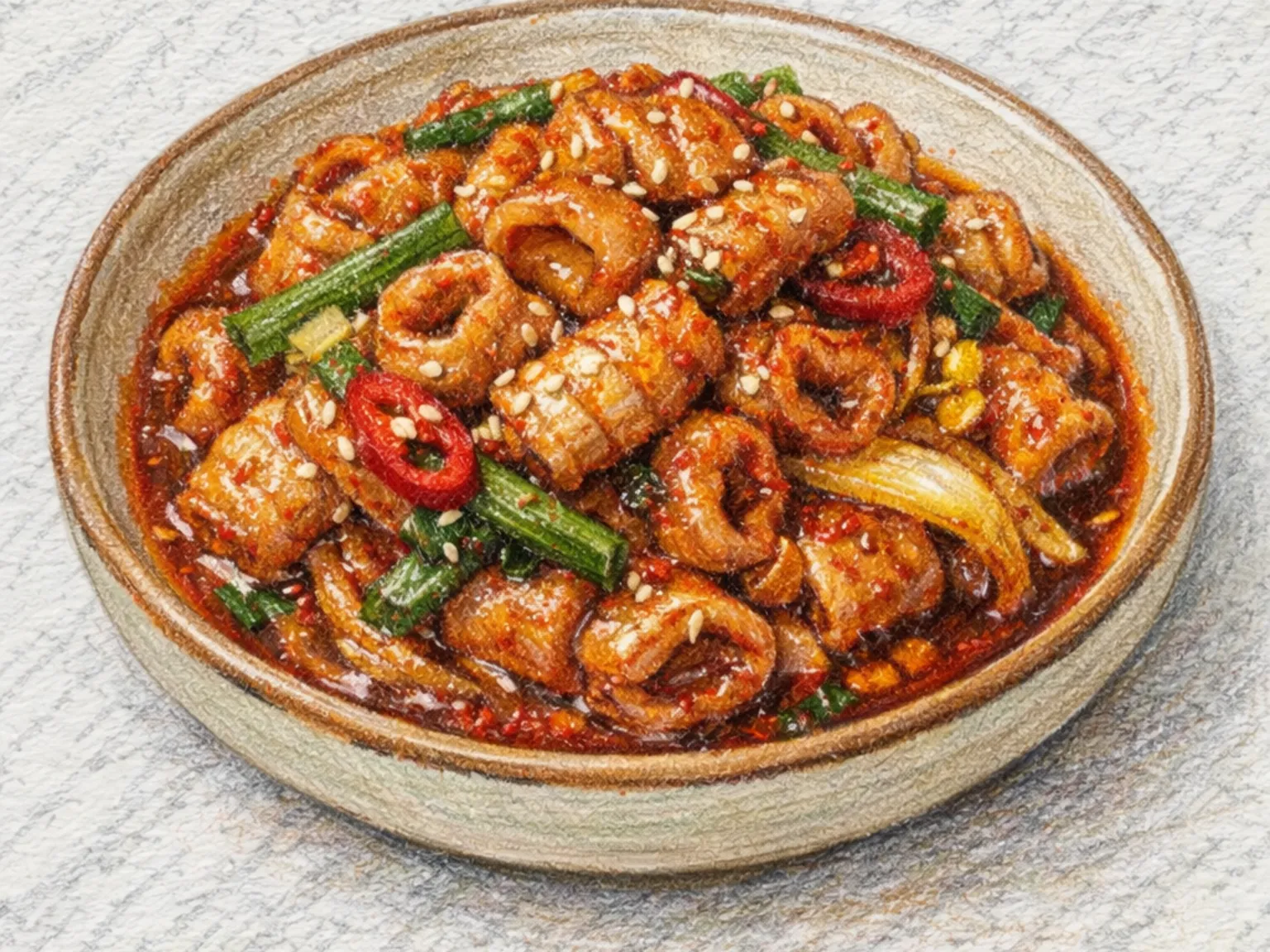
Ojingeo-jjim is a Korean spicy steamed squid dish cooked with onion and green onion in a sauce of gochugaru, gochujang, and soy sauce. The key is keeping the total cooking time to around ten minutes, starting on high heat and finishing on medium, so the squid stays chewy rather than turning rubbery. Gochujang provides a thick, coating heat while the chili flakes add a sharper spiciness on top. One final toss at the end ensures every piece is evenly glazed with the red sauce. This quick-cooking dish works equally well as a banchan alongside rice or as an accompaniment to drinks.

Korean Spicy Braised Monkfish
Agu-jjim is a signature dish of Masan, a port city in Korea's Gyeongsang-do province, where monkfish has been landed and cooked in spicy preparations for generations. The dish involves braising monkfish pieces over high heat with a thick layer of bean sprouts, all drenched in a paste of gochugaru, gochujang, soy sauce, and garlic. The monkfish flesh, which has a firm, gelatinous texture unlike any other white fish, absorbs the fiery red seasoning while the bean sprouts release enough moisture to create a natural braising liquid. Water dropwort - minari - goes in at the very end, contributing a celery-like herbal note that cuts through the heavy chili-garlic coating. Traditionally served communal-style on a large platter, agu-jjim is a staple of Korean drinking gatherings where the bold spice demands cold beer or soju.

Korean Braised Cod with Vegetables
Daegu-jjim is braised cod fillet cooked with Korean radish, onion, and green onion in a sauce of gochugaru, soy sauce, and garlic. The thick cod flesh absorbs the spiced broth while keeping its firm, flaky texture intact. Radish pieces soak up the cooking liquid and turn sweet against the chili heat, while cooking wine and garlic neutralize any fishiness. The dish finishes with just enough sauce clinging to the bottom of the pot to spoon over a bowl of rice.

Korean Braised Pollock (Frozen Pollock with Radish in Spicy Sauce)
Dongtae-jjim is frozen pollock braised with Korean radish and bean sprouts in a sauce of gochugaru, soy sauce, garlic, and ginger. Using frozen rather than fresh pollock is traditional - the freezing-and-thawing process gives the flesh a firm, slightly spongy texture that holds up well in the spicy broth. Radish soaks up the chili-laced liquid and turns sweet against the heat, while bean sprouts contribute crunch and a clean, refreshing aftertaste. The sauce reduces to a shallow pool at the bottom, meant to be spooned over rice as a wintertime staple.

Korean Spicy Braised Hairtail
Galchi-yangnyeom-jorim is a Korean braised hairtail in a spicy-sweet sauce made from chili flakes, soy sauce, and garlic. The seasoning soaks into the tender hairtail flesh during simmering, suppressing any fishiness while building layered umami. Radish pieces braise alongside the fish, softening completely and offering a textural contrast to the flaky meat. Reducing the sauce uncovered at the end concentrates the flavors into a thick, glossy glaze.

Korean Monkfish Soup (Spicy Southern Coastal Fish Broth)
Agwi-tang is the soup version of Korea's monkfish preparations, originating from the fishing villages along the southern coast where monkfish - called agwi or agu depending on dialect - is landed fresh. Unlike braised or stir-fried monkfish dishes, the tang form prioritizes a clear, brothy base built on anchovy stock. Radish simmers first for eight minutes, sweetening the liquid before the monkfish enters. The fish cooks gently at medium heat, its collagen dissolving into the broth and giving it body. Bean sprouts go in last, contributing a clean crunch that contrasts the soft fish flesh. A final addition of sliced green onion and a punch of gochugaru turns the broth a hazy red. This is hangover food in Korea's coastal towns - hot, spicy, and restorative, traditionally served steaming at dawn markets.