Korean White Chili Clam Stew
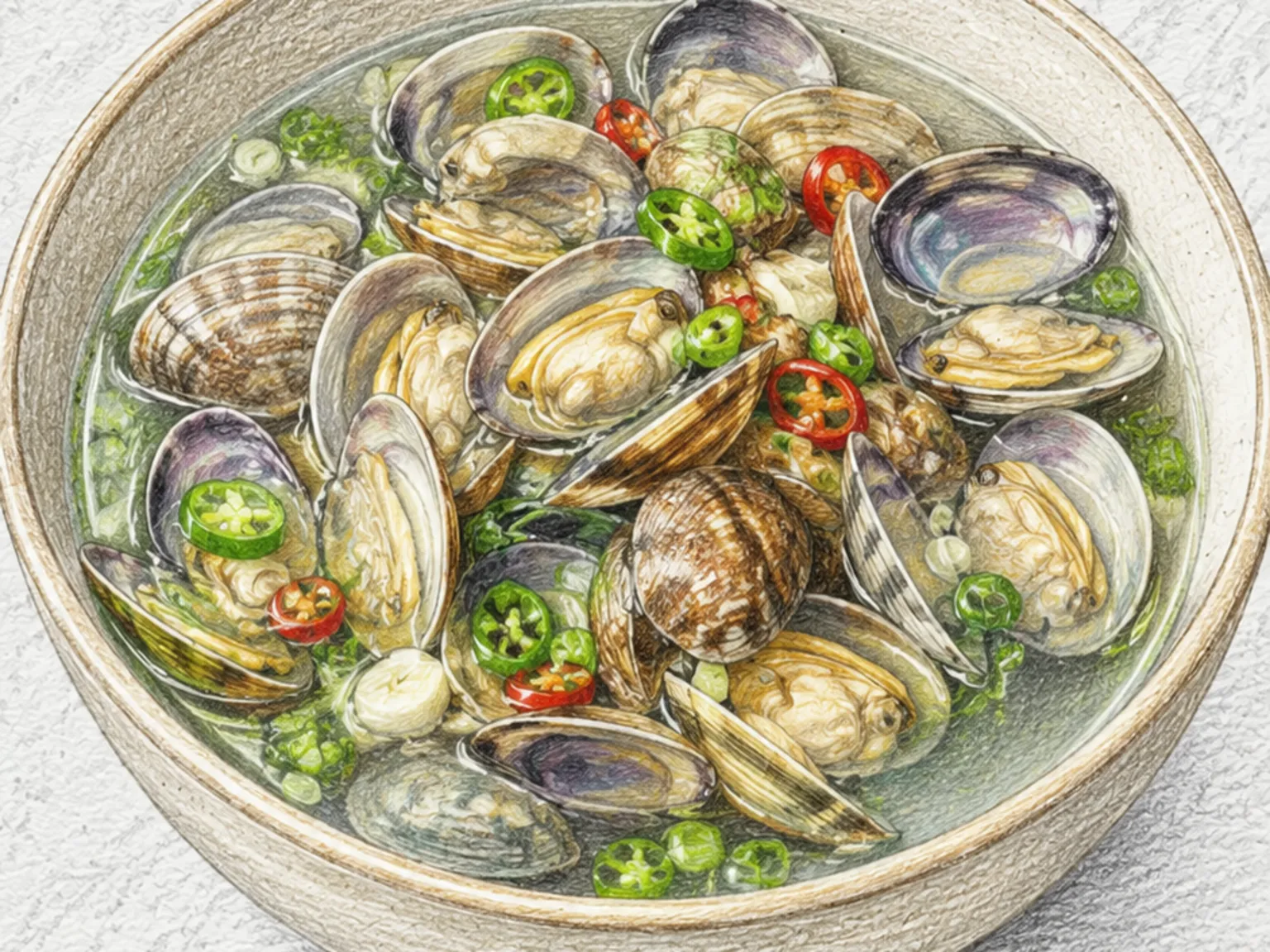
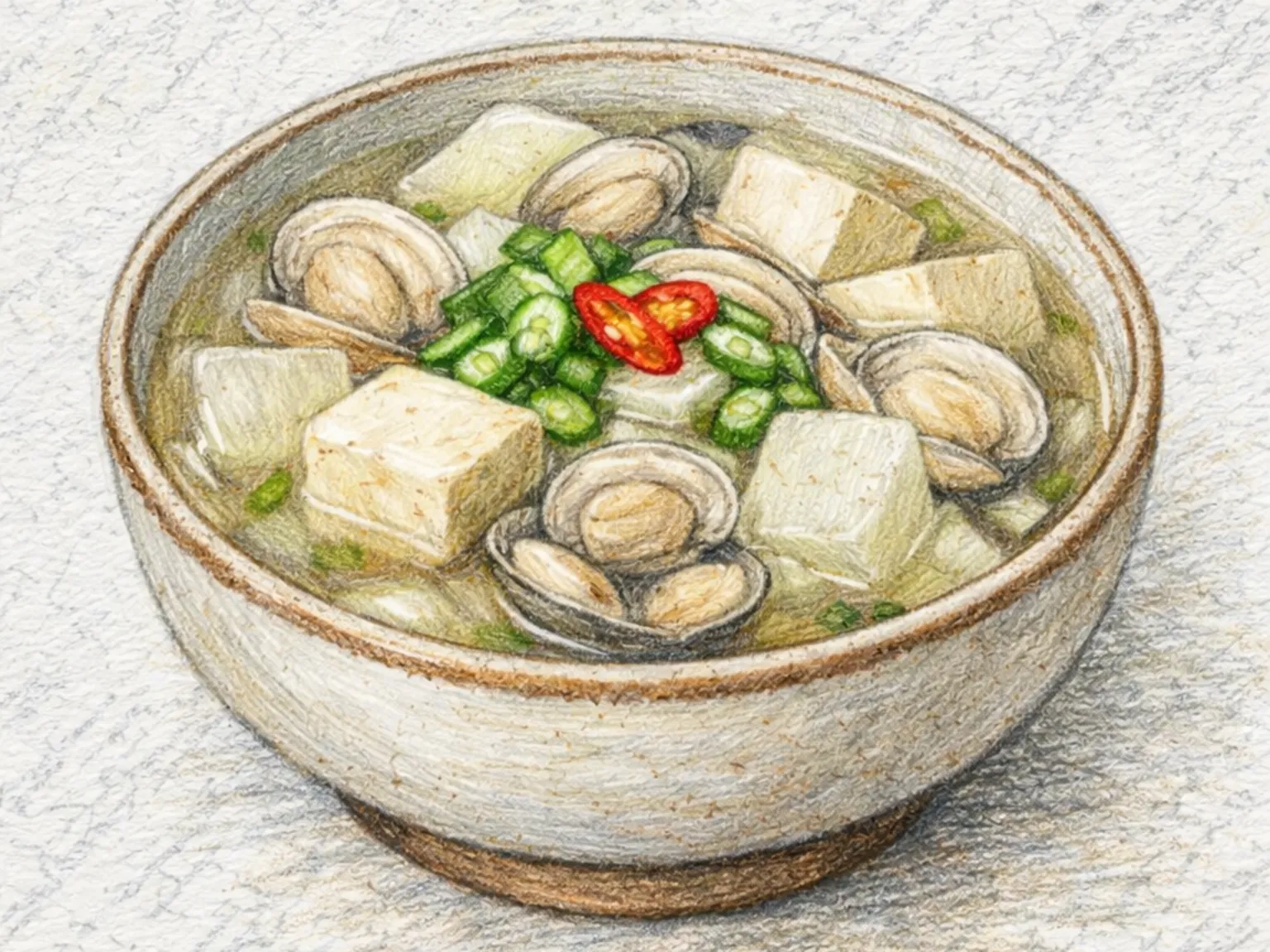
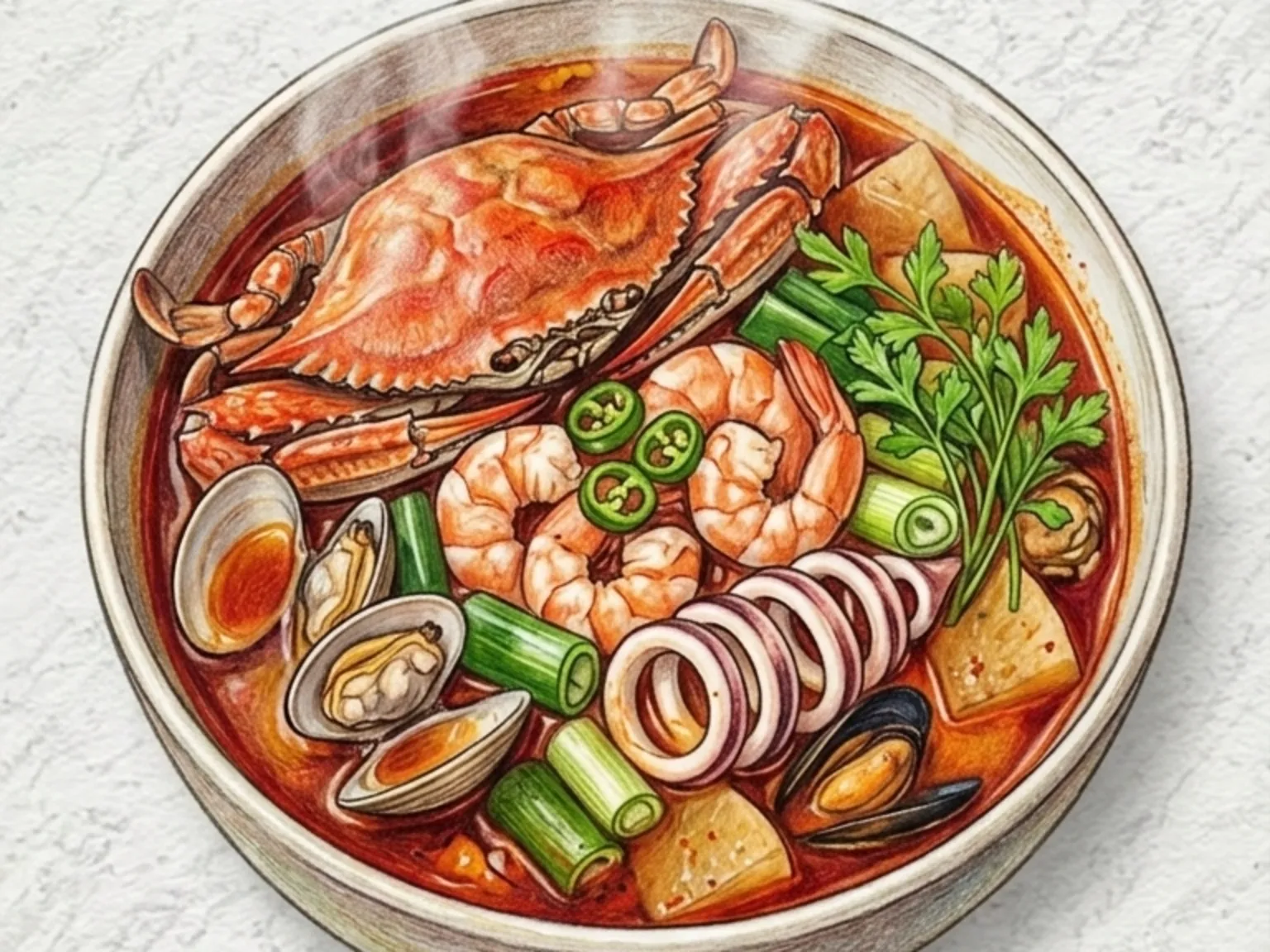
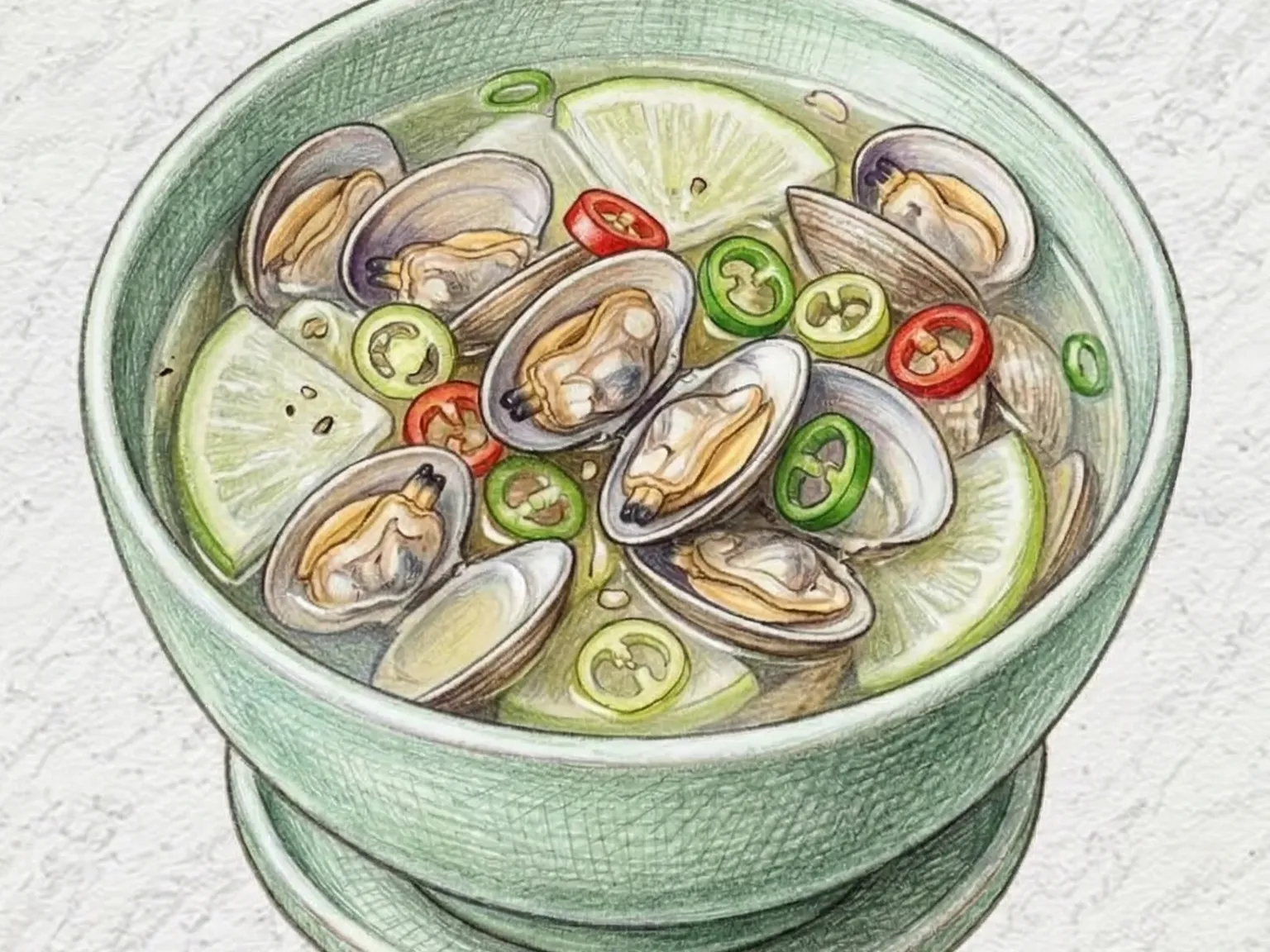
Baekgochu bajirak jjigae is a clear Korean clam stew where manila clams and daikon radish provide all the broth flavor without additional stock. The clams are purged thoroughly in salted water, then placed in cold water with the radish and brought to a boil. As the water heats, the clams open and release their liquor into the broth; any that remain closed are discarded. Seasoning stays light with minced garlic and guk-ganjang, while diagonally sliced red chili and cheongyang chili add color and layered heat. Scallion goes in at the end for freshness. The radish contributes a cool sweetness that melds with the briny clam liquor, producing a broth that tastes more complex than its simple ingredient list suggests. White chili peppers (baekgochu), milder than standard green ones, lend a soft peppery fragrance rather than sharp heat. The stew's strength is its restraint: clams and radish alone generate the depth that many stews need stock packets to achieve.
Adjust Servings
Instructions
- 1
Purge clams in salted water, then rinse well.
- 2
Slice radish into thin squares and diagonally slice scallion and chilies.
- 3
Boil water with radish for 6 minutes to build sweetness.
- 4
Add clams and garlic; cook until shells open.
- 5
Season with soup soy sauce, add scallion and chilies, and simmer 2 minutes.
As an Amazon Associate, we may earn from qualifying purchases.
Tips
Nutrition (per serving)
More Recipes

Korean White Clam Clear Soup
Baekhap jogae tang is a clear Korean soup built entirely on the flavor of hard clams simmered in water without additional stock. The clams are soaked in salt water until fully purged of sand, then placed in cold water and heated gradually; this slow temperature rise draws maximum flavor from the shells into the broth. Daikon radish simmers alongside, lending a cool sweetness that tempers the clams' saltiness. A tablespoon of cheongju (clear rice wine) is added to neutralize any briny off-notes and leave a clean finish. Garlic is used sparingly so it does not compete with the shellfish flavor, and scallion and red chili are added at the end for color and fragrance. Salt is kept minimal since the clam liquor itself provides ample seasoning. The soup's entire philosophy rests on a single ingredient doing all the heavy lifting: no anchovy, no kelp, just clams producing a broth that is simultaneously light and deeply flavored.

Korean Bajirak Miyeok Jjigae (Clam Seaweed Stew)
Bajirak miyeok jjigae is a Korean stew combining manila clams and soaked seaweed, layering shellfish umami with the mineral depth of sea vegetables. Clams start in cold water with radish, which adds a cool sweetness to the broth that balances the clams' natural saltiness as the temperature climbs. Once the shells open, rice wine removes any briny off-notes, and the stew is seasoned with soup soy sauce and minced garlic. The seaweed, soaked and cut into bite-sized pieces, must enter the pot only in the last five minutes; longer cooking turns it tough and unpleasantly slippery. Diagonally sliced scallion added at the end releases a fresh aroma across the surface of the stew. The iodine-rich character of the seaweed and the briny depth of the clams belong to the same marine family yet occupy different flavor registers, creating a broth with compound depth. Any clams that remain closed after cooking must be removed to prevent grit from contaminating the finished stew.

Korean Wild Chive Clam Chili Stew
Fresh clams and wild chives come together in a gochujang-spiked anchovy broth for this seasonal stew. The clams open during simmering, releasing their briny liquor into the spicy stock, while the wild chives - added near the end - contribute a sharp, garlic-like bite that lifts the whole dish. Potato and tofu give the stew substance, and the interplay of sea-briny clam flavor with pungent spring chives makes it a distinctly early-spring recipe.

Korean Mussel Stew
Honghap jjigae uses a generous 900g of mussels to create an intensely briny, clean-tasting broth that defines this stew. Korean radish simmers alongside the shellfish, absorbing the ocean-flavored liquid and contributing a mild sweetness. Cheongyang chili and gochugaru add a moderate kick, while soup soy sauce and cooking wine round out the seasoning without overpowering the seafood. Finished with sliced green onion, the result is a light yet deeply flavorful stew.

Korean Clear Broth Tofu Stew
Tofu simmers in a deep beef stock alongside shiitake mushrooms and zucchini in this clean-flavored stew. The quality of the beef stock drives the entire dish, with shiitake mushrooms reinforcing the umami depth. Soft tofu cubes absorb the rich broth, while zucchini contributes a mild sweetness. Seasoned only with soup soy sauce and salt, this stew showcases a restrained, elegant approach to Korean jjigae without any chili heat.

Dongjuk-tang (Korean Surf Clam Broth)
Dongjuk-tang is a Korean surf clam soup where purged clams simmer with radish in water to produce a briny, naturally sweet broth with almost no added seasoning. The radish goes in first for six minutes to build a sweet base, and the clams follow for three to four minutes - they are done the moment their shells open, and cooking any longer toughens the meat. Clams that remain shut after cooking must be discarded. Water dropwort stirred in at the end contributes a fresh, herbaceous fragrance, and a single cheongyang chili pepper adds a mild, lingering heat that tempers the ocean flavor without masking it.