Korean Grilled Hard Clams with Doenjang Sauce
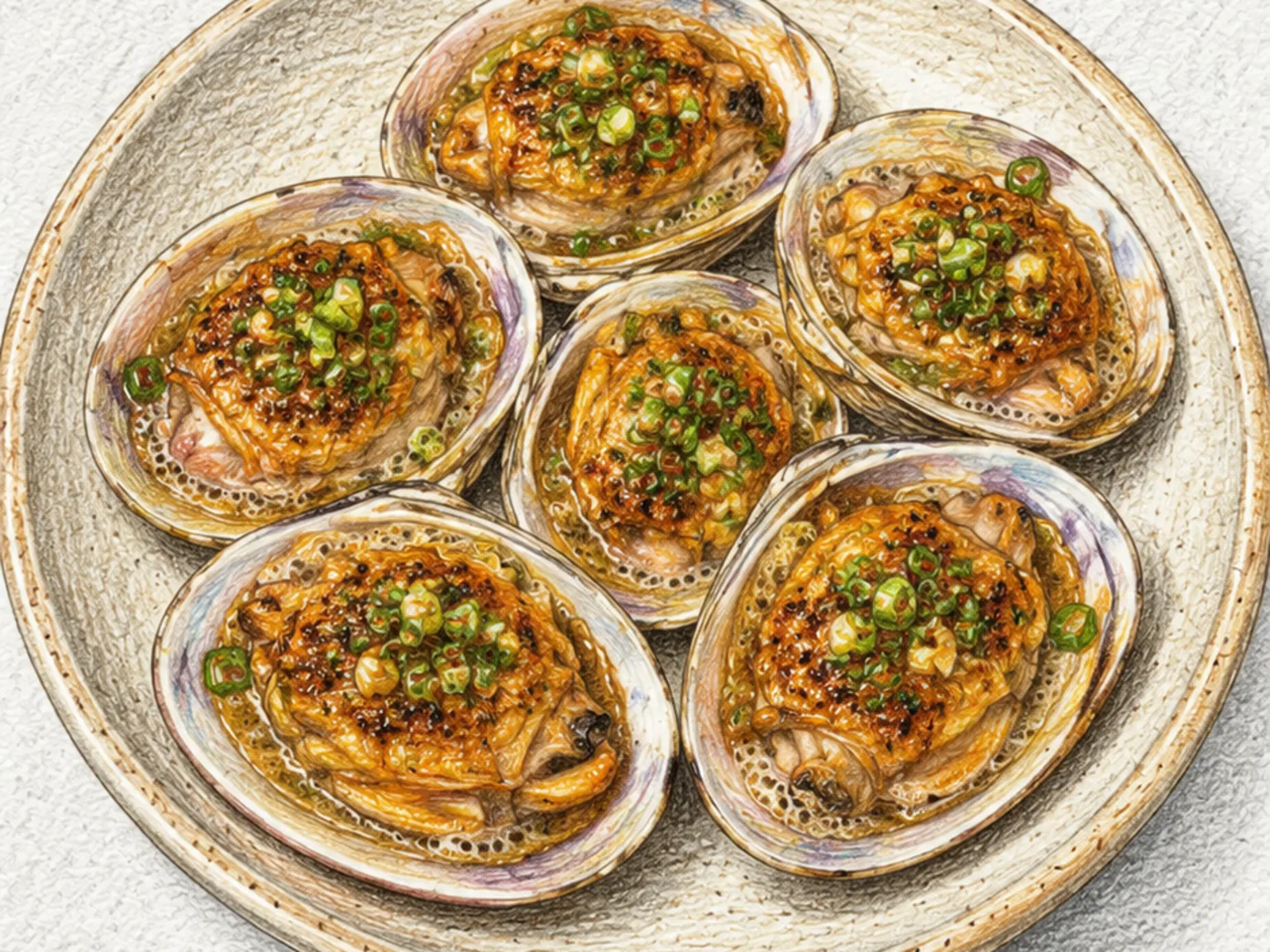
Baekhap doenjang gui is a Korean grilled clam dish where hard clams are topped with doenjang sauce and cooked over direct flame or in an oven. The clams are purged in salt water for at least three hours, then shucked to leave the meat on one half shell. A sauce of doenjang mixed with minced garlic, cheongyang chili, and sesame oil is spread thinly on each clam; too much doenjang overwhelms the natural brininess of the shellfish. Over high direct heat for three to four minutes, the doenjang surface chars slightly, developing a roasted, caramelized aroma while the clam meat contracts and its juices concentrate. Finely chopped scallion scattered on top provides a green visual contrast. The critical timing indicator is when the liquid pooled in the shell begins to bubble; at that point the clams should come off the heat immediately, because further cooking toughens the meat. The dish layers two kinds of salinity, the ocean salt of the clam and the fermented salt of the doenjang, into a single intense bite.
Adjust Servings
Instructions
- 1
Purge clams in salted water for 1 hour, then scrub shells clean.
- 2
Mix doenjang, soy sauce, garlic, and water into a thick sauce.
- 3
Grill clams over high heat until shells open.
- 4
Top opened clams with small amounts of sauce and grill 1-2 minutes more.
- 5
Finish with chopped chili, scallion, and a light drizzle of sesame oil.
As an Amazon Associate, we may earn from qualifying purchases.
Tips
Nutrition (per serving)
More Recipes

Korean Mixed Grilled Seafood
Haemul-gui modeum is a Korean mixed grilled seafood platter where shrimp, squid, Manila clams, and scallops are lightly dressed in olive oil, salt, and black pepper, then grilled at different intervals to account for each ingredient's cook time. Shrimp and scallops need only two to three minutes, squid takes three to four, and clams stay on the grill just until their shells pop open-staggering the timing ensures everything finishes together at peak texture. Overcooking any element by even a minute turns it rubbery, so close attention is the most important ingredient in this dish. A squeeze of fresh lemon juice over the entire platter at the table brightens the natural sweetness of each shellfish and ties the assortment into a cohesive, clean-tasting spread.

Korean Grilled Clams (Butter Garlic Mixed Shellfish Grill)
Mixed clams are purged in salt water, then placed on a hot grill or pan until the shells pop open. Butter, minced garlic, and a splash of rice wine are dropped into each opened shell for one to two more minutes of cooking. The briny liquid released by the clams mingles with the melted butter, forming a natural sauce inside each shell. Any clams that refuse to open are discarded, and chopped parsley finishes the dish.

Korean Daegu Doenjang Gui (Doenjang-Grilled Cod)
Daegu-doenjang-gui is a Korean grilled cod dish where fillets are coated with a mixture of doenjang, minced garlic, and sesame oil, then cooked until the paste forms a thin, savory crust over the fish. Cod's mild, white flesh is an ideal canvas for doenjang's deep, fermented soybean flavor-the seasoning does not compete with the fish but rather defines it. As the paste dries slightly on the surface under heat, it creates a concentrated savory shell while the flesh underneath stays moist and flaky. Adjusting the amount of doenjang is key since it can easily oversalt the delicate fish, and serving with sliced green onion or perilla leaves provides an herbal counterpoint to the earthy paste.

Korean Grilled Sea Snail with Gochujang
Pre-boiled sea snail meat is sliced thin, trimmed of tough visceral parts, and marinated for fifteen minutes with sliced onion in a sauce built on gochujang, gochugaru, soy sauce, oligosaccharide syrup, and minced garlic. A screaming-hot pan sears the marinated snail in three to four minutes, concentrating the spicy-sweet sauce onto the surface while preserving the snail's signature firm chew. Green onion goes in for the final minute, followed by a drizzle of sesame oil. The briny depth of the sea snail meets the fermented heat of gochujang in every bite.

Korean Hard Clam Radish Stew
Sweet radish broth meets briny hard clams in this clean, deeply flavored Korean stew that needs no stock -- just clams, radish, and 35 minutes. The radish goes into the pot first and boils for ten minutes to release its natural sweetness, which forms the foundation of the broth before the clams are added. Once the clams open, their concentrated marine flavor layers over the radish sweetness, creating a broth that is both clean and deeply flavored. Seasoning is kept minimal with soup soy sauce and minced garlic, added after the clams open so the garlic cooks through without remaining raw. Thick-cut firm tofu absorbs the surrounding broth, acting as a sponge for the clam umami. Diagonally sliced cheongyang and red chilies go in last, contributing a mild heat and visual contrast to the pale broth. Any clams that fail to open must be removed to keep the liquid free of grit. The stew demonstrates how two primary ingredients, clams and radish, can produce a complex broth without relying on anchovy or kelp stock.

Korean Garlic Chive & Clam Stir-fry
Clams purged in salt water are steamed with rice wine until their shells open, then stir-fried with garlic chives, soy sauce, and oyster sauce. The rice wine strips away any briny off-notes while amplifying the clean oceanic umami, and the liquid the clams release as they open becomes a built-in sauce. Garlic chives go in during the last 40 seconds only; longer exposure to heat wilts them into a stringy mass and disperses their aroma. Sliced red chili contributes more visual contrast than actual spice, and a final drizzle of sesame oil smooths out the flavors. Any clam that fails to open after steaming should be discarded for safety. The dish works equally well as a drinking snack alongside soju or as a protein-rich side at the dinner table.