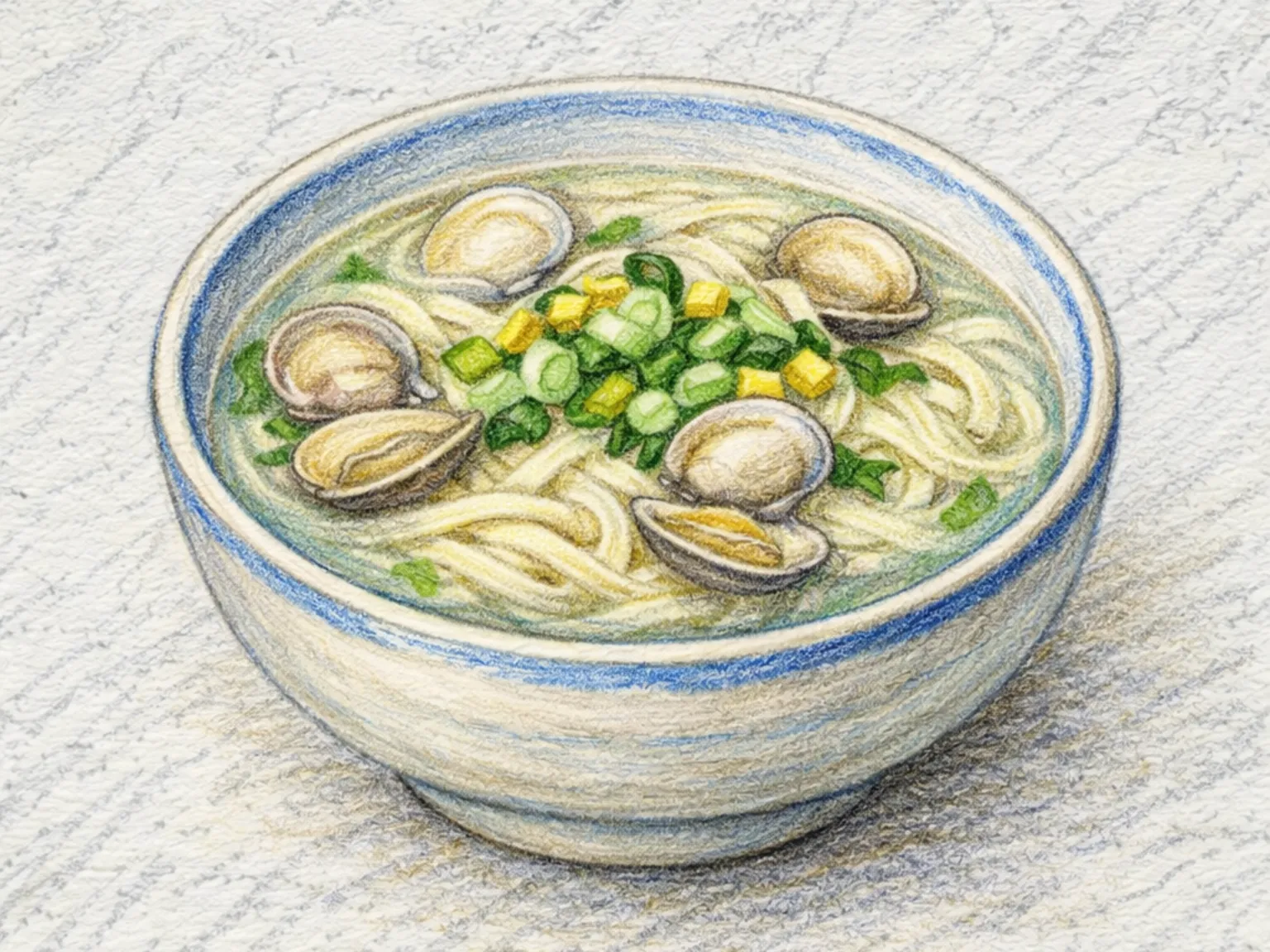
Korean Clam Kalguksu (Hand-Cut Noodles in Clam Broth)
Baekhap kalguksu is a Korean knife-cut noodle soup where the broth comes entirely from hard clams. Purged clams are simmered in water until they open, then removed while the broth is strained through cloth to catch any remaining grit. Thinly sliced daikon radish and Korean zucchini cook in the strained broth for five minutes, adding vegetal sweetness. The hand-cut noodles go in next and boil for six to seven minutes until they turn translucent; starch released from the noodles thickens the broth naturally into a lightly viscous consistency. Once the noodles are cooked, the reserved clam meat returns to the pot and the soup is seasoned with minced garlic and guk-ganjang. Adding onion deepens the broth's sweetness further. Because the base is clam liquor rather than the more common anchovy stock, the soup carries a distinctly marine character that infuses every strand of noodle, setting it apart from other kalguksu variations.
Adjust Servings
Instructions
- 1
Purge clams in salted water for 20 minutes, then rinse several times.
- 2
Boil water with radish for 10 minutes to build the base broth.
- 3
Add clams and cook until opened, skimming foam as needed.
- 4
Add zucchini, onion, garlic, and soup soy sauce; simmer 3 more minutes.
- 5
Add noodles and cook 4-5 minutes, stirring to prevent sticking.
- 6
Adjust seasoning with salt and serve hot.
As an Amazon Associate, we may earn from qualifying purchases.
Tips
Nutrition (per serving)
More Recipes

Korean Knife-cut Noodle Soup
Kalguksu is a Korean noodle soup made with hand-cut wheat noodles simmered in anchovy-kelp broth. The noodles are rolled flat and sliced with a knife, giving them a rough surface that absorbs broth and a satisfying chew distinct from machine-made pasta. Sliced potato, half-moon zucchini, and onion go into the pot, with the potato releasing starch that naturally thickens the broth as it cooks. Seasoning stays minimal - soup soy sauce, salt, minced garlic, and green onion added at the end - so the clean, savory depth of the stock comes through clearly. The dish is traditionally associated with rainy days in Korea, and adding clams turns it into a popular seafood variation.

Korean Spicy Gangwon Knife-Cut Noodles
Jang kalguksu is a Gangwon Province-style knife-cut noodle soup where gochujang and doenjang are dissolved into an anchovy-kelp stock, creating a broth that is both fiery and deeply savory. The combination of fermented chili paste heat and soybean paste earthiness produces a complexity well beyond a standard kalguksu, amplified by an extra hit of gochugaru. Potato and zucchini break down as they simmer, naturally thickening the broth and adding sweetness, while onion and green onion round out the aromatics. The fresh, slightly rough-textured noodles cling to the thick, rust-colored broth, making each bite substantial.

Korean Seafood Knife-Cut Noodle Soup
Haemul kalguksu simmers knife-cut wheat noodles in a broth built from clams, shrimp, and squid. Dried kelp forms the stock's foundation, and as Manila clams open they release a briny liquor that deepens the base considerably. Zucchini adds mild sweetness, green onion brings fragrance, and soup soy sauce with minced garlic rounds out the seasoning into a clean yet umami-rich broth. The wide, flat kalguksu noodles have a distinctive chewy bite and absorb the seafood broth with each slurp.

Korean Chicken Knife-Cut Noodle Soup
A whole chicken is simmered with scallion, garlic, and ginger until the broth turns cloudy and rich, then hand-cut wheat noodles are cooked directly in that liquid. As the noodles release their starch into the pot, the broth takes on a silky body that coats the palate, and the noodles themselves absorb the concentrated chicken flavor at every surface. Shredded chicken meat, pulled along the grain, is piled on top just before serving. Potato and zucchini chunks, added during the final minutes, contribute gentle sweetness and soft texture. A generous grind of black pepper over the steaming bowl sharpens the chicken aroma and adds a subtle warmth. On a cold day, this noodle soup delivers the kind of deep, lasting comfort that lighter broths cannot match.

Korean Soy Braised Chicken with Glass Noodles
Jjimdak is a Korean braised chicken dish originating from the Andong region, featuring bone-in chicken, potatoes, and glass noodles simmered in a soy sauce, sugar, and garlic glaze. The soy-based sauce soaks into the chicken and potatoes, delivering a salty-sweet depth in every bite. Glass noodles swell as they absorb the braising liquid, becoming chewy and flavorful, while potatoes turn soft and starchy. As the dish reduces, the sauce thickens into a glossy coating that clings to each piece, making it irresistible over rice.

Jaecheop-guk (Korean Marsh Clam Clear Soup)
Crystal-clear broth, impossibly deep flavor - jaecheop-guk is Korea's prized marsh clam soup, a Hadong specialty worth traveling for. Tiny freshwater clams from the Seomjin River are purged in salted water, then simmered until they open and release their concentrated liquor into the broth. The result is a translucent soup with a remarkably clean umami - far more intense than the small size of the clams would suggest. Chopped chives are added at the end, their sharp green flavor lifting the broth with a bright finish. Soup soy sauce and garlic provide restrained seasoning. The soup has a long-standing reputation in Korea as one of the best hangover remedies, and in Hadong it is served in restaurants that specialize in nothing else, drawing visitors specifically for this one bowl.