Charim

2686 Korean & World Recipes

2686+ Korean recipes, clean and organized. Ingredients to instructions, all at a glance.

Korean Hard Clam Radish Stew
Stews Medium

Korean Hard Clam Radish Stew

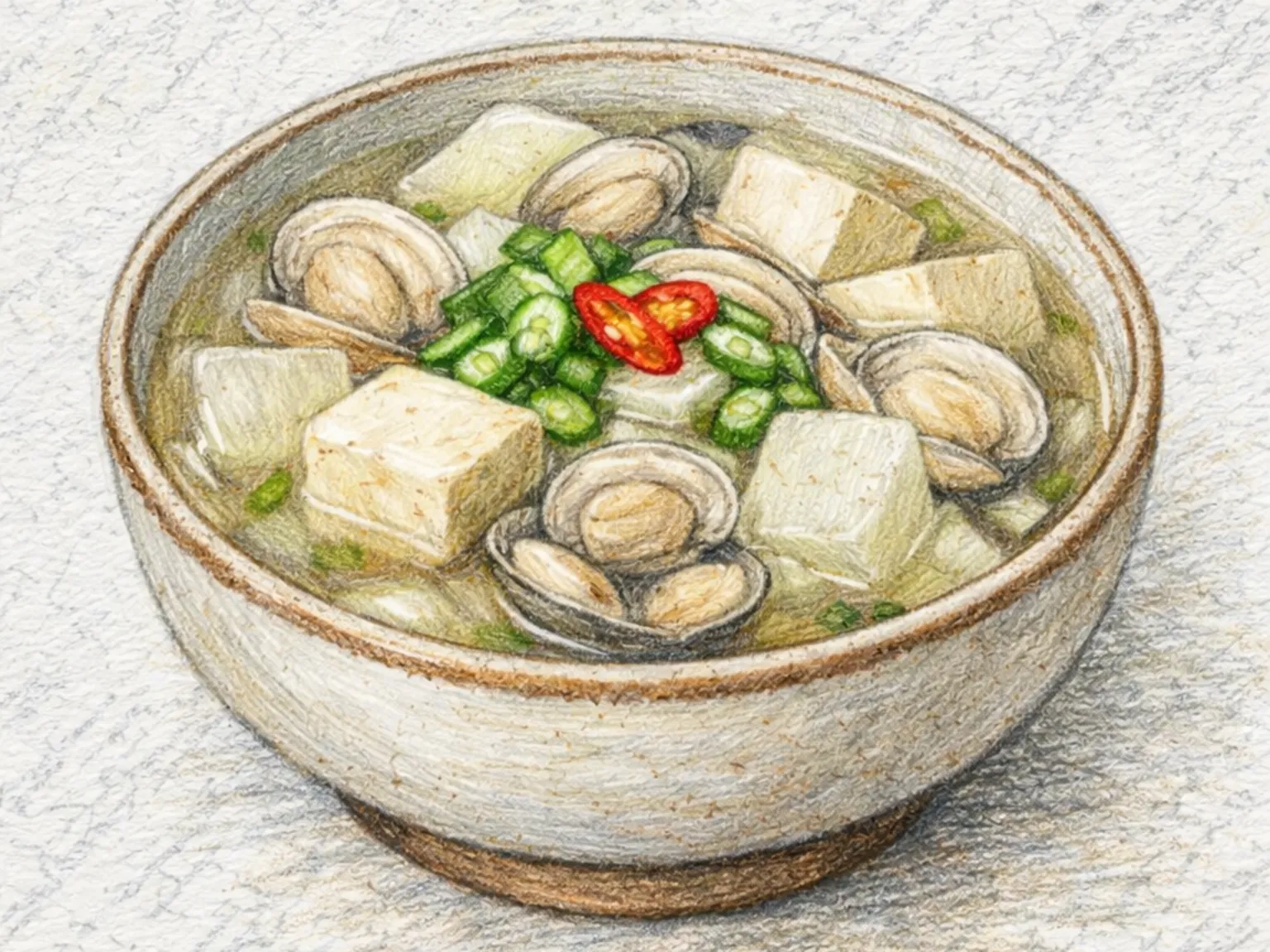
Sweet radish broth meets briny hard clams in this clean, deeply flavored Korean stew that needs no stock -- just clams, radish, and 35 minutes. The radish goes into the pot first and boils for ten minutes to release its natural sweetness, which forms the foundation of the broth before the clams are added. Once the clams open, their concentrated marine flavor layers over the radish sweetness, creating a broth that is both clean and deeply flavored. Seasoning is kept minimal with soup soy sauce and minced garlic, added after the clams open so the garlic cooks through without remaining raw. Thick-cut firm tofu absorbs the surrounding broth, acting as a sponge for the clam umami. Diagonally sliced cheongyang and red chilies go in last, contributing a mild heat and visual contrast to the pale broth. Any clams that fail to open must be removed to keep the liquid free of grit. The stew demonstrates how two primary ingredients, clams and radish, can produce a complex broth without relying on anchovy or kelp stock.

Prep 20min Cook 25min 4 servings

Adjust Servings

2servings
servings

Instructions

  1. 1

    Purge clams in salted water for 20 minutes, then rinse well.

  2. 2

    Slice radish thinly, cube tofu, and diagonally slice chilies and green onion.

  3. 3

    Boil water with radish over medium-high heat for 10 minutes to release sweetness.

  4. 4

    Add soup soy sauce and garlic, then cook clams until they open.

  5. 5

    Add tofu and simmer 5 minutes, then finish with chilies and green onion for 1 minute.

🛒Shop Ingredients on Amazon

As an Amazon Associate, we may earn from qualifying purchases.

Tips

Discard unopened clams for a clean final stew.
Simmer radish first to deepen natural sweetness in the broth.

Nutrition (per serving)

Calories
245
kcal
Protein
24
g
Carbs
14
g
Fat
9
g

More Recipes

Korean Gul Dubu Jjigae (Oyster Tofu Stew)
StewsEasy

Korean Gul Dubu Jjigae (Oyster Tofu Stew)

Gul dubu jjigae pairs 180 grams of fresh oysters with firm tofu in an anchovy-kelp stock. The oysters plump up as they cook, releasing their briny juices into the broth. Korean radish adds a mild sweetness, while gochugaru and a Cheongyang chili counter any fishiness with their heat. The generous 300 grams of tofu make this a substantial meal. This stew is best enjoyed during winter months when oysters are at their peak.

🏠 Everyday
Prep 12minCook 18min2 servings
Korean Oyster & Crown Daisy Stew
StewsEasy

Korean Oyster & Crown Daisy Stew

This stew combines oysters with crown daisy greens, a leafy herb that brings a pleasantly bitter, aromatic quality to the broth. The 220 grams of oysters provide the savory seafood base, while the crown daisy is added late to preserve its fragrance. Korean radish and firm tofu fill out the bowl, and soup soy sauce keeps the seasoning clean. The pairing of briny shellfish and herbal greens is a traditional Korean combination not often seen outside home kitchens.

🏠 Everyday
Prep 15minCook 20min2 servings
Korean Bajirak Miyeok Jjigae (Clam Seaweed Stew)
StewsEasy

Korean Bajirak Miyeok Jjigae (Clam Seaweed Stew)

Bajirak miyeok jjigae is a Korean stew combining manila clams and soaked seaweed, layering shellfish umami with the mineral depth of sea vegetables. Clams start in cold water with radish, which adds a cool sweetness to the broth that balances the clams' natural saltiness as the temperature climbs. Once the shells open, rice wine removes any briny off-notes, and the stew is seasoned with soup soy sauce and minced garlic. The seaweed, soaked and cut into bite-sized pieces, must enter the pot only in the last five minutes; longer cooking turns it tough and unpleasantly slippery. Diagonally sliced scallion added at the end releases a fresh aroma across the surface of the stew. The iodine-rich character of the seaweed and the briny depth of the clams belong to the same marine family yet occupy different flavor registers, creating a broth with compound depth. Any clams that remain closed after cooking must be removed to prevent grit from contaminating the finished stew.

🏠 Everyday
Prep 18minCook 16min2 servings
Korean Napa Cabbage Anchovy Stew
StewsEasy

Korean Napa Cabbage Anchovy Stew

Baechu myeolchi jjigae is a homestyle Korean stew built on dried anchovy stock with napa cabbage as the main vegetable. Large dried anchovies and kelp are simmered for ten minutes to create a stock with deep umami, then strained for a clean base. Baby napa cabbage is cut into long vertical strips so the stems release their sweetness into the broth, naturally balancing the saltiness of the anchovy. Thick-cut tofu slabs are nestled between the cabbage pieces, and sliced onion adds another layer of sweetness. Diagonally cut cheongyang chili brings a sharp heat that enlivens the otherwise mild broth. Simmering for fifteen to twenty minutes allows the cabbage to soften fully and its sugars to dissolve into the liquid. The stew demonstrates a core principle of Korean home cooking: a well-made stock and a single good vegetable can produce depth without complicated seasoning.

🏠 Everyday
Prep 10minCook 20min2 servings
Korean Napa Cabbage Clam Soup
SoupsEasy

Korean Napa Cabbage Clam Soup

Baechu jogae guk is a clear Korean soup that draws its flavor entirely from clams and napa cabbage without any additional stock ingredients. The clams must be purged in salted water for at least two hours to expel all sand; skipping this step ruins the broth with grit. Starting from cold water with both the cabbage and clams allows the temperature to rise gradually, coaxing sweetness from the cabbage as it heats. Once the clam shells open, the heat is reduced and the broth is lightly seasoned with minced garlic and guk-ganjang. Sliced scallion is added near the end for freshness but is not overcooked. Since the clam liquor itself carries significant salinity, additional salt should be minimal and added only after tasting. The soup's appeal lies in its simplicity: no anchovy stock or kelp is needed because the marine depth of the clams and the vegetal sweetness of the cabbage together produce a clean, layered broth.

🏠 Everyday
Prep 20minCook 18min4 servings
Korean Braised Squid with Radish
SteamedMedium

Korean Braised Squid with Radish

Ojingeo mu jorim is a Korean braised squid and radish dish where the radish is simmered first in soy broth to soften and release its natural sweetness, then squid is added with a spicy sauce of gochugaru, gochujang, and garlic. Cooking the radish ahead allows it to absorb the seasoned liquid thoroughly, and the squid goes in only for the last five minutes to maintain its firm, springy bite. Green onion stirred in at the end lifts the aroma. The sauce reduces to a shallow, concentrated pool at the bottom that is meant to be mixed into steamed rice, pulling together the ocean flavor of the squid and the mellow sweetness of the radish.

🏠 Everyday🎉 Special Occasion
Prep 20minCook 30min4 servings
More Stews →