Korean White Kimchi Clam Soup
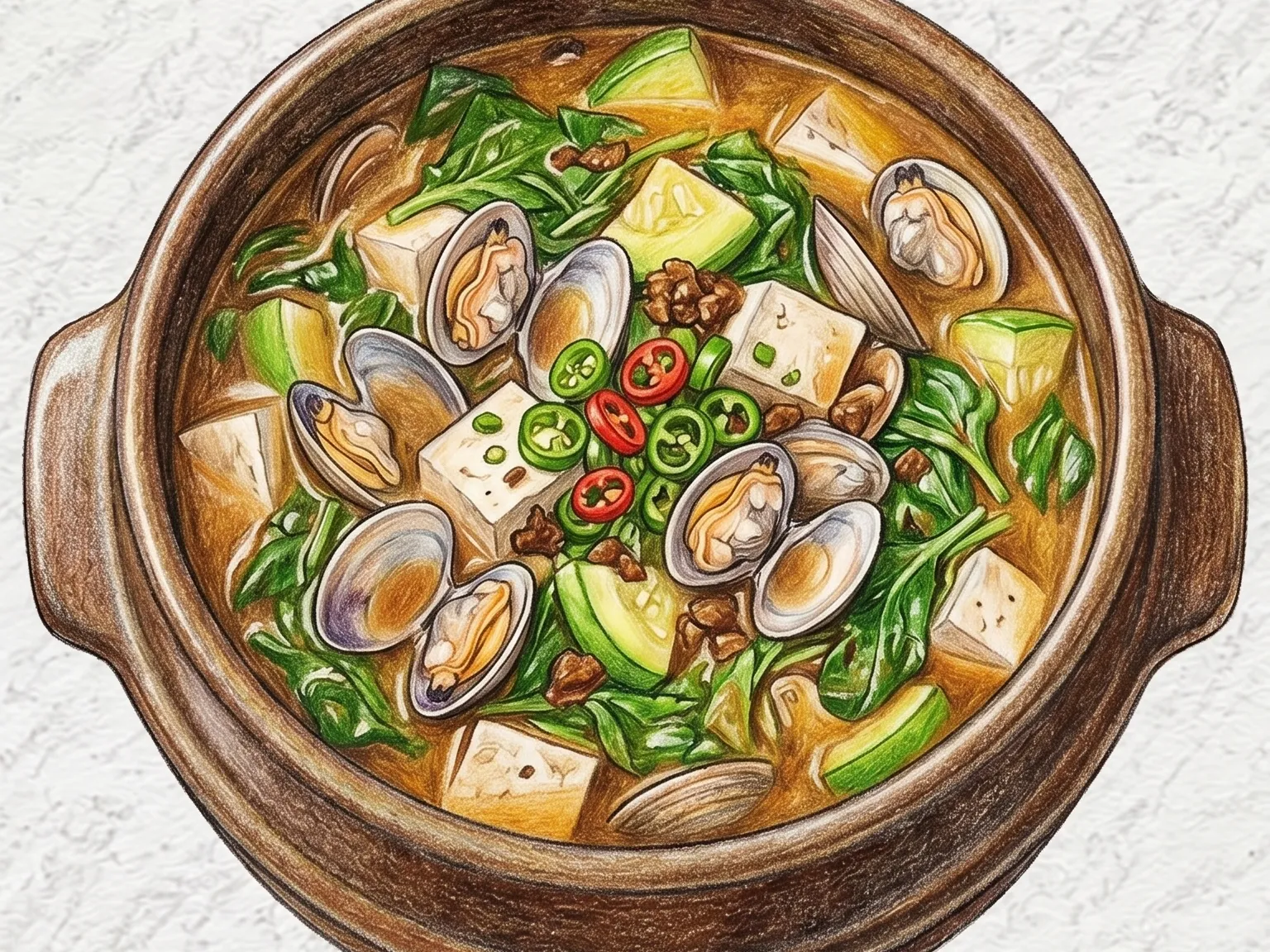
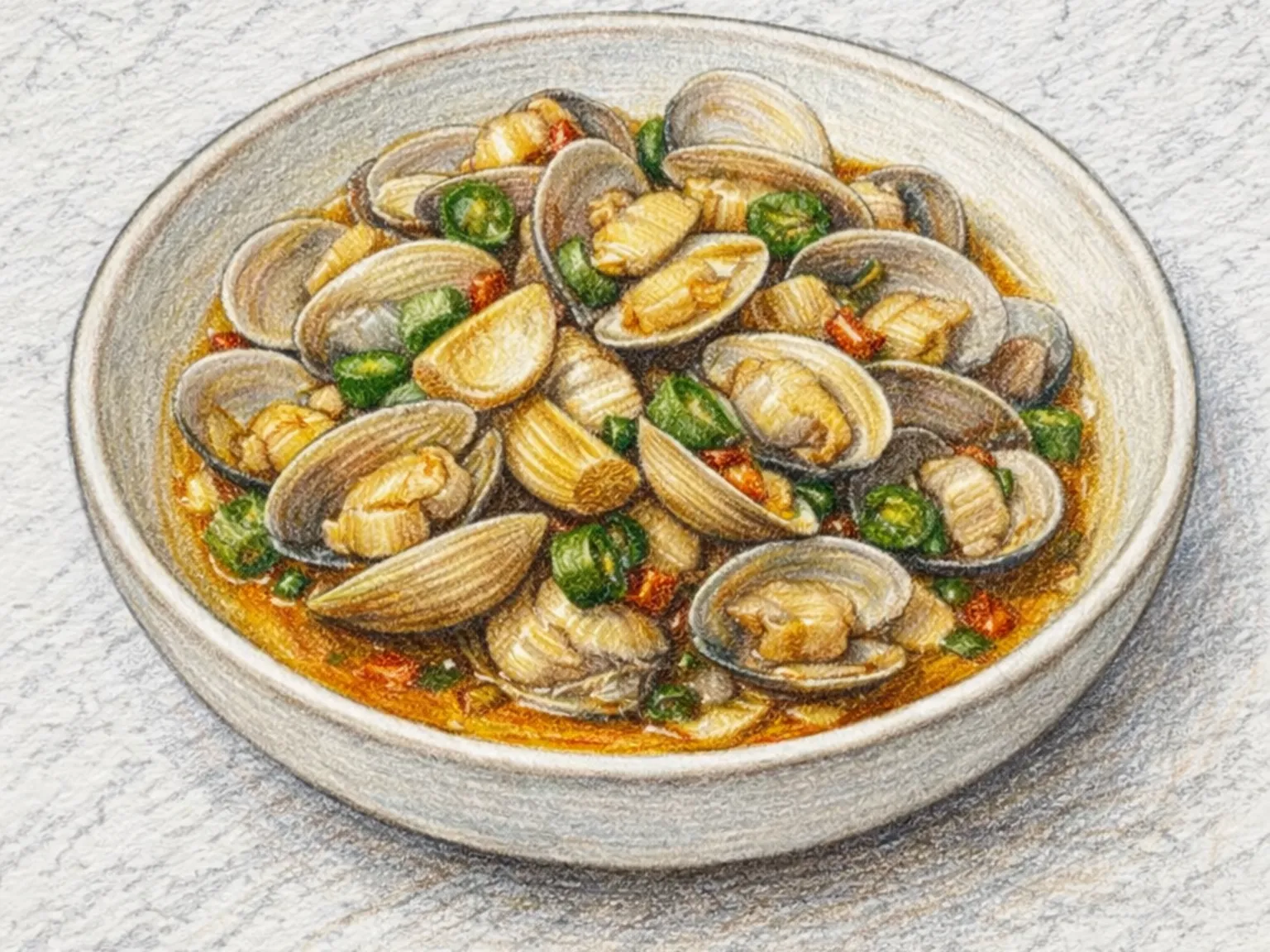
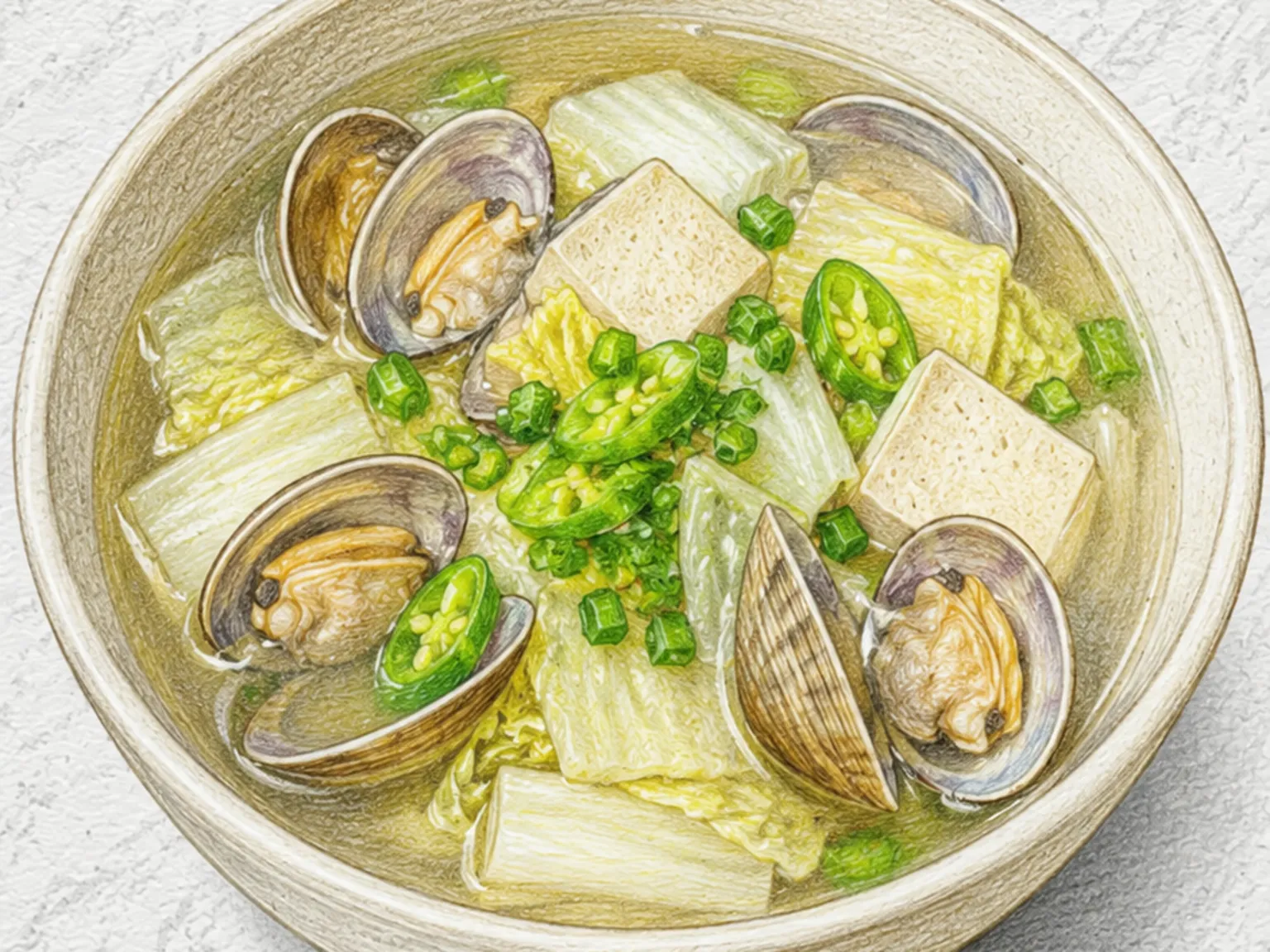
Baekkimchi bajirak guk is a clear Korean soup that unites the gentle fermented acidity of white kimchi with the briny depth of manila clams. Purged clams are simmered in water until they open, then removed while the broth is strained to catch any grit. Chopped white kimchi is added to the clean clam stock, where its lactic tang dissolves into the liquid and produces a flavor profile that is both refreshing and layered. Including the white kimchi brine deepens the acidity, though its salt content means additional seasoning should follow a taste check. Thick-cut tofu slabs absorb the surrounding broth while contributing substance, and a single diagonally sliced cheongyang chili introduces a controlled heat into the otherwise mild soup. Scallion goes in at the end and should not overcook to preserve its fresh aroma. Unlike red kimchi soups, this version has no gochugaru, keeping the broth clear and letting the white kimchi's clean sourness sharpen the clam umami rather than competing with it.
Adjust Servings
Instructions
- 1
Purge clams in salted water for 20 minutes, then rinse several times.
- 2
Cut white kimchi into 3 cm pieces and dice tofu into large cubes.
- 3
Boil clams in water until they open, then remove the clams and reserve.
- 4
In the same broth, add kimchi, kimchi brine, and garlic, then simmer 8 minutes.
- 5
Return tofu and clams, cook 3 minutes, then add green onion and chili for 1 final minute.
As an Amazon Associate, we may earn from qualifying purchases.
Tips
Nutrition (per serving)
More Recipes

Korean White Clam Clear Soup
Baekhap jogae tang is a clear Korean soup built entirely on the flavor of hard clams simmered in water without additional stock. The clams are soaked in salt water until fully purged of sand, then placed in cold water and heated gradually; this slow temperature rise draws maximum flavor from the shells into the broth. Daikon radish simmers alongside, lending a cool sweetness that tempers the clams' saltiness. A tablespoon of cheongju (clear rice wine) is added to neutralize any briny off-notes and leave a clean finish. Garlic is used sparingly so it does not compete with the shellfish flavor, and scallion and red chili are added at the end for color and fragrance. Salt is kept minimal since the clam liquor itself provides ample seasoning. The soup's entire philosophy rests on a single ingredient doing all the heavy lifting: no anchovy, no kelp, just clams producing a broth that is simultaneously light and deeply flavored.

Korean Clam Soft Tofu Soup
Bajirak sundubu guk is a Korean soup where manila clam broth meets soft tofu for a texture that is simultaneously silky and full of marine flavor. Radish simmers first to release its cool sweetness into the water, and when the purged clams are added afterward, the radish sweetness wraps around the clams' saltiness, creating a balanced base. Once the shells open, soft tofu is scooped in with a large spoon and left largely undisturbed; stirring too vigorously dissolves the tofu completely and clouds the broth, while gentle placement preserves its pillowy, cloud-like texture. Soup soy sauce and minced garlic provide seasoning, and scallion goes in at the end for aroma. Each spoonful delivers the soft tofu holding a pocket of clam-infused broth, making the eating experience both mild and deeply flavored at once. Because clam meat toughens with prolonged cooking, the tofu should go in immediately after the shells open and the soup should finish within three minutes.

Korean Young Radish Clam Soup
Yeolmu-bajirak-guk is a clear soup that draws its flavor from manila clams purged in salt water and simmered with thinly sliced radish. As the clam shells open, they release a briny, mineral-rich liquid that forms the broth's backbone. Young radish greens and a cheongyang chili are added in the final three minutes to keep the greens vibrant and slightly crunchy. Soup soy sauce and salt adjust the seasoning, though the clams provide enough natural salinity that only a light hand is needed.

Korean Spinach Clam Soup (Light Shellfish and Greens Broth)
Sigeumchi-bajirak-guk pairs spinach and manila clams in a light, transparent broth that showcases the natural flavor of both ingredients with minimal interference. The clams are purged of sand, placed in cold water, and brought to a boil; as each shell opens, it releases a briny, mineral-rich liquor that becomes the soup's foundation without any need for additional stock. Spinach is added only in the final minute so the leaves wilt just enough to soften while retaining their vivid green color and nutritional content. Soup soy sauce and a touch of garlic round out the seasoning, and the restraint is intentional - anything heavier would mask the delicate sweetness of the clam broth. The spinach's mild, grassy undertone quietly absorbs any seafood sharpness, leaving the overall flavor clean and balanced. Nutritionally, the pairing is notable: spinach is rich in iron, and clams are high in taurine and zinc, making this a soup frequently recommended for children and pregnant women in Korean households. From start to finish, the whole process takes about fifteen minutes, which explains why it appears so often on weeknight dinner tables.

Korean Clear Broth Tofu Stew
Tofu simmers in a deep beef stock alongside shiitake mushrooms and zucchini in this clean-flavored stew. The quality of the beef stock drives the entire dish, with shiitake mushrooms reinforcing the umami depth. Soft tofu cubes absorb the rich broth, while zucchini contributes a mild sweetness. Seasoned only with soup soy sauce and salt, this stew showcases a restrained, elegant approach to Korean jjigae without any chili heat.

Korean White Chili Clam Stew
Baekgochu bajirak jjigae is a clear Korean clam stew where manila clams and daikon radish provide all the broth flavor without additional stock. The clams are purged thoroughly in salted water, then placed in cold water with the radish and brought to a boil. As the water heats, the clams open and release their liquor into the broth; any that remain closed are discarded. Seasoning stays light with minced garlic and guk-ganjang, while diagonally sliced red chili and cheongyang chili add color and layered heat. Scallion goes in at the end for freshness. The radish contributes a cool sweetness that melds with the briny clam liquor, producing a broth that tastes more complex than its simple ingredient list suggests. White chili peppers (baekgochu), milder than standard green ones, lend a soft peppery fragrance rather than sharp heat. The stew's strength is its restraint: clams and radish alone generate the depth that many stews need stock packets to achieve.