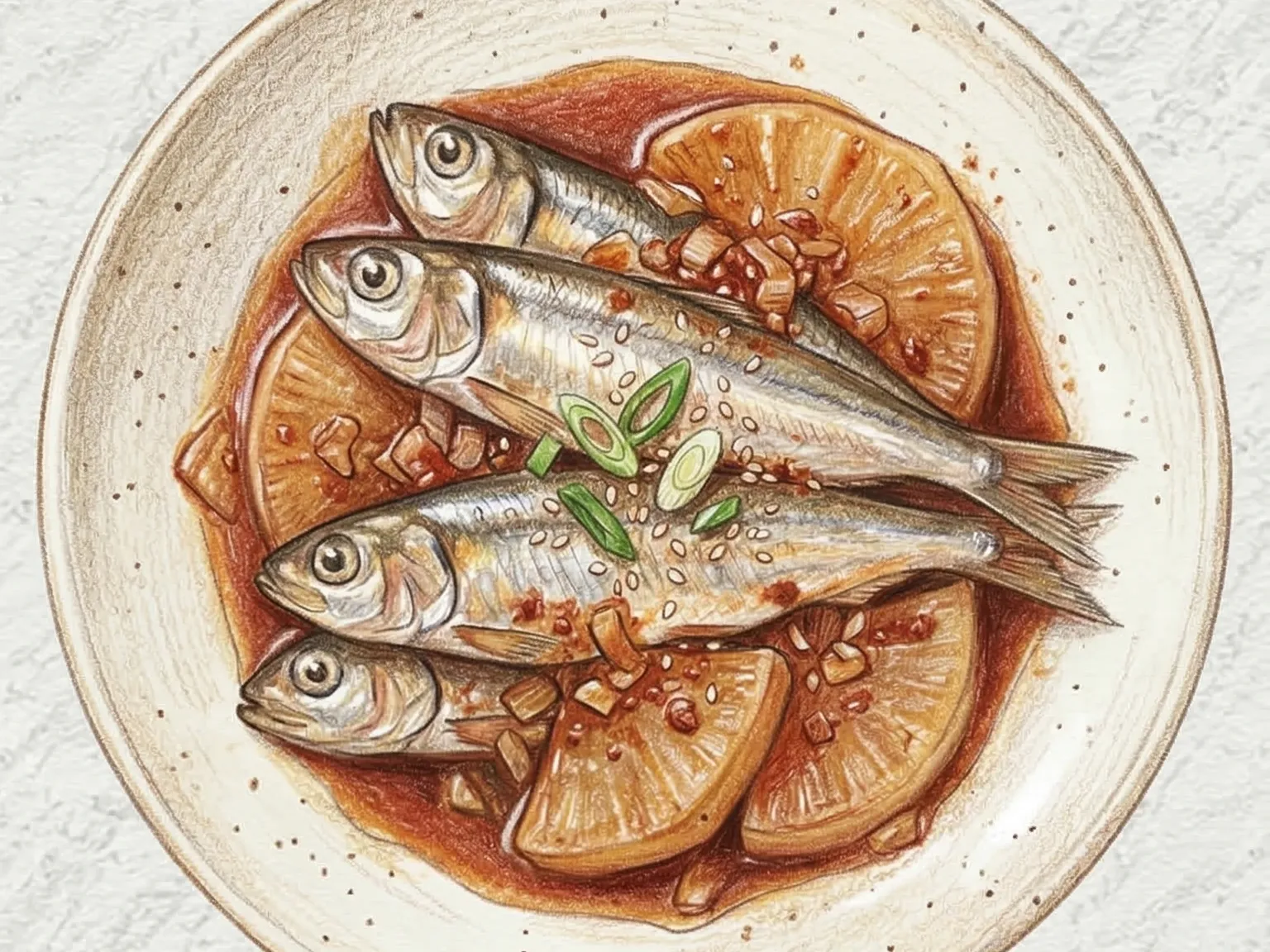
Korean Soy-Braised Dotted Gizzard Shad with Radish
Baendaengi mu jorim is a Korean braised dish where small dotted gizzard shad and radish simmer together in a gochujang-based sauce. Radish lines the bottom of the pot, preventing the fish from sticking and absorbing the braising liquid as it reduces, which infuses the radish with a deep salty-sweet flavor. The sauce combines gochujang, gochugaru, soy sauce, and minced garlic, with cooking wine added to suppress any fishy odor while contributing a mild sweetness. The pot simmers covered on medium-low heat for twenty minutes, with the sauce spooned over the fish midway through to ensure even coating. Gizzard shad have fine, soft bones that are edible whole, and the braising process softens them further until they are barely noticeable when chewing. Onion added alongside the radish melts into the liquid as it cooks, contributing natural sweetness that balances the spicy-salty punch of the sauce. The finished dish concentrates into a thick glaze that clings to both the fish and the radish pieces.
Adjust Servings
Instructions
- 1
Clean the shad, remove innards, and drain well.
- 2
Slice radish into thick half-moons and onion into thick strips.
- 3
Layer radish, fish, and onion in a pot.
- 4
Mix sauce ingredients and pour evenly over the layers.
- 5
Simmer 20 minutes, then baste and reduce for 10 more minutes.
- 6
Add green onion and cook 3 minutes until radish turns translucent.
As an Amazon Associate, we may earn from qualifying purchases.
Tips
Nutrition (per serving)
More Recipes

Korean Braised Flounder with Radish
Gajami mu jorim is a Korean braised flounder dish cooked with thick slices of Korean radish in a soy sauce and gochugaru broth. The radish absorbs the spicy, savory braising liquid as it softens, becoming just as prized as the fish itself. Hot green chili adds an extra kick of heat that balances the natural sweetness of the radish. The remaining sauce is rich enough to spoon over steamed rice, making it a satisfying one-bowl meal when paired with a few simple side dishes.

Korean Braised Mackerel with Dried Radish Greens
Siraegi godeungeo jorim is a Korean braised mackerel dish cooked with blanched dried radish greens, radish, and onion in a chili-soy sauce. The richness of mackerel fat and the earthy fiber of the dried greens meet in a single pot, each amplifying the other's flavor. Mackerel pre-seasoned with cooking wine is placed on top of the vegetables and braised over medium-low heat for more than twenty minutes, allowing the seasoning to penetrate the fish. Thorough boiling of the greens beforehand is essential to soften their tough fibers, and serving the finished dish over rice with generous spoonfuls of the spicy sauce captures its full depth.

Korean Soy-Braised Rockfish
Ureok-jorim is a Korean soy-braised rockfish simmered with Korean radish, gochugaru, garlic, and rice wine. The radish goes in first and softens in the braising liquid before the cleaned whole fish is placed on top and basted with sauce over medium heat for ten minutes. Rice wine neutralizes any fishiness, while the radish absorbs the salty braising liquid and releases its own sweetness to balance the seasoning naturally. The rockfish flesh stays mild and flakes in soft layers, with gochugaru lending a gentle warmth to the overall dish.

Korean Braised Chicken with Radish
This braise combines bone-in chicken pieces with Korean radish and potato in a soy-and-gochugaru sauce. The radish absorbs both the chicken stock and the spiced seasoning, turning amber on the outside while going translucent within. Potato edges break down during the long simmer, thickening the sauce into a sticky glaze. Gochugaru and black pepper build a layered heat that soy sauce and sugar round off, so the dish is assertively spicy without being harsh. Reducing the liquid until it barely coats the bottom concentrates all the flavors onto the surface of each piece.

Korean Braised Spanish Mackerel with Radish
Samchi mu-jorim layers sliced Korean radish on the bottom of a pot, topped with Spanish mackerel steaks and onion, then braised in a sauce of gochujang, soy sauce, gochugaru, and garlic. The radish prevents the fish from sticking, absorbs the braising liquid, and turns translucent-soft as it cooks. Rather than flipping the fish, the sauce is spooned over the top repeatedly so the flesh stays intact. After about fifteen minutes of simmering on medium heat, the liquid reduces to a concentrated, mildly spicy broth with the radish's subtle sweetness woven through it.

Korean Braised Monkfish in Spicy Soy Sauce
Agwi-jorim - braised monkfish - is a gentler preparation than the fiery agu-jjim, focusing on a soy-based braising sauce rather than a chili-paste coating. Thick slices of Korean radish line the bottom of the pot, cooking first to release their natural sweetness into the liquid. The monkfish goes on top and simmers covered in a mixture of soy sauce, gochugaru, garlic, and water that reduces slowly into a concentrated glaze. The radish acts as both a buffer preventing the delicate fish from sticking and a flavor sponge that becomes the best part of the dish. As the liquid reduces, the sauce thickens and stains both fish and radish a deep amber. The finished dish has a more balanced, less aggressive flavor profile than agu-jjim, with soy saltiness and radish sweetness in equal proportion to the chili heat.