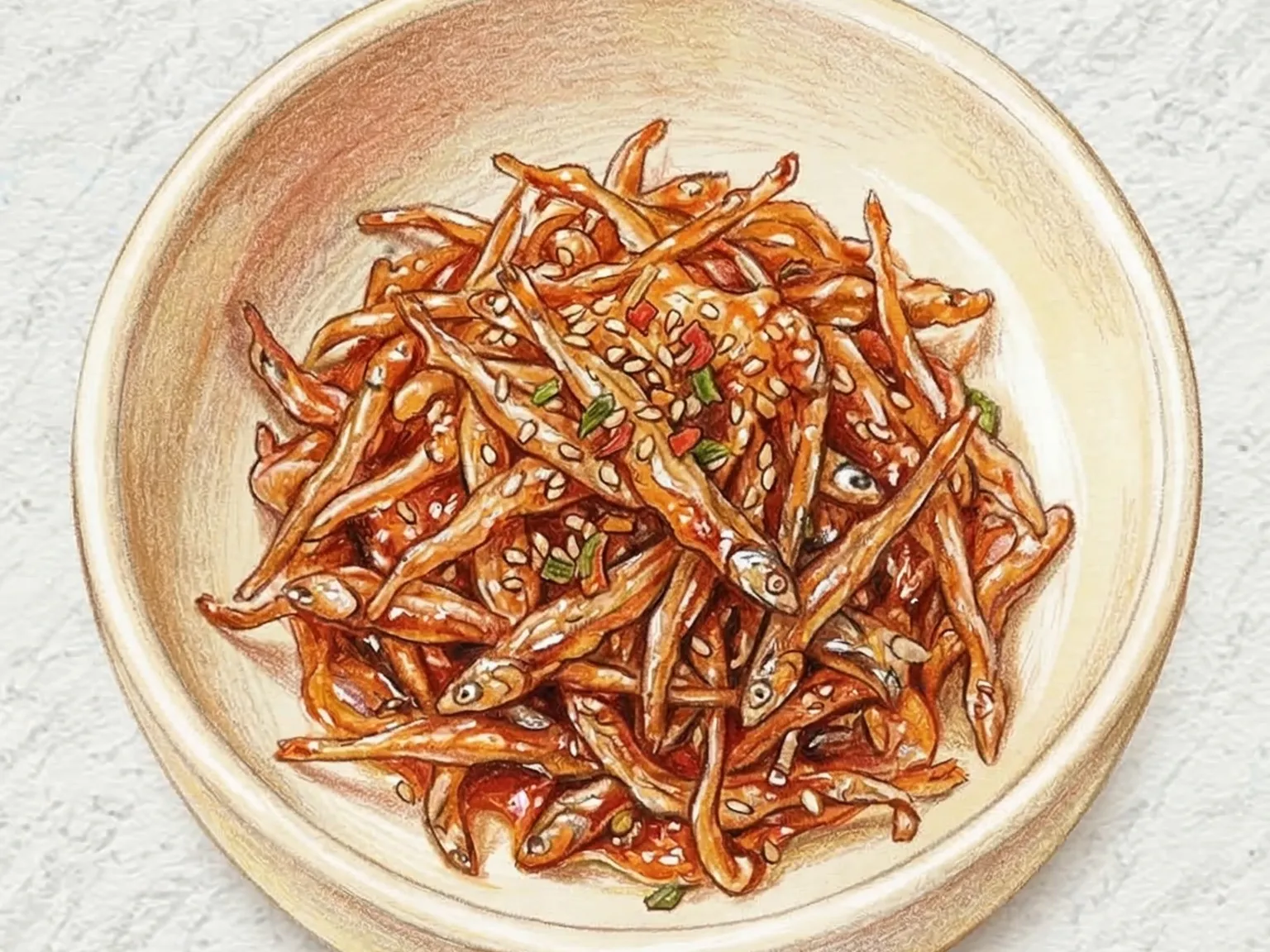
Korean Stir-fried Dried Whitebait Sheet
Toast the whitebait pieces, cut about 4 cm across, in a dry pan over low heat for 1 minute until the surface feels stiff. Cook the gochujang sauce in 1 tbsp oil over medium-low heat for 30 seconds, until small bubbles form around the edges, then toss the whitebait in quickly, because it hardens if it is overcooked after saucing. Let it cool completely before serving: it gets crispier as it cools.
Quick answer
- Total time
- 13 min
- Level
- Easy
- Servings
- 4 servings
- Ingredients
- 9
About this dish
Paper-thin sheets of dried whitebait are dry-toasted until stiff, then coated thinly in gochujang, soy sauce and oligosaccharide syrup.
Read more
Straight from the pan they look a little soft, but they crisp as they cool; there is no need to keep them on the heat longer.
Ingredients
Instructions
- 1
Using scissors, cut 60 g of dried whitebait sheets into pieces roughly 4 cm across, or tear them by hand into bite-size chunks.
Keep the pieces uniform so they toast evenly.
- 2
Heat a dry pan over low heat and add the whitebait pieces.
Dry-toast for 1 minute, stirring occasionally, until the surface feels stiff and all residual moisture has left the pan.
- 3
Combine 1 tbsp gochujang, 1 tsp soy sauce, 1 tbsp oligosaccharide syrup, half a tsp sugar, and half a tsp minced garlic in a small bowl. Stir until the sauce is uniformly smooth.
- 4
Pour 1 tbsp vegetable oil into the same pan and add the sauce over medium-low heat.
Cook for 30 seconds, stirring, until small bubbles form around the edges and the sauce turns fragrant.
- 5
Add the toasted whitebait pieces to the pan and toss quickly with tongs or chopsticks, flipping each piece repeatedly so both sides pick up an even coat of the glossy red sauce.
- 6
Turn off the heat and gently fold in half a tsp sesame oil and half a tbsp sesame seeds.
Allow the dish to cool completely before serving as the texture crisps further at room temperature.
Official cooking and safety guidance
Public-agency cooking and food safety guidance that applies to this recipe.
Official cooking and safety guidance
-
Storage and reheating
Refrigerate leftovers in shallow containers within 2 hours and use them within 3 to 4 days. Reheat the center to 74°C.
Source: USDA Food Safety and Inspection Service. Leftovers and Food Safety
Sources checked 2026-08-03
Use-up ingredient planner
Turn these ingredients into two more meals
The overlap excludes basic seasonings. Open the next recipe and your selected dishes will stay with you.
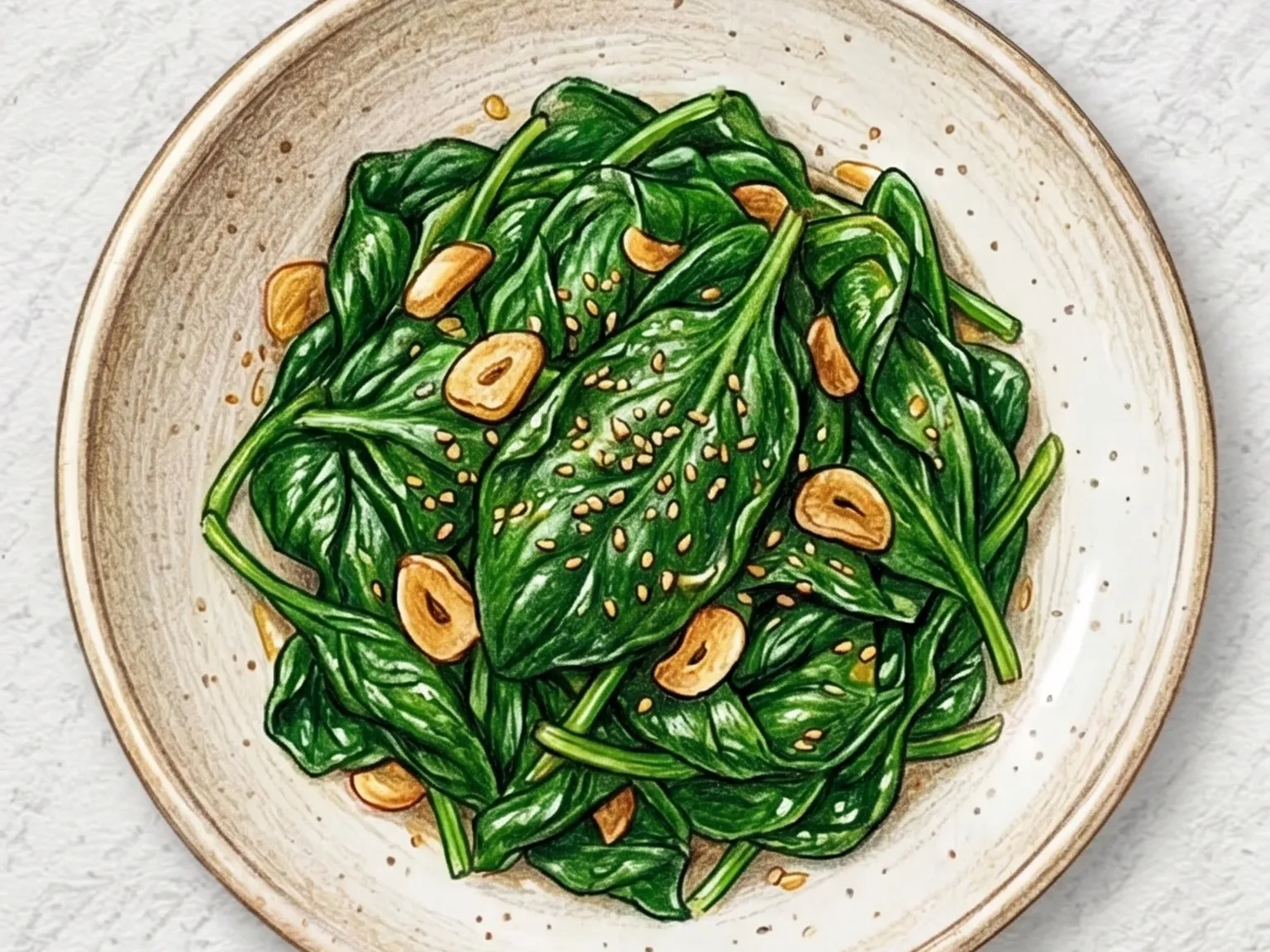
Korean Sautéed Spinach (Garlic Soy Sesame Spinach Side)
sesame seeds
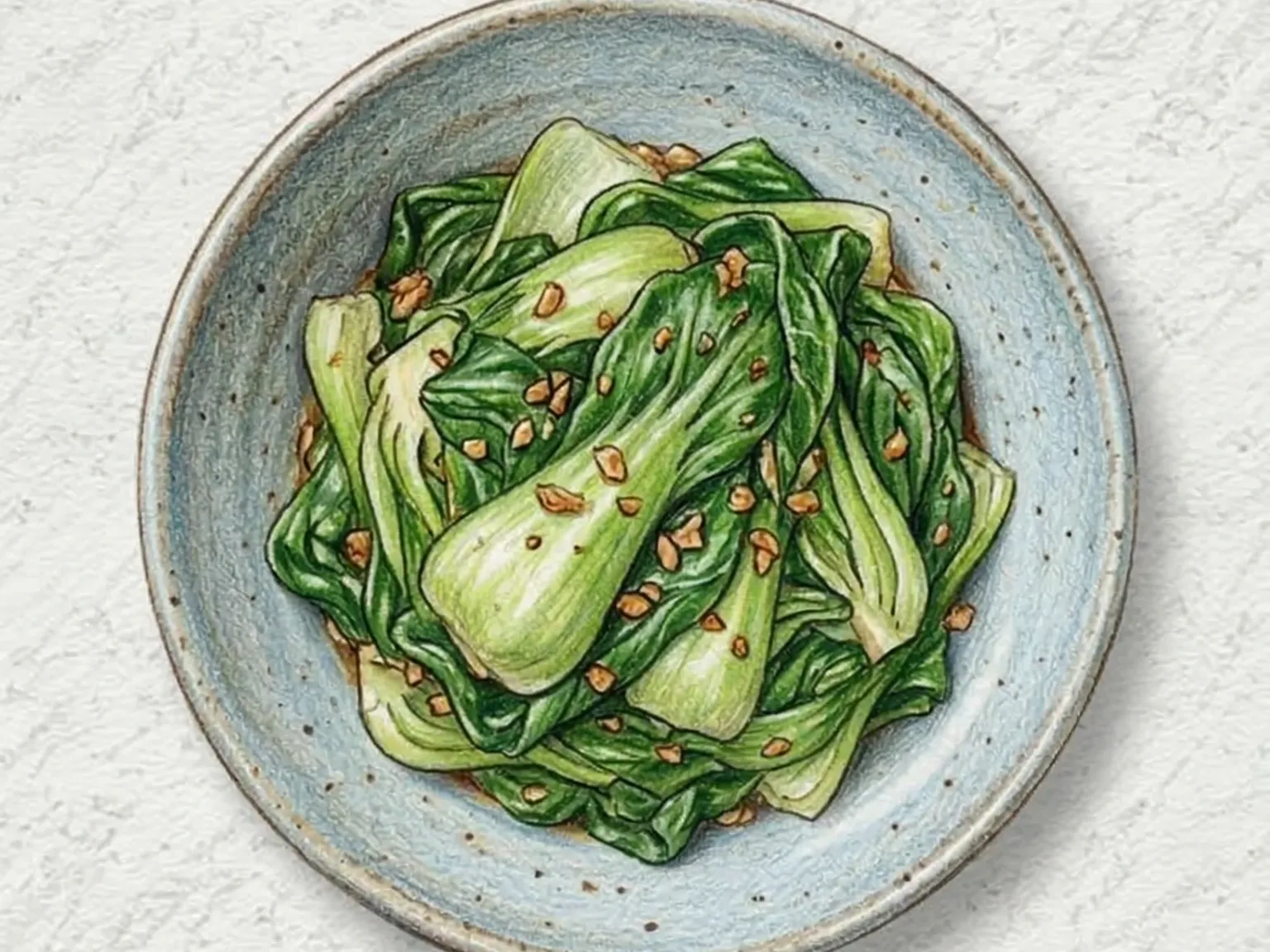
Korean Stir-Fried Leafy Greens
sesame seeds
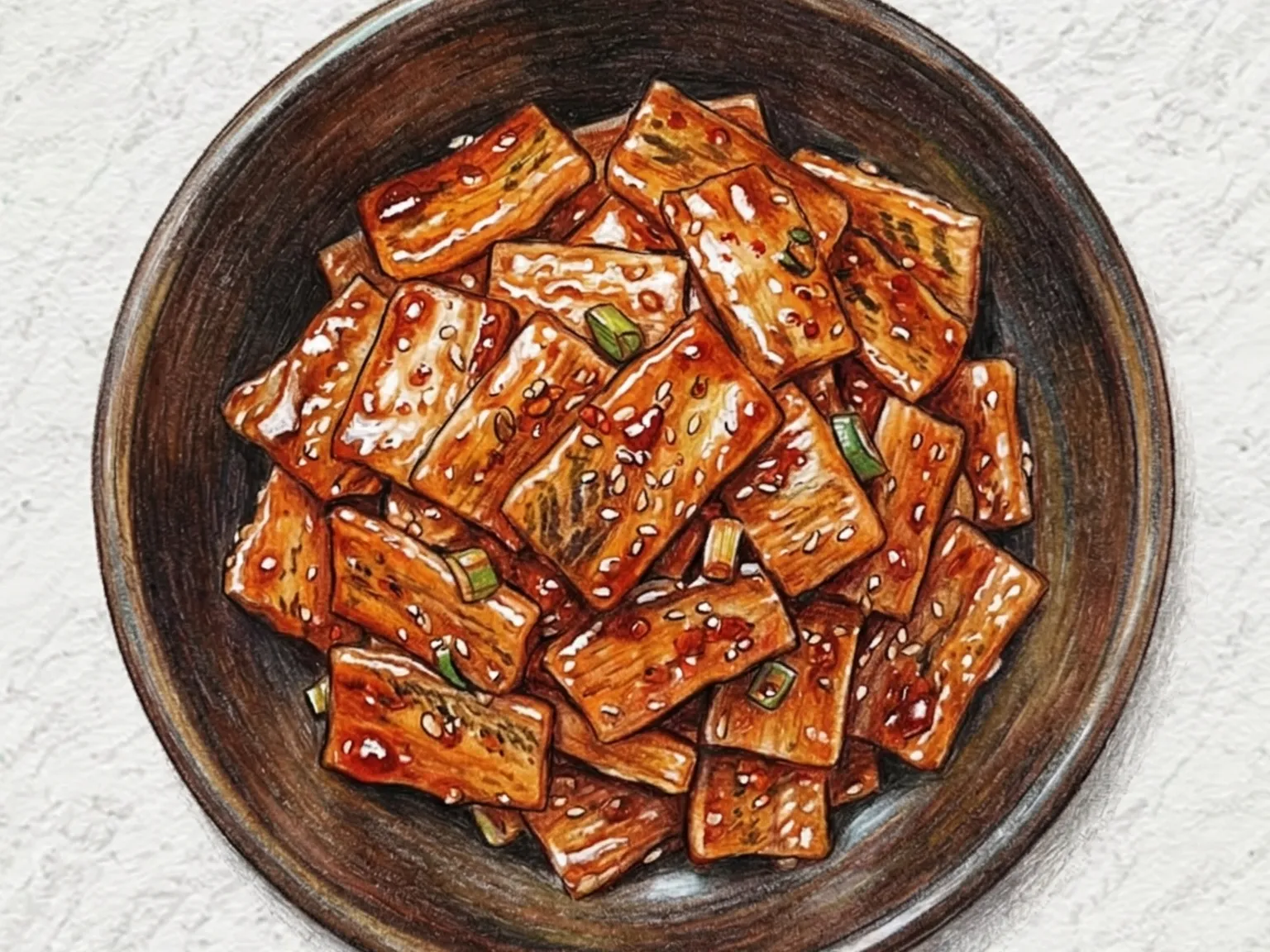
Korean Sweet Spicy Stir-fried Filefish Jerky
sesame seeds