Korean Clam Stir-Fry (Manila Clams with Butter, Garlic and Chili)

Korean Clam Stir-Fry (Manila Clams with Butter, Garlic and Chili)

Quick answer

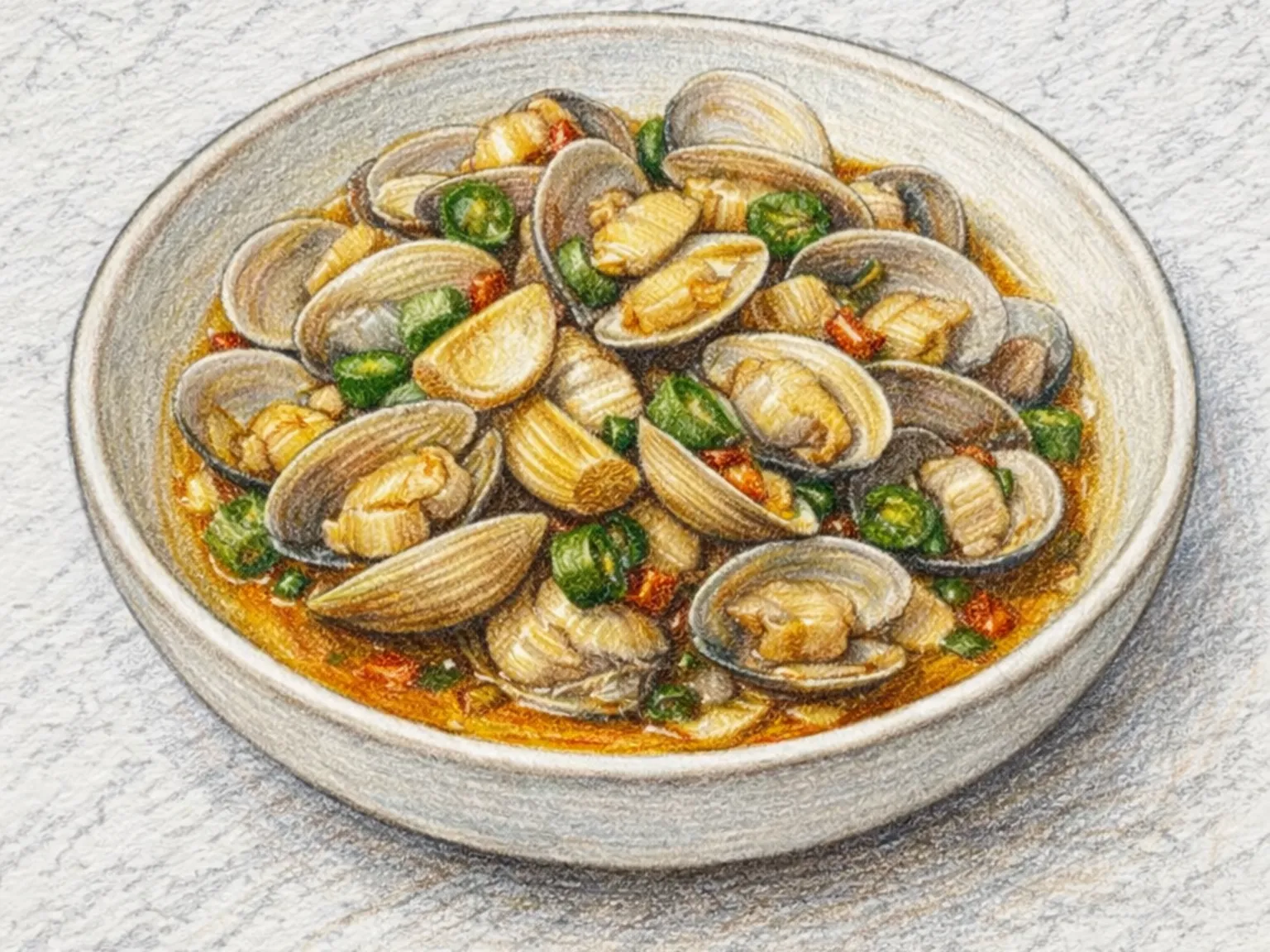
Bajirak bokkeum is a Korean clam stir-fry where purged manila clams are cooked quickly over high heat with butter, garlic, and cheongyang chili.

What makes this special

  • Manila clams opened quickly with rice wine, butter, and spicy Cheongyang chili peppers.
  • Covered with cheongju steam, clams open quickly while fishiness is driven off
  • Clam juice and butter emulsify naturally into a briny sauce without extra steps
Total time
25 min
Level
Easy
Servings
2 servings
Ingredients
7
Calories
190 kcal
Protein
20 g

Key ingredients

short-neck clamsbuttergarlicKorean chili peppergreen onion

Core cooking flow

  1. 1 Place 400 g of manila clams in 3 percent salted water and keep them in a dark spot for 2 hours.
  2. 2 Slice 5 garlic cloves thinly, then cut 2 cheongyang chilies and 2 green onion stalks into small rounds.
  3. 3 Heat a wide pan over medium heat and melt 30 g of butter completely.

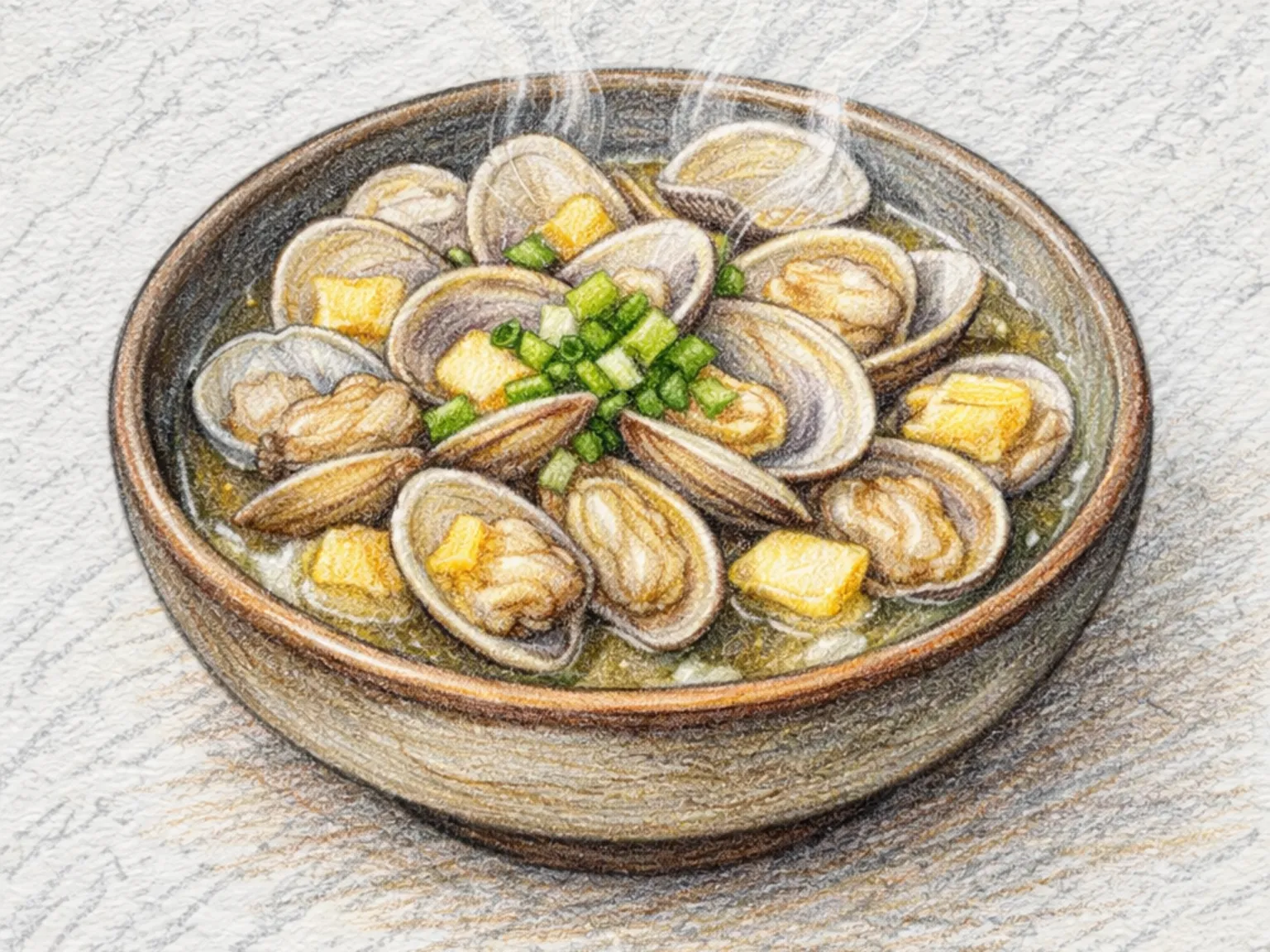
Bajirak bokkeum is a Korean clam stir-fry where purged manila clams are cooked quickly over high heat with butter, garlic, and cheongyang chili. Thorough purging in salted water beforehand removes all sand and prevents grit from appearing in the finished dish. Rice wine goes in first with the lid closed, so the alcohol steam helps the clams open rapidly while eliminating any lingering briny or muddy off-notes. Once the shells open, butter is added and emulsifies naturally with the released clam juices, building a salty, savory sauce without any additional effort or thickening agent. Generous sliced garlic infuses the butter sauce with depth as it cooks, and the cheongyang chili introduces a bright, sharp heat that prevents the richness from becoming too heavy. A small measure of soy sauce adjusts the final seasoning, though it must be kept minimal because the clams already contribute their own pronounced salinity. Scallion is tossed in at the very end for a clean, herbal finish before the pan comes off the heat. Total cooking time must stay within three to four minutes: beyond that window, the clam meat contracts, toughens, and loses its tender, juicy texture entirely. The sauce left in the pan after eating is intensely concentrated with shellfish flavor and pairs exceptionally well with crusty bread for soaking up every last drop. The dish works equally as a drinking snack alongside beer or as a side with steamed rice, and frozen manila clams produce reliably good results when fresh ones are unavailable.

Prep 15min Cook 10min 2 servings

Instructions

Read the steps as a cooking flow: prep, heat, seasoning, doneness control, and finish.

6 steps
  1. 1
    Season

    Place 400 g of manila clams in 3 percent salted water and keep them in a dark spot for 2 hours.

    Rinse by rubbing the shells together under running water so loose sand does not end up in the pan.

  2. 2
    Heat

    Slice 5 garlic cloves thinly, then cut 2 cheongyang chilies and 2 green onion stalks into small rounds.

    Keep everything separated and ready, because the stir-fry moves quickly once the clams go in.

  3. 3
    Control

    Heat a wide pan over medium heat and melt 30 g of butter completely.

    Add the sliced garlic and cook for about 30 seconds, just until fragrant, stopping before the edges brown or the butter tastes burnt.

  4. 4
    Control

    Add the purged clams and 2 teaspoons of rice wine, then cover the pan immediately.

    Raise the heat to high and steam for 2 to 3 minutes, watching for the shells to open from the alcohol steam.

  5. 5
    Season

    When most shells have opened, add 1 teaspoon of soy sauce and the sliced cheongyang chilies.

    Shake the pan so the clam juices and butter emulsify into a glossy sauce, then toss for only about 20 seconds.

  6. 6
    Heat

    Add the green onion, toss once more, and turn off the heat right away.

    Keep total cooking within 4 minutes so the clam meat stays tender, and discard any clams that remain closed.

After the steps

Pick a recipe that fits this dish.

Continue with shared ingredients, meal pairings, or a similar method.

Recipes That Go Well With This

More Stir-fry →

Based on shared ingredients and meal pairing

Korean Mussel Stir-Fry (Plump Mussels with Butter, Garlic and Chili)
Shared ingredient: butter Stir-fry

Korean Mussel Stir-Fry (Plump Mussels with Butter, Garlic and Chili)

Honghap-bokkeum is a Korean stir-fried mussel dish cooked in a garlic butter sauce. The recipe begins by cleaning the mussels, removing the beards, and discarding cracked shells. Garlic slices are sautéed in melted butter until fragrant. The mussels are then added with rice wine, covered, and steamed for four minutes. This steaming process creates a savory sauce by combining the butter with the natural juices from the mussels. Unopened shells are discarded. Sliced green onions and cheongyang chilies are stir-fried with the mussels for one minute, adding a sharp heat that balances the buttery richness. Finally, a splash of soy sauce is drizzled around the pan edge to glaze the shells, making the dish ready to serve alongside steamed rice.

Korean Blue Crab Soy Stir-Fry
Shared ingredient: green onion Stir-fry

Korean Blue Crab Soy Stir-Fry

Kkotge ganjang bokkeum is a Korean blue crab stir-fry where halved crabs are lightly dusted with flour, pan-seared until the shells turn deep red, then braised briefly under a lid in a sauce of soy sauce, sugar, garlic, ginger, and gochugaru. The flour coating seals in moisture and helps the sweet-salty sauce cling to the shell surface, leaving a sticky, aromatic glaze that is meant to be licked off the fingers. Ginger neutralizes the briny smell that crabs can carry, while scallion and sesame oil are stirred in at the end to build the final aromatic layer. Using live crabs and cooking them immediately after cleaning ensures the meat stays firm and sweet; frozen crabs lose moisture during thawing and produce a noticeably softer result. Scoring the claws before cooking allows the sauce to penetrate the thicker sections of shell.

Korean Wild Chive Soy Butter Rice
Serve together Rice

Korean Wild Chive Soy Butter Rice

Dallae ganjang butter bap is a Korean one-bowl meal that comes together in under ten minutes by folding melted butter, soy sauce, and wild chives into warm rice. The butter coats each grain with richness, soy sauce provides a salty backbone, and the wild chives, called dallae, deliver a sharp, garlicky bite that lifts the bowl out of plainness. A raw egg yolk placed on top breaks into a golden sauce when stirred in, binding the ingredients into a velvety mixture. The chives are best in spring when their pungency is at its peak, and they need only twenty seconds in the buttered pan to release their aroma before the heat drives it off. With just a handful of pantry staples, this dish fills the gap on evenings when the refrigerator offers little else. Green onion or garlic chives can substitute for dallae, but the particular sharpness of wild chives is unique and worth seeking out when spring is in season.

Korean Mushroom Perilla Seed Stir-Fry
Similar recipe Stir-fry

Korean Mushroom Perilla Seed Stir-Fry

Three varieties of mushroom, shiitake, enoki, and oyster, are stir-fried over high heat until their moisture fully evaporates, then dusted with ground perilla seed that releases a surge of nutty fragrance the moment it contacts the hot surface. Each mushroom contributes a distinct texture to a single dish: shiitake offers firm, satisfying chew when torn along the grain; enoki provides delicate, threadlike strands; and oyster adds thick, meaty bites that hold their shape through the heat. The perilla seed powder must be added only in the final minute of cooking because its aromatic oils are volatile: longer exposure turns them acrid rather than nutty, and the window between perfectly toasted and burned is narrow. Soy sauce and a pinch of salt adjust the seasoning without masking the mushrooms, and a finishing drizzle of sesame oil rounds everything off with a gentle, fat-carried richness. At around 90 calories per serving, this side dish works as an everyday component of any meal without adding weight, and the unsaturated fatty acids in perilla seeds add nutritional substance well beyond what a side this light might suggest. Tearing shiitake along its natural grain accelerates moisture release during cooking, and pulling enoki apart by hand before adding it to the pan prevents the strands from clumping.

Serve with this

Korean Kimchi Mandu Jjigae (Kimchi Dumpling Stew)
Stews Easy

Korean Kimchi Mandu Jjigae (Kimchi Dumpling Stew)

Kimchi mandu jjigae drops whole frozen kimchi dumplings straight into a simmering pot of aged kimchi, tofu, and anchovy stock. The dumpling wrappers absorb the broth as they cook, swelling plump and moist, while the kimchi filling inside echoes the stew's tangy base and doubles the fermented depth. Gochugaru and soup soy sauce add a clean chili heat, and firm tofu cubes absorb the spiced broth for a softer textural contrast. Because the dumplings themselves carry seasoning, it is better to start with less sauce and adjust after tasting the broth. This is a filling, no-fuss meal that needs nothing more than a bowl of steamed rice alongside it.

🏠 Everyday ⚡ Quick
Prep 8min Cook 15min 2 servings
Korean Soft Tofu Soup (Mild Clear Broth with Silken Tofu)
Soups Easy

Korean Soft Tofu Soup (Mild Clear Broth with Silken Tofu)

Sundubu-guk is the gentler sibling of the more widely known sundubu-jjigae, trading the latter's fiery red broth for a clear, mild soup that puts silken tofu front and center. The base is a simple anchovy and kelp stock, seasoned with soup soy sauce and nothing more assertive, so the broth stays transparent and clean on the palate. Blocks of unpressed soft tofu are slipped into the simmering liquid and heated just until they are warmed through - overcooked sundubu loses the trembling, custard-like texture that defines the dish. Each spoonful collapses gently on the tongue, releasing a faint, sweet soybean flavor that pairs effortlessly with the umami-rich stock. A small addition of salted shrimp paste can be stirred in at the table to introduce a subtle marine depth without disrupting the soup's calm character. This is the soup Koreans turn to when appetite is low, digestion needs rest, or the body simply craves something warm and uncomplicated. It is equally suitable for young children and elderly diners, and its quiet simplicity is precisely its strength.

🏠 Everyday ⚡ Quick
Prep 5min Cook 15min 4 servings
Korean Seasoned Deer Fern Namul
Side dishes Medium

Korean Seasoned Deer Fern Namul

Samnamul-muchim is a Korean mountain vegetable side dish made from 220 grams of deer fern, a spring foraged green with a distinctively herbal, slightly bitter flavor. Blanching for one minute and immediately rinsing in cold water tempers the fern's wild aroma to a pleasant, manageable level while preserving its tender bite. The dressing of soup soy sauce, perilla oil, minced garlic, chopped green onion, and ground sesame keeps the dish clean in both color and flavor, letting the fern's natural character come through. Cut into 4-centimeter lengths for easy eating, each piece carries a gentle earthiness that pairs naturally with steamed rice. The ground sesame adds a subtle crunch and nuttiness that complements the perilla oil.

🏠 Everyday 🍱 Lunchbox
Prep 10min Cook 5min 4 servings

Similar recipes

Korean Soy-Glazed Chicken Stir-Fry
Stir-fry Easy

Korean Soy-Glazed Chicken Stir-Fry

Chicken thigh meat stir-fries in soy sauce, sugar, and oligosaccharide syrup for a sweet-salty glaze. Garlic and ginger go into the oil first to infuse the fat with fragrance before the chicken is added, letting the aromatics penetrate deep into the meat as it cooks. The oligosaccharide heats into a tacky gloss that coats each piece evenly as the liquid reduces. Sesame oil and whole sesame seeds scattered over the top at the end bring a nutty, aromatic finish. The flavor profile runs close to Japanese teriyaki, but the heavier use of garlic and ginger pushes it toward the more direct, punchy spice character typical of Korean cooking. Boneless thighs cut into bite-sized pieces cook more evenly than larger pieces, and keeping the heat high through most of the cook ensures the surface caramelizes without turning rubbery.

🏠 Everyday 🌙 Late Night
Prep 15min Cook 15min 2 servings
Korean Spicy Gochujang Dried Squid Stir-Fry
Side dishes Easy

Korean Spicy Gochujang Dried Squid Stir-Fry

Jinmichae, shredded dried squid, is a Korean pantry staple valued for its chewy texture and the umami that builds and intensifies the longer you chew. This preparation coats the strands in a gochujang glaze, making it one of the most reliably present banchan in Korean households. Briefly soaking the dried squid in water before squeezing it dry softens the tough fibers and opens them to absorb the sauce more evenly. The sauce of gochujang, gochugaru, rice syrup, soy sauce, and garlic is stir-fried first over low heat to mellow the raw chili sharpness, then the squid is tossed through quickly over the same heat. Sesame oil and toasted sesame seeds are added off the heat, coating the strands in a sweet, spicy glaze that keeps well at room temperature for several days.

🏠 Everyday 🍱 Lunchbox
Prep 8min Cook 7min 4 servings
Korean King Oyster Mushroom Stir-fry with Perilla
Side dishes Easy

Korean King Oyster Mushroom Stir-fry with Perilla

This stir-fry combines 250 grams of julienned king oyster mushrooms with onion, cooked rapidly over high heat in perilla oil and cooking oil to prevent the mushrooms from releasing too much water. Garlic is sauteed for 20 seconds first to infuse the oil, followed by onion for one minute to draw out its natural sweetness. The mushrooms then go in for a quick two-minute toss before soup soy sauce and a splash of water are added to create a light braising liquid. One and a half tablespoons of ground perilla seeds are stirred in during the final minute, thickening the sauce into a creamy coating without becoming pasty. Scallion is added off heat for a finishing touch of color and freshness.

🏠 Everyday 🍱 Lunchbox
Prep 10min Cook 8min 2 servings

Tips

Discard any clams that do not open.

Nutrition (per serving)

Calories
190
kcal
Protein
20
g
Carbs
5
g
Fat
10
g