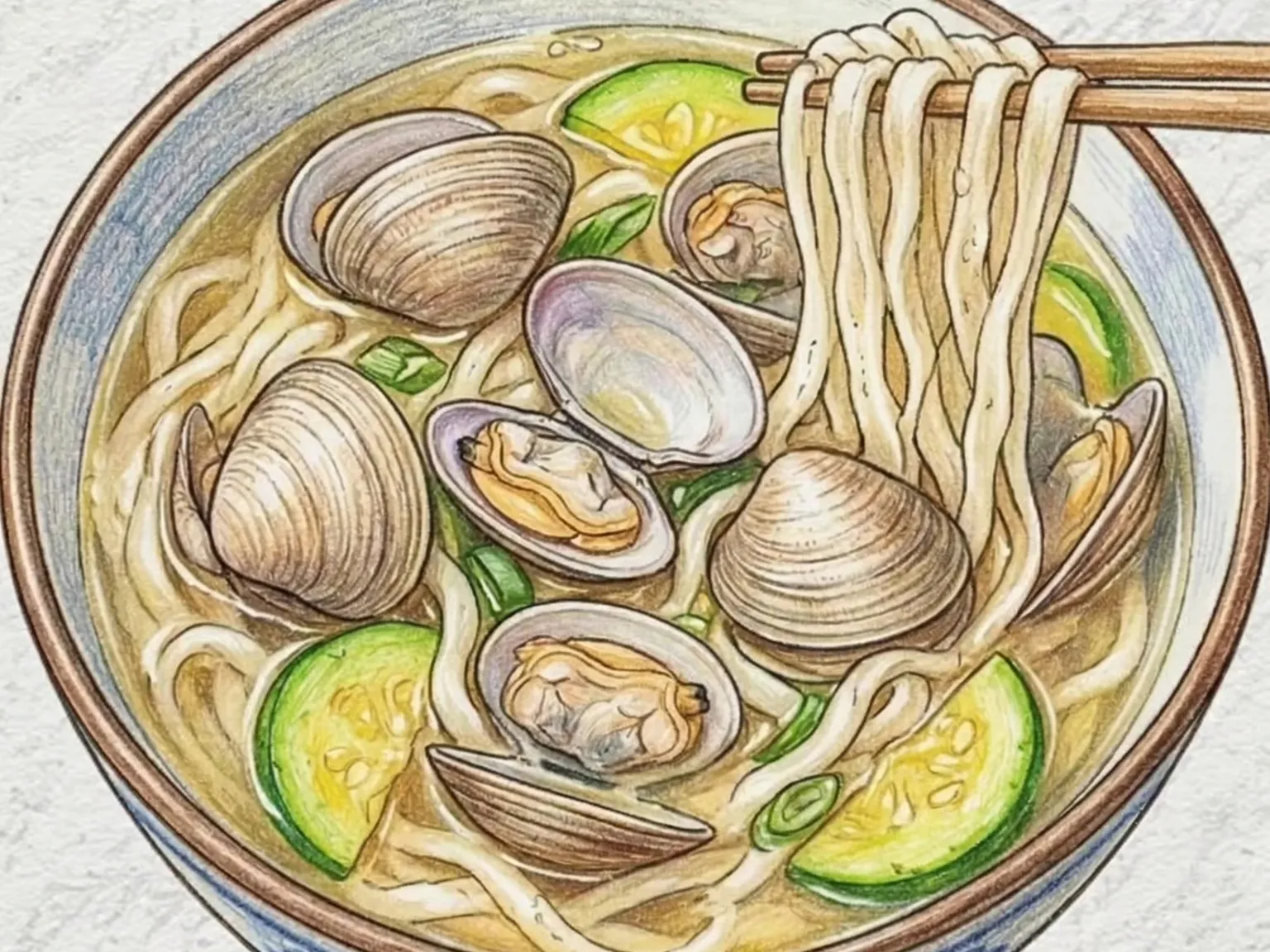
Korean Manila Clam Knife-Cut Noodle Soup
Bajirak kalguksu is one of Korea's most recognized noodle dishes, featuring hand-cut wheat noodles in a broth made entirely from manila clams. Purged clams are boiled in water until they open, then removed while the stock is strained through cloth to eliminate any remaining grit. Korean zucchini and scallion simmer in the strained broth for five minutes, adding vegetal sweetness that rounds out the clam flavor. When the knife-cut noodles go in, they release starch into the liquid as they cook, thickening the broth into a lightly viscous consistency that distinguishes kalguksu from other noodle soups. The noodles cook for six to seven minutes until they turn translucent, at which point the reserved clam meat returns to the pot. Seasoning with soup soy sauce is done carefully since the clam stock already carries its own salinity. Unlike anchovy-based kalguksu, the marine character here is direct and present in every strand of noodle, making the clam the unmistakable center of the dish.
Adjust Servings
Instructions
- 1
Purge clams in salted water for at least 30 minutes, then rinse well.
- 2
Boil clams in water until they open, then remove them from the broth.
- 3
Strain the broth, add garlic and soup soy sauce, and bring to a boil.
- 4
Add noodles and zucchini, boil 6~8 minutes.
- 5
Return some clams to the soup, adjust salt, top with green onion, and serve.
As an Amazon Associate, we may earn from qualifying purchases.
Tips
Nutrition (per serving)
More Recipes

Korean Knife-cut Noodle Soup
Kalguksu is a Korean noodle soup made with hand-cut wheat noodles simmered in anchovy-kelp broth. The noodles are rolled flat and sliced with a knife, giving them a rough surface that absorbs broth and a satisfying chew distinct from machine-made pasta. Sliced potato, half-moon zucchini, and onion go into the pot, with the potato releasing starch that naturally thickens the broth as it cooks. Seasoning stays minimal - soup soy sauce, salt, minced garlic, and green onion added at the end - so the clean, savory depth of the stock comes through clearly. The dish is traditionally associated with rainy days in Korea, and adding clams turns it into a popular seafood variation.

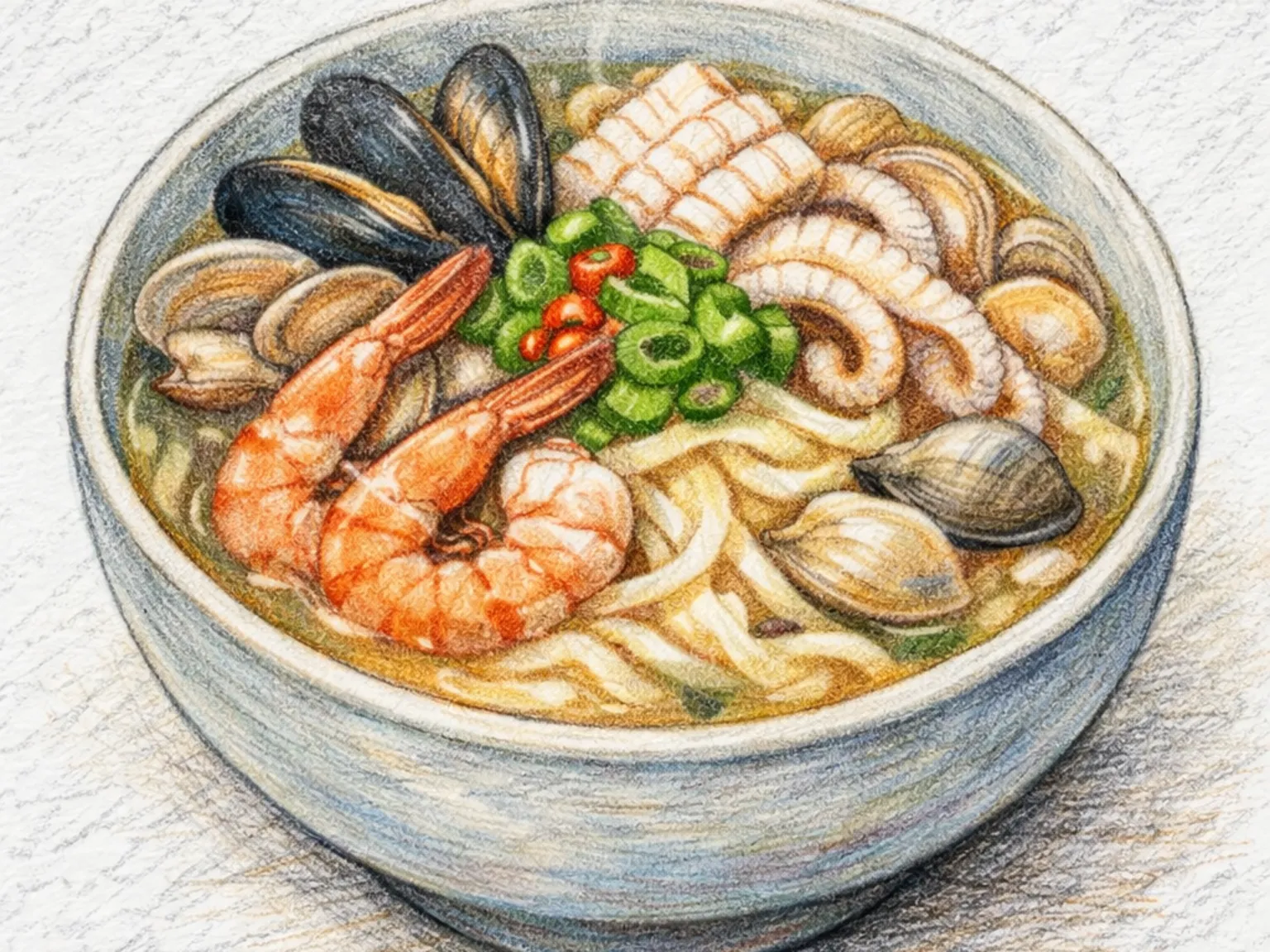
Korean Seafood Knife-Cut Noodle Soup
Haemul kalguksu simmers knife-cut wheat noodles in a broth built from clams, shrimp, and squid. Dried kelp forms the stock's foundation, and as Manila clams open they release a briny liquor that deepens the base considerably. Zucchini adds mild sweetness, green onion brings fragrance, and soup soy sauce with minced garlic rounds out the seasoning into a clean yet umami-rich broth. The wide, flat kalguksu noodles have a distinctive chewy bite and absorb the seafood broth with each slurp.

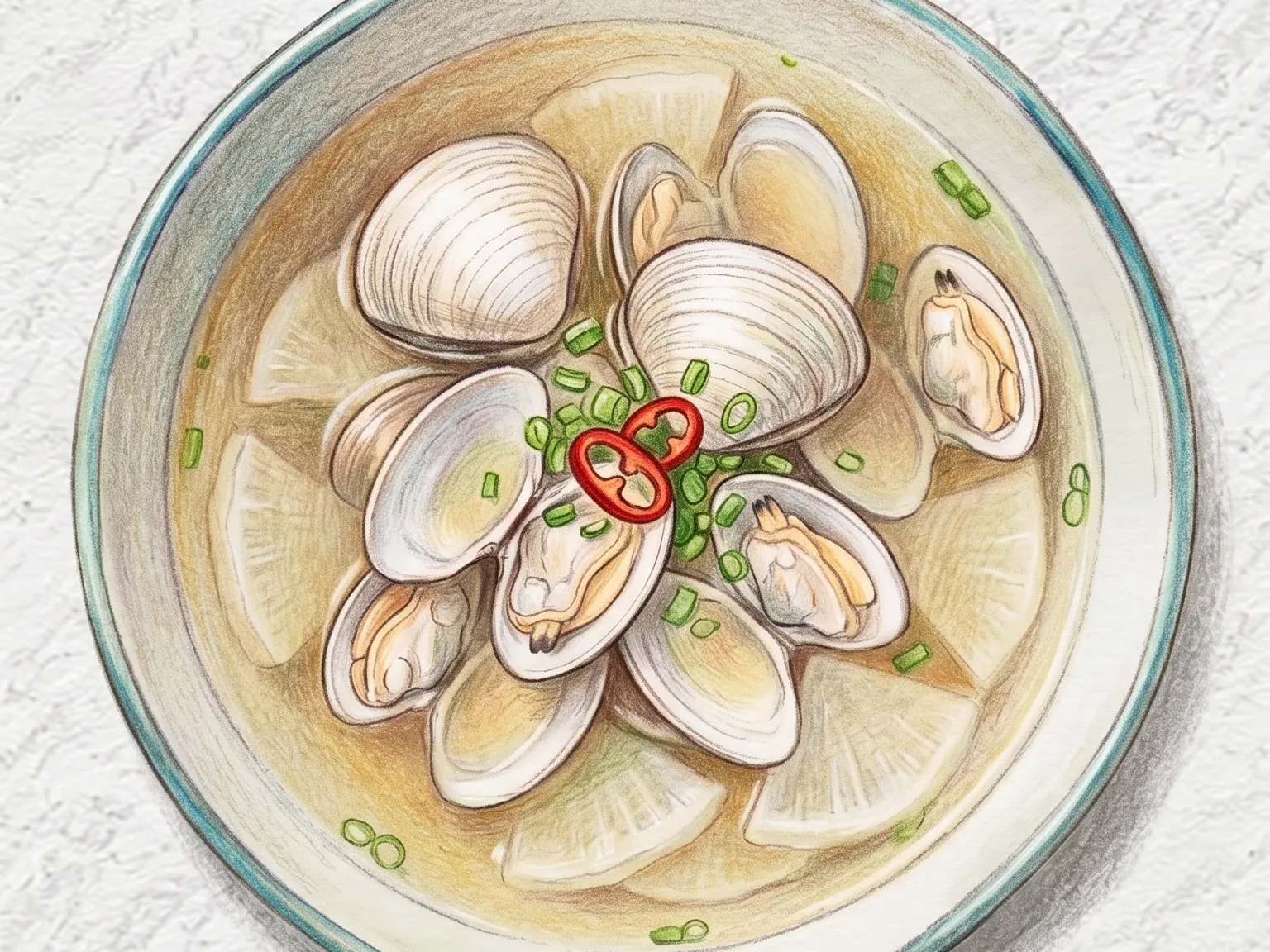
Korean Clam Kalguksu (Hand-Cut Noodles in Clam Broth)
Baekhap kalguksu is a Korean knife-cut noodle soup where the broth comes entirely from hard clams. Purged clams are simmered in water until they open, then removed while the broth is strained through cloth to catch any remaining grit. Thinly sliced daikon radish and Korean zucchini cook in the strained broth for five minutes, adding vegetal sweetness. The hand-cut noodles go in next and boil for six to seven minutes until they turn translucent; starch released from the noodles thickens the broth naturally into a lightly viscous consistency. Once the noodles are cooked, the reserved clam meat returns to the pot and the soup is seasoned with minced garlic and guk-ganjang. Adding onion deepens the broth's sweetness further. Because the base is clam liquor rather than the more common anchovy stock, the soup carries a distinctly marine character that infuses every strand of noodle, setting it apart from other kalguksu variations.

Korean Spicy Gangwon Knife-Cut Noodles
Jang kalguksu is a Gangwon Province-style knife-cut noodle soup where gochujang and doenjang are dissolved into an anchovy-kelp stock, creating a broth that is both fiery and deeply savory. The combination of fermented chili paste heat and soybean paste earthiness produces a complexity well beyond a standard kalguksu, amplified by an extra hit of gochugaru. Potato and zucchini break down as they simmer, naturally thickening the broth and adding sweetness, while onion and green onion round out the aromatics. The fresh, slightly rough-textured noodles cling to the thick, rust-colored broth, making each bite substantial.

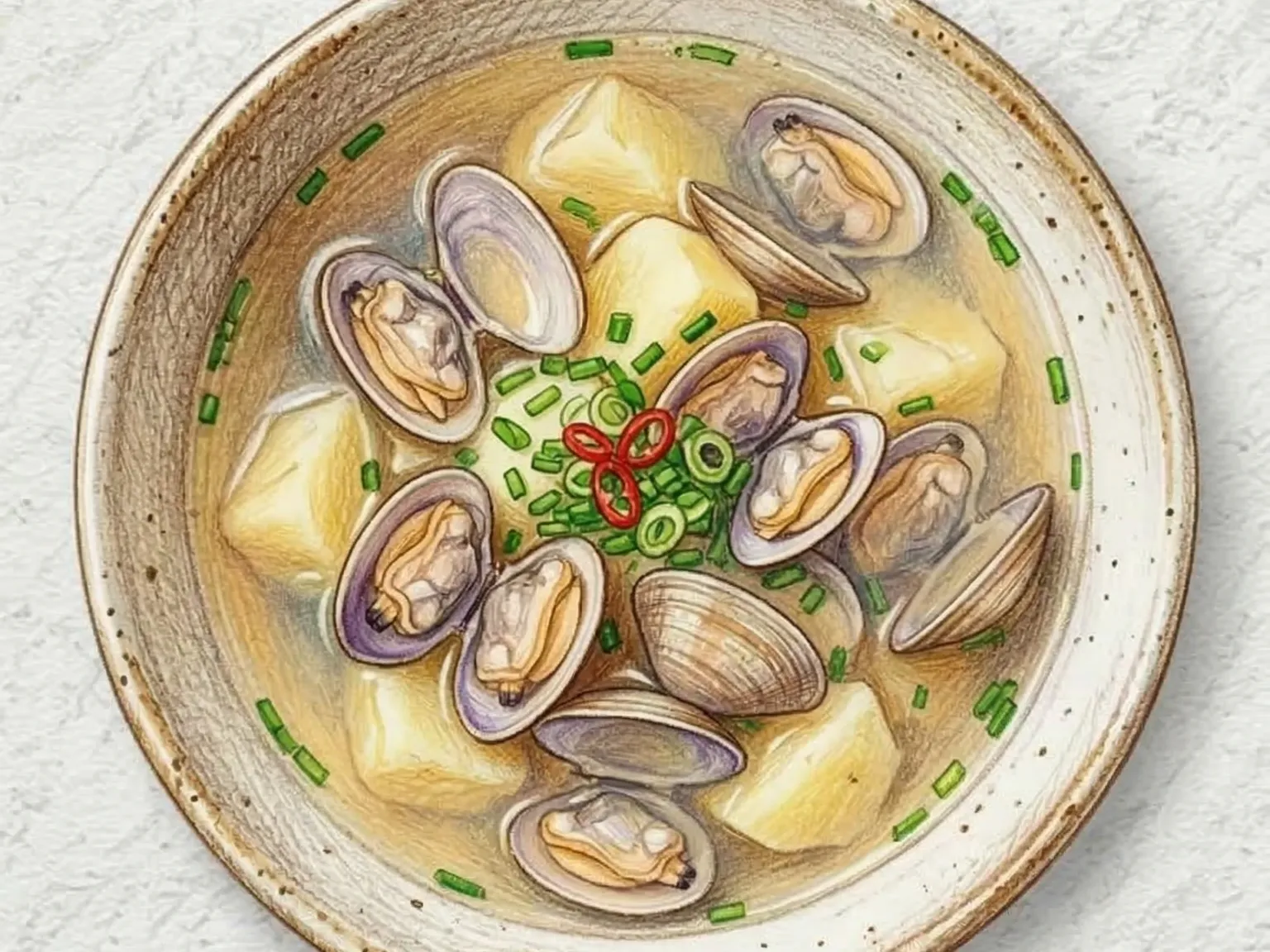
Korean Clam Soft Tofu Soup
Bajirak sundubu guk is a Korean soup where manila clam broth meets soft tofu for a texture that is simultaneously silky and full of marine flavor. Radish simmers first to release its cool sweetness into the water, and when the purged clams are added afterward, the radish sweetness wraps around the clams' saltiness, creating a balanced base. Once the shells open, soft tofu is scooped in with a large spoon and left largely undisturbed; stirring too vigorously dissolves the tofu completely and clouds the broth, while gentle placement preserves its pillowy, cloud-like texture. Soup soy sauce and minced garlic provide seasoning, and scallion goes in at the end for aroma. Each spoonful delivers the soft tofu holding a pocket of clam-infused broth, making the eating experience both mild and deeply flavored at once. Because clam meat toughens with prolonged cooking, the tofu should go in immediately after the shells open and the soup should finish within three minutes.

Korean Chive Clam Soup (Briny Clam Broth with Garlic Chives)
Purged clams are simmered with Korean radish to build a refreshing, naturally sweet stock, then garlic chives and cheongyang chili are stirred in at the end for fragrance and heat. Boiling the radish first for five minutes establishes a mild sweetness that balances the briny clam liquor. The chives go in last to keep their vivid green color and grassy aroma intact, and any clams that fail to open are discarded.