Korean Steamed Clams with Soju
Quick answer
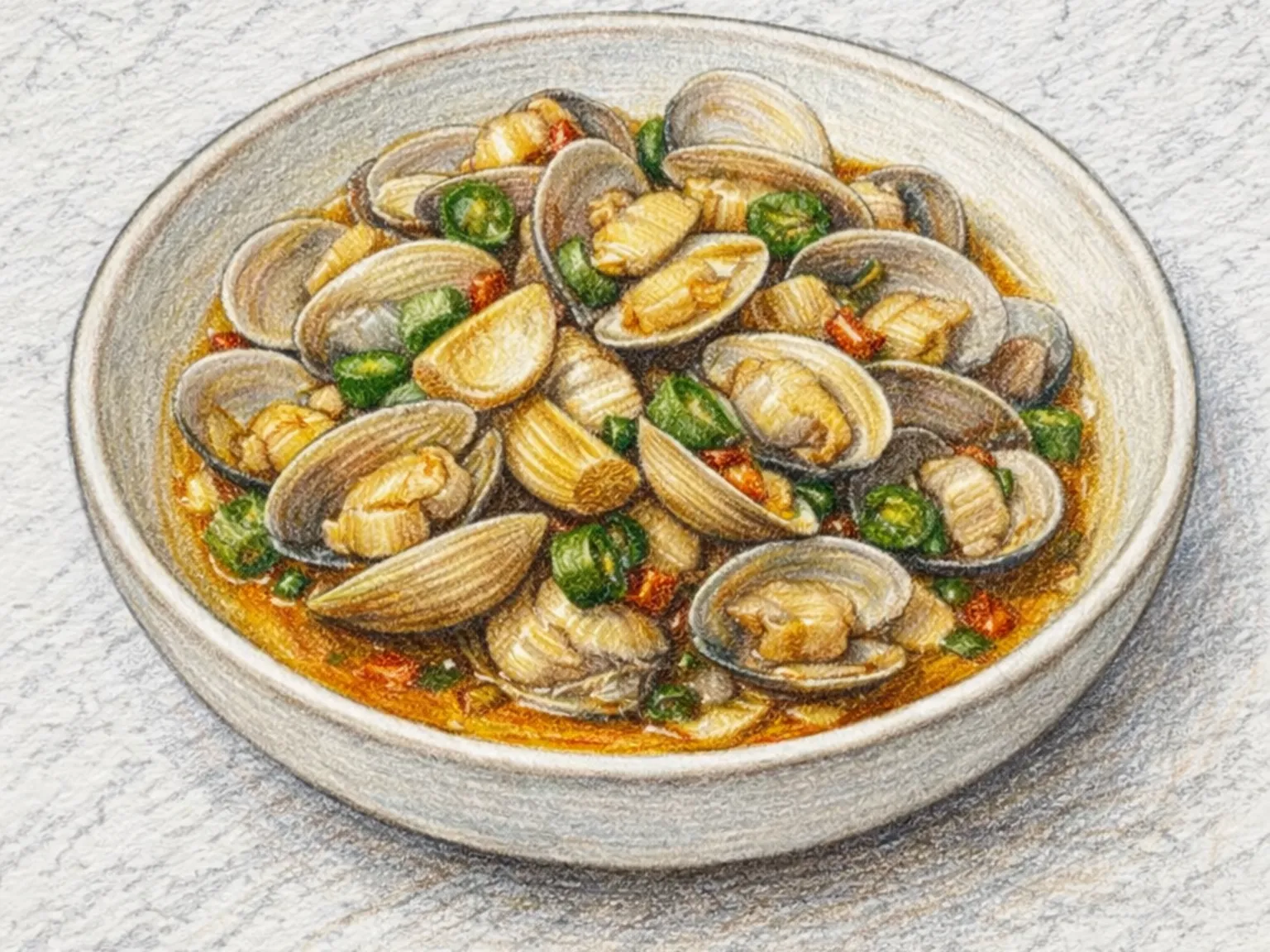
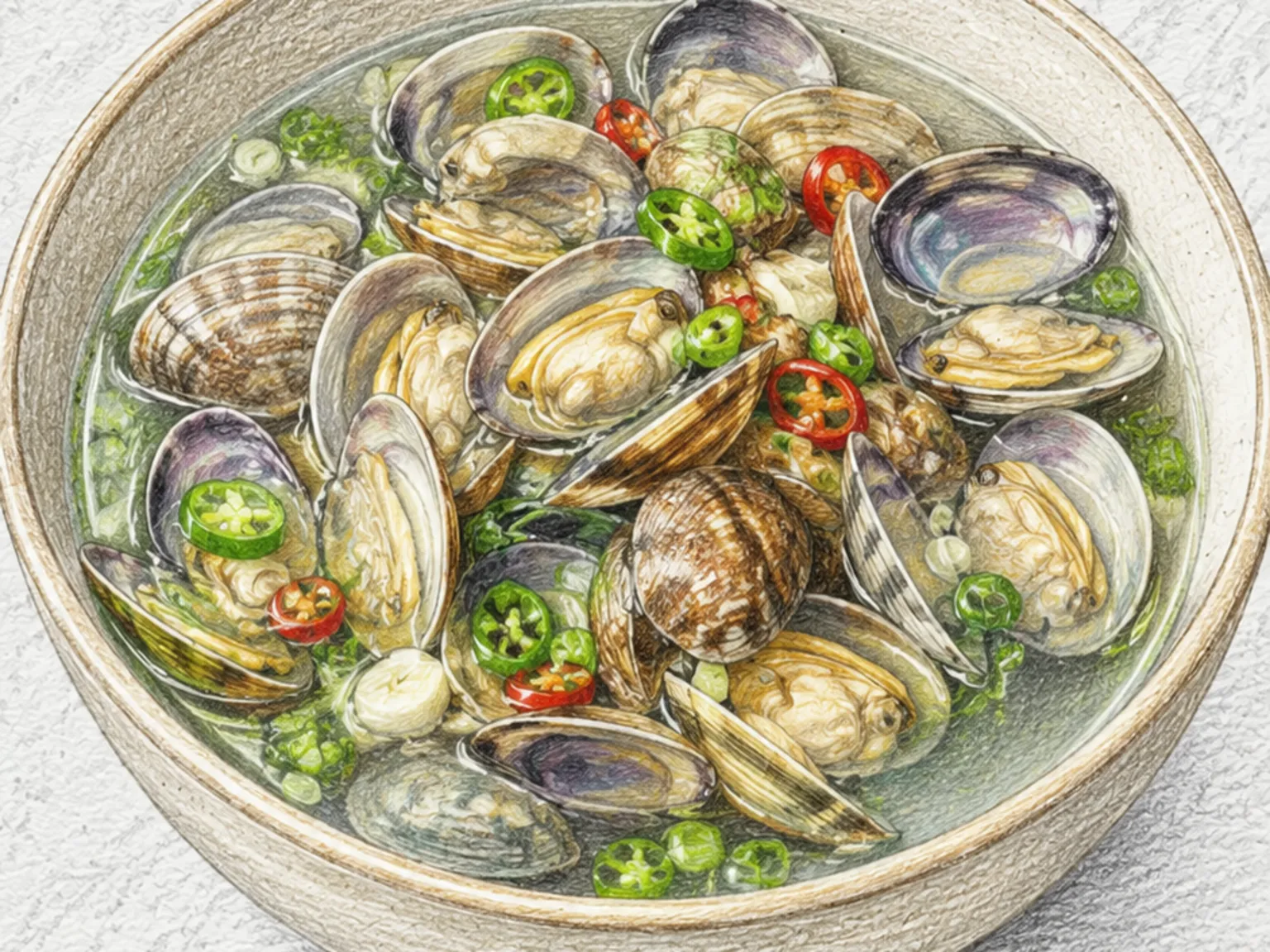
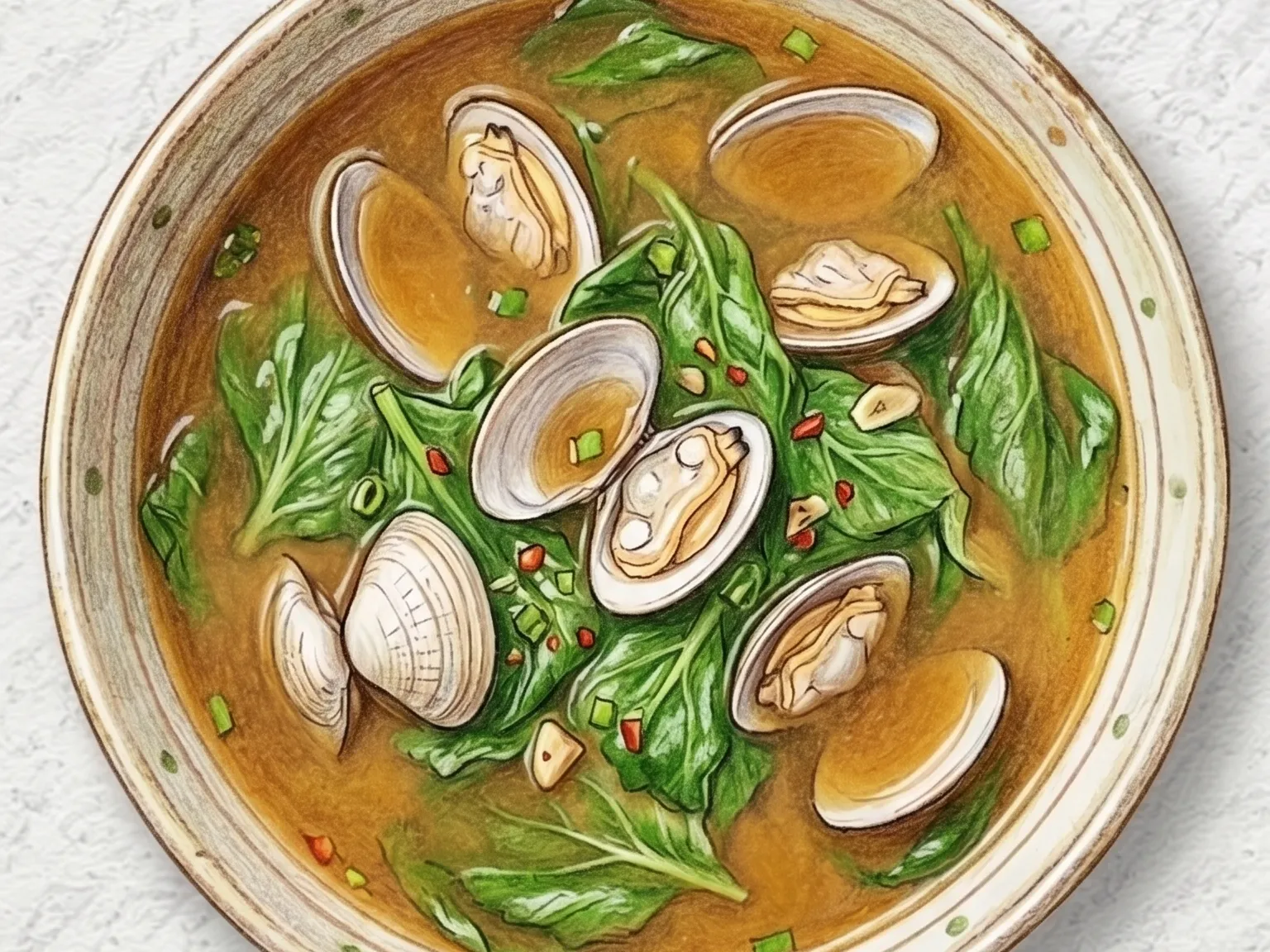
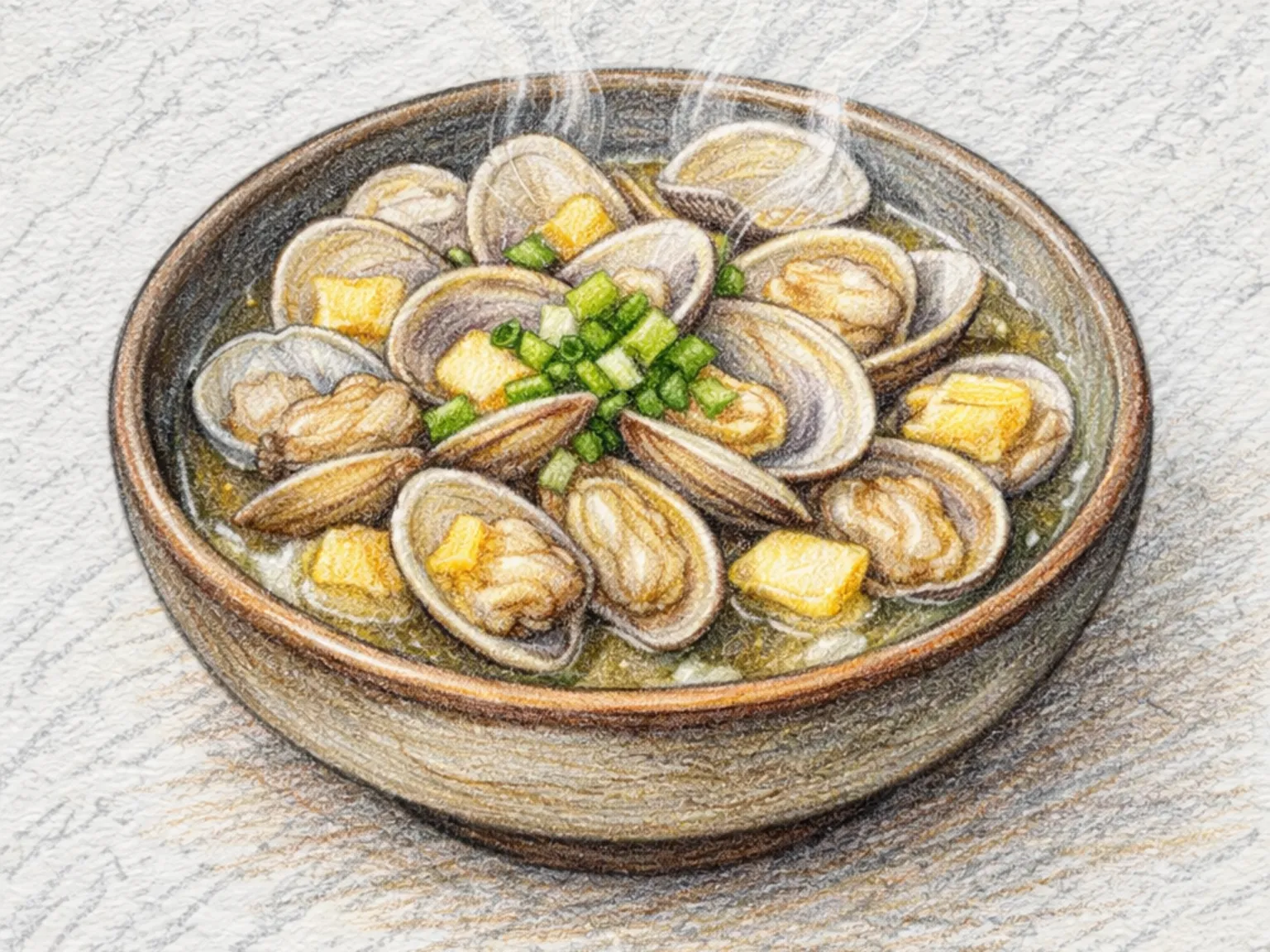
Bajirak sul jjim is a Korean drinking snack of baby clams steamed open in soju with garlic and butter, producing a savory broth suited for dipping bread or cooking noodle...
What makes this special
- Quick-steamed baby clams in Bajirak sul jjim release a savory broth infused with garlic and soju.
- Soju steam cooks the clams quickly while eliminating fishiness
- Butter added after the clams open mixes with the brine into a rich sauce
Key ingredients
Core cooking flow
- 1 Soak 700 g clams in mild salt water for 20 minutes, then scrub the shells ag...
- 2 Slice 1 hot green chili on the diagonal and cut 0.5 scallion for finishing.
- 3 Put the clams, 1 tablespoon minced garlic, 80 ml soju, and 200 ml water in a pot.
Bajirak sul jjim is a Korean drinking snack of baby clams steamed open in soju with garlic and butter, producing a savory broth suited for dipping bread or cooking noodles afterward. The alcohol in soju evaporates quickly, steaming the clams open while stripping away any fishy odor, and leaving a faint grain-spirit aroma in the liquid. Butter is added after the shells open so it emulsifies with the released clam juice to form a rich, cohesive sauce; adding it from the start causes the fat to separate and float on top. Generous sliced garlic steams alongside the clams, losing its raw bite while retaining a mellow fragrance that builds depth in the sauce. Diagonally cut cheongyang chili adds a sharp heat accent to the salty, buttery liquid. Scallion is scattered on top at the end for a fresh finish. White wine can replace soju, adding acidity and a different aromatic character, but soju's clean grain note pairs more naturally with clams in a Korean context. Bajirak - short-neck clams - are smaller and sweeter than other Korean clams, making them well suited for quick steaming, and frozen clams release sufficient broth to make the dish work. Cooking thin wheat noodles in the remaining liquid after the clams are eaten makes an excellent final course.
Instructions
Read the steps as a cooking flow: prep, heat, seasoning, doneness control, and finish.
- 1Season
Soak 700 g clams in mild salt water for 20 minutes, then scrub the shells against each other under cold running water.
Discard any cracked clams or clams with an off smell before cooking.
- 2Finish
Slice 1 hot green chili on the diagonal and cut 0.5 scallion for finishing.
Keep 20 g butter aside for later, because adding it after the clams open helps it blend into the clam juices.
- 3Control
Put the clams, 1 tablespoon minced garlic, 80 ml soju, and 200 ml water in a pot.
Bring to a strong boil uncovered for about 1 minute so the sharp alcohol aroma can cook off.
- 4Control
Cover the pot and steam over medium-high heat for 4 to 5 minutes.
When most shells open and the broth turns cloudy, shake the pot gently so the clams heat evenly without overcooking.
- 5Step
Lower the heat to medium and add the 20 g butter.
Spoon the hot broth over the clams and swirl the pot until the butter melts into the liquid instead of floating as separate oil.
- 6Finish
Add the sliced hot green chili and scallion, then simmer for just 1 more minute.
Discard any clams that remain closed after cooking, and serve the clams hot with the broth.
After the steps
Pick a recipe that fits this dish.
Continue with shared ingredients, meal pairings, or a similar method.
Recipes That Go Well With This
More Drinks →Based on shared ingredients and meal pairing
Korean Steamed Clams
Jogae-jjim is Korean steamed clams cooked with rice wine, garlic, green onion, and cheongyang chili over high heat in a covered pot. Properly purged clams open within minutes and release their natural juices into the pot, creating a clean, intensely savory seafood broth without any added stock. The chili adds a background warmth without overpowering the shellfish, and minimal salt lets the clams' natural salinity and sweetness come through unobstructed. Removing the clams from heat as soon as they open keeps the meat plump and tender rather than chewy and shrunken. The remaining broth is flavorful enough to serve as a base for noodles or porridge, so nothing goes to waste.
Korean Butter-Grilled Squid Beaks
Ojingeo-ip-butter-gui is a Korean bar snack made by searing squid beaks in melted butter with minced garlic over high heat. Thoroughly patting the squid beaks dry with paper towels before they hit the pan is a non-negotiable step: any residual moisture causes violent splattering and prevents the butter from forming a direct, fragrant crust on the surface. Three minutes of rapid stir-frying over high heat keeps the texture springy and chewy rather than tough and rubbery, which is the line squid crosses the moment heat is applied too long. Adding soy sauce and cooking wine creates a savory glaze as the liquid rapidly evaporates and concentrates against the hot surface. A finish of red chili flakes and cracked black pepper introduces a clean, warm heat that lingers behind the buttery garlic aroma, rounding out every bite. The dish comes together in under five minutes, which makes it one of the most practical snacks to serve alongside drinks.
Gotgam Cream Cheese Roll (Dried Persimmon Rolls)
Gotgam cream cheese roll is a no-cook Korean dessert that requires nothing more than a knife, a bowl, and a refrigerator. Dried persimmons are slit open and flattened into thin sheets, each one acting as the outer wrapper. The filling is cream cheese mixed with honey and fresh lemon juice to balance its natural richness with acidity, and finely chopped walnuts are folded in throughout to add a crunchy, nutty element to every bite. The filling is spread across the opened persimmon, which is then rolled tightly and wrapped in plastic wrap. Twenty minutes in the refrigerator firms the roll enough to slice cleanly. Dipping the knife in warm water and wiping it dry before each cut produces the smoothest cross-sections. The finished slices reveal clearly defined layers: the chewy, caramel-sweet dried persimmon on the outside, the tangy cream cheese in the middle, and flecks of walnut distributed throughout. The combination makes it a natural pairing with wine or a polished addition to a traditional holiday table.
Korean Grilled Clams (Butter Garlic Mixed Shellfish Grill)
Mixed clams are submerged in salt water for at least one hour so they expel any sand and grit naturally, then placed shell-side down on a hot grill or pan. As the shells gradually crack open from the heat, a knob of butter, minced garlic, and a splash of rice wine are dropped into each opened shell for one to two more minutes of cooking. The briny liquid that the clams release mingles with the melting butter, building a concentrated natural sauce inside every shell without any additional stock or seasoning needed. Because clams vary in size, they open at different times, so pulling each one as soon as it opens rather than waiting for the whole batch prevents overcooking. Any clam that stays firmly shut after the others have opened should be discarded as unsafe. Chopped fresh parsley scattered over the finished clams cuts through any residual fishiness with a clean herbal note.
Serve with this
Korean Stir-fried Sundae (Sundae Bokkeum)
Sundae-bokkeum is a spicy Korean stir-fry of blood sausage with cabbage, onion, and green onion in a sauce made from gochujang, gochugaru, soy sauce, sugar, and garlic. High heat and a short cooking time are essential because prolonged stir-frying causes the sundae casing to burst and the filling to toughen, while the cabbage and onion release just enough moisture as they wilt to help the sauce coat every piece evenly. The seasoning stacks direct heat from gochujang, a gentler radiant warmth from gochugaru flakes, and sweetness from sugar into a multidimensional spicy-sweet profile. Green onion is held until the very last moment so its fragrance survives the heat; added earlier, the aroma disappears before the dish reaches the table. Adding tteokbokki rice cakes transforms the dish into the popular combo known as tteoksuni, and a layer of melted cheese on top rounds out the spice.
Chicken Cabbage Wraps
Simple chicken tenderloin and cabbage wraps, ideal for a diet-friendly side dish.
Dasik (Korean Honey-Pressed Roasted Grain Confection)
Dasik is a traditional Korean pressed confection made by kneading roasted grain or nut powders with honey and pressing the mixture into carved wooden molds. Unlike baked goods, dasik holds its shape entirely through the binding power of honey, with no heat applied during preparation. This technique produces a texture that is slightly resistant at first contact, then dissolves gently at body temperature in a way that releases the full aroma of the main ingredient. Roasted soybean powder yields a nutty version, black sesame produces a deeply aromatic one, and additions of pine nut powder or cinnamon develop the flavor in different directions. The wooden molds carve decorative patterns into the surface of each piece, giving dasik a visual refinement that matches its restrained sweetness. For centuries, dasik has been a standard offering at Korean tea gatherings, and its subtle flavor remains a natural match for the gentle bitterness of green tea.
Similar recipes
Korean Butter-Grilled Scallops
Garibi butter-gui sears fresh scallops in garlic butter until each side develops a deep golden-brown crust, then finishes with lemon juice and parsley to balance the richness. Removing every trace of surface moisture with paper towels before seasoning is the single most important step -- water on the surface of the scallop causes it to steam rather than sear, and no caramelized crust will form until that moisture has evaporated. Each side cooks for only one to two minutes at the highest heat the pan can sustain, leaving the center just barely opaque and the texture tender rather than rubbery. After flipping, butter and minced garlic are added directly to the hot pan and spooned continuously over the scallops so the aroma infuses the surface. A squeeze of lemon and a scatter of chopped parsley added just before removing from heat layers acidity and freshness over the butter richness. Simple to prepare and fast to cook, this dish appears regularly at home gatherings in Korea as a crowd-pleasing appetizer.
Korean Grilled Filefish Jerky
Jjipo-gui is a Korean bar snack made by pan-grilling dried filefish jerky in melted butter until golden on both sides. Jjipo - dried and pressed filefish - has a dense, chewy texture and a concentrated umami that intensifies the longer you chew, which is what makes it so effective as drinking food alongside beer or soju. Grilling it in butter rather than oil adds a rich, nutty fat quality that complements the inherent savoriness of the dried fish in a way that neutral oil cannot. A thin glaze of soy sauce and oligosaccharide syrup applied near the end of cooking transforms the surface into a glossy, sweet-savory crust that caramelizes without burning, and a pinch of red chili flakes dusted over the top adds a mild heat that persists through the finish. The key to getting the glaze right is temperature control - medium-low heat allows the sugars to caramelize gradually and evenly without scorching, while too high a flame will burn the coating and turn it bitter before the fish has fully grilled through. Too low, and the moisture simply steams off without the glaze setting properly. Cutting the grilled jjipo into long strips with kitchen scissors before serving preserves the chewy pull of the jerky and makes it easier to share and eat in pieces without tearing.
Korean Garlic-Grilled Octopus
Muneo-garlic-gui is a Korean seafood drinking snack made by slicing pre-boiled octopus into bite-size pieces, seasoning them with salt, pepper, and red chili flakes, then searing them hard in olive oil with minced garlic over high heat. The garlic goes in first at low heat to bloom slowly in the oil, then the flame is raised and the octopus is added so the exterior chars rapidly while the interior stays springy and resilient. The olive oil coats the surface at high temperature and locks in moisture, producing a scorched crust outside and a genuinely tender bite within. A squeeze of fresh lemon juice at the finish cuts through the oil and brings the natural brininess of the octopus into sharp relief. The octopus should go straight to the table after cooking, as the texture toughens quickly, and thorough pan preheating is essential to getting the sear right.