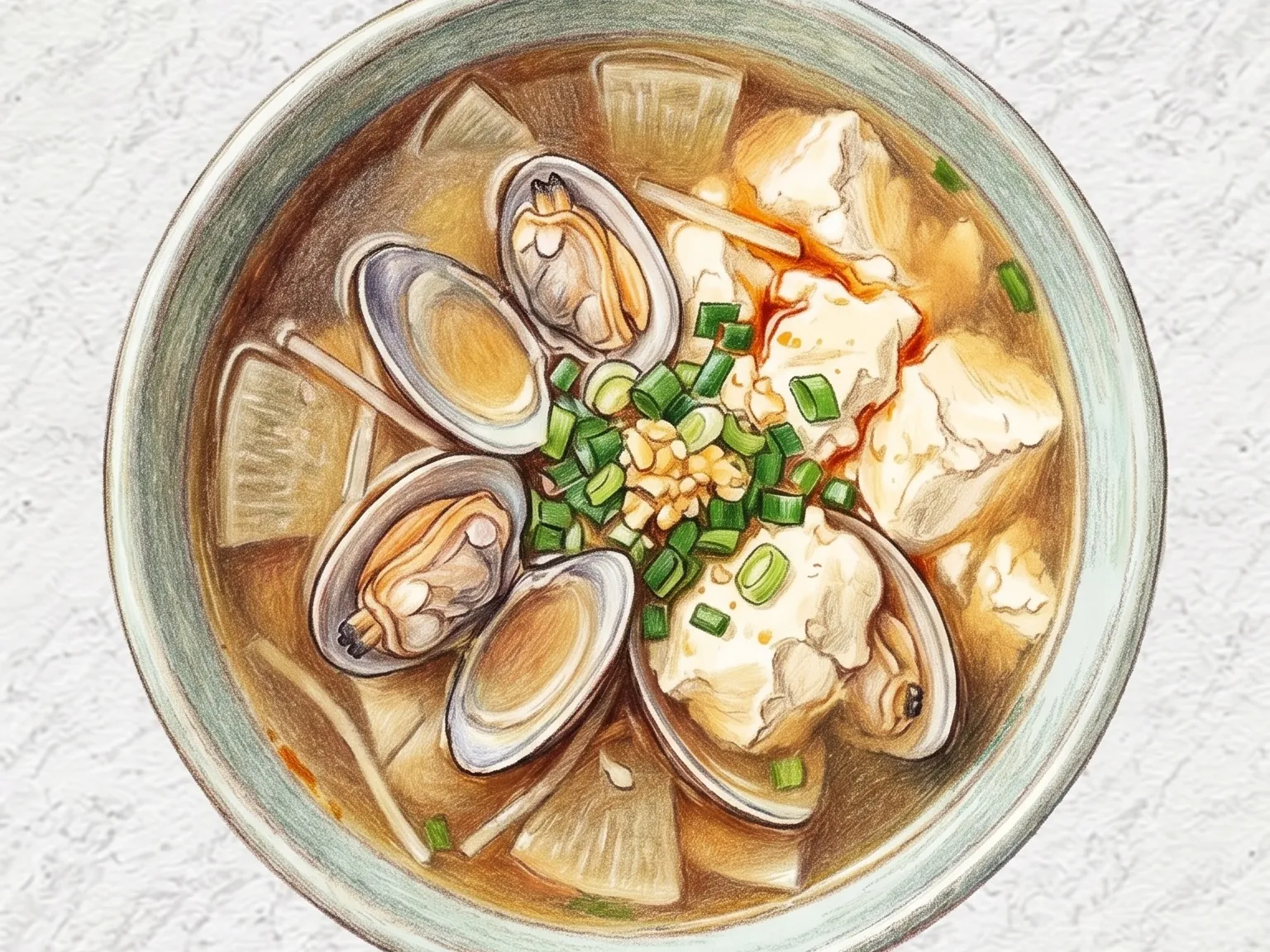
Korean Clam Soft Tofu Soup
Bajirak sundubu guk is a Korean soup where manila clam broth meets soft tofu for a texture that is simultaneously silky and full of marine flavor. Radish simmers first to release its cool sweetness into the water, and when the purged clams are added afterward, the radish sweetness wraps around the clams' saltiness, creating a balanced base. Once the shells open, soft tofu is scooped in with a large spoon and left largely undisturbed; stirring too vigorously dissolves the tofu completely and clouds the broth, while gentle placement preserves its pillowy, cloud-like texture. Soup soy sauce and minced garlic provide seasoning, and scallion goes in at the end for aroma. Each spoonful delivers the soft tofu holding a pocket of clam-infused broth, making the eating experience both mild and deeply flavored at once. Because clam meat toughens with prolonged cooking, the tofu should go in immediately after the shells open and the soup should finish within three minutes.
Adjust Servings
Instructions
- 1
Soak clams in salted water for 20 minutes, then rinse well.
- 2
Boil water and radish for 8 minutes to draw out sweetness.
- 3
Add clams and garlic, then simmer until the shells open.
- 4
Spoon in soft tofu and season with soup soy sauce.
- 5
Add green onion, simmer 2 more minutes, and finish with salt.
- 6
Serve hot right away.
As an Amazon Associate, we may earn from qualifying purchases.
Tips
Nutrition (per serving)
More Recipes

Korean Soft Tofu Shrimp Soup
Yeondubu-saeu-guk is a clear Korean soup where anchovy-kelp stock, radish, and shrimp provide the flavor, and soft tofu adds a creamy contrast. Radish simmers for eight minutes to release its natural sweetness, then peeled and deveined shrimp cook for three minutes, contributing a clean seafood taste without heaviness. Soft tofu is spooned in at the very end and heated for just two minutes so it stays intact and silky. Green onion and a touch of salt close out the seasoning, leaving a gentle, soothing bowl that works well as a light meal or alongside heavier dishes.

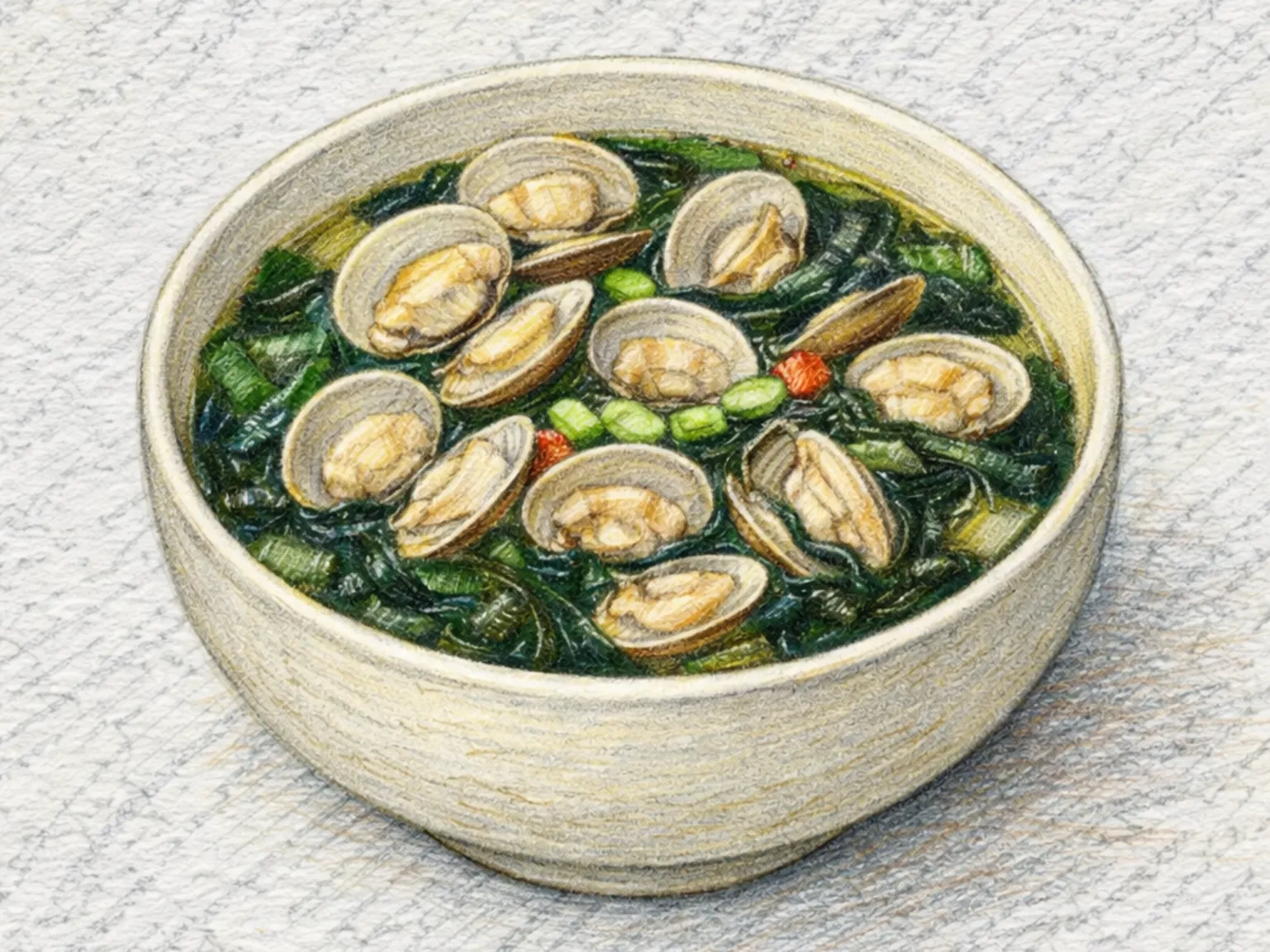
Korean Young Radish Clam Soup
Yeolmu-bajirak-guk is a clear soup that draws its flavor from manila clams purged in salt water and simmered with thinly sliced radish. As the clam shells open, they release a briny, mineral-rich liquid that forms the broth's backbone. Young radish greens and a cheongyang chili are added in the final three minutes to keep the greens vibrant and slightly crunchy. Soup soy sauce and salt adjust the seasoning, though the clams provide enough natural salinity that only a light hand is needed.

Korean Soft Tofu Soup (Mild Clear Broth with Silken Tofu)
Sundubu-guk is the gentler sibling of the more widely known sundubu-jjigae, trading the latter's fiery red broth for a clear, mild soup that puts silken tofu front and center. The base is a simple anchovy and kelp stock, seasoned with soup soy sauce and nothing more assertive, so the broth stays transparent and clean on the palate. Blocks of unpressed soft tofu are slipped into the simmering liquid and heated just until they are warmed through - overcooked sundubu loses the trembling, custard-like texture that defines the dish. Each spoonful collapses gently on the tongue, releasing a faint, sweet soybean flavor that pairs effortlessly with the umami-rich stock. A small addition of salted shrimp paste can be stirred in at the table to introduce a subtle marine depth without disrupting the soup's calm character. This is the soup Koreans turn to when appetite is low, digestion needs rest, or the body simply craves something warm and uncomplicated. It is equally suitable for young children and elderly diners, and its quiet simplicity is precisely its strength.

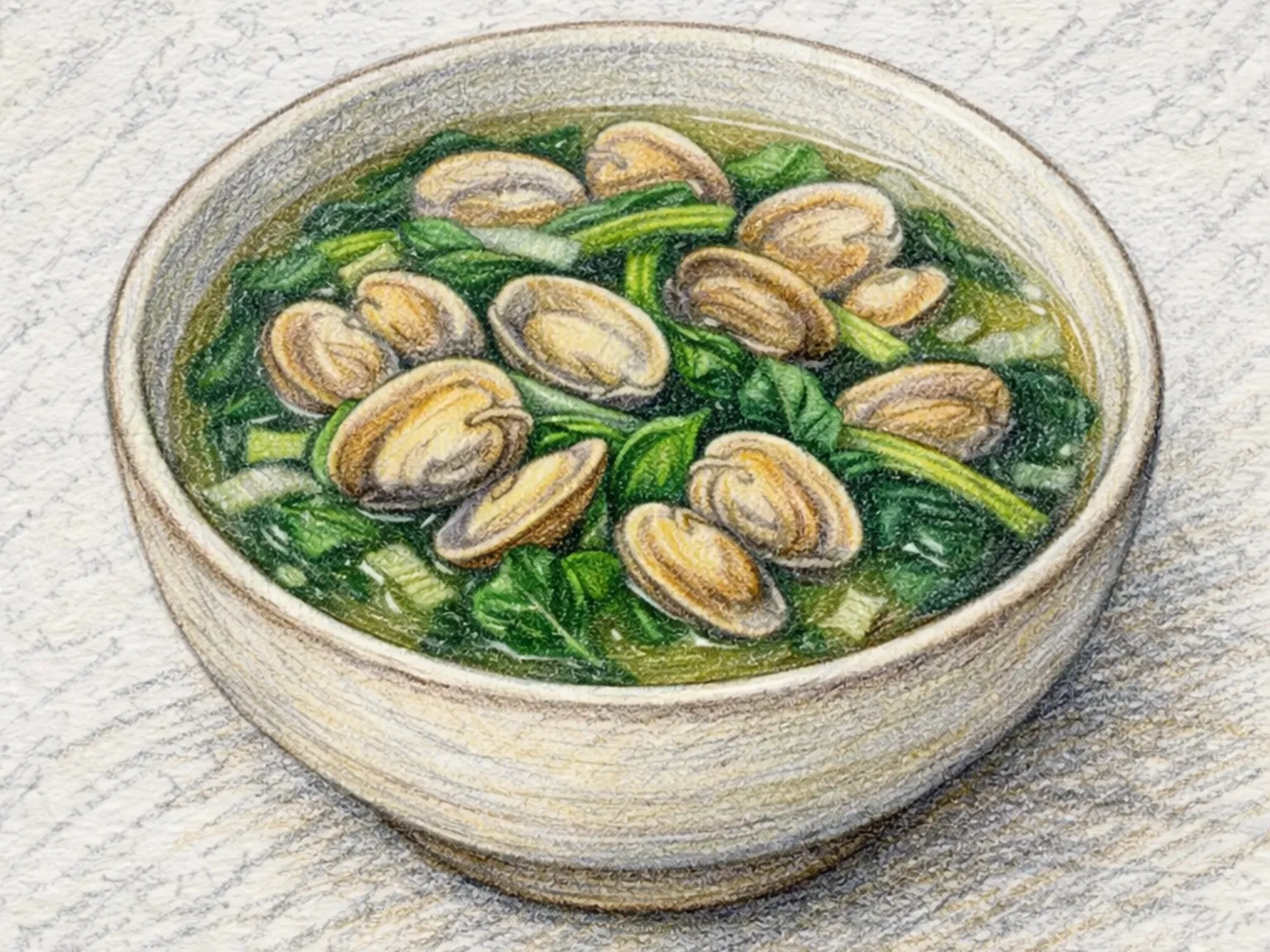
Korean Spinach Clam Soup (Light Shellfish and Greens Broth)
Sigeumchi-bajirak-guk pairs spinach and manila clams in a light, transparent broth that showcases the natural flavor of both ingredients with minimal interference. The clams are purged of sand, placed in cold water, and brought to a boil; as each shell opens, it releases a briny, mineral-rich liquor that becomes the soup's foundation without any need for additional stock. Spinach is added only in the final minute so the leaves wilt just enough to soften while retaining their vivid green color and nutritional content. Soup soy sauce and a touch of garlic round out the seasoning, and the restraint is intentional - anything heavier would mask the delicate sweetness of the clam broth. The spinach's mild, grassy undertone quietly absorbs any seafood sharpness, leaving the overall flavor clean and balanced. Nutritionally, the pairing is notable: spinach is rich in iron, and clams are high in taurine and zinc, making this a soup frequently recommended for children and pregnant women in Korean households. From start to finish, the whole process takes about fifteen minutes, which explains why it appears so often on weeknight dinner tables.

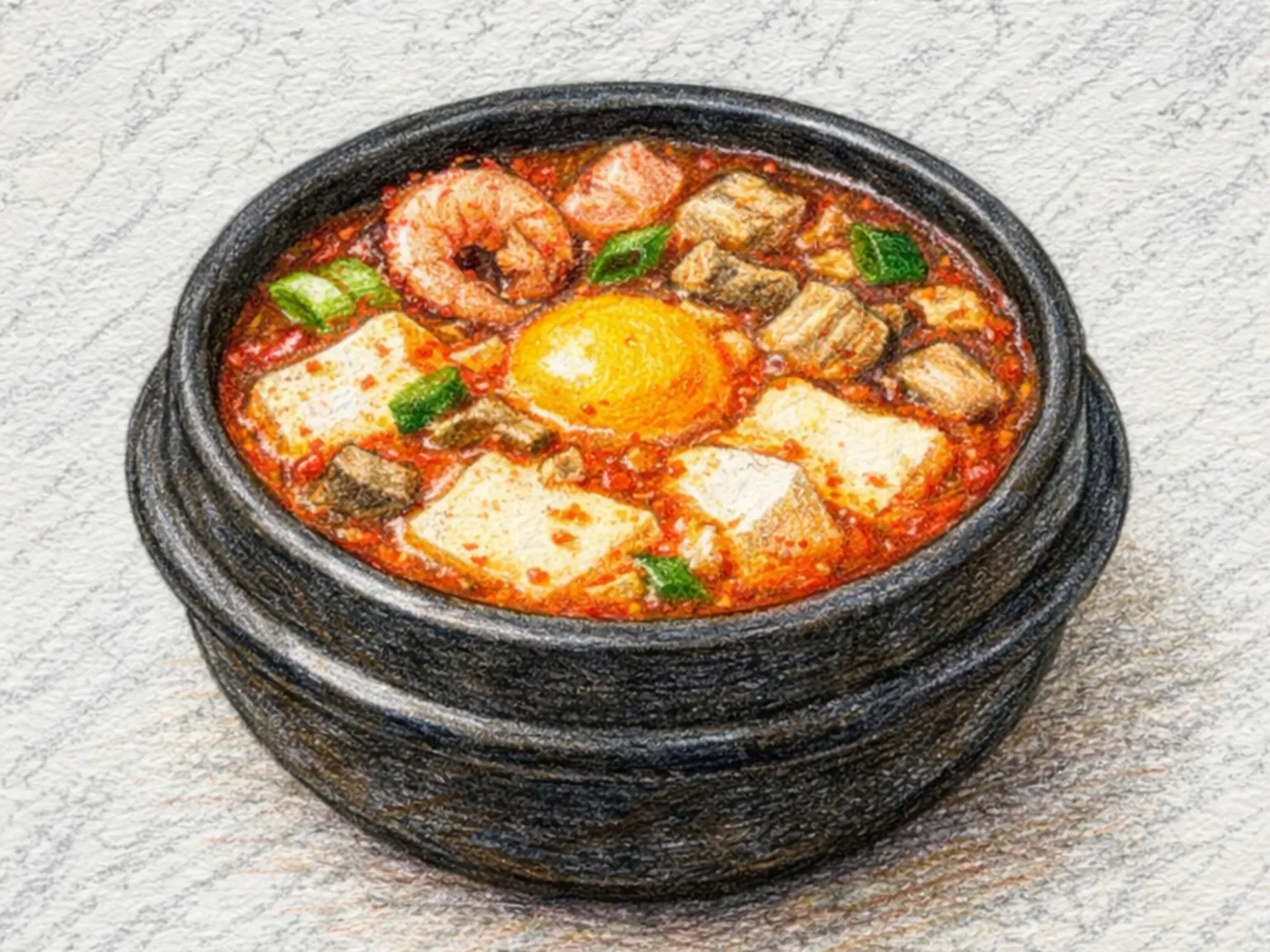
Korean Soft Tofu Stew (Silken Tofu in Spicy Clam Broth)
Sundubu-jjigae is one of Korea's most iconic stews, featuring silken soft tofu in a fiery broth with clams, ground pork, and gochugaru. Sesame oil, chili flakes, and garlic are fried together first to create a fragrant base, then the liquid is added and brought to a rolling boil. Two eggs are cracked on top and left to set softly in the bubbling stew. The clams contribute a clean brininess while the pork grounds the dish with meaty depth, and it is traditionally served still boiling in an earthenware pot.

Korean Clam Sujebi Stew (Hand-Torn Dough in Clam Broth)
This stew combines hand-torn flour dumplings with clams, potato, and zucchini in an anchovy-kelp stock. The clams infuse the broth with a clean, briny depth, and the dough pieces cook into chewy, irregular shapes that catch the soup nicely. Potato melts partially to thicken the broth, while zucchini and onion lend sweetness. Finished with soup soy sauce and green onion, it works as a complete one-bowl meal covering both soup and starch.