Warm Melting Cheese (Whole Oven-Baked Camembert with Garlic and Honey)
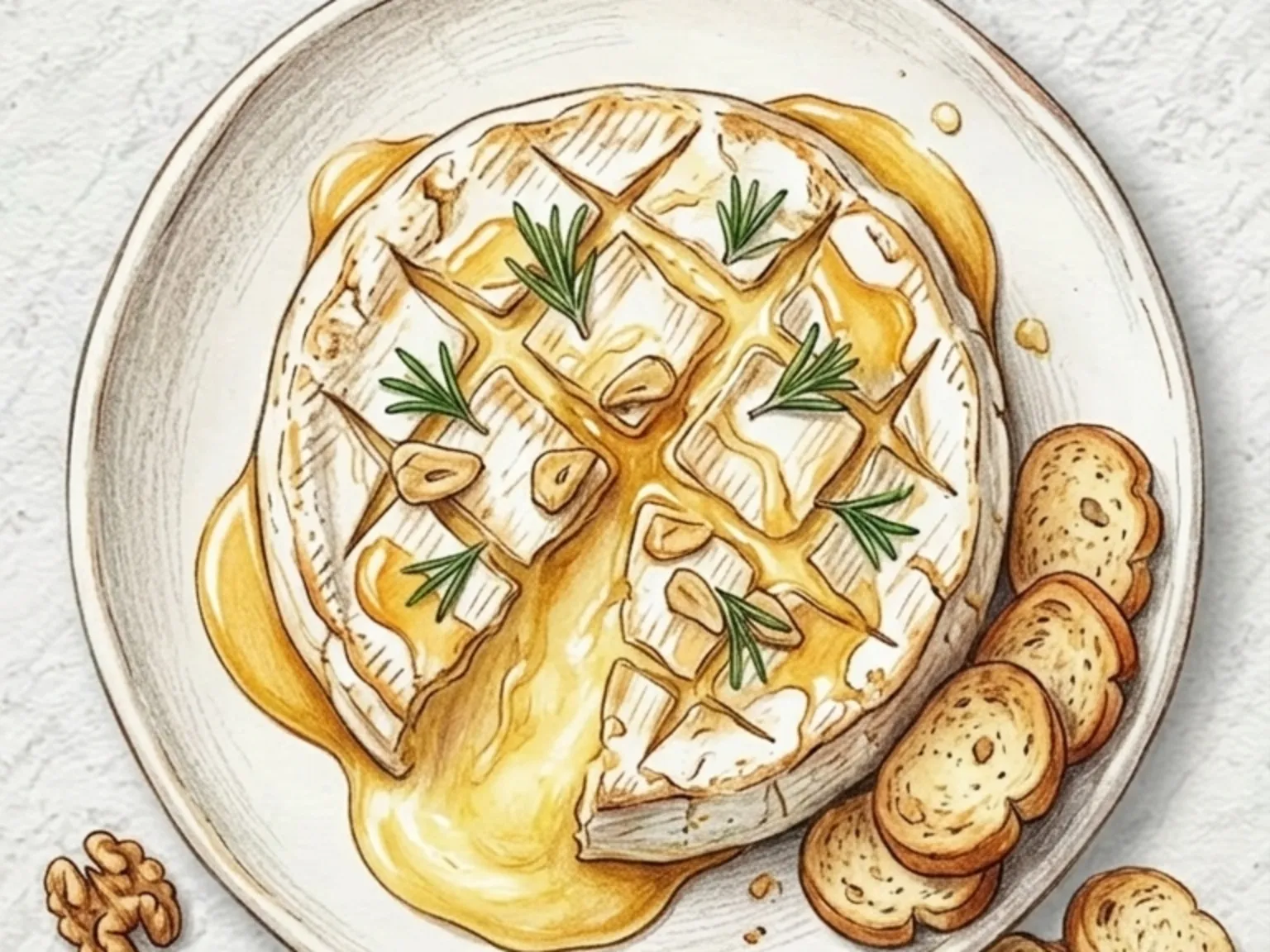
Baked Camembert is a French-style appetizer in which an entire wheel of Camembert cheese is oven-roasted until its interior melts into a flowing cream. Shallow cuts scored across the rind allow garlic slivers and rosemary sprigs to infuse the cheese as it heats. After roughly fifteen minutes at 180 degrees Celsius, the firm center collapses into a dip-like consistency while the white-mold rind holds its shape as a natural vessel. Torn baguette pieces and toasted walnuts are the classic accompaniments, and a drizzle of honey bridges the mild funk of the cheese with sweetness. The preparation takes under five minutes of active work, making it one of the quickest warm appetizers to assemble. It pairs especially well with dry white wine or light-bodied reds.
Adjust Servings
Instructions
- 1
Preheat oven to 190C and score the top rind of camembert in a shallow crosshatch.
- 2
Top with minced garlic and rosemary, then drizzle lightly with olive oil.
- 3
Bake in a small dish for 12 minutes, then broil for 2 minutes for color.
- 4
Slice baguette and toast in a pan or oven while the cheese bakes.
- 5
Remove cheese, top with honey, crushed walnuts, and pepper, then serve warm for dipping.
As an Amazon Associate, we may earn from qualifying purchases.
Tips
Nutrition (per serving)
More Recipes

Gougeres (Gruyère Cheese Choux Puffs)
Gougeres are savory cheese puffs from Burgundy, France, made by folding grated Gruyere cheese into choux pastry and baking until golden and hollow inside. Water, butter, and salt are brought to a boil, then flour is added all at once and stirred over low heat until the starches gelatinize and the dough pulls away from the pan in a smooth ball. Eggs are beaten in one at a time - the dough breaks apart and re-forms with each addition, building the elastic structure that allows the puffs to rise. Folding in the cheese and pepper, then piping rounds onto a tray and baking at 200 degrees Celsius turns the moisture in the dough to steam, which inflates each puff into a crisp shell with a hollow, airy center. Opening the oven door during baking releases the steam prematurely, which can cause the puffs to collapse.

Cod en Papillote (French Parchment-Steamed Cod with Vegetables)
Cod en papillote seals cod fillets with zucchini, cherry tomatoes, shallot, thyme, and lemon slices inside parchment paper, then bakes at 200 degrees Celsius for fifteen to eighteen minutes. The tightly crimped seal traps steam inside the packet, cooking the fish gently without drying it out. Dry white wine added before sealing generates additional aromatic steam that infuses the cod with bright, clean flavor. The vegetables release their natural sweetness as they soften, and olive oil ties the components together with a smooth richness. Opening the parchment at the table releases the trapped aroma all at once.

Ratatouille
Ratatouille is a Provencal vegetable dish where thinly sliced eggplant, zucchini, tomato, and bell pepper are arranged in overlapping circles over a sauce base and slow-baked in the oven. The base is made by sauteing onion, garlic, and diced bell pepper in olive oil, and it mingles with the moisture released from the vegetables during baking to form a naturally thickened sauce. Cutting all vegetables to a uniform thickness is critical - uneven slices lead to some pieces turning mushy while others remain underdone. Thyme adds a quiet herbal note that lifts the natural sweetness of the vegetables. Refrigerating overnight and reheating the next day lets the vegetable juices fully merge with the sauce, deepening the flavor considerably.

Dauphinoise Potatoes (Creamy Garlic Potato Gratin)
Dauphinoise potatoes are a French gratin made by layering uniformly thin potato slices - cut to two millimeters - in a buttered baking dish, with a warm mixture of heavy cream, milk, minced garlic, and salt poured between each layer. Rinsing and drying the sliced potatoes removes excess surface starch for a cleaner result. Grated Gruyère cheese goes on top before the dish bakes at 170 degrees Celsius for fifty-five to sixty minutes, during which the potatoes absorb the cream and turn meltingly tender beneath a golden crust. Resting the gratin for ten minutes after baking lets the layers firm up enough to hold their shape when sliced. Keeping the potato thickness consistent ensures every slice cooks at the same rate.

Fruit Clafoutis (Baked Custard with Fresh Fruit)
Clafoutis is a rustic French baked dessert that suspends fresh seasonal fruit in a thin custard batter and bakes it until the edges puff golden and the center sets to a silky cream. The batter, close to crepe batter in consistency, is made from eggs, milk, flour, and sugar whisked until smooth. Traditionally, unpitted cherries are used because the pits release a faint almond-like fragrance during baking that deepens the overall flavor. Strawberries, blueberries, and plums work equally well, their juices concentrating in the oven heat and creating pockets of intense sweetness against the mild custard. Because the method is little more than mixing and pouring, it requires no special technique. Served warm with a dusting of powdered sugar, the contrast between the crisp rim and the soft interior is what makes this dessert memorable.

Sweet Potato Cream Cheese Galette
Cold butter is rubbed into flour to create a flaky pastry shell, which is rolled flat, spread with a blend of mashed sweet potato, cream cheese, honey, and cinnamon, and then folded at the edges into a free-form galette. The sweet potato contributes mellow sweetness while cream cheese adds a tangy counterpoint, and honey bridges the two into a cohesive filling. Cinnamon provides a warm spice note that suits the autumnal character of the galette. Keeping the butter cold throughout the process is essential for flaky layers - if the dough softens, it should return to the refrigerator immediately. Leaving a four-centimeter border of bare dough around the filling makes the folding step clean and prevents leaking. Drier sweet potato varieties, such as chestnut-type, absorb less moisture and keep the crust from turning soggy during baking. The galette is best served warm, when the pastry is at its crispest and the filling is still soft.