Baklava
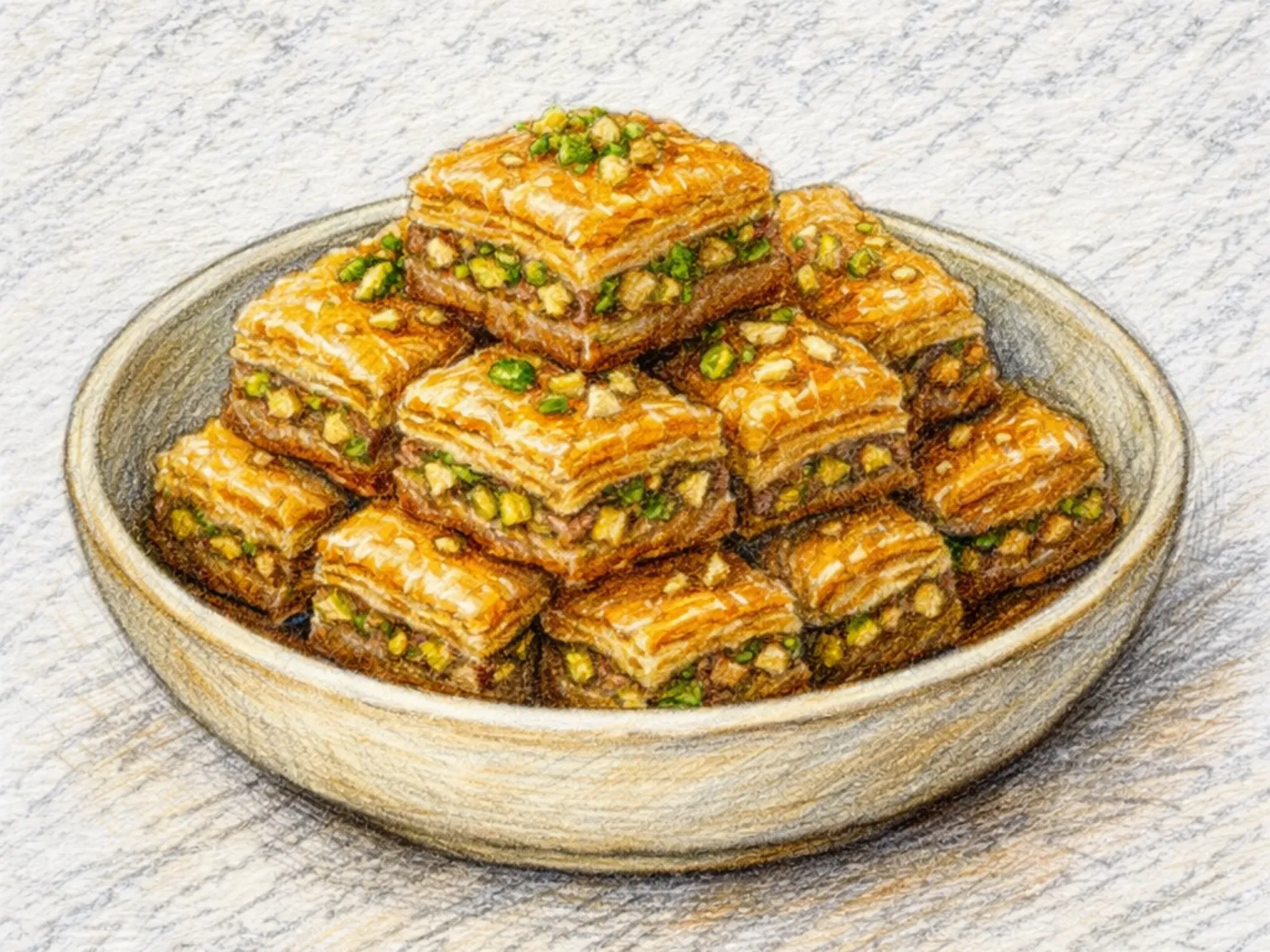
Baklava is a layered pastry dessert rooted in Middle Eastern and Mediterranean culinary traditions. Paper-thin sheets of phyllo dough are stacked in a baking pan, each brushed with melted butter, with a filling of finely chopped walnuts and pistachios spread between the layers. After baking until the top turns deep golden, a hot honey-and-sugar syrup is poured over the entire pan so the crisp pastry absorbs the liquid gradually. Ground cinnamon mixed into the nut filling adds a warm spice note that balances the sweetness. The contrast between the shattering crispness of the top layers and the syrup-soaked bottom layers defines the eating experience. Baklava keeps well at room temperature in an airtight container for over a week, and it is traditionally served alongside unsweetened Turkish coffee.
Adjust Servings
Instructions
- 1
Preheat oven to 170C and chop nuts finely, then mix with cinnamon.
- 2
Brush a pan with melted butter and layer 6 sheets of filo, buttering each sheet.
- 3
Add half the nuts, then 4 sheets, remaining nuts, and finish with 6 more sheets.
- 4
Score into diamonds and bake 35-40 minutes until golden.
- 5
Simmer honey, sugar, and water into syrup, then pour over hot baklava and cool.
As an Amazon Associate, we may earn from qualifying purchases.
Tips
Nutrition (per serving)
More Recipes

Knafeh (Crispy Shredded Pastry with Cheese)
Shredded kataifi pastry is tossed in melted butter, pressed into a pan, layered with mozzarella cheese, and baked until the strands turn golden and shatteringly crisp. The butter saturates every strand during baking, creating an intensely rich, crunchy base. Between the two layers of pastry, the cheese melts into a stretchy, creamy sheet that pulls apart in long strings when the dessert is cut. A syrup of sugar, water, and lemon juice, poured hot over the hot pastry, sinks into the crunchy layers almost instantly, glazing them with a sweet, barely tart coating that balances the cheese's mild salinity. Crushed pistachios scattered on top add a vivid green contrast and a firm, nutty bite that breaks up the otherwise uniform texture. The interplay of crunchy, stretchy, and syrupy in a single forkful is what makes knafeh distinctive. It must be served immediately; the pastry softens as it sits, and the contrast between crisp and molten fades.

Date-Filled Semolina Cookies
A traditional Middle Eastern cookie in which a buttery semolina shell encloses a spiced date paste filling. Semolina produces a distinctly different texture from wheat flour: low in gluten, the baked cookie disintegrates into fine, sandy crumbs the moment it touches the tongue, releasing a wave of butter fragrance. A few drops of rose water woven into the dough create a faint floral backdrop that never overpowers. The filling blends date paste with ground cinnamon into a dense, caramel-like sweetness that contrasts with the restrained sweetness of the shell. After wrapping the filling, each cookie is gently pressed into a mold or marked with a fork to imprint a decorative pattern that is the visual signature of maamoul. Baking at 180 degrees Celsius for 16 to 18 minutes, just until the edges take on the palest gold, is critical; even a minute too long hardens the delicate crumb irreversibly. A light dusting of powdered sugar after cooling adds a sweet first impression before the date flavor takes over.

Basbousa (Middle Eastern Semolina Syrup-Soaked Cake)
Basbousa is a Middle Eastern semolina cake soaked in fragrant syrup, producing a texture unlike any Western cake. Semolina is mixed with yogurt, sugar, and melted butter to form a dense, grainy batter that bakes into a golden slab with a coarse, sandy crumb. Immediately after baking, a hot sugar syrup spiked with lemon juice is poured over the surface, and the porous semolina absorbs it rapidly - the top retains a slight crispness while the interior becomes thoroughly moist. Each piece is scored into diamonds before baking, with a blanched almond pressed into the center of every portion for a nutty accent. Basbousa is a staple dessert during Ramadan across the Arab world.

Red Lentil Soup
Red lentil soup is a Middle Eastern and Mediterranean staple made by simmering red lentils with cumin, turmeric, and vegetable stock until the lentils dissolve into a silky, golden broth. Onion and garlic are sauteed in olive oil, then the ground spices are toasted briefly to bloom their earthy, warm aromatics into the fat, which flavors the entire pot. Red lentils require no soaking - they go straight into the stock and break down within twenty to twenty-five minutes, their skins splitting apart to create a naturally creamy texture without the need for blending. A generous squeeze of lemon juice at the end is essential, cutting through the heaviness of the spices with a bright, clean acidity. A final drizzle of olive oil over each bowl adds a layer of richness that deepens every spoonful.

Tabbouleh Salad (Middle Eastern herb salad)
Tabbouleh salad is a Middle Eastern herb salad where finely chopped parsley and mint are the main ingredients and bulgur plays a supporting textural role. The bulgur is soaked in boiling water until tender, then cooled to develop a nutty chew that anchors the bright greenery piled on top. Removing the seeds from the tomatoes before dicing prevents excess juice from diluting the lemon-olive oil dressing. The dressing itself is simple - lemon juice, olive oil, and salt - but its acidity lifts the grassy flavor of the herbs into something sharp and clean. Resting the assembled salad in the refrigerator for at least ten minutes allows the lemon to penetrate the bulgur, producing a consistent flavor in every bite.

Freekeh Herb Salad (Smoky Roasted Wheat & Fresh Herbs)
Freekeh is an ancient Middle Eastern grain made by harvesting young wheat and roasting it over an open flame, which imparts a distinctive smoky aroma and a nutty undertone not found in other grains. When boiled, it retains a firm, chewy bite that holds up well in salads without turning mushy. This salad combines the grain with generous handfuls of fresh parsley, mint, and dill, creating a vibrant green bowl that is as visually appealing as it is flavorful. A simple dressing of lemon juice and extra-virgin olive oil is sufficient, as the grain's inherent smokiness provides enough depth on its own. Chopped cucumber and halved cherry tomatoes contribute freshness and moisture, and crumbled feta cheese adds salt and creaminess. The salad improves after resting for an hour, as the dressing soaks into the grain and the herb flavors meld.