Korean Chestnut Latte
Quick answer
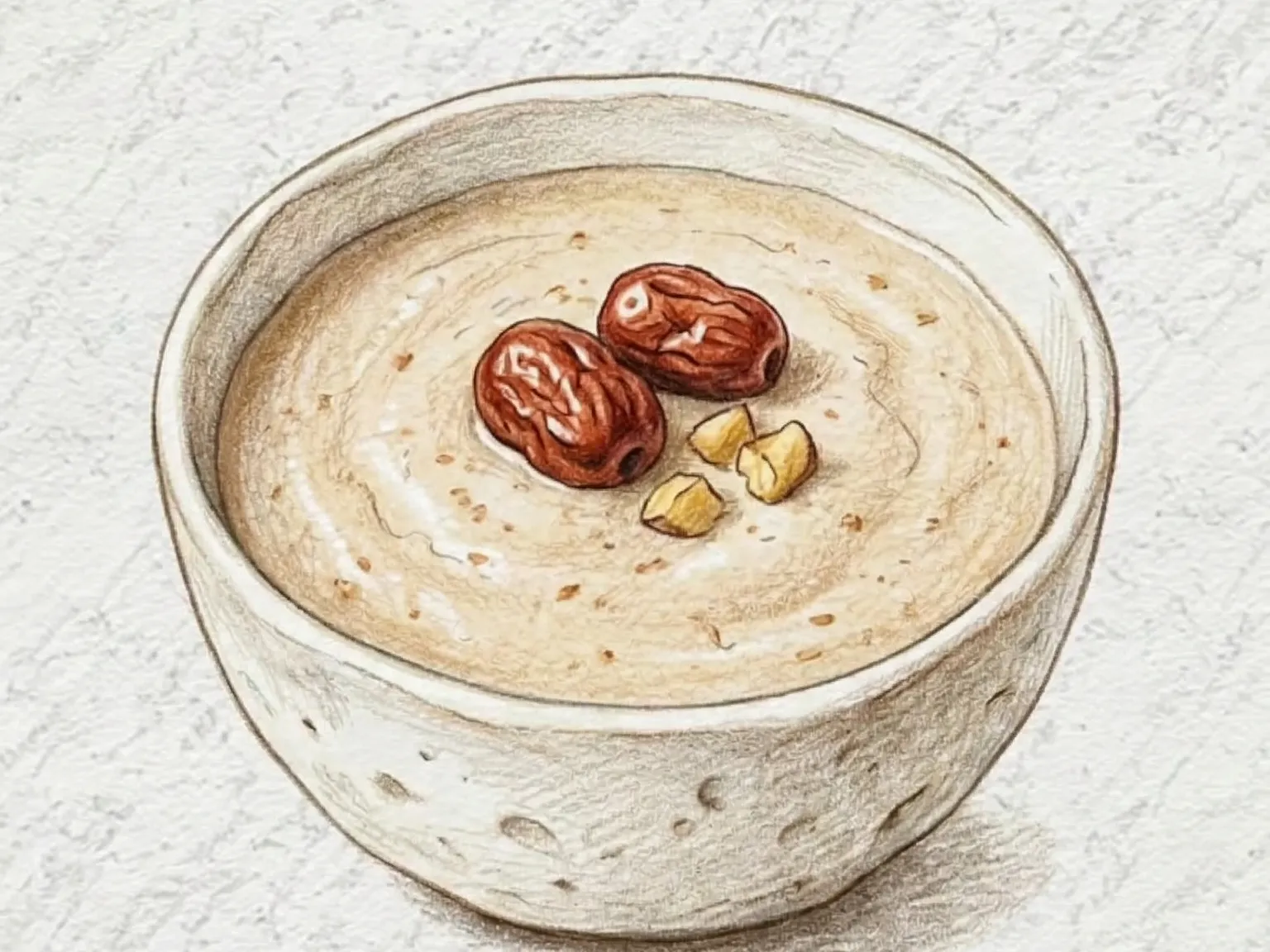
Bam latte is a Korean autumn drink made by blending boiled chestnuts into a smooth paste and warming it with milk.
What makes this special
- Korean Chestnut Latte offers a silky texture when finely blended with milk and boiled chestnuts.
- Coarsely blended chestnut gives porridge-like texture; finely blended stays silky
- Maple syrup adds caramel depth to the starchy sweetness of boiled chestnut
Key ingredients
Core cooking flow
- 1 Peel 180g of boiled chestnuts completely, removing both the outer shell and...
- 2 Place the chestnuts into a pot with 200ml of water and 250ml of milk, then s...
- 3 Allow the mixture to cool slightly before transferring everything to a blend...
Bam latte is a Korean autumn drink made by blending boiled chestnuts into a smooth paste and warming it with milk. The chestnuts are pureed with water until the mixture is completely smooth, then combined with milk and heated gently on the stovetop over low heat. Maple syrup introduces a caramel sweetness over the mild, starchy flavor of the chestnuts. Ground cinnamon adds warmth, and a small amount of vanilla extract gives the overall aroma more depth. Blending the chestnuts longer yields a silkier drink; leaving some texture produces a thicker, more porridge-like consistency. The full preparation takes about twenty minutes, making it a practical homemade version of the seasonal chestnut lattes that appear in Korean cafes each autumn.
Instructions
Read the steps as a cooking flow: prep, heat, seasoning, doneness control, and finish.
- 1Heat
Peel 180g of boiled chestnuts completely, removing both the outer shell and the thin inner skin to ensure a smooth texture, then cut them in half to facilitate easier blending.
- 2Control
Place the chestnuts into a pot with 200ml of water and 250ml of milk, then simmer over low heat for ten minutes until the chestnuts are soft enough to be mashed.
- 3Prep
Allow the mixture to cool slightly before transferring everything to a blender and processing on high speed for one minute until the texture is perfectly smooth, creamy, and free of lumps.
- 4Season
Pour the blended chestnut base back into the pot and add the remaining 250ml of milk, two tablespoons of maple syrup, and a quarter teaspoon of salt to balance flavors.
- 5Control
Warm the latte over low heat for five minutes while stirring constantly to prevent scorching, then whisk in a quarter teaspoon of ground cinnamon and one teaspoon of vanilla extract.
- 6Finish
Create a rich layer of foam on top using a milk frother and pour the latte into warm mugs, optionally garnishing with extra chestnut pieces or cinnamon for a professional presentation.
After the steps
Pick a recipe that fits this dish.
Continue with shared ingredients, meal pairings, or a similar method.
Recipes That Go Well With This
More Drinks →Based on shared ingredients and meal pairing
Korean Sweet Pumpkin Latte
Danhobak latte begins with seeded kabocha pumpkin steamed skin-on, then blended with water into a smooth puree. Milk is whisked in gradually over low heat until the drink reaches a rich, velvety consistency. The pumpkin contributes natural sweetness that anchors the flavor, supported by honey, a half teaspoon of ground cinnamon, and a pinch of salt that defines the sweetness without adding noticeable saltiness. Keeping the milk below a boil -- around 80 degrees Celsius -- preserves its creamy character, and a spoonful of lightly whipped cream on top adds a soft, layered texture to each sip.
Korean Black Sesame Latte
Heugimja latte is a Korean roasted black sesame drink made by finely grinding toasted sesame seeds and warming them slowly with milk over low heat. Toasting the sesame beforehand draws the oils to the surface, intensifying the deep, nutty character that defines the drink. The finer the grind, the more evenly the sesame disperses through the liquid, creating a smooth, uniform texture rather than a gritty one. Adding sweet rice flour dissolved in a small amount of water gives the latte a natural thickness that sets it apart from commercial nut milks or grain beverages. A tiny amount of salt sharpens the sesame flavor without adding any perceptible saltiness, and sugar should be added with restraint since too much sweetness masks the roasted depth that makes this drink distinctive. Served warm, the toasted aroma rises steadily from the cup. Chilled versions retain the same nuttiness, making the drink work in both seasons. The drink draws on a long Korean tradition of using ground sesame as a nutrient-dense base for beverages and porridges.
Korean Galbi Tteokbokki (Soy-Braised Pork Rib Rice Cake Stir-Fry)
Galbi tteokbokki marinates boneless pork ribs in soy sauce, sugar, mirin, garlic, and sesame oil for fifteen minutes before the dish comes together in a single pan. The ribs go in first over high heat, searing until the surface caramelizes and the rendered fat begins to collect in the pan. Water and rice cakes are added next, and the mixture simmers on medium until the sauce reduces into a concentrated glaze that coats each tteok thoroughly. No gochujang enters the recipe at any point - the flavor profile is entirely soy-and-sugar sweet-salty, made deeper by the pork's own fat and juices as they cook down. The finished dish shows a visible sheen on both the rice cakes and the meat, with green onion and sesame seeds scattered over the top.
Korean Perilla Seed Latte
Deulkkae latte is a Korean warm drink made by whisking ground perilla seed powder into water first to dissolve any lumps, then heating the mixture together with milk over medium-low heat until hot throughout. Sifting the perilla powder before mixing it into water is a small step that makes a measurable difference in texture: fine particles disperse evenly and the finished latte pours with a silky smoothness, with no gritty residue settling at the bottom of the cup. Honey and dark brown sugar are added together, building a layered sweetness that sits on top of the deep, nutty perilla base without overwhelming it. A pinch of salt stirred in alongside the sweeteners keeps the flavor from going flat by grounding the sweetness with a subtle mineral edge. Cinnamon dusted lightly over the surface at the end melds with the perilla aroma into a warm, spiced finish that lingers after each sip. To serve cold, the finished drink can be chilled and poured over ice.
Serve with this
Flower Rice Pancakes (Glutinous Rice Cakes with Edible Flowers)
Hwajeon is a traditional Korean rice pancake made by kneading glutinous rice flour with salt and warm water, portioning the dough into 30-gram rounds, and pan-frying on low heat with edible flower petals pressed onto the surface. Low heat is not optional: high heat chars the outside while leaving the center gummy, whereas patient cooking at a gentle temperature produces a uniform chew all the way through. The petals must be dried completely before use to avoid oil splatter, and they are pressed in while the top of the pancake is still slightly underdone so they bond firmly rather than sitting loose on the surface. Different flowers shift the character of each batch: azalea delivers a faintly floral note, chrysanthemum a subtler, more herbal impression, and rose a soft sweetness. Served alongside honey and pine nuts, the honey draws out the mild sweetness of the rice dough, and the pine nuts add a resinous, oily richness that rounds out the last bite.
Korean Stir-Fried Sweet Potato Stems
Goguma julgi - sweet potato stems - are the above-ground vines of the sweet potato plant, a byproduct that Korean cooks transform into a summer namul rather than discarding. The most labor-intensive step is peeling each stem by hand, pinching the outer skin with a fingernail and pulling it away to reveal the tender core beneath. After blanching for two minutes and rinsing in cold water, the stems are stir-fried in perilla oil with garlic and seasoned with soup soy sauce. Perilla powder stirred in at the end thickens the remaining liquid into a nutty glaze. In season during summer, the stems are harvested from sweet potato fields before the tubers themselves are dug up.
Gyeongdan (Chewy Rice Balls with Sweet Coating)
Gyeongdan are Korean glutinous rice balls, each one shaped by hand into a small sphere, boiled until it floats, then rolled in a dry coating while still warm. The dough is made by kneading glutinous rice flour with hot water rather than cold, a technique that partially gelatinizes the starch and gives the finished rice ball its characteristic chewy spring. Rinsing the cooked balls immediately in cold water stops them from sticking together and firms the surface enough for the coating to cling evenly. Traditional coatings include roasted soybean powder, which is mild and nutty, ground black sesame, which adds deep toasted bitterness, and sweetened red bean crumbles. Some versions are filled with sweet red bean paste before shaping, so the filling bursts as you bite through. Gyeongdan appear on ceremonial tables at seasonal holidays and as everyday snacks, often presented as a trio of colors arranged side by side on a single plate.
Similar recipes
Korean Malcha Duyu Latte (Matcha Soy Latte)
Matcha duyu latte is a vegan drink that pairs whisked matcha with gently warmed unsweetened soy milk. The tea's vegetal bitterness meets the soy milk's natural nuttiness in a creamy balance, anchored by acacia honey and a pinch of salt that clarify both flavors. A small measure of vanilla extract adds a background sweetness, and roasted soybean powder dusted on top reinforces the nutty character. Heating the soy milk only until tiny bubbles appear at the edges prevents any off-flavors from developing.
Black Rice Black Sesame Muffins
Black rice black sesame muffins bring together two of Korean baking's most distinctive ingredients into a single pastry with layered flavor and an unusual deep color. Black rice flour and cake flour form the dry base, with roasted black sesame seeds folded in to add concentrated nuttiness and tiny bursts of crunch throughout the crumb. Plain yogurt and milk provide the moisture and a faint tang that offsets the sweetness, while neutral oil keeps the fat light. During baking, the heat activates the oils within the sesame seeds, intensifying their roasted aroma as the muffins rise. The finished interior stays moist and tender, and the crust develops a subtle chew. The color is a striking deep purple-gray from the black rice. Flavor arrives in sequence: the earthy, slightly mineral depth of black rice leads, and the bold, roasted sesame note finishes. The restrained sweetness makes these muffins as well-suited to coffee or tea as they are to eating on their own.
Omija Berry Frangipane Tart
A crisp, buttery tart shell cradles a filling of frangipane - the classic almond cream made from ground almonds, butter, eggs, and sugar - baked until the surface sets into a thin golden crust while the interior stays moist and dense. Omija berries and mixed berries are pressed into the frangipane before baking, and as they heat they release tart juices that seep into the almond cream, creating pockets of bright acidity that cut through the richness. Omija contributes a complex sourness with faintly astringent and floral undertones that distinguish this tart from standard berry versions. The almond flavor intensifies as the tart cools, and a light dusting of powdered sugar before serving adds a clean finishing touch. Sliced thin, each piece offers the full progression: crunchy pastry, dense nutty cream, and bursts of fruit.