Bangers and Mash

Bangers and Mash

Quick answer

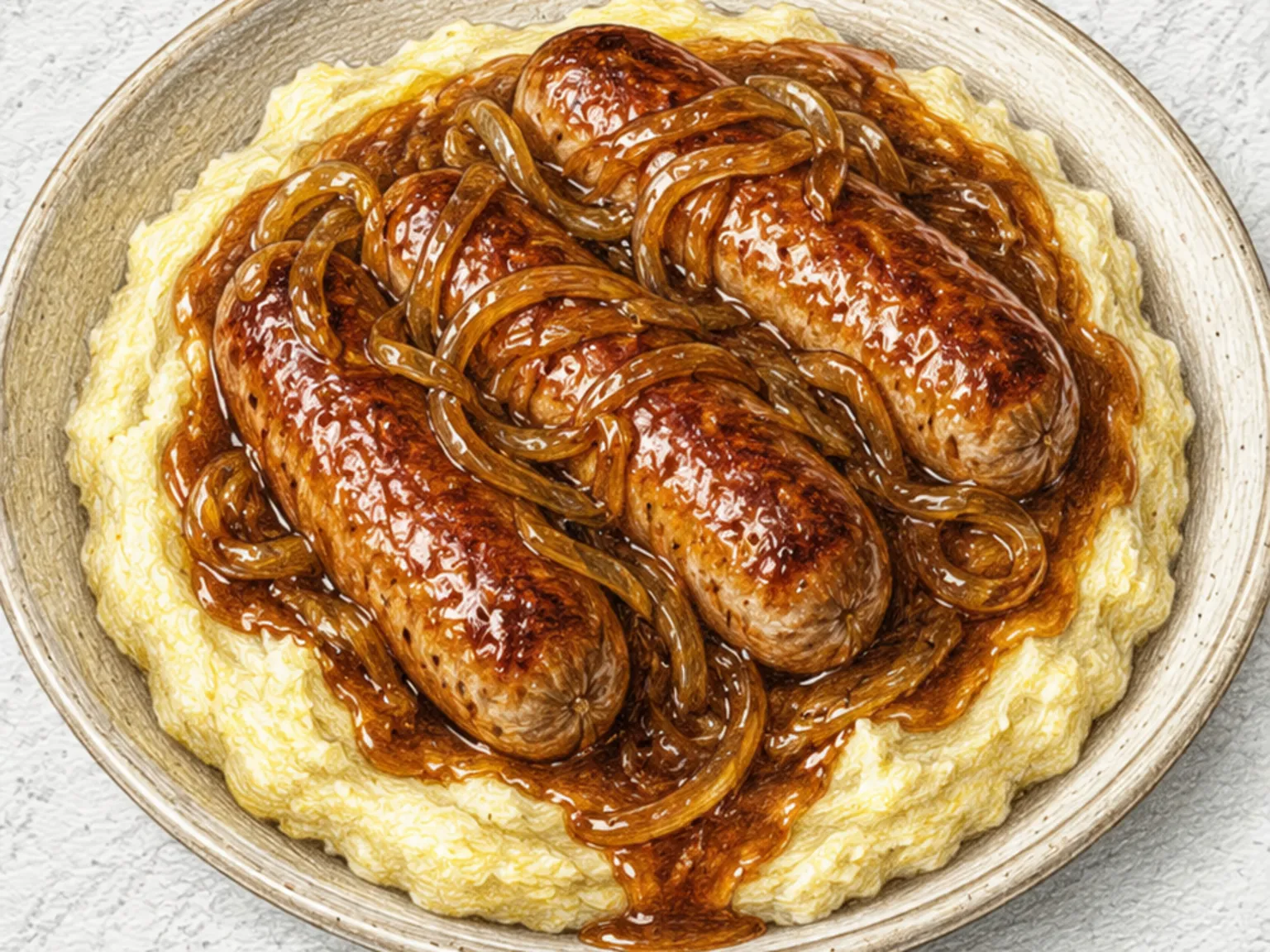
Bangers and mash is a cornerstone of British home cooking, pairing pan-fried pork sausages with creamy butter mashed potatoes under a ladle of slowly built onion gravy.

What makes this special

  • British Bangers and Mash pairs pan-seared pork sausages with buttered potatoes and onion gravy.
  • Onions caramelized in sausage drippings build the gravy base
  • Butter and warm milk mash soaks up the rich, meaty gravy
Total time
40 min
Level
Easy
Servings
2 servings
Ingredients
7
Calories
620 kcal
Protein
28 g

Key ingredients

pork sausagespotatoesbuttermilkonion

Core cooking flow

  1. 1 Peel 600g potatoes, cut them into 5cm pieces, and rinse them in cold water to remove surface starch.
  2. 2 Drain the potatoes thoroughly, return them to the pot, and shake them over l...
  3. 3 Warm 100ml milk separately, then stir it into the mash a little at a time so...

Bangers and mash is a cornerstone of British home cooking, pairing pan-fried pork sausages with creamy butter mashed potatoes under a ladle of slowly built onion gravy. The sausages are cooked until their casings turn a deep brown and develop a slight snap when bitten. Potatoes are boiled until fully tender, then mashed with butter and warm milk to a smooth, uniform consistency. The onion gravy is the element that makes the dish: sliced onions caramelize slowly over low heat until deeply sweet, then beef broth goes in and reduces with a small addition of flour to reach a pourable thickness. That gravy's concentrated savory depth ties together the saltiness of the sausage and the neutral base of the mash in a way that neither component achieves alone. It is one of the most frequently ordered items on British pub menus and straightforward enough to put together in about thirty minutes at home.

Prep 10min Cook 30min 2 servings

Instructions

Read the steps as a cooking flow: prep, heat, seasoning, doneness control, and finish.

6 steps
  1. 1
    Season

    Peel 600g potatoes, cut them into 5cm pieces, and rinse them in cold water to remove surface starch.

    Boil in well-salted water for 15 to 18 minutes, until a fork slides in without resistance.

  2. 2
    Control

    Drain the potatoes thoroughly, return them to the pot, and shake them over low heat for 1 minute to dry the surface.

    Add 50g butter while they are still hot, then mash until no firm chunks remain.

  3. 3
    Control

    Warm 100ml milk separately, then stir it into the mash a little at a time so the texture stays smooth instead of loose.

    When it spreads softly, season with salt and pepper and cover to prevent drying.

  4. 4
    Control

    Set 6 pork sausages in a pan over medium heat and cook for 10 to 12 minutes, turning them often.

    Remove them when the casings are deep brown, taut, and slightly springy, and keep them warm.

  5. 5
    Control

    Thinly slice 2 onions into the sausage drippings and cook over low heat for 20 to 25 minutes.

    Stir often and lower the heat if they catch, aiming for soft golden onions with a sweet aroma.

  6. 6
    Finish

    Sprinkle in 1 teaspoon flour and stir for 1 minute so it loses the raw taste.

    Gradually add 300ml beef broth, simmer 3 to 4 minutes until spoon-coating, then serve over the mash and sausages.

After the steps

Pick a recipe that fits this dish.

Continue with shared ingredients, meal pairings, or a similar method.

Recipes That Go Well With This

More Western →

Based on shared ingredients and meal pairing

Cottage Pie
Shared ingredient: potatoes Western

Cottage Pie

Cottage pie is a British comfort dish that layers a rich ground-beef filling under buttery mashed potatoes and bakes the whole thing until the top is golden and the interior is bubbling. The filling starts with beef browned alongside diced onion and carrot, then simmers with tomato paste, Worcestershire sauce, beef stock, and green peas until the liquid reduces to a thick, concentrated sauce that holds its shape in the dish. Adding beef stock to the simmer deepens the flavor considerably compared to water alone. The potatoes must be mashed immediately after draining while still steaming hot: mashing cool potatoes produces a gluey texture instead of a smooth, creamy layer. Scoring the surface with a fork before the dish goes into the oven creates ridges that catch the heat and brown in the oven at 200 degrees Celsius over twenty minutes, adding a lightly crisp layer over the soft interior. During baking, the heat from the filling rises through the potato crust, allowing the two layers to exchange aromas. The defining characteristic of the dish is the contrast between the deeply savory, umami-packed meat layer below and the soft, golden, buttery potato crust above.

Fish Pie
Shared ingredient: potatoes Western

Fish Pie

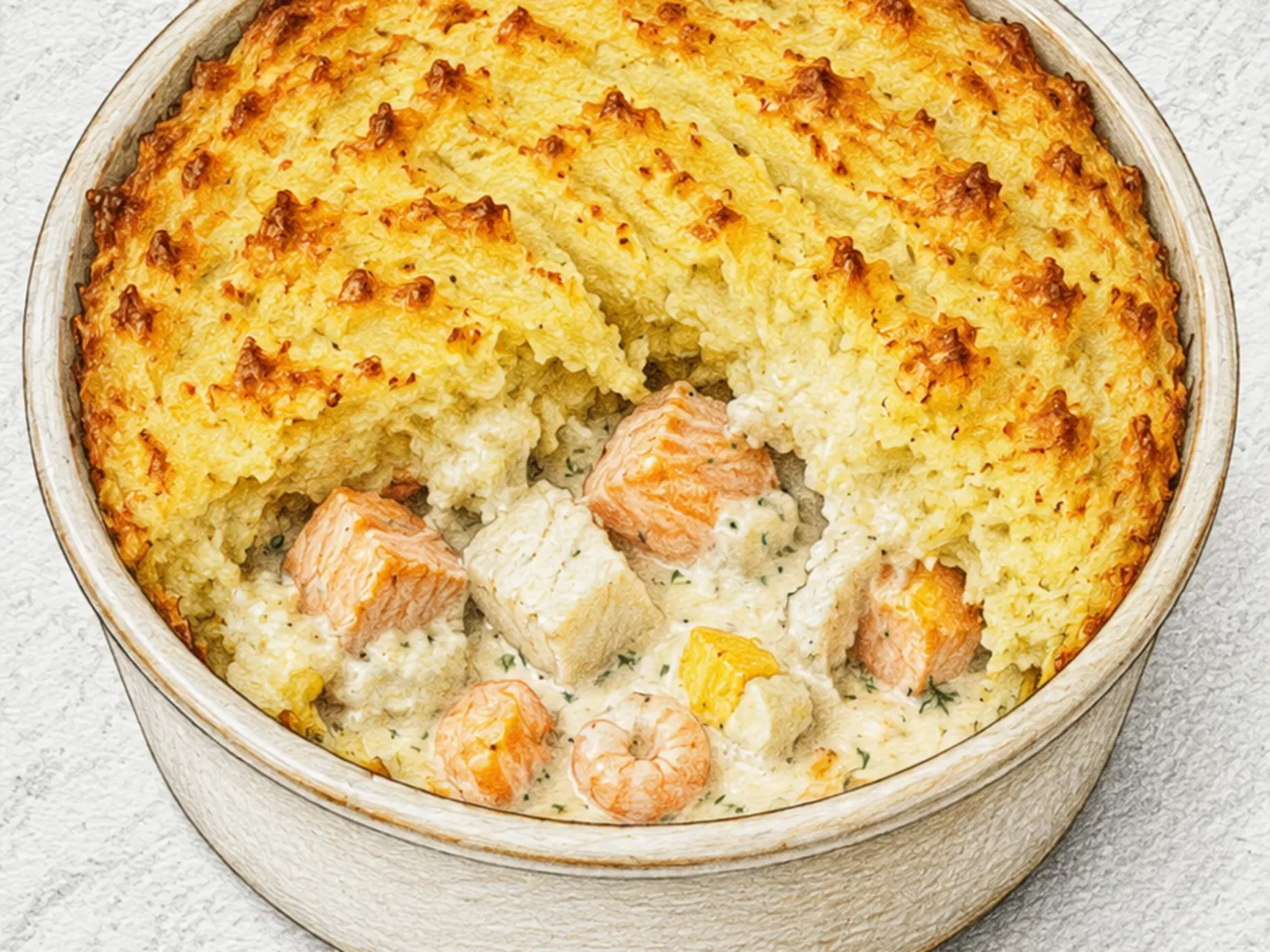
Fish pie is a staple of British home cooking, particularly during the colder months. Chunks of cod, salmon, and smoked haddock are folded into a cream sauce made with milk, butter, parsley, and a touch of English mustard, then topped with a thick layer of mashed potatoes and baked until the surface turns golden and slightly crisp. The combination of fresh and smoked fish creates layers of flavor - the cod contributes clean, mild sweetness, the salmon adds richness, and the smoked haddock provides a saline, smoky depth that permeates the sauce. Peeled prawns and halved boiled eggs are common additions that make the filling more substantial. In the oven, the sauce bubbles up around the edges of the potato crust, and the first scoop through the golden top reveals the creamy seafood filling beneath. It is a complete meal requiring nothing more than a side of steamed greens.

Black Tea Milk Tea (British Condensed Milk Sweet Tea)
Serve together Drinks

Black Tea Milk Tea (British Condensed Milk Sweet Tea)

Milk tea is prepared by steeping black tea bags in boiling water for exactly four minutes to extract a strong, tannic base, then combining it with whole milk and condensed milk over low heat. Steeping shorter than four minutes leaves the tea pale and thin; longer than four minutes introduces bitterness and astringency that no amount of milk can fully mask. The milk rounds out the tea's sharpness and adds a creamy body, while condensed milk layers on a dense, caramel-like sweetness that sets this version apart from tea simply sweetened with sugar. Regular sugar dissolved early provides the baseline sweetness, and the condensed milk fine-tunes the richness and texture in the final moments. Warming the milk before combining it with the brewed tea helps both blend more smoothly. For an iced version, the mixture must be cooled completely before pouring over ice, since adding hot liquid directly to ice dilutes the drink and washes out the flavor.

Bubble and Squeak (Pan-Fried Mashed Potato and Cabbage Cake)
Similar recipe Western

Bubble and Squeak (Pan-Fried Mashed Potato and Cabbage Cake)

Bubble and squeak is a traditional British household dish made by combining mashed boiled potatoes with blanched, chopped cabbage, pressing the mixture flat in a well-oiled hot pan, and frying each side until a deep golden-brown crust forms across the entire surface. The name refers to the noise the dish makes during cooking - moisture from the cabbage hits the hot fat and sends up bubbles and a squeaking hiss. Frying diced onion in butter until soft and lightly caramelized before folding it into the potato-cabbage mixture adds a quiet sweetness that elevates the otherwise modest base ingredients considerably. Pressing the mixture firmly and evenly with a spatula throughout cooking is what creates the crust, and holding back the urge to move or flip it prematurely is the main technique. If the potatoes are particularly wet, a tablespoon or two of plain flour helps the mixture bind and hold its shape in the pan. The dish has been a fixture of British home cooking for generations, rooted in the tradition of using leftover Sunday roast vegetables the following day, and is commonly topped with a fried egg to make a complete one-plate meal.

Serve with this

Pork Bossam Apple Mustard Salad
Salads Medium

Pork Bossam Apple Mustard Salad

Bossam apple mustard salad uses thinly sliced cold boiled pork belly as its main component, arranged over shredded cabbage, cucumber, and crisp apple slices, then finished with a sharp mustard-soy vinaigrette. Chilling the boiled pork completely before slicing is not optional: warm pork crumbles under the knife, while cold pork yields clean, even cuts that hold their shape on the plate. Cabbage and cucumber provide a firm, crunchy base whose texture directly contrasts with the soft, fatty pork, and the apple slices introduce a cool sweetness along with a welcome burst of moisture. Korean hot mustard, dissolved generously into a soy-vinegar dressing, releases a nasal, sinus-clearing heat with each bite that cuts through the richness of the pork fat without the acidity becoming the dominant note. Perilla leaves placed underneath the pork act as both a flavoring layer and a suppressor of any residual pork odor, their herbal intensity complementing the mustard without competing with it. The salad works equally well as a standalone meal and as a second-day use for leftover bossam from the previous night, which is one reason it appears in Korean home kitchens as often as it does.

🥗 Light & Healthy 🎉 Special Occasion
Prep 22min Cook 8min 4 servings
Yuja Shrimp Basil Linguine
Pasta Easy

Yuja Shrimp Basil Linguine

Yuja shrimp basil linguine is a light oil-based pasta that keeps shrimp at the center of attention by handling them quickly and carefully. After deveining and thoroughly patting dry, the shrimp are seared in olive oil just until both sides turn pink, pulling them from the pan within three minutes total to preserve their springy, snapping bite. Prolonged heat is the enemy of shrimp texture, so they are removed and returned only when the pasta is nearly ready. The aromatic base begins with garlic and red pepper flakes sauteed over low heat in olive oil until fragrant but not colored, a process that infuses the fat with a gentle heat and a savory depth. A splash of white wine goes in next and cooks off quickly, adding a clean acidity and lifting the browned bits from the pan. Yuja marmalade contributes a distinct citrus sweetness, but the sugar content varies considerably between brands, so it is added incrementally and tasted as it goes. Three tablespoons of starchy pasta cooking water emulsify the oil and marmalade into a light sauce that clings to every strand of linguine without feeling heavy. Basil leaves are folded in off the heat to protect their volatile aromatic oils, so their fresh herbal fragrance layers over the yuja's bright citrus without any loss.

🎉 Special Occasion ⚡ Quick
Prep 12min Cook 15min 2 servings
Candied Tangerine Peel (Korean Citrus Honey Confection)
Desserts Medium

Candied Tangerine Peel (Korean Citrus Honey Confection)

Gyul jeonggwa is a traditional Korean confection made by cutting tangerine peels into 0.8 cm strips with a moderate amount of white pith left on, blanching the strips twice in salted water to eliminate bitterness, then cooking them low and slow in a syrup of sugar, honey, and cinnamon for thirty-five to forty minutes. Keeping the pith is deliberate: it holds the essential citrus oils that define the candy's fragrance, so trimming too much away produces a noticeably flatter result. The longer the peels simmer, the more completely they turn translucent, pulling syrup into every layer of fiber until the texture becomes dense and springy, close to a firm fruit jelly. Lemon juice added toward the end of cooking performs two functions: it inhibits crystallization of the syrup as it cools, and its acidity trims back the sweetness for a cleaner finish. Draining the pieces and resting them on a rack for an hour produces a dry, non-tacky surface that holds its shape well.

🧒 Kid-Friendly 🎉 Special Occasion
Prep 25min Cook 70min 4 servings

Similar recipes

Fish and Chips
Western Medium

Fish and Chips

Fish and chips began in the seaside towns of England and grew into one of the most recognized British dishes worldwide. A fillet of cod or haddock is dipped in a batter made with beer or sparkling water, then fried at high heat until the coating turns golden, crisp, and shatteringly light. The carbonation in the batter creates tiny air pockets during frying, producing a shell that is crunchy without being heavy or greasy. Inside, the fish remains moist and flakes cleanly along its natural grain. The chips - thick-cut potatoes fried twice - develop a golden crust around a fluffy, starchy interior. Malt vinegar splashed over the hot fish cuts through the oil with sharp acidity, and traditional accompaniments include mushy peas and tartar sauce. Eating them wrapped in paper, standing at the harbor, remains the definitive experience.

🍺 Bar Snacks 🎉 Special Occasion
Prep 20min Cook 20min 2 servings
Victoria Sponge Cake (British Jam and Cream Layered Cake)
Baking Medium

Victoria Sponge Cake (British Jam and Cream Layered Cake)

Equal weights of butter and sugar are creamed together, then eggs and cake flour are added to produce two round sponge layers that are sandwiched with strawberry jam and whipped cream - the defining structure of this classic British cake. Named after Queen Victoria, the cake is deliberately simple in presentation: no elaborate frosting or tiered decoration, just a dusting of powdered sugar on top. Thorough creaming is essential to a light rise, and room-temperature eggs integrate into the batter without curdling. The jam provides a bright, tart contrast to the buttery sponge, while the whipped cream softens each bite with cool richness. Both layers must cool completely before assembly, as warm sponge melts the cream and causes the filling to slide. Refrigerated, the cake stays moist through the next day, and the jam and cream flavors deepen as they settle into the sponge overnight. It is the standard cake served at British afternoon teas and garden parties.

🎉 Special Occasion 🧒 Kid-Friendly
Prep 25min Cook 25min 4 servings
Eton Mess (Crushed Meringue, Cream & Strawberry Mix)
Baking Easy

Eton Mess (Crushed Meringue, Cream & Strawberry Mix)

Eton mess is a British dessert originating from Eton College, made by roughly folding together broken meringue, whipped cream, and strawberries into a deliberate, unstudied jumble. The name comes from the method itself: there is no careful layering or presentation, just a generous combination of three components mixed loosely in a glass or wide bowl. The meringue is baked low and slow until the outside develops a firm, crisp shell while the inside stays soft and marshmallow-like, then cooled completely before being broken by hand into irregular shards of varying sizes. Strawberries are treated in two ways: some are crushed roughly with a fork so the juice bleeds in red streaks through the white cream, while others remain whole to provide fresh, firm bites of fruit. The heavy cream is whipped only to soft, billowy peaks so it folds around the meringue and fruit loosely rather than sitting in stiff mounds. Every spoonful delivers a different ratio of crunch, softness, tartness, and sweetness depending on which pieces land together, which is the pleasure of the dessert. Because the cream and fruit juices begin softening the meringue the moment they are combined, Eton mess must be assembled and eaten immediately to preserve the textural contrast between crisp and soft.

🧒 Kid-Friendly 🎉 Special Occasion
Prep 15min Cook 60min 4 servings

Tips

Good quality pork sausages are the key to this dish.

Nutrition (per serving)

Calories
620
kcal
Protein
28
g
Carbs
48
g
Fat
35
g