Korean Seasoned Coastal Hogfennel Greens
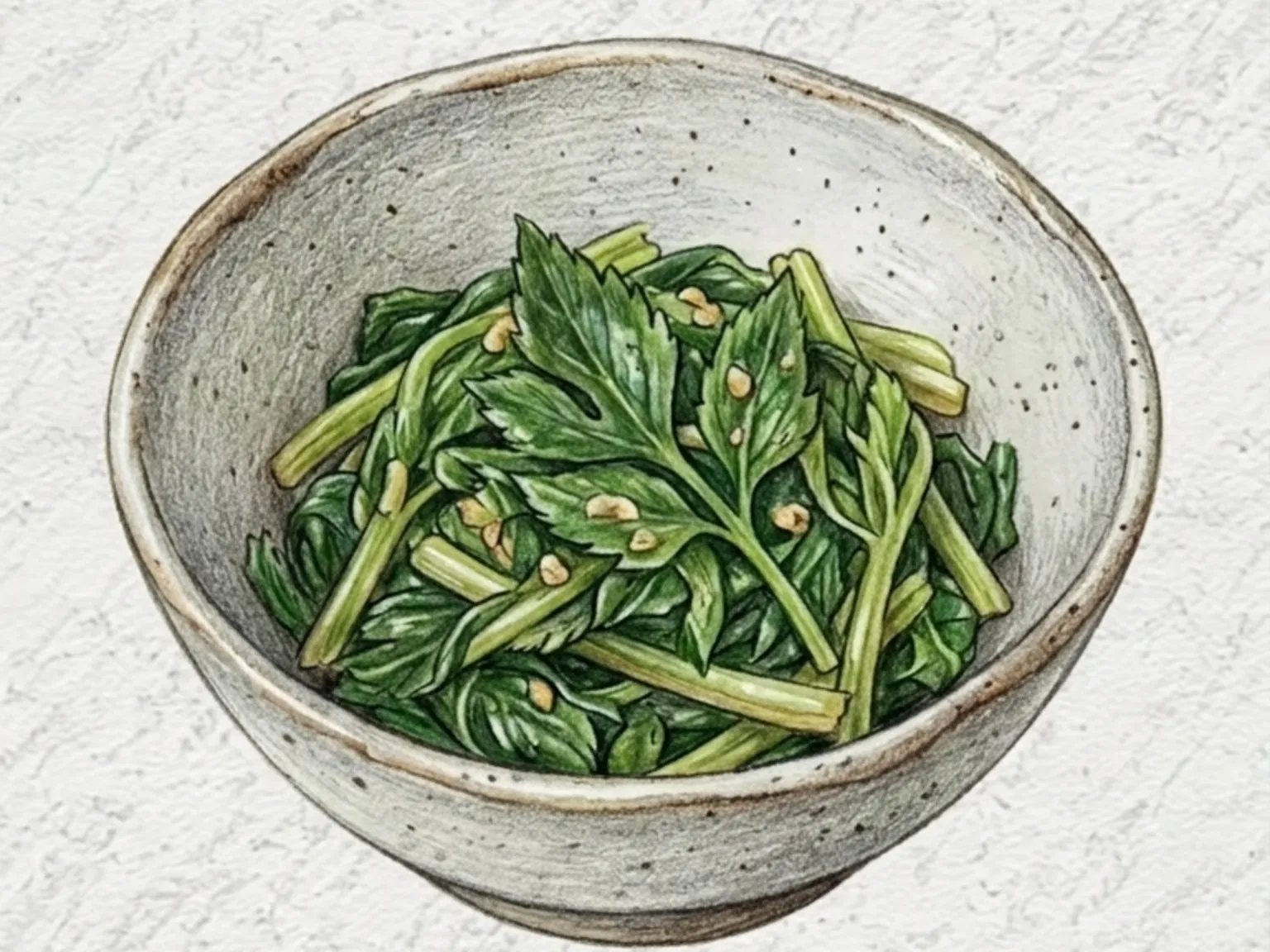
Coastal hogfennel - bangpung - is a wild herb from Korea's seaside cliffs, prized for its pungent, celery-like aroma. Blanched one minute in salted water to tame bitterness while preserving herbal fragrance, the greens are dressed simply with doenjang, garlic, and sesame oil. Minimal seasoning lets the herb's character lead. A seasonal specialty from spring markets in coastal regions like Gangwon-do and Jeju.
Adjust Servings
Instructions
- 1
Trim tough stems from bangpung greens and wash.
- 2
Blanch in salted boiling water for 1 minute, then rinse in cold water.
- 3
Squeeze dry and cut into bite-size pieces.
- 4
Mix doenjang, garlic, and sesame oil.
- 5
Toss greens with seasoning and sprinkle sesame seeds.
As an Amazon Associate, we may earn from qualifying purchases.
Tips
Nutrition (per serving)
More Recipes

Korean Seasoned Radish Greens Namul
Dried radish greens are soaked, boiled until pliable, and dressed in a seasoning anchored by doenjang and ground perilla seeds. The drying process concentrates the fiber in the greens, giving them a satisfying chew that persists even after boiling: the outer layer turns silky while the inner stem retains a springy resistance. Doenjang supplies the salty, fermented backbone, and ground perilla seeds melt into a creamy coating that softens the roughness of the greens on the palate. A generous pour of perilla oil ties the dressing together, adding a glossy sheen and a rich, nutty fragrance. Minced garlic and chopped green onion introduce a sharp aromatic layer that cuts through the heaviness. Each bite releases more of the siraegi's own deep, vegetal flavor, a taste that builds rather than fades. Paired with steamed rice, the doenjang's salinity and the perilla's richness draw out the natural sweetness of the grain.

Korean Seasoned Rapeseed Greens
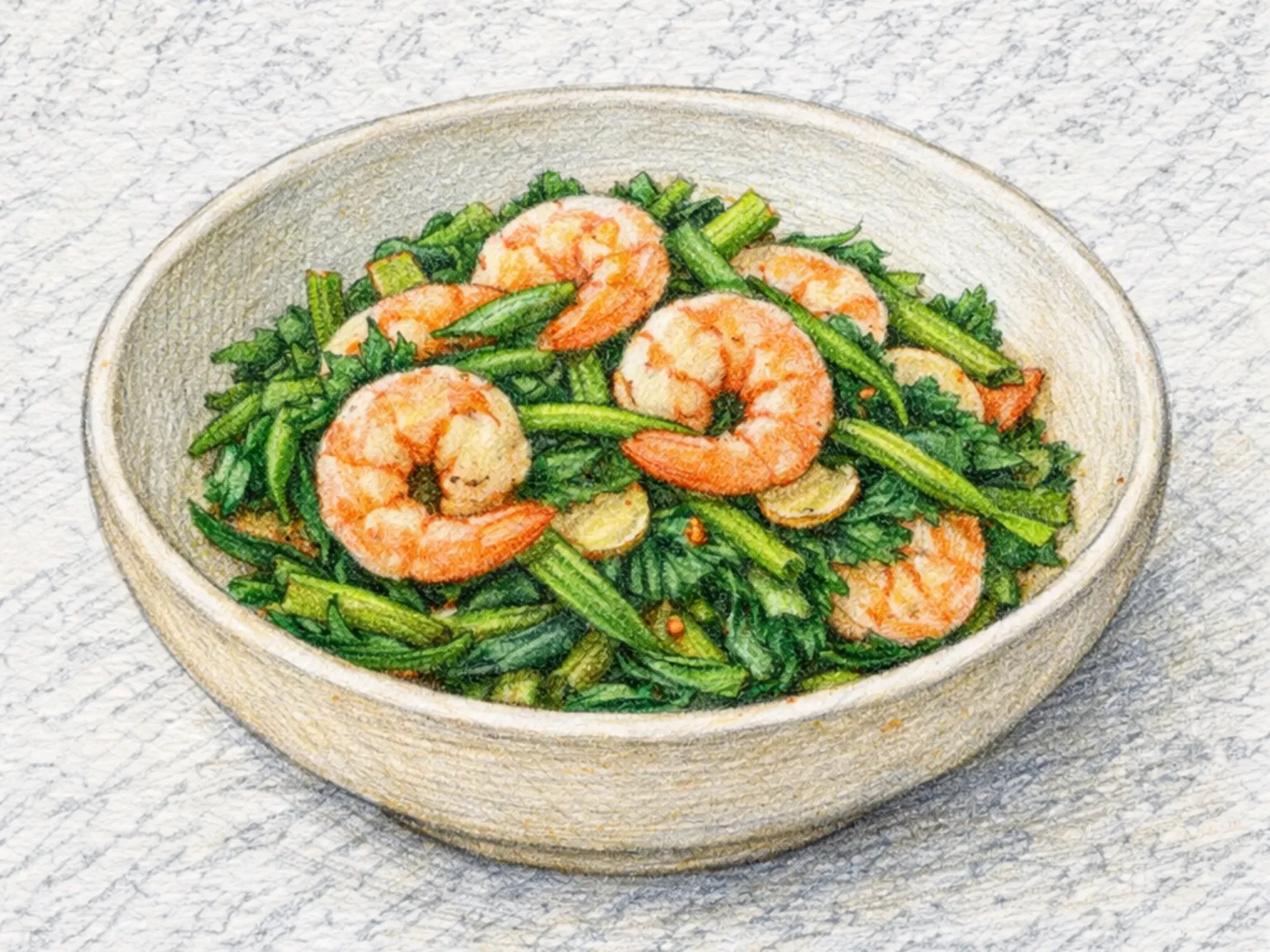
Young rapeseed greens are blanched for just 40 seconds in salted water, then squeezed dry and tossed with doenjang, minced garlic, green onion, sesame oil, and ground sesame. The brief blanching preserves the stems' gentle snap, and the fermented soybean paste brings an earthy depth that pairs naturally with the greens' mild grassy flavor. Squeezing out excess water before seasoning keeps the dressing concentrated on each piece rather than pooling at the bottom. From prep to plate, this banchan takes under fifteen minutes.

Korean Seasoned Swiss Chard Namul
Geundae - Swiss chard in Korean kitchens - has been used in doenjang soup and namul for generations. Because the stems are substantially thicker than the leaves, they are blanched separately: stems go in first for thirty seconds, then leaves join for another thirty. After squeezing dry, the greens are hand-dressed with doenjang, soup soy sauce, garlic, and perilla oil, allowing the fermented paste's earthy depth to merge with chard's faintly bitter, mineral flavor. Perilla powder stirred in last thickens the dressing into a clinging coating without adding liquid. Chard leaves hold up better than spinach after dressing, making this namul a sturdy banchan that does not wilt quickly.

Korean Seasoned Mallow Greens
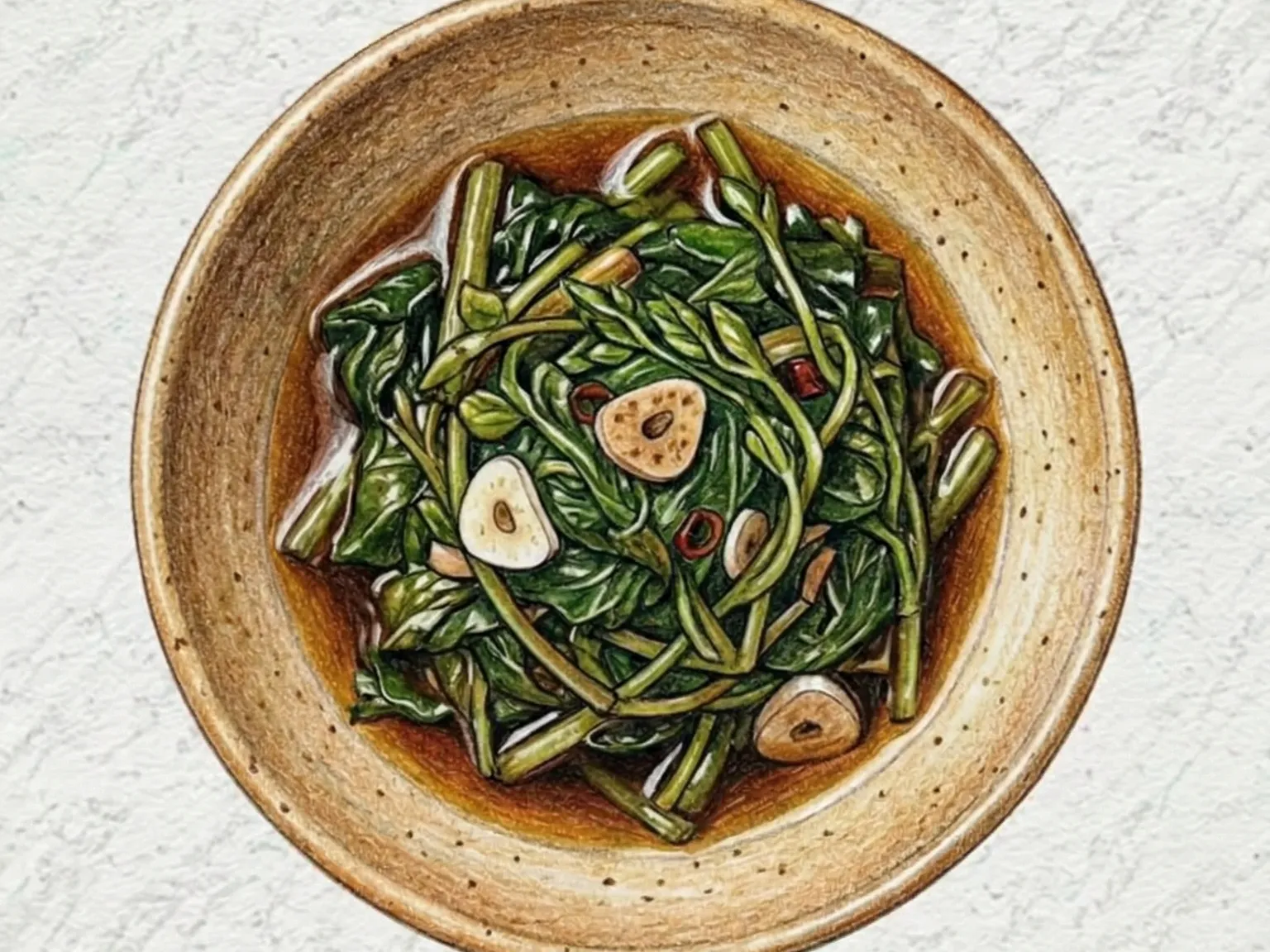
Mallow greens have appeared in Korean cooking since the Joseon era, typically in doenjang-guk. For this namul, they are blanched just 40 seconds - supple but not collapsed. After squeezing dry, they are rubbed gently with doenjang, soup soy sauce, and garlic so the fermented paste penetrates the porous leaves. A finish of sesame oil adds a glossy coating. The distinctive mucilaginous quality - slightly slippery on the tongue - sets this apart from other Korean greens.

Korean Coastal Hogfennel Kimchi
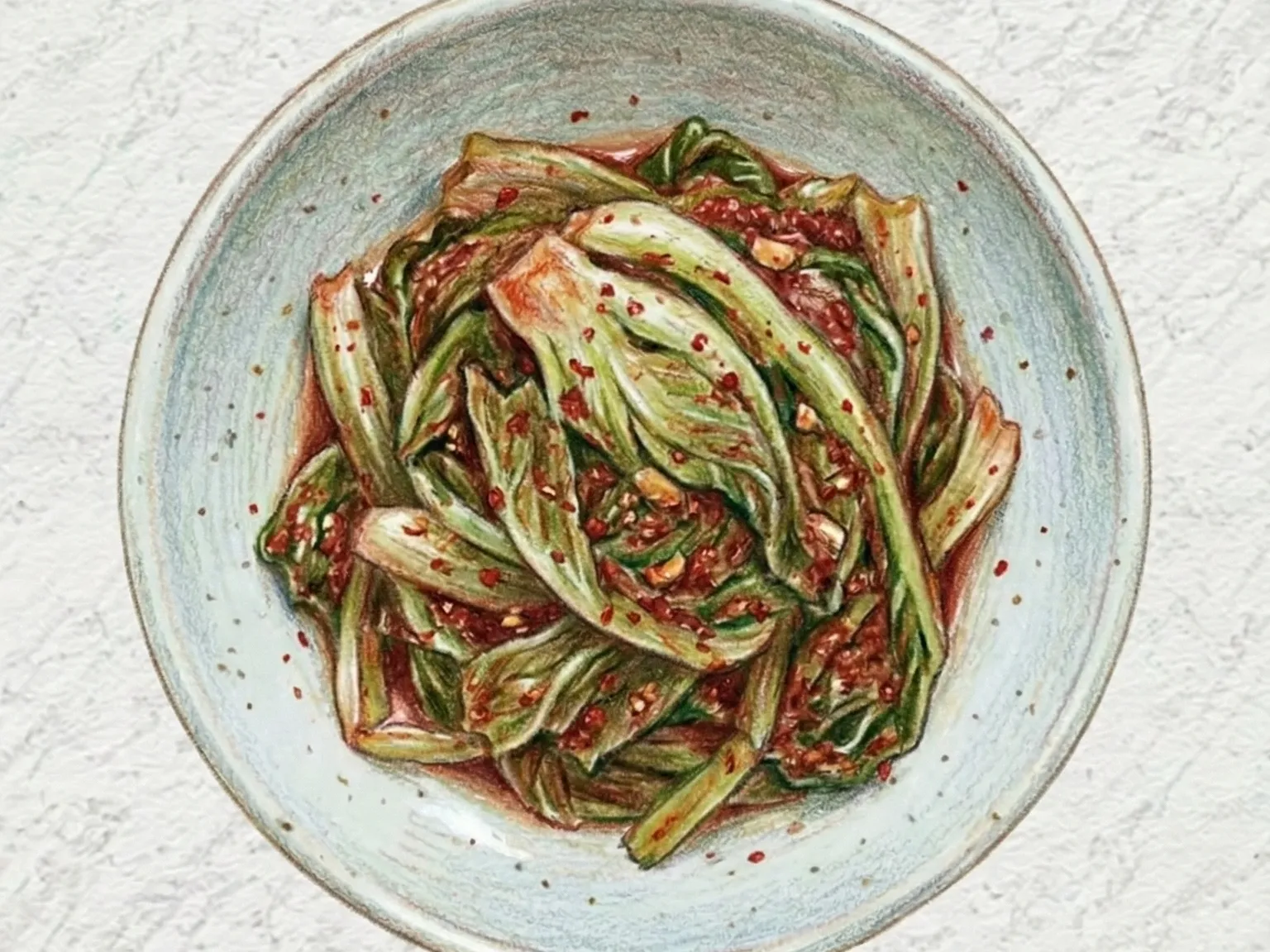
Bangpungnamul kimchi is a seasonal Korean kimchi made by dressing coastal hogfennel herb in a chili-based seasoning paste. The herb is first lightly salted to soften its fibers, then mixed with Korean chili flakes, anchovy fish sauce, soup soy sauce, minced garlic, and ginger. Sweet rice paste acts as a binder, helping the seasoning adhere evenly to each leaf. Sliced scallions are folded in for a crisp textural element. The herb's natural bitterness mellows noticeably during fermentation, producing a flavor profile distinct from standard napa cabbage kimchi. One day at room temperature followed by refrigerated storage achieves a balanced level of fermentation that preserves the herb's character while developing lactic acidity.

Korean Coastal Herb Pickle
Bangpungnamul jangajji is a Korean soy-pickled side dish made from coastal hog fennel, a spring herb with a distinctive fragrance and mild bitterness. The pickling liquid is prepared by boiling soy sauce, water, vinegar, and sugar together, then pouring it hot over the cleaned herb in a jar. Garlic cloves and ginger slices added to the brine contribute additional aromatic depth. After about two days of marination, the herb absorbs enough of the soy-vinegar liquid to become flavorful, and the taste continues to develop over subsequent weeks. The pickle keeps for over a month under refrigeration and is served in small portions alongside rice. Its pungent, slightly bitter character acts as a palate stimulant between bites of milder dishes.