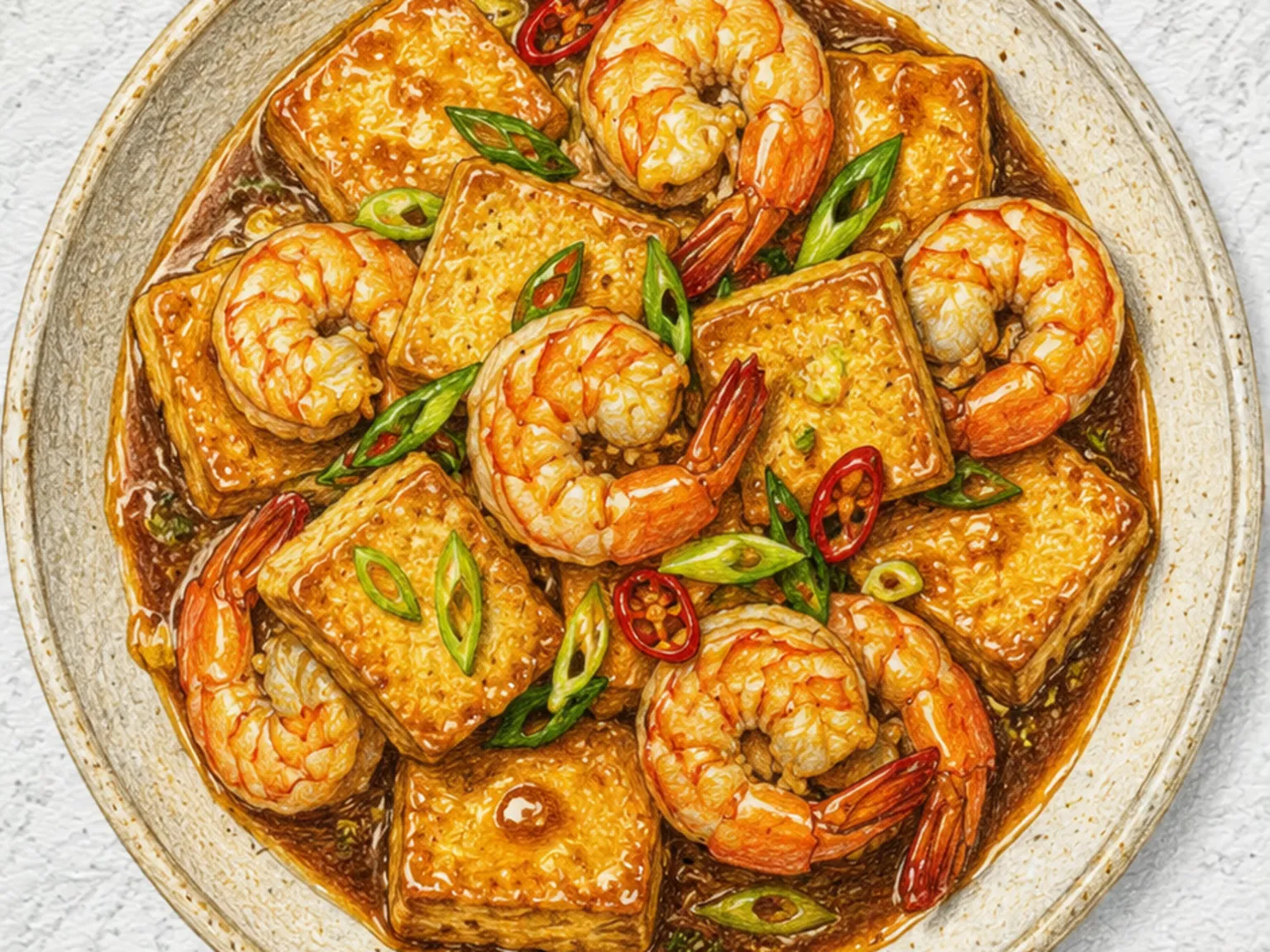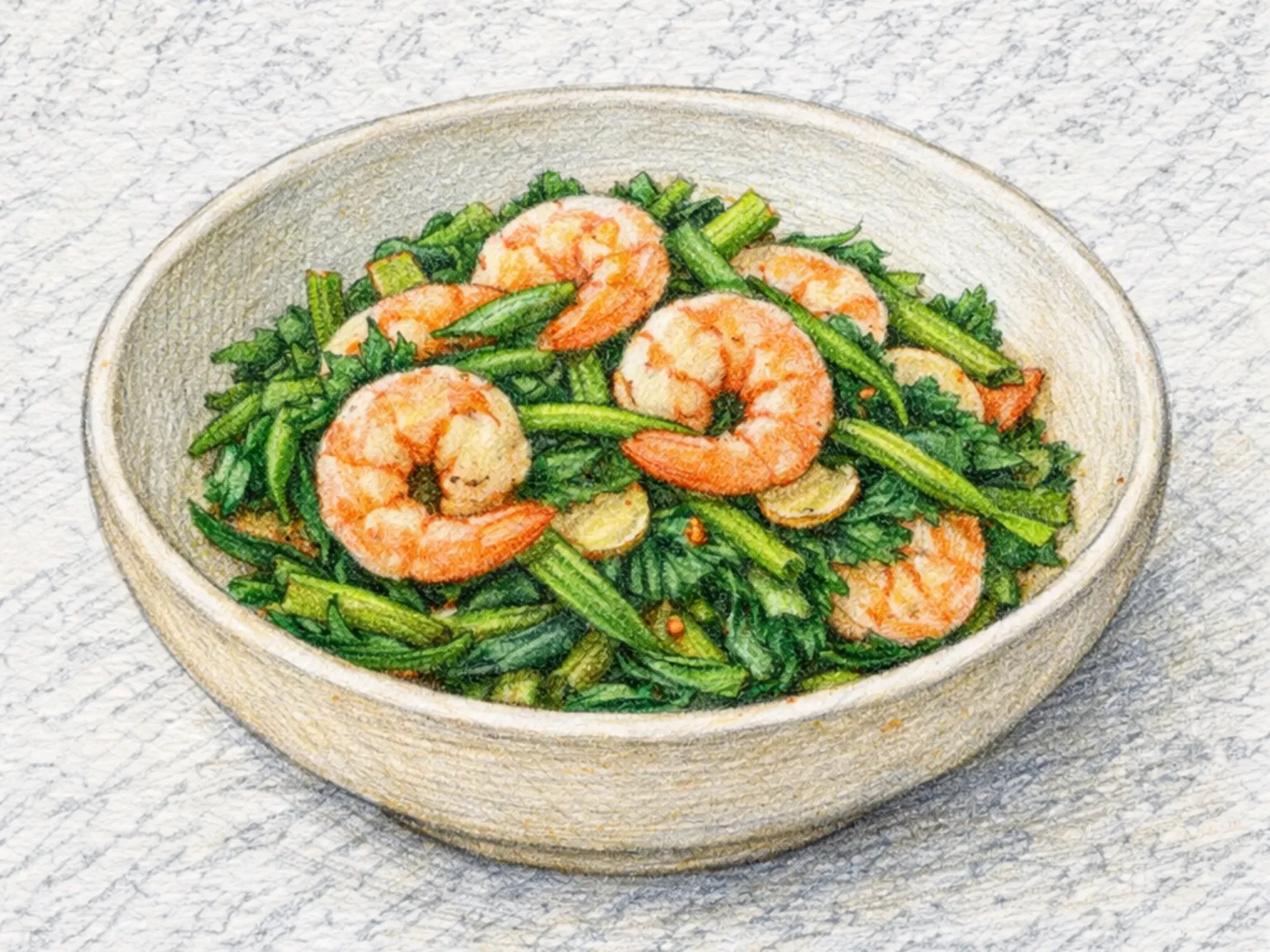
Korean Sea Breeze Herb Shrimp Stir-fry
Stir-fry Medium

Korean Sea Breeze Herb Shrimp Stir-fry

Quick answer

Bangpungnamul saeu bokkeum is a Korean stir-fry that pairs coastal hogfennel, a pungent spring herb, with medium-sized shrimp over sustained high heat.

What makes this special

  • Coastal hogfennel herb adds a pungent, bitter edge to seared shrimp and cooking wine.
  • Spring bangpung herb's bitter edge balances shrimp umami without sauce
  • Bangpung loses its aroma quickly; high-heat, short time is the key technique
Total time
23 min
Level
Medium
Servings
2 servings
Ingredients
9
Calories
254 kcal
Protein
28 g

Key ingredients

sea breeze herbmedium shrimpred chiligreen onioncooking wine

Core cooking flow

  1. 1 Remove shells and devein 220 g of medium shrimp, then marinate with 1 tables...
  2. 2 Trim the tough stem ends of 140 g of sea breeze herb and cut into 5 cm pieces.
  3. 3 Heat 1 tablespoon of cooking oil in a pan over high heat, add 40 g of scalli...

Bangpungnamul saeu bokkeum is a Korean stir-fry that pairs coastal hogfennel, a pungent spring herb, with medium-sized shrimp over sustained high heat. The shrimp are first splashed with cooking wine to eliminate off-flavors, then seared in oil and removed from the pan. Minced garlic is sweated in the residual oil before the hogfennel and sliced red chili are added and tossed rapidly - the herb loses its characteristic bitterness quickly if it lingers on heat. Soy sauce and sesame oil go in next for seasoning, and the shrimp are returned for a final toss to integrate everything without overcooking the proteins. The herb's slightly bitter, aromatic edge contrasts with the natural sweetness of the shrimp to produce a balanced flavor that needs no additional sauce. From start to finish the dish takes under nine minutes, and its low calorie count makes it a practical light banchan alongside rice.

Prep 14min Cook 9min 2 servings

Instructions

Read the steps as a cooking flow: prep, heat, seasoning, doneness control, and finish.

6 steps
  1. 1
    Heat

    Remove shells and devein 220 g of medium shrimp, then marinate with 1 tablespoon of cooking wine and 1 teaspoon of minced garlic for 5 minutes. The cooking wine removes any fishy smell while the garlic adds aroma.

  2. 2
    Prep

    Trim the tough stem ends of 140 g of sea breeze herb and cut into 5 cm pieces.

    The leaves are delicate and wilt quickly in the pan, so have them ready to add at the end.

  3. 3
    Control

    Heat 1 tablespoon of cooking oil in a pan over high heat, add 40 g of scallion and 20 g of red chili, and stir-fry for 30 seconds to release their aroma.

  4. 4
    Control

    Add the marinated shrimp and stir-fry over medium heat for 2.5 minutes.

    When the shrimp curl into a half-moon shape and turn pink, they are about half cooked.

  5. 5
    Control

    Add 1 tablespoon of soy sauce and the sea breeze herb, then stir-fry briskly over high heat for 1.5 minutes.

    Prepare to remove from heat while the herb still holds its bright green color.

  6. 6
    Finish

    Turn off heat and drizzle in 1 teaspoon of sesame oil, tossing gently.

    Once the sesame aroma rises from the residual heat, plate and serve immediately.

After the steps

Pick a recipe that fits this dish.

Continue with shared ingredients, meal pairings, or a similar method.

Recipes That Go Well With This

More Stir-fry →

Based on shared ingredients and meal pairing

Korean Napa Cabbage Shrimp Stir-fry
Shared ingredient: green onion Stir-fry

Korean Napa Cabbage Shrimp Stir-fry

Baechu saeu bokkeum is a Korean stir-fry of napa cabbage and medium shrimp seasoned with soy sauce and fish sauce. The shrimp are deveined and scored along the back so they curl attractively and absorb seasoning more readily. They go into a hot oiled pan first for thirty seconds to sear the surface, then are removed while the cabbage stems are stir-fried until slightly wilted. Soy sauce, fish sauce, and minced garlic are added along with the cabbage leaves, and the shrimp return to the pan for a final thirty-second toss so everything seasons evenly. Sliced cheongyang chili and scallion go in last for a hit of heat and freshness. The entire stir-fry stays under three to four minutes of active cooking, which preserves the crunch of the cabbage stems and the firm bite of the shrimp. The combination of soy sauce and fish sauce provides a layered saltiness that brings out the natural sweetness of both the cabbage and the shrimp.

Korean Crisp Chili Pepper Salad
Serve together Side dishes

Korean Crisp Chili Pepper Salad

Asakigochu is a specific variety of Korean pepper characterized by its thick walls and a distinct snap when bitten. This pepper was developed to prioritize texture over spiciness, resulting in a vegetable that offers a significant crunch without the heat of other varieties. The preparation of this dish involves a brief blanching process where the peppers are submerged in boiling water for a duration of exactly twenty seconds. This short exposure to heat is sufficient to eliminate the raw, grassy aroma often found in uncooked peppers, yet it is not long enough to soften the cellular structure. Consequently, the characteristic crispness remains unchanged. The seasoning sauce is a mixture of two traditional fermented pastes. Doenjang provides a salty and fermented depth, while gochujang adds complexity. To balance these heavy flavors, vinegar is added for sharpness and oligosaccharide syrup is used to adjust the consistency and add a subtle sweetness. This combination creates a contrast between the deep, funky notes of the fermented beans and a bright acidity that highlights the clean taste of the pepper. Timing is important for the final result. It is best to allow the seasoned peppers to rest for five minutes before serving. This pause allows the flavors from the thick sauce to soak into the pepper walls instead of simply sitting on the exterior. This side dish functions well as a standard accompaniment to a bowl of rice or as a more fullly flavored snack to be consumed while drinking soju.

Korean Beef Fried Rice (Soy-Marinated Ground Beef Stir-fried Rice)
Serve together Rice

Korean Beef Fried Rice (Soy-Marinated Ground Beef Stir-fried Rice)

Sogogi bokkeumbap stir-fries soy-marinated ground beef with diced vegetables and day-old rice over high heat for a deeply savory fried rice. The beef goes in first, rendering its fat and leaving behind a flavorful fond that coats the pan. Onion, carrot, and zucchini follow, cooking just until their edges soften and their natural sugars begin to caramelize. Cold rice is added and tossed vigorously to break up clumps, picking up the soy seasoning and meat juices as it fries. A final drizzle of sesame oil right before plating adds a fragrant, nutty finish. The beef infuses the rice with a meaty depth while the vegetables keep the dish from feeling heavy, making it a quick, satisfying meal from everyday pantry ingredients.

Korean Kollabi Saeu Bokkeum (Kohlrabi Shrimp Stir-fry)
Similar recipe Stir-fry

Korean Kollabi Saeu Bokkeum (Kohlrabi Shrimp Stir-fry)

Kolrabi saeu bokkeum is a quick stir-fry of shrimp marinated in cooking wine and julienned kohlrabi, cooked over high heat in garlic-infused oil and seasoned with soy sauce and oyster sauce. Spreading the shrimp in a single layer and letting one side sear properly before flipping is the key to a firm, bouncy texture rather than a steamed one. Kohlrabi, a cross between turnip and cabbage, brings a natural sweetness and firm crunch that pairs well with the shrimp, and keeping the cooking time short preserves that crisp bite. Red bell pepper adds a contrasting color to the dish, and the deep savory quality of oyster sauce amplifies the shrimp's natural sweetness. Preheating the pan thoroughly before adding ingredients prevents excess moisture from releasing, which keeps the stir-fry dry and the textures distinct. Scallion and a finish of sesame oil round out the dish. The calorie count is low relative to the protein content, making it a practical side dish for everyday meals.

Serve with this

Korean Seaweed Winter Soup
Soups Easy

Korean Seaweed Winter Soup

Maesaengi-guk is a winter soup made with capsosiphon, a fine, thread-like green seaweed harvested along Korea's southern coast from December to February. Garlic is briefly sauteed in sesame oil, anchovy stock is poured in, and the seaweed is added and loosened with chopsticks to prevent clumping. The entire cooking time after adding the maesaengi is only three to four minutes; any longer and its delicate ocean aroma fades. After turning off the heat, the soup rests for two minutes so the seasoning of soup soy sauce and black pepper distributes evenly through the silky, deep-green broth.

🥗 Light & Healthy 🏠 Everyday
Prep 12min Cook 15min 4 servings
Korean Turnip Perilla Seed Stew
Stews Easy

Korean Turnip Perilla Seed Stew

Sunmu deulkkae jjigae is a gentle Korean stew that simmers turnip with ground perilla seed in a kelp stock base. As the turnip cooks slowly, it softens and releases a quiet natural sweetness, while the perilla powder thickens the broth into a creamy, nutty layer that coats each spoonful. Oyster mushrooms add a chewy bite and soft tofu contributes protein, rounding out the bowl into a balanced meal on its own. Adding the perilla powder late in the cooking process preserves its aroma, and the stew should be finished within two to three minutes of the broth returning to a boil to prevent any bitterness from developing. Seasoned with soup soy sauce and a drizzle of sesame oil at the end, the result is a clean, quietly satisfying stew that is easy on the stomach.

🥗 Light & Healthy 🏠 Everyday
Prep 12min Cook 18min 2 servings

Similar recipes

Korean Seaweed Stem & Shrimp Stir-fry
Stir-fry Easy

Korean Seaweed Stem & Shrimp Stir-fry

Miyeokjulgi-deulkkae-saeu-bokkeum combines desalted seaweed stems and medium shrimp, stir-fried in perilla oil and finished with a generous coating of perilla seed powder. The seaweed stems are soaked in cold water for ten minutes to draw out excess salt, then cut into five-centimeter pieces that retain a distinctive chewy-crunchy bite throughout cooking - a textural contrast that keeps each forkful interesting against the springy shrimp. Onion and garlic are sauteed first to establish a sweet aromatic base, the shrimp are added until they turn pink, and then the seaweed stems join the pan for a quick toss over high heat. Soup soy sauce provides the only seasoning, keeping the flavor profile clean and allowing the two main ingredients to come forward. Perilla powder goes in immediately after the heat is off so its nutty, slightly grassy aroma stays fully intact through serving. The combination of perilla's earthy nuttiness and the seaweed's oceanic minerality gives this simple banchan a layered depth that reads distinctly Korean.

🥗 Light & Healthy 🏠 Everyday
Prep 18min Cook 10min 4 servings
Korean Stir-fried Chives and Shrimp
Stir-fry Easy

Korean Stir-fried Chives and Shrimp

Deveined shrimp are dried thoroughly and seared over high heat until their shells turn pink, then tossed briefly with garlic chives for a stir-fry that takes under ten minutes from cutting board to plate. Removing every trace of surface moisture before the shrimp hit the pan is the single most important step; residual water generates steam and turns the sear into a braise, leaving the shrimp pale and soft instead of lightly caramelized. Sliced garlic goes into the oil first to build an aromatic base that clings to every ingredient. One tablespoon of soy sauce paired with a teaspoon of oyster sauce amplifies the natural seafood umami without tipping the dish into excessive saltiness, and black pepper sharpens the finish. The chives must go in last and cook for no more than sixty seconds; any longer and they lose their vivid color and turn stringy. At 220 calories with 26 grams of protein per serving, this dish fills the role of a satisfying yet light side that pairs well with steamed rice or slides neatly into a packed lunch.

🏠 Everyday 🍱 Lunchbox
Prep 12min Cook 8min 2 servings
Korean Stir-fried Dried Shrimp
Side dishes Easy

Korean Stir-fried Dried Shrimp

Geon-saeu-bokkeum transforms a handful of dried shrimp, a Korean pantry staple, into a quick, crunchy banchan that earns its reputation as a rice thief. The shrimp are dry-toasted in a pan first to drive off residual moisture, intensifying their briny aroma and building the foundation for a crisp final texture. Soy sauce, rice syrup or oligosaccharide, and garlic are added and reduced over low heat until the shrimp are wrapped in a thin, glossy sweet-salty glaze. The timing matters: the moment the syrup bubbles once, the heat must drop immediately, because leaving it even slightly too long hardens the coating into a tooth-testing shell rather than a pliable lacquer. A finish of sesame oil and whole sesame seeds adds a nutty warmth that rounds out this compact side dish. Finely sliced Cheongyang chili mixed in during the last minute produces a spicier variation, and a small handful of almonds or peanuts stirred in enriches the chew. The finished banchan keeps well in a sealed container at room temperature for several days, making it as practical as it is flavorful.

🏠 Everyday 🍱 Lunchbox
Prep 5min Cook 8min 4 servings
Korean Saeu Herb Sogeum Gui (Herb Salt Grilled Shrimp)
Grilled Easy

Korean Saeu Herb Sogeum Gui (Herb Salt Grilled Shrimp)

Saeu herb-sogeum-gui is Korean herb-salt grilled shrimp, where shell-on medium shrimp are deveined, tossed with olive oil, minced garlic, rosemary, thyme, and black pepper for ten minutes, then seared over high heat on a grill pan lined with a thin layer of coarse salt. Keeping the shells on prevents moisture loss during the intense heat, so the flesh stays moist while the shells themselves crisp into an edible, crunchy layer. Grilling on a salt bed distributes radiant heat evenly and draws surface moisture away from the shrimp, preventing the steaming effect that makes shellfish soggy. A finishing squeeze of lemon juice lifts the herb and garlic aromas while sharpening the shrimp's natural sweetness.

🍺 Bar Snacks 🥗 Light & Healthy
Prep 12min Cook 10min 2 servings

Tips

Cook shrimp briefly over higher heat to avoid toughness.
Dry the herbs well to prevent watery stir-fry.

Nutrition (per serving)

Calories
254
kcal
Protein
28
g
Carbs
7
g
Fat
11
g