Banh Cuon (Hanoi Steamed Rice Rolls with Pork and Mushroom)
Asian Hard

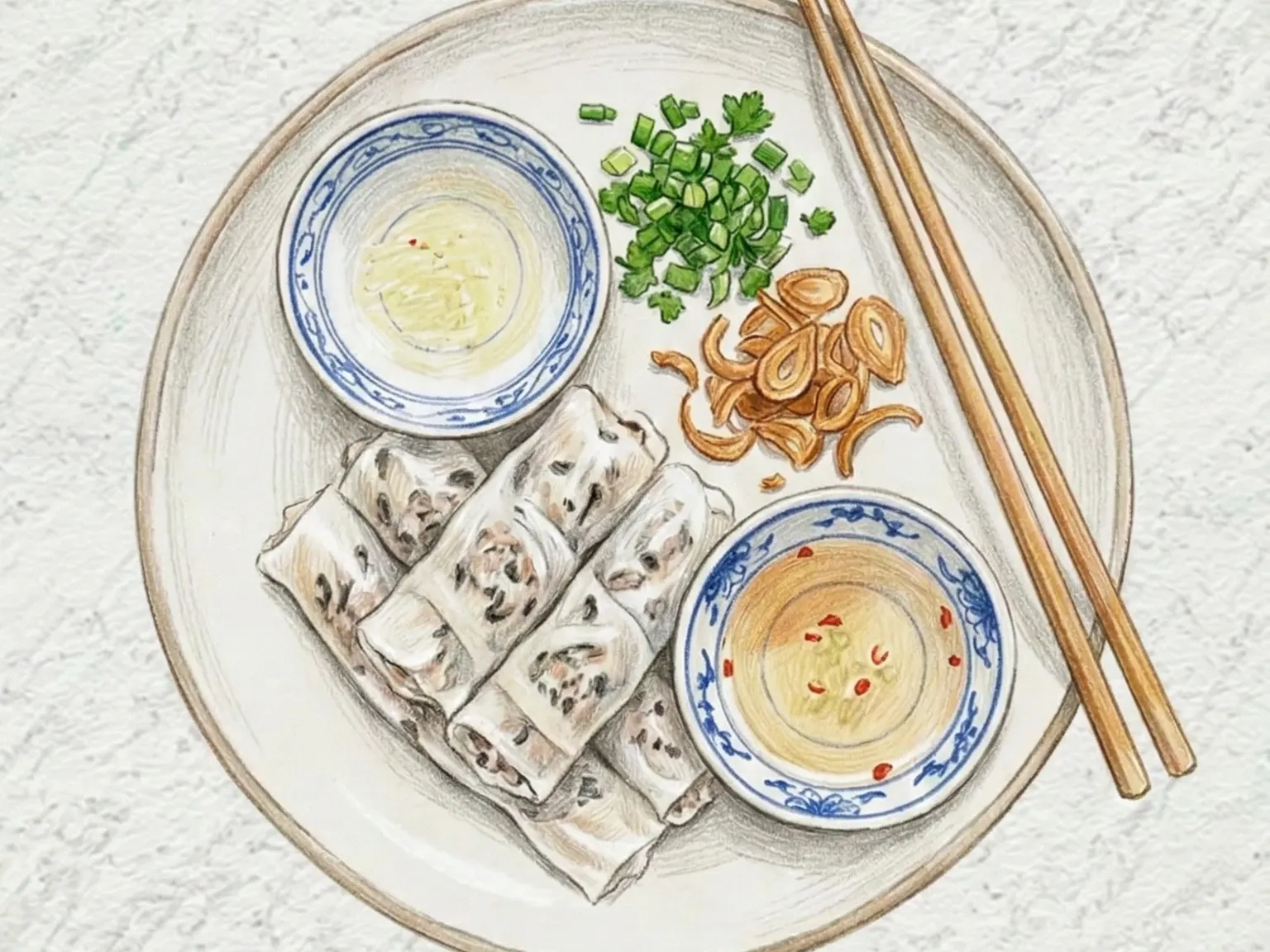
Banh Cuon (Hanoi Steamed Rice Rolls with Pork and Mushroom)

Quick answer

Banh cuon is a Hanoi breakfast specialty - translucent rice sheets steamed on fabric stretched over boiling water, then filled and rolled within seconds by practiced hands.

What makes this special

  • Banh Cuon consists of tissue-thin rice sheets steamed over cloth and rolled with minced pork.
  • Batter steamed tissue-thin on cloth over boiling water, then immediately rolled
  • Wood ear mushrooms add a crisp, bouncy counterpoint to the pork filling
Total time
55 min
Level
Hard
Servings
3 servings
Ingredients
8
Calories
420 kcal
Protein
19 g

Key ingredients

rice flourtapioca starchwaterground porkwood ear mushroom

Core cooking flow

  1. 1 Combine 220g rice flour, 30g tapioca starch, and 500ml water in a bowl and whisk until smooth.
  2. 2 Soak 40g wood ear mushrooms in water until soft and chop into 0.3cm pieces for a crunchy texture.
  3. 3 Season with 1.5 tbsp fish sauce and cook over medium heat until all moisture evaporates from the filling.

Banh cuon is a Hanoi breakfast specialty - translucent rice sheets steamed on fabric stretched over boiling water, then filled and rolled within seconds by practiced hands. The batter contains nothing but rice flour and water, spread tissue-thin to produce a wrapper so delicate it tears under rough handling. Inside sits a filling of minced pork and finely chopped wood ear mushrooms, delivering a savory, slightly crunchy core against the soft sheet. The rolls come to the table at room temperature alongside fried shallots and sliced Vietnamese sausage, with a bowl of nuoc cham for dipping. What separates banh cuon from other rice-based wraps is texture: silky and almost slippery on the tongue, with none of the resistance or chew found elsewhere.

Prep 30min Cook 25min 3 servings
Recipes by ingredient → onion fish sauce

Instructions

Read the steps as a cooking flow: prep, heat, seasoning, doneness control, and finish.

6 steps
  1. 1
    Prep

    Combine 220g rice flour, 30g tapioca starch, and 500ml water in a bowl and whisk until smooth.

    Let the thin batter rest for 20 minutes to ensure a silky and delicate texture.

  2. 2
    Heat

    Soak 40g wood ear mushrooms in water until soft and chop into 0.3cm pieces for a crunchy texture.

    Sauté with finely diced onion and 220g ground pork until the meat turns opaque.

  3. 3
    Control

    Season with 1.5 tbsp fish sauce and cook over medium heat until all moisture evaporates from the filling.

    A dry filling is essential to prevent the tissue-thin rice sheets from tearing.

  4. 4
    Control

    Pour a ladle of batter onto a steaming cloth stretched over boiling water and spread it tissue-thin.

    Cover and steam on high for 40 seconds until the sheet becomes translucent and slippery.

  5. 5
    Prep

    Use a thin rod or chopstick to carefully lift the delicate sheet without tearing it.

    Place the pork and mushroom filling in the center and roll it up smoothly into a long cylinder.

  6. 6
    Finish

    Repeat the process with the remaining batter and brush each roll lightly with oil to prevent sticking.

    Serve at room temperature with fried shallots, Vietnamese sausage, and a bowl of nuoc cham.

After the steps

Pick a recipe that fits this dish.

Continue with shared ingredients, meal pairings, or a similar method.

Recipes That Go Well With This

More Asian →

Based on shared ingredients and meal pairing

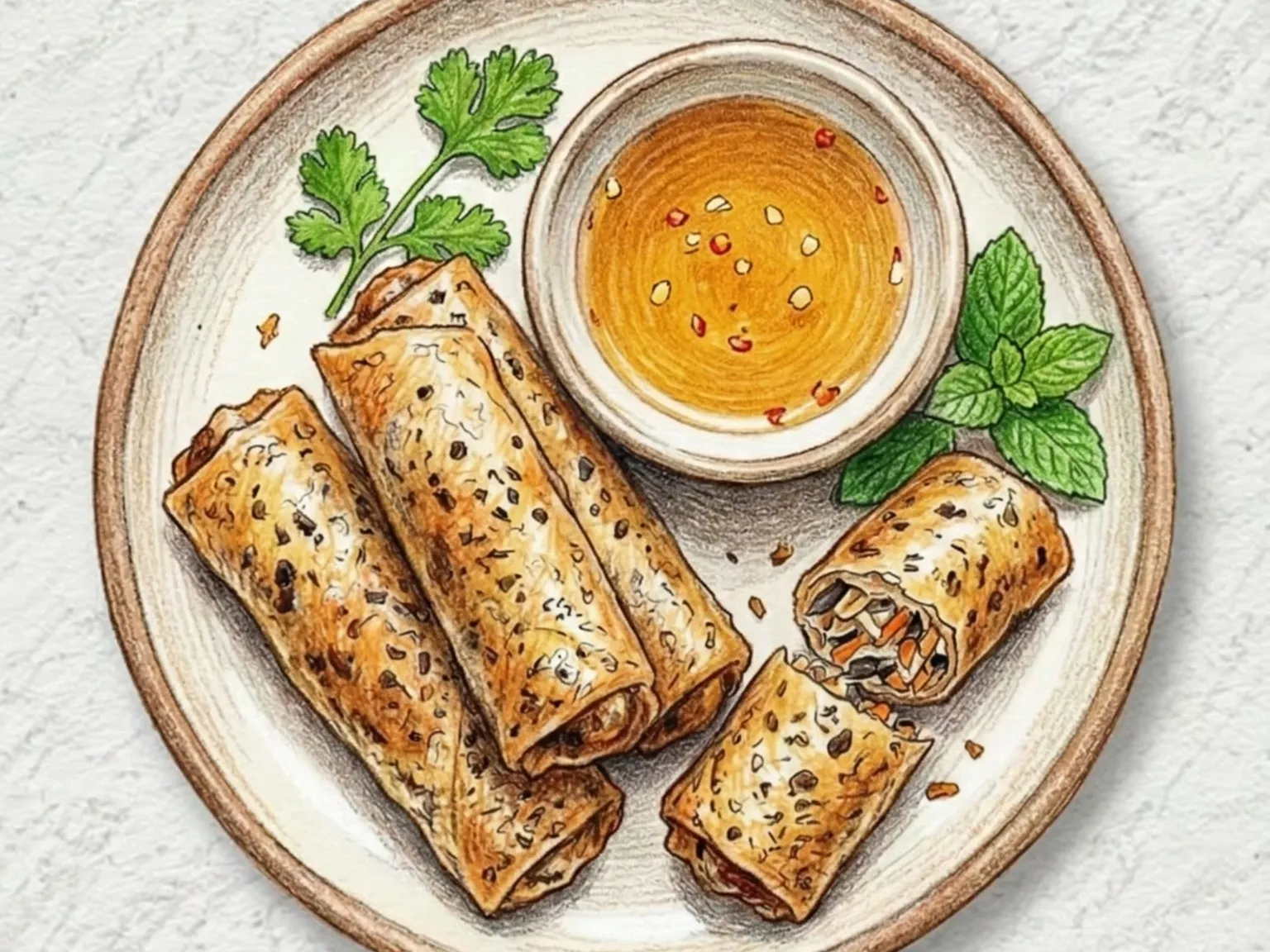
Cha Gio (Southern Vietnamese Crispy Rice Paper Spring Rolls)
Shared ingredient: pork shoulder Asian

Cha Gio (Southern Vietnamese Crispy Rice Paper Spring Rolls)

Cha gio are fried spring rolls from southern Vietnam, distinct from the north's nem ran in both wrapper and filling. Southern cooks use rice paper instead of wheat-based wrappers, which produces an exceptionally thin, blistered shell on frying - one that shatters with a louder, sharper crack than a Chinese egg roll. The filling is ground pork, shrimp, glass noodle threads, wood ear mushroom, and grated carrot, seasoned with fish sauce and black pepper. Rolling technique directly affects the result: too loose, and the roll bursts in the oil; too tight, and the filling compresses into a hard, dense core. Oil temperature is managed in two stages - the rolls go in at 160°C to cook the filling through without scorching the wrapper, then the heat rises to 180°C for a final crisping that leaves the shell nearly translucent. The traditional presentation is wrapped in mustard greens or lettuce with fresh mint, Thai basil, and perilla, then dipped in nuoc cham. In southern Vietnamese households, the Tet (Lunar New Year) preparation of cha gio is itself a ritual: the entire family gathers to roll hundreds at once, an act that marks the holiday as much as eating them does. Frozen unbaked rolls fry from frozen with almost no loss in texture.

Banh Khot Recipe  -  Crispy Vietnamese Mini Shrimp Pancakes
Shared ingredient: rice flour Asian

Banh Khot Recipe - Crispy Vietnamese Mini Shrimp Pancakes

Banh khot is a Vietnamese miniature shrimp pancake that originated in the coastal city of Vung Tau in southern Vietnam. Rice flour and coconut milk are combined into a thin batter, which is poured into the circular hollows of a specialty cast-iron griddle and covered to steam-bake until the edges crisp up and the centers set into a soft, custardy texture. One whole shrimp is pressed into each pancake while the batter is still liquid so it cooks embedded in the top. Coconut milk gives the rice batter a gentle sweetness and richness that plain rice flour lacks, and the fat in the milk contributes to the characteristic crisp edges. The pancakes are served hot, wrapped in lettuce or perilla leaves with fresh mint and Thai basil, then dipped in nuoc cham. The contrast between the hot, crispy shell and the cool, fresh herbs is central to how the dish is eaten. At home, a small egg pan or takoyaki mold can substitute for the traditional griddle.

Vietnamese Mi Quang (Turmeric Noodles with Pork and Shrimp)
Serve together Noodles

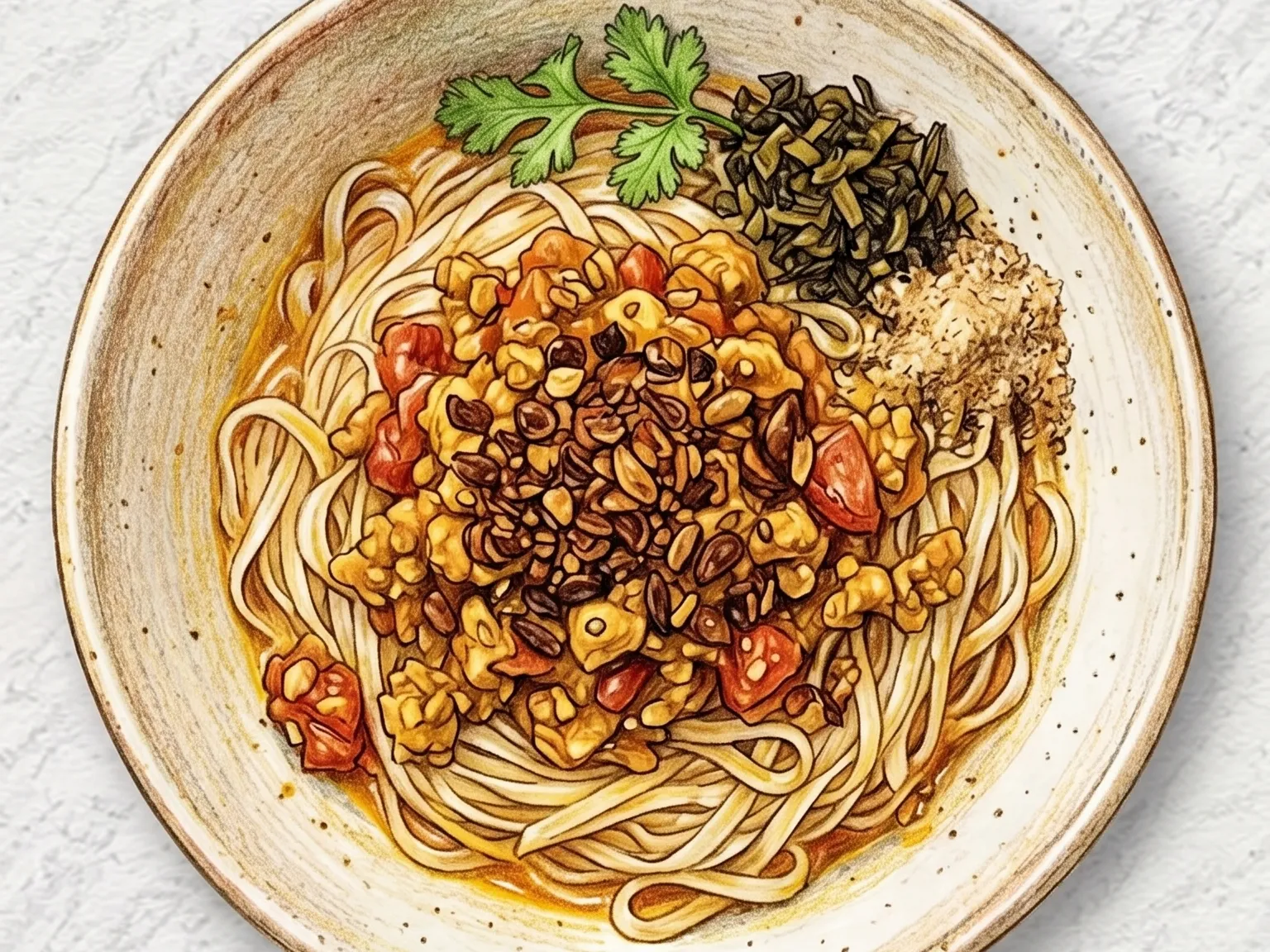
Vietnamese Mi Quang (Turmeric Noodles with Pork and Shrimp)

Mi quang is a noodle dish from the Quang Nam province in central Vietnam, built on wide, turmeric-tinted rice noodles dressed with pork, shrimp, and a deliberately small amount of intensely concentrated broth. The defining characteristic of the dish is that ratio. Where most noodle soups are meant to be submerged, mi quang uses just enough broth to moisten the noodles, making it closer to a dressed noodle than a soup bowl. Pork is marinated in fish sauce and turmeric before cooking, which simultaneously tints the meat yellow and saturates it with fermented savory depth. Simmering it briefly with chicken stock draws out a small volume of broth with a concentrated, meaty intensity that would taste overwhelmingly strong on its own but calibrates perfectly when distributed across a full serving of noodles. Shrimp are kept separate and cooked quickly by sautéing or grilling rather than simmering, which keeps them springy rather than soft. The noodles are cooked, rinsed under cold water so they do not stick, and placed in a bowl before the meat, shrimp, and broth go on top. Bean sprouts add a raw crunch that contrasts directly with the soft noodles, while crushed roasted peanuts contribute a dry, nutty texture that absorbs some of the broth. A squeeze of lime at the end sharpens the entire flavor profile and balances the richness.

Vietnamese Fresh Spring Rolls
Similar recipe Asian

Vietnamese Fresh Spring Rolls

Goi cuon, Vietnamese fresh spring rolls, are an uncooked hand-assembled dish from southern Vietnam. A sheet of rice paper softened in water serves as the wrapper for poached shrimp, sliced pork, rice vermicelli, lettuce, mint, cilantro, and garlic chives, all rolled tightly into a compact cylinder. Because the wrapper is translucent, the pink shrimp and bright herbs are visible through the exterior before the first bite, and that visual layer is part of the appeal. Two dipping sauces are standard: a thick peanut-hoisin blend whose richness suits the fatty pork, and nuoc cham, a light bright mixture of fish sauce, lime juice, sugar, and chili that works against the springy shrimp. Inside each roll, four distinct textures come together - the chewy rice paper, slippery vermicelli, firm shrimp, and leafy herbs - and none of them would work the same way if cooked. The dish requires no heat source to prepare, yet the balance of protein, starch, and fresh aromatics makes it nutritionally complete as a light meal. In Ho Chi Minh City, fresh spring rolls are sold from street carts alongside more elaborate restaurant preparations, and serving them at home means assembling at the table together, a format that brings a communal rhythm to the meal that plated dishes do not.

Serve with this

Vietnamese Lotus Stem Shrimp Salad
Salads Medium

Vietnamese Lotus Stem Shrimp Salad

Goi ngo sen is a traditional Vietnamese salad of thinly sliced lotus stem, blanched shrimp halved lengthwise, julienned carrot, and cilantro dressed in a fish sauce and lime vinaigrette. Soaking the lotus stem in diluted vinegar water for ten minutes is not optional: it removes the astringent edge while keeping the crisp, snapping texture that defines the dish, and skipping this step leaves a rough, bitter aftertaste no amount of good dressing can fix. Blanching the shrimp for two to three minutes and splitting them open lengthwise exposes more cut surface for the dressing to penetrate. The dressing combines fish sauce, lime juice, and sugar in a ratio that hits salty, sour, and sweet simultaneously, making the natural umami of the seafood stand out rather than recede. Letting the salad rest for at least five minutes after tossing gives the dressing time to soak into each ingredient and allows the flavors to settle into one another.

🥗 Light & Healthy 🏠 Everyday
Prep 20min Cook 5min 2 servings
Dongdongju (Korean Unfiltered Fermented Rice Wine)
Drinks Hard

Dongdongju (Korean Unfiltered Fermented Rice Wine)

Dongdongju is a traditional Korean unfiltered rice wine made by steaming short-grain and sweet rice together, then fermenting the cooked grain with nuruk starter and a small amount of dry yeast for seven days. Unlike makgeolli, it passes through a coarse sieve only once, leaving rice grains floating on the surface -- a trait that gives the drink its name and provides a distinctly chewy grain texture with each sip. Stirring the mash twice daily ensures the nuruk breaks down the starches evenly throughout fermentation, and keeping the temperature low after day three prevents the batch from over-fermenting. A pinch of salt added at the finish tempers residual sweetness without flattening the fermented grain character. Home-brewed dongdongju tends to carry a more pronounced rice fragrance and a heavier body than commercial makgeolli, and its flavor shifts noticeably day by day as fermentation continues.

🍺 Bar Snacks 🎉 Special Occasion
Prep 30min Cook 40min 8 servings
Korean Abalone Pot Rice (Ocean-Scented Sesame Base Grain Pot)
Rice Medium

Korean Abalone Pot Rice (Ocean-Scented Sesame Base Grain Pot)

Jeonbok sotbap is an abalone and rice dish cooked in a heavy-bottomed pot, where the process of building flavor begins before the rice itself goes in. Abalone innards are sauteed directly in the cooking vessel with sesame oil, and their distinctive green pigment dissolves into the fat and spreads a deep, marine-tinged aroma throughout the pot. Soaked rice and water are added to this scented base and the rice is cooked in the usual way, absorbing the briny fragrance into each grain. Sliced abalone meat is placed on top of the rice only when it is nearly done, then the lid is replaced for a five-minute steam that gently cooks the abalone without toughening it. Extending this resting time by two or three minutes generates a layer of nurungji, scorched rice at the bottom of the pot, that adds a crisp textural counterpoint. A sauce of soy sauce, sliced chives, minced garlic, and sesame seeds is mixed into each bowl at the table, bringing a savory, nutty accent that complements the abalone's subtle flavor.

🎉 Special Occasion
Prep 20min Cook 25min 2 servings

Similar recipes

Banh Beo (Hue Steamed Rice Cakes with Shrimp and Scallion Oil)
Asian Medium

Banh Beo (Hue Steamed Rice Cakes with Shrimp and Scallion Oil)

Banh beo comes from Hue, the old imperial capital of central Vietnam, and it is served as a snack on tiny saucer-shaped plates, each holding a single steamed rice cake. A thin rice flour batter is poured into each dish and steamed until it sets into a soft, slightly sticky disc - translucent and thin at the edges, opaque and a little thicker at the center. The topping formula is minimal and exact: dried shrimp ground to a coarse, fragrant powder, crispy deep-fried shallots, and scallion oil drizzled into the concave surface of the rice cake so it pools rather than runs off. The dipping sauce is nuoc cham - fish sauce, lime, sugar, and chili balanced into a sweet-sour-salty liquid that pulls everything together. Eating banh beo requires scraping each small cake off its plate with a flat spoon, one at a time, in a slow and deliberate rhythm that has become part of the experience. The dish traces back to Hue's imperial court cuisine, and the restrained, precise presentation reflects that origin.

🎉 Special Occasion 🥗 Light & Healthy
Prep 25min Cook 20min 4 servings
Beef Brisket Pho Guksu (Charred Ginger Beef Rice Noodle Soup)
Noodles Medium

Beef Brisket Pho Guksu (Charred Ginger Beef Rice Noodle Soup)

Beef pho guksu is a Vietnamese-style rice noodle soup that pairs the clean, sweet depth of charred-onion-and-ginger broth with thin slices of Korean chadolbaegi brisket. The broth starts with dry-charring whole onion and ginger directly in a pan until the surfaces blacken. This step burns off the raw pungency and draws out a caramelized sweetness that defines the soup's aroma. Fish sauce and a measured amount of sugar season the strained broth, producing a full-flavored liquid that finishes clean. To cook the brisket, the boiling broth is poured directly over the thinly sliced meat in the bowl, allowing gentle heat to set the beef while leaving it tender and slightly pink. Bean sprouts, cilantro, and lime wedges arrive on the side so each person adjusts freshness and acidity to taste, following Vietnamese table tradition. The marbled fat in Korean brisket adds a richer body to the broth than standard pho, making this a distinct take that sits between Korean gomtang and Vietnamese pho.

🎉 Special Occasion 🏠 Everyday
Prep 18min Cook 25min 2 servings
Vietnamese Beef Pho
Western Hard

Vietnamese Beef Pho

Vietnamese beef pho begins with a broth made by simmering beef bones for eight hours or more to extract a clear yet deeply flavored stock. The defining step is dry-toasting whole spices - star anise, cinnamon sticks, and cloves - in a pan until fragrant, then charring halved onion and ginger over open flame to develop smoky sweetness before adding them to the pot. Skimming impurities from the surface throughout the cooking process is essential for maintaining the broth's signature clarity and golden transparency. Blanched rice noodles are placed in a bowl with paper-thin slices of raw beef on top, and the boiling broth is poured over to partially cook the meat, leaving it tender and faintly pink. Fish sauce adjusts the salinity, and a plate of fresh bean sprouts, lime wedges, Thai basil, and sliced chili allows each diner to customize their bowl.

🎉 Special Occasion 🌙 Late Night
Prep 30min Cook 480min 4 servings

Tips

Stir batter before each sheet to prevent starch settling.
Keep filling dry so the rolls do not tear.

Nutrition (per serving)

Calories
420
kcal
Protein
19
g
Carbs
52
g
Fat
15
g