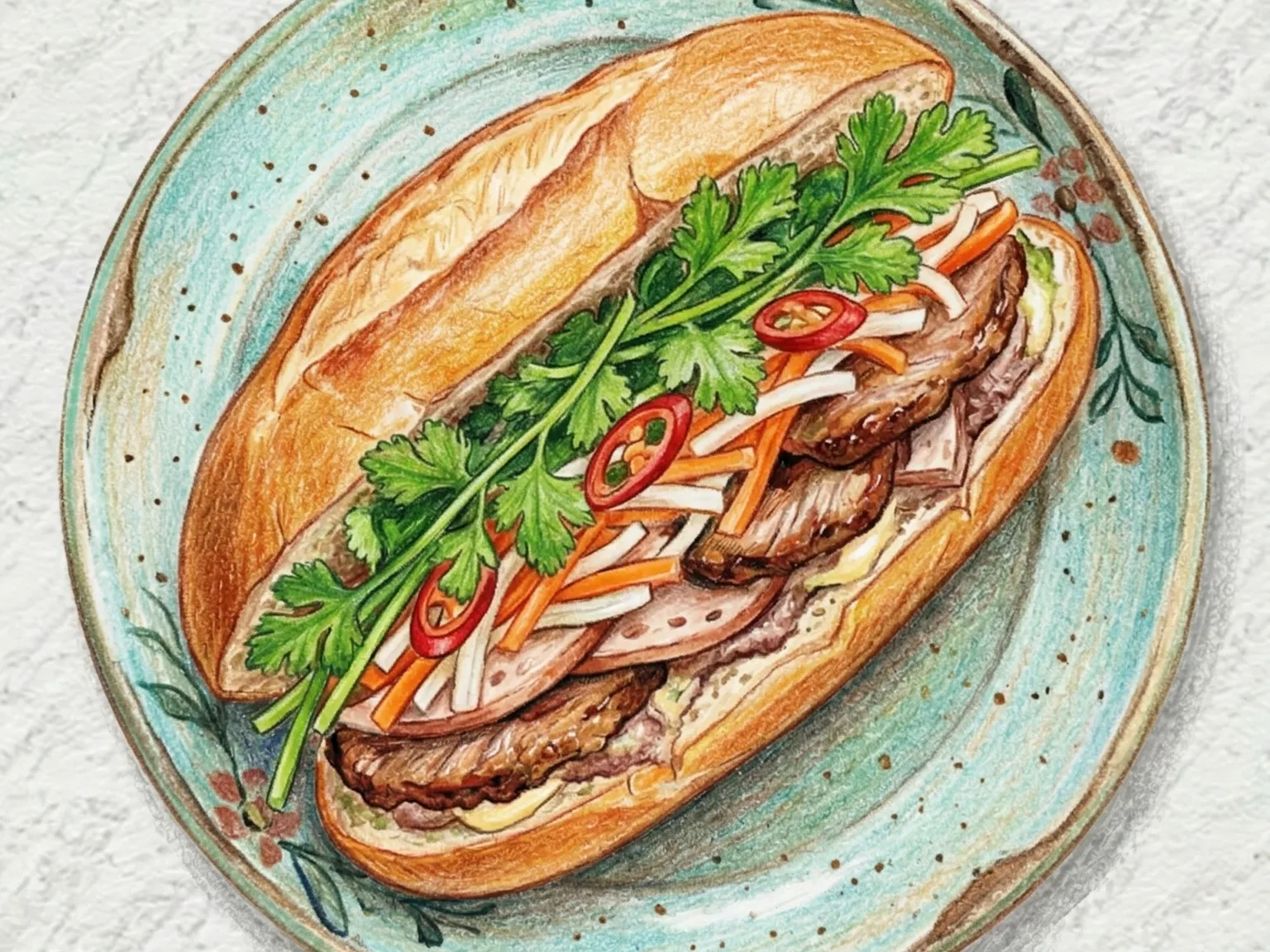
Bánh Mì (Vietnamese Crispy Baguette Sandwich with Pork and Pickles)
Banh mi is the product of French colonialism meeting Vietnamese resourcefulness - a baguette made with rice flour for extra crispness, filled with ingredients that span both culinary traditions. The bread itself is the foundation: lighter and airier than a French baguette, with a shattering crust that flakes when bitten. Fillings vary by region and stall, but the classic Saigon version layers pate, cold cuts, pickled daikon and carrot, sliced cucumber, cilantro, and jalapeno. The pickled vegetables provide a tart crunch that offsets the richness of the meat and pate. Assembled in under a minute at street carts across Ho Chi Minh City, it costs less than a dollar and delivers one of the most complete flavor experiences in Southeast Asian street food - crunchy, sour, herbal, spicy, and fatty in every bite.
Adjust Servings
Instructions
- 1
Julienne carrot and daikon; pickle in vinegar and sugar for at least 15 minutes.
- 2
Slice pork thinly and season with salt and pepper; pan-fry.
- 3
Split the baguette and spread with mayonnaise.
- 4
Fill with pork, pickled vegetables, cilantro, and chili.
As an Amazon Associate, we may earn from qualifying purchases.
Tips
Nutrition (per serving)
More Recipes

Banh Cuon (Hanoi Steamed Rice Rolls with Pork and Mushroom)
Banh cuon is a Hanoi breakfast specialty - translucent rice sheets steamed on fabric stretched over boiling water, then filled and rolled in seconds by practiced hands. The batter is nothing more than rice flour and water, spread tissue-thin to produce a wrapper so delicate it tears if handled roughly. Inside, a filling of minced pork and finely chopped wood ear mushrooms provides a savory, slightly crunchy core. The rolls are served at room temperature with fried shallots, sliced Vietnamese sausage, and a bowl of nuoc cham for dipping. What sets banh cuon apart is its texture - silky, almost slippery on the tongue, with none of the chew associated with other rice-based wraps.

Banh Xeo (Vietnamese Sizzling Turmeric Rice Crepe with Shrimp)
Banh xeo - named for the sizzling sound ('xeo') the batter makes hitting a hot pan - is a Vietnamese crepe found across the country in regional variations. The batter is a simple mix of rice flour, coconut milk, and turmeric, poured thin into a wide, oiled pan where it crackles into a lacy, shatteringly crisp shell. Shrimp, sliced pork, and bean sprouts fill one half before the crepe is folded over. In southern Vietnam, banh xeo are plate-sized and served with a mountain of lettuce, herbs, and pickled carrots for wrapping. The eating ritual matters as much as the cooking: tear a piece of crepe, wrap it in lettuce with mint and perilla, dip in nuoc cham, and eat in one bite. The interplay between the hot, oily crunch and cool, herbal freshness defines the experience.

Banh Beo (Hue Steamed Rice Cakes with Shrimp and Scallion Oil)
Banh beo comes from Hue, the old imperial capital of central Vietnam, where it is served as a snack on tiny saucer-shaped plates that each hold a single rice cake. A thin rice flour batter is poured into each dish and steamed until it sets into a soft, slightly sticky disc - translucent at the edges and opaque in the center. Toppings are minimal but precise: dried shrimp ground to a coarse powder, crispy fried shallots, and a drizzle of scallion oil that pools in the concave surface. The dipping sauce - nuoc cham - ties everything together with its sweet-sour-salty balance. Eating banh beo means scraping each little cake off its plate with a flat spoon, one by one, at a pace that makes this a meditative street-food experience.

Banh Canh Cua (Vietnamese Thick Crab and Pork Noodle Soup)
Banh canh cua is a southern Vietnamese noodle soup where the broth and noodles are equally thick - a departure from the clear, delicate soups of Hanoi. The base is built from crab shells and pork bones simmered together, then strained and thickened with tapioca starch until it coats the back of a spoon. Hand-cut tapioca-rice noodles have a distinctive chew - slippery and dense, unlike any wheat or rice noodle. Chunks of crab meat and a crab-paste egg custard float in the milky broth, making each bowl intensely rich with ocean flavor. Street vendors in Ho Chi Minh City and Can Tho ladle it from giant pots at dawn, serving it as a morning meal with fried shallots and fresh herbs on the side.

Jambon-Beurre (Classic Butter and Ham Baguette)
Jambon-beurre is the quintessential French everyday sandwich, made with just baguette, butter, and ham. With only three core ingredients, quality determines everything - a baguette with a shattering crust and chewy crumb, cultured unsalted butter, and thinly sliced jambon blanc are the ideal combination. The butter must be softened to room temperature so it spreads without tearing the delicate bread interior. A thin coat of Dijon mustard on one side adds a sharp, peppery note that anchors the richness of the butter against the salty ham. Sliced cornichons tucked inside provide a tart acidity that lightens the overall weight of the sandwich and keeps each bite balanced.

Croque Monsieur (Béchamel Ham and Cheese Melt)
Croque monsieur is a Parisian café classic built on a smooth béchamel sauce made from a butter-flour roux whisked with warm milk. One slice of white bread is spread with Dijon mustard before being layered with sliced ham and grated Gruyère cheese. The second slice tops the sandwich, which then gets a generous coat of béchamel and more cheese on the upper surface. Baking at 200 degrees Celsius for ten minutes melts the interior filling, and a brief three-minute broil creates a golden, bubbling crust on top. The mustard's pungent sharpness balances the salty richness of ham and cheese, keeping the overall flavor clean.