Banoffee Pie
Quick answer
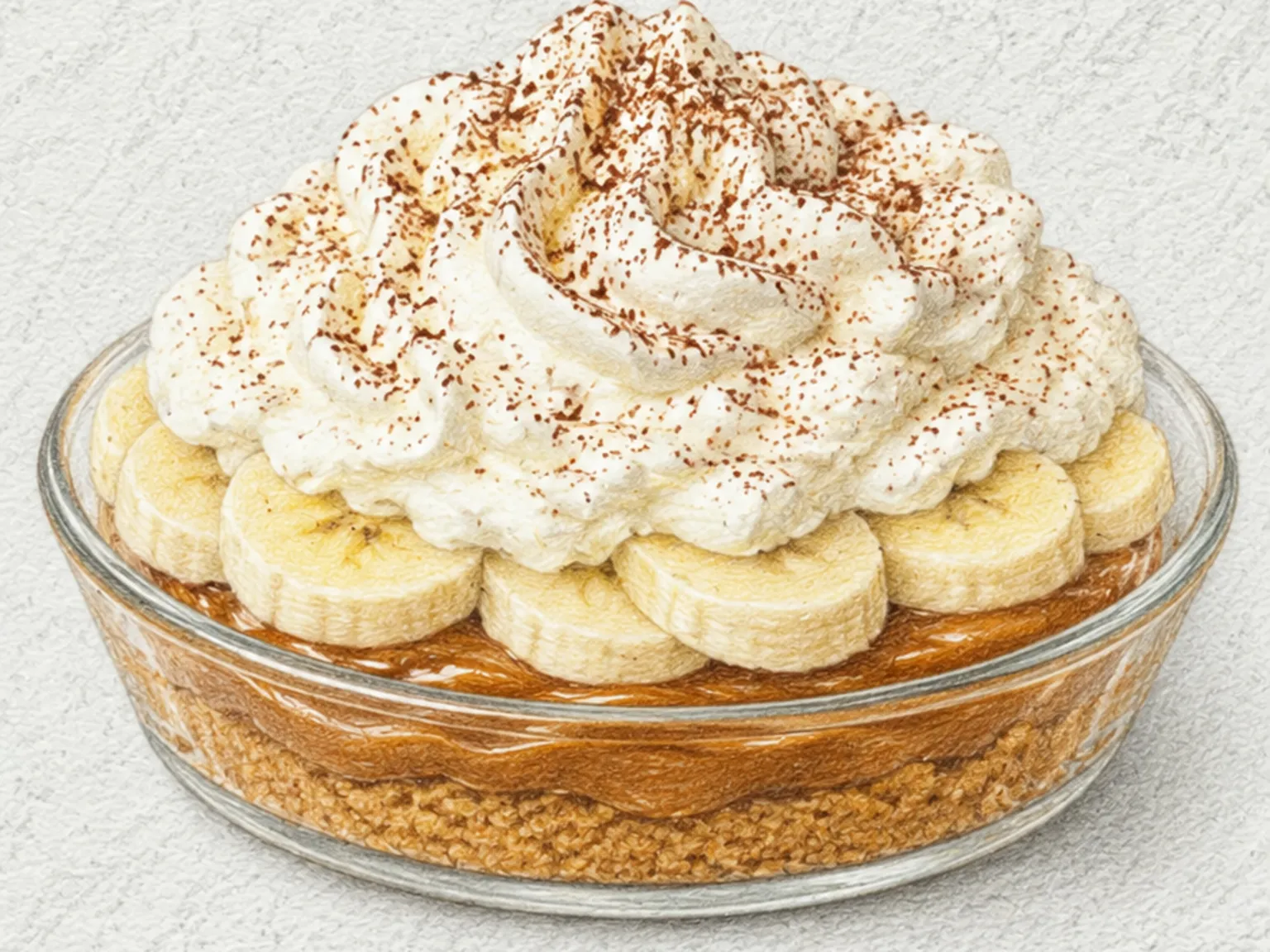
Banoffee pie is a British no-bake dessert whose name compresses banana and toffee, the two ingredients that define its character.
What makes this special
- Banoffee Pie assembles thick toffee and fresh bananas over a buttery biscuit base and cream.
- Condensed milk slowly caramelized into deep amber toffee forms the second layer
- Each spoonful hits biscuit grit, then sticky caramel, then soft banana, then light cream
Key ingredients
Core cooking flow
- 1 Crush 180g digestive biscuits into fine crumbs, then mix them with 75g melted unsalted butter.
- 2 Press the crumbs firmly into the pan, reaching the edges so the crust has an even thickness.
- 3 Put 320g sweetened condensed milk in a saucepan and cook over medium-low hea...
Banoffee pie is a British no-bake dessert whose name compresses banana and toffee, the two ingredients that define its character. A base of crushed digestive biscuits bound with melted butter is pressed firmly into a pan and chilled until set. Sweetened condensed milk is heated slowly over low heat, stirring constantly, until it darkens into a thick, amber-colored toffee that spreads over the biscuit base in a dense layer. Ripe bananas are sliced thickly and layered on top of the toffee, then the whole assembly is finished with a generous dome of softly whipped cream and a dusting of cocoa powder or grated dark chocolate. Each forkful delivers four textures in sequence: the sandy crunch of the biscuit base, the dense caramel pull of the toffee, the soft sweetness of banana, and the cool, airy lightness of cream.
Instructions
Read the steps as a cooking flow: prep, heat, seasoning, doneness control, and finish.
- 1Season
Crush 180g digestive biscuits into fine crumbs, then mix them with 75g melted unsalted butter.
When the mixture feels like damp sand and holds together when pressed, tip it into the base of the tart pan.
- 2Heat
Press the crumbs firmly into the pan, reaching the edges so the crust has an even thickness.
Bake at 180°C for 10 minutes, then chill for 30 minutes until cool and firm enough to hold the toffee.
- 3Control
Put 320g sweetened condensed milk in a saucepan and cook over medium-low heat for 15 to 20 minutes, stirring constantly.
Stop when it turns deep amber and the spatula leaves a brief trail.
- 4Control
Spread the toffee over the crust while it is still spreadable, then let it cool completely so the layer sets cleanly.
Slice 2 bananas about 1cm thick and cover the surface without large gaps.
- 5Season
Whip cold 200ml heavy cream with 20g powdered sugar until firm peaks form.
Stop while the cream still looks glossy, because over-whipping makes it grainy and harder to spread neatly over the bananas.
- 6Prep
Spread the whipped cream thickly over the bananas and sift 1 tablespoon cocoa powder evenly over the top.
Chill the pie for at least 1 hour, then slice it cold for cleaner layers and better shape.
After the steps
Pick a recipe that fits this dish.
Continue with shared ingredients, meal pairings, or a similar method.
Recipes That Go Well With This
More Baking →Based on shared ingredients and meal pairing
Shortbread Cookies
Shortbread is built on a high ratio of butter to flour, with just enough sugar to sweeten, producing a cookie that crumbles on contact and dissolves into a wave of pure butter flavor. The dough demands minimal handling - overworking it develops gluten and turns the tender crumb tough and biscuit-like. Cold butter cut into the flour creates the sandy, friable texture that defines a proper shortbread. Chilling the shaped dough before baking prevents spreading, ensuring clean edges and a uniform thickness. Powdered sugar yields a finer, more delicate crumb, while granulated sugar introduces a subtle crunch and slightly coarser grain. Traditionally scored into wedges or stamped into rounds, shortbread keeps well in a tin and actually improves after a day, as the butter flavor mellows and permeates the flour more evenly. It is the natural companion to a cup of strong black tea.
Sticky Toffee Pudding
Sticky toffee pudding is a British dessert consisting of a moist date sponge cake drenched in a warm, buttery toffee sauce. Chopped dates are soaked in hot water with baking soda, which softens the fruit into a near-puree that distributes through the batter, providing natural sweetness and exceptional moisture. Brown sugar in the batter deepens the caramel character, and eggs give the sponge just enough structure to hold together under the weight of the sauce. The toffee sauce is made by simmering heavy cream with additional brown sugar and butter until it thickens to a pourable consistency that coats a spoon. Poured over the warm cake, the sauce seeps into the crumb and pools around the edges, creating a sticky, glossy finish. Reheating the sauce just before serving ensures it flows freely and releases its full butterscotch aroma. A scoop of vanilla ice cream on the side provides a cold, clean contrast that prevents the richness from becoming overwhelming. The dates must be thoroughly soaked - under-softened pieces leave gritty pockets in an otherwise uniformly tender cake.
Black Tea Milk Tea (British Condensed Milk Sweet Tea)
Milk tea is prepared by steeping black tea bags in boiling water for exactly four minutes to extract a strong, tannic base, then combining it with whole milk and condensed milk over low heat. Steeping shorter than four minutes leaves the tea pale and thin; longer than four minutes introduces bitterness and astringency that no amount of milk can fully mask. The milk rounds out the tea's sharpness and adds a creamy body, while condensed milk layers on a dense, caramel-like sweetness that sets this version apart from tea simply sweetened with sugar. Regular sugar dissolved early provides the baseline sweetness, and the condensed milk fine-tunes the richness and texture in the final moments. Warming the milk before combining it with the brewed tea helps both blend more smoothly. For an iced version, the mixture must be cooled completely before pouring over ice, since adding hot liquid directly to ice dilutes the drink and washes out the flavor.
Eton Mess (Crushed Meringue, Cream & Strawberry Mix)
Eton mess is a British dessert originating from Eton College, made by roughly folding together broken meringue, whipped cream, and strawberries into a deliberate, unstudied jumble. The name comes from the method itself: there is no careful layering or presentation, just a generous combination of three components mixed loosely in a glass or wide bowl. The meringue is baked low and slow until the outside develops a firm, crisp shell while the inside stays soft and marshmallow-like, then cooled completely before being broken by hand into irregular shards of varying sizes. Strawberries are treated in two ways: some are crushed roughly with a fork so the juice bleeds in red streaks through the white cream, while others remain whole to provide fresh, firm bites of fruit. The heavy cream is whipped only to soft, billowy peaks so it folds around the meringue and fruit loosely rather than sitting in stiff mounds. Every spoonful delivers a different ratio of crunch, softness, tartness, and sweetness depending on which pieces land together, which is the pleasure of the dessert. Because the cream and fruit juices begin softening the meringue the moment they are combined, Eton mess must be assembled and eaten immediately to preserve the textural contrast between crisp and soft.
Serve with this
Beef Wellington
Beef Wellington wraps a whole seared beef tenderloin in a layer of mushroom duxelles and prosciutto, then encases everything in puff pastry before baking. The initial sear builds a Maillard-crusted surface on the beef, and the duxelles acts as a moisture barrier between the meat and the pastry, absorbing rendered juices so the dough does not go soggy during baking. In the oven, the pastry puffs into hundreds of golden, flaky layers while the tenderloin inside cooks evenly to a pink medium-rare center. Slicing through the finished roll reveals a clean cross-section of bronze pastry, dark mushroom layer, and rosy beef - the visual reward for careful assembly. The tightly packed sequence of textures, from shatteringly crisp pastry to the soft mushroom filling to the tender beef, makes every cut through the roll deliver a different bite. A red wine reduction served alongside completes the dish for a formal occasion.
Half-moon Rice Cake (Sesame Honey Filled Steamed Rice Cake)
Kkul songpyeon are traditional half-moon rice cakes shaped by hand from rice flour dough and filled with a paste of finely ground toasted sesame seeds, honey, and dark brown sugar, then steamed over a bed of fresh pine needles. Grinding the sesame seeds fine enough to form a cohesive mixture with honey and sugar is important -- the oil-rich nuttiness and dense sweetness bind together into a smooth filling that turns moist and paste-like as steam penetrates the rice dough during cooking. Arranging pine needles at the bottom of the steamer imparts a faint resinous, woody fragrance to the surface of each rice cake after 15 minutes of steaming, layering over the natural grain aroma of the rice flour dough. After steaming, a quick rinse in cold water stops carry-over cooking, and a thin brush of sesame oil gives each songpyeon a glossy sheen while preventing them from sticking together. Shaping songpyeon together as a family at Chuseok is one of the most recognizable autumn traditions in Korea, and the saying that beautifully shaped songpyeon foretells a beautiful daughter remains widely repeated today.
Fruit Yogurt Salad
Apple, banana, strawberry, and blueberry are cut into bite-sized pieces and folded into plain yogurt for a fruit salad where the dressing serves as background rather than centerpiece. The yogurt provides gentle acidity that anchors the sweetness of the fruit without overwhelming it. Honey softens the sharper edge of the yogurt, and a squeeze of lemon juice does double duty: it slows the browning of cut apple and banana while leaving a clean citrus note on the finish. Roughly chopped walnuts scattered over the top introduce a crunchy, slightly bitter contrast to the soft fruit and smooth yogurt, breaking the monotony of texture. Swapping in seasonal fruit makes the recipe adaptable year-round without adjusting the base formula - peaches and melon in summer, persimmon and pear in autumn all work within the same yogurt, honey, and lemon framework. Light enough for a morning meal and refreshing enough after a heavy dinner, it sits comfortably in either role.
Similar recipes
English Trifle (Layered Cake, Custard & Cream Dessert)
English trifle is a layered dessert assembled in a glass bowl, where each stratum contributes a different texture and flavor. Slices of sponge cake are soaked in sherry or fruit juice until they soften into a pudding-like consistency, then covered with a thick vanilla custard that sets gently as it chills. Fresh strawberries and blueberries are scattered between layers, introducing bright acidity and color. Whipped cream crowns the top, providing a light, airy finish. The glass bowl displays the distinct bands of cake, custard, fruit, and cream from the side. Each serving should dig deep enough to capture all layers in a single spoonful, ensuring that the wine-soaked sponge, the smooth custard, and the cream's lightness arrive together.
Cornish Pasty (British Hand Pie with Beef and Root Vegetables)
Cornish pasty is a traditional British hand pie from Cornwall, made by sealing raw diced beef, potatoes, rutabaga, and onion inside a sturdy pastry of flour, butter, salt, and water. The filling is not pre-cooked before sealing, so the meat and vegetables steam inside the crust during baking. Their juices collect and concentrate inside the sealed shell, forming a rich, savory interior gravy that makes the pasty deeply satisfying without any additional sauce. Crimping the edges tightly is essential to contain this liquid during the forty-to-forty-five-minute bake at 200 degrees Celsius. Cutting the filling into pieces no larger than about one centimeter ensures everything cooks evenly through. An egg wash brushed over the surface before baking develops a glossy, amber crust. The pasty originated as a practical working meal for Cornish tin miners, who held the pastry by its thick crimped edge to avoid contaminating the food with dirty hands, then discarded that portion when finished.
Shepherd's Pie
Shepherd's pie is a traditional British home dish where seasoned lamb mince is cooked with onion, carrot, and peas, deglazed with red wine and beef stock, then topped with creamy mashed potato and baked until golden. The wine evaporates its alcohol during cooking, leaving behind fruit depth and tannin that enrich the lamb, while Worcestershire sauce adds a layer of fermented umami. The potatoes are boiled, mashed with butter and milk until smooth, then spread evenly over the meat filling. Dragging a fork across the mashed potato surface creates ridges that brown and crisp in the oven, adding textural contrast to the creamy layer beneath. After twenty-five minutes at 200 degrees Celsius, the meat juices bubble up around the edges, signaling that the filling is hot throughout.