Basbousa (Middle Eastern Semolina Syrup-Soaked Cake)

Basbousa (Middle Eastern Semolina Syrup-Soaked Cake)

Quick answer

Basbousa is a Middle Eastern semolina cake soaked in fragrant syrup, producing a texture nothing like a Western flour-based cake.

What makes this special

  • Basbousa involves coarse semolina and yogurt for a dense, grainy cake soaked in syrup.
  • Semolina-yogurt batter bakes grainier and coarser than wheat flour cakes
  • Hot lemon sugar syrup poured right after baking seeps through semolina keeping inside moist
Total time
55 min
Level
Easy
Servings
4 servings
Ingredients
7
Calories
470 kcal
Protein
7 g

Key ingredients

semolinasugarplain yogurtunsalted butterbaking powder

Core cooking flow

  1. 1 Preheat the oven to 180°C and coat the inside of the pan thoroughly with unsalted butter.
  2. 2 Put 220g semolina, 100g sugar, and 1 teaspoon baking powder in a bowl.
  3. 3 Add 180ml plain yogurt and 80g melted unsalted butter, then stir in one dire...

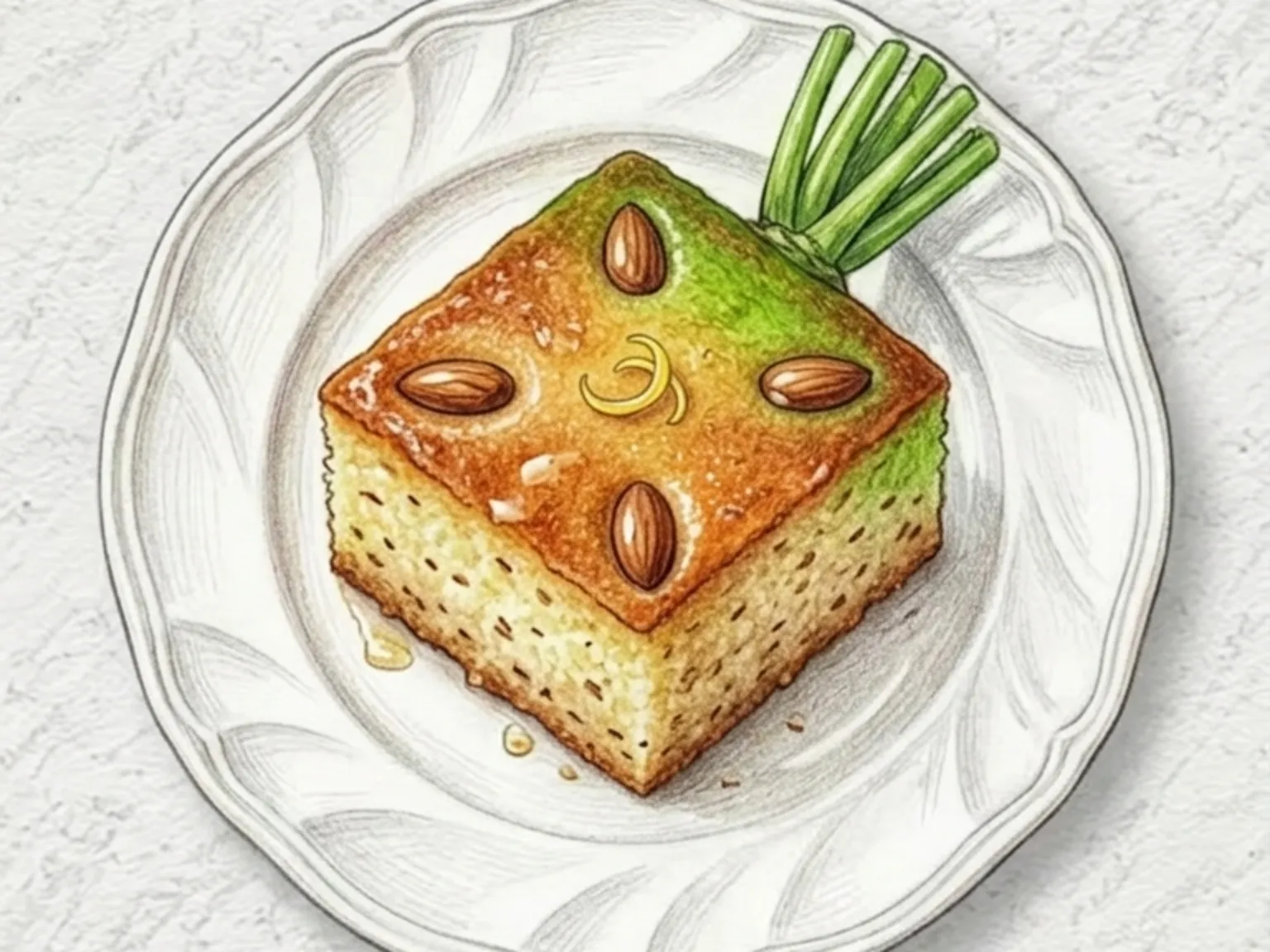
Basbousa is a Middle Eastern semolina cake soaked in fragrant syrup, producing a texture nothing like a Western flour-based cake. Semolina is combined with yogurt, sugar, and melted butter to form a dense, grainy batter that bakes into a golden slab with a coarse, sandy crumb. The moment it comes out of the oven, hot sugar syrup sharpened with lemon juice is poured over the surface. The porous semolina pulls it in rapidly - the top retains a faint crispness while the interior becomes moist all the way through. Before baking, the batter is scored into diamond portions and a blanched almond is pressed into each one for a nutty accent. Across the Arab world, basbousa is among the most common desserts served during Ramadan, made in large trays and shared among families.

Prep 20min Cook 35min 4 servings
Recipes by ingredient → butter baking powder lemon juice

Instructions

Read the steps as a cooking flow: prep, heat, seasoning, doneness control, and finish.

6 steps
  1. 1
    Control

    Preheat the oven to 180°C and coat the inside of the pan thoroughly with unsalted butter.

    Cover the corners and sides well, because semolina cake can cling there after the syrup is added.

  2. 2
    Season

    Put 220g semolina, 100g sugar, and 1 teaspoon baking powder in a bowl.

    Stir the dry ingredients until the baking powder is evenly dispersed and no pockets of sugar remain.

  3. 3
    Season

    Add 180ml plain yogurt and 80g melted unsalted butter, then stir in one direction until the mixture looks thick and evenly moistened. Spread it level in the prepared pan without pressing it too hard.

  4. 4
    Step

    Use a knife or spatula to score shallow diamond shapes in the batter before baking.

    Press the 12 almonds gently into the portions, one per piece, so they stay in place as the surface rises.

  5. 5
    Heat

    Bake at 180°C for 30 to 35 minutes.

    Remove the cake when the top is deep golden, the edges feel slightly firm, and the center no longer looks wet or loose.

  6. 6
    Control

    While it bakes, simmer 40g sugar, 80ml water, and 1 tablespoon lemon juice until the sugar dissolves.

    Pour the hot syrup over the cake immediately, then rest at least 10 minutes before cutting cleanly.

After the steps

Pick a recipe that fits this dish.

Continue with shared ingredients, meal pairings, or a similar method.

Recipes That Go Well With This

More Baking →

Based on shared ingredients and meal pairing

Persimmon Spice Pound Cake
Shared ingredient: butter Baking

Persimmon Spice Pound Cake

Persimmon spice pound cake is a dense, buttery loaf made with finely chopped dried persimmon folded into the batter, scented with cinnamon and nutmeg. The natural sweetness of dried persimmon keeps the sugar level modest while contributing a concentrated, jammy richness to every slice. Chewy morsels of persimmon distributed through the crumb provide bursts of intense dried-fruit flavor amid the buttery cake. Cinnamon and nutmeg give the loaf its warm, autumnal character, making it a natural fit for the cooler months when dried persimmon is most abundant. The batter should be mixed only until the ingredients just come together; overmixing develops excess gluten and produces a tough, dense result rather than the moist, tender crumb the cake depends on. Resting the cake at room temperature for two days allows the spices to fully penetrate the crumb and the dried persimmon to meld with the surrounding butter base, deepening the flavor considerably. The cake pairs naturally with warm tea or black coffee. Slicing and toasting briefly before serving crisps the outer surface and revives the butter fragrance.

Knafeh (Crispy Shredded Pastry with Cheese)
Shared ingredient: butter Baking

Knafeh (Crispy Shredded Pastry with Cheese)

Shredded kataifi pastry is tossed in melted butter, pressed into a pan, layered with mozzarella cheese, and baked until the strands turn golden and shatteringly crisp. The butter saturates every strand during baking, creating an intensely rich, crunchy base. Between the two layers of pastry, the cheese melts into a stretchy, creamy sheet that pulls apart in long strings when the dessert is cut. A syrup of sugar, water, and lemon juice, poured hot over the hot pastry, sinks into the crunchy layers almost instantly, glazing them with a sweet, barely tart coating that balances the cheese's mild salinity. Crushed pistachios scattered on top add a vivid green contrast and a firm, nutty bite that breaks up the otherwise uniform texture. The interplay of crunchy, stretchy, and syrupy in a single forkful is what makes knafeh distinctive. It must be served immediately; the pastry softens as it sits, and the contrast between crisp and molten fades.

Shakshuka (Eggs Poached in Spiced Tomato Sauce)
Serve together Western

Shakshuka (Eggs Poached in Spiced Tomato Sauce)

Shakshuka starts with onion and bell pepper softened in olive oil, followed by cumin, smoked paprika, and chili flakes bloomed briefly in the hot fat to unlock their oil-soluble aromas. Crushed whole tomatoes are added and simmered until the sauce thickens enough to hold its shape when a spoon is dragged through it. Eggs are cracked directly into wells made in the sauce, then the pan is covered and cooked for six to eight minutes so the whites set while the yolks stay runny. The spice profile delivers warm earthiness from the cumin, gentle smokiness from the paprika, and a low heat from the chili that builds gradually. Tearing bread and dragging it through a broken yolk and the surrounding sauce is the traditional way to eat it.

Date-Filled Semolina Cookies
Similar recipe Baking

Date-Filled Semolina Cookies

A traditional Middle Eastern cookie in which a buttery semolina shell encloses a spiced date paste filling. Semolina produces a distinctly different texture from wheat flour: low in gluten, the baked cookie disintegrates into fine, sandy crumbs the moment it touches the tongue, releasing a wave of butter fragrance. A few drops of rose water woven into the dough create a faint floral backdrop that never overpowers. The filling blends date paste with ground cinnamon into a dense, caramel-like sweetness that contrasts with the restrained sweetness of the shell. After wrapping the filling, each cookie is gently pressed into a mold or marked with a fork to imprint a decorative pattern that is the visual signature of maamoul. Baking at 180 degrees Celsius for 16 to 18 minutes, just until the edges take on the palest gold, is critical; even a minute too long hardens the delicate crumb irreversibly. A light dusting of powdered sugar after cooling adds a sweet first impression before the date flavor takes over.

Serve with this

Roasted Cauliflower Tahini Salad
Salads Easy

Roasted Cauliflower Tahini Salad

Cauliflower florets reach a specific texture and flavor profile when roasted in a mixture of olive oil and salt. This process continues in the oven until the edges of the vegetable turn a deep golden brown. This dry heat method creates a transformation that is distinct from moist heat methods like steaming or boiling. High oven temperatures trigger caramelization and the Maillard reaction, which together extract a nutty and slightly sweet complexity from the cauliflower. This development is significant because the vegetable is otherwise quite mild and neutral in its raw or boiled state. The concentrated flavor resulting from roasting provides the necessary foundation for the tahini dressing. Because the dressing is thick and carries a heavy sesame richness, it requires the caramelized depth of the roasted cauliflower to act as a balance. Without this roasting process, the dressing might easily overpower a vegetable that has not developed its own strong character. The preparation of the sauce involves whisking tahini paste with fresh lemon juice and minced garlic. This mixture is stirred until it becomes smooth. The acidity from the lemon juice is essential here as it cuts through the density of the sesame paste. This ensures the final sauce remains bright on the palate instead of feeling heavy or overly thick. To complete the dish, large amounts of chopped flat-leaf parsley are scattered over the top. This addition introduces a vivid green color and a clean herbal quality that serves to offset the richness of both the tahini and the oil used during the roasting process. A light dusting of cumin or smoked paprika can be applied as a final step to sharpen the Middle Eastern characteristics of the salad. The final result presents a series of layered flavors including the toasted sesame from the tahini, the caramelized edges of the cauliflower, the sharp acid of the lemon, and the clean finish provided by the parsley. Each of these components acts as a distinct note within the overall composition. This combination is a common staple in Middle Eastern culinary traditions. It functions well when served alongside flatbread or as an accompaniment to grilled portions of meat or fish.

🥗 Light & Healthy 🏠 Everyday
Prep 15min Cook 25min 2 servings
Sweet Chestnut Confection
Desserts Medium

Sweet Chestnut Confection

Yulran is a traditional Korean chestnut confection that is prepared by boiling 300 grams of chestnuts in water for a duration of 20 minutes. Once the boiling process is complete, the chestnut flesh is removed from the shells and pressed through a fine sieve. This manual pressing continues until the texture becomes perfectly smooth. The purpose of using a sieve is to eliminate any grainy bits, which results in a chestnut paste with an even and velvety consistency. This puree is then kneaded together with a combination of honey and ground cinnamon. After the ingredients are thoroughly mixed, the paste is shaped into small, bite-sized rounds. The honey used in this recipe serves as both a source of moisture and a necessary adhesive. Its sticky property provides the strength required for the confection to hold its molded shape effectively without crumbling into pieces. Ground cinnamon is included to provide a warm spice note. This flavor is chosen because it complements the starchy and earthy sweetness of the chestnut rather than competing with the natural profile of the nut. Following the shaping process, each piece is rolled in ground pine nuts. This step coats the exterior in a mild nuttiness and introduces a subtle textural contrast against the smooth paste contained within. For a final visual touch, thin slices of jujube are placed on top as a garnish to provide a stroke of red color. The finished rounds are then placed in the refrigerator to chill for 15 minutes. This cooling period firms the surface of the paste just enough so that the confections can be picked up cleanly with the fingers without sticking to the skin. Historically, Yulran was a common fixture on the ceremonial and banquet tables of the Joseon court. It was valued for its clean and understated sweetness, which allows the natural flavor of the chestnut to remain the central focus.

🎉 Special Occasion 🧒 Kid-Friendly
Prep 25min Cook 20min 2 servings
Korean Five-Grain Sweet Rice Punch
Drinks Medium

Korean Five-Grain Sweet Rice Punch

Ogok-sikhye is a traditional Korean grain punch made by saccharifying a mix of cooked sweet rice, barley, millet, and foxtail millet in barley malt extract at 60 to 65 degrees Celsius for one hour. The malt powder is soaked in lukewarm water for 20 minutes, kneaded by hand, and strained through a cloth to yield a clear, enzyme-rich liquid -- this is the working ingredient that converts the grain starches into natural sugars during the slow saccharification. Temperature control is central to the process: below 60 degrees the enzymes slow down, and above 70 degrees they denature and die, so maintaining the right range throughout the hour-long rest determines whether the conversion succeeds. As saccharification progresses, the rice grains hollow out and float to the surface; these are skimmed off, rinsed separately, and later floated back into the finished punch to add a soft, chewable element to each cup. After sweetening with sugar and chilling completely in the refrigerator, the drink is served cold with pine nuts floating on top. The combination of multiple grains produces a more layered, complex sweetness than single-grain sikhye, and the overnight rest in the refrigerator smooths the flavor into something more cohesive.

🍺 Bar Snacks 🎉 Special Occasion
Prep 20min Cook 70min 2 servings

Similar recipes

Baklava
Baking Hard

Baklava

Baklava is a historical pastry dessert consisting of multiple layers, which holds a significant place in the culinary cultures of the Middle East, Turkey, and the Mediterranean region. The preparation involves taking extremely thin sheets of phyllo dough and stacking them one by one inside a baking pan that has been coated with grease. To achieve a uniform golden color and a crunchy consistency, every single layer of the dough is brushed thoroughly with a generous amount of melted butter. Between these stacked phyllo sheets, a mixture made of finely chopped walnuts and pistachios is distributed at specific intervals. This nut filling is typically seasoned with ground cinnamon to add a specific aromatic quality to the internal layers of the pastry. Before the assembled pastry is placed into the oven, it is carefully cut into diamond or square shapes. This scoring process is essential because it creates paths for the syrup to flow deep into every individual piece later. The baking process occurs at a temperature of approximately 175 degrees Celsius, continuing until the pastry reaches a deep golden hue across its entire surface. While the pastry is still hot from the oven, a liquid syrup consisting of sugar, honey, water, and a small amount of fresh lemon juice is poured over the whole pan. The crisp layers of the dough absorb this liquid over a period of several hours. This gradual absorption results in a specific final texture where the pastry remains both extremely brittle and noticeably moist at the same time. The inclusion of ground cinnamon within the nut layers provides a warm spice profile that helps to provide a contrast to the high level of sweetness from the honey syrup. In traditional settings, baklava is often presented on a plate next to a cup of unsweetened Turkish coffee or a serving of bitter tea. These beverages are chosen because their natural bitterness helps to balance the heavy richness of the dessert. When stored in an airtight container at room temperature, this pastry maintains its quality for more than a week.

🎉 Special Occasion 🧒 Kid-Friendly
Prep 30min Cook 40min 4 servings
Red Lentil Soup
Western Easy

Red Lentil Soup

Red lentil soup is a Middle Eastern and Mediterranean staple made by simmering red lentils with cumin, turmeric, and vegetable stock until the lentils dissolve into a silky, golden broth. Onion and garlic are sauteed in olive oil, then the ground spices are toasted briefly to bloom their earthy, warm aromatics into the fat, which flavors the entire pot. Red lentils require no soaking - they go straight into the stock and break down within twenty to twenty-five minutes, their skins splitting apart to create a naturally creamy texture without the need for blending. A generous squeeze of lemon juice at the end is essential, cutting through the heaviness of the spices with a bright, clean acidity. A final drizzle of olive oil over each bowl adds a layer of richness that deepens every spoonful.

🥗 Light & Healthy 🏠 Everyday
Prep 10min Cook 30min 4 servings
Tabbouleh Salad (Middle Eastern herb salad)
Salads Easy

Tabbouleh Salad (Middle Eastern herb salad)

Tabbouleh salad is a Middle Eastern herb salad where finely chopped parsley and mint are the main ingredients and bulgur plays a supporting textural role. The bulgur is soaked in boiling water until tender, then cooled to develop a nutty chew that anchors the bright greenery piled on top. Removing the seeds from the tomatoes before dicing prevents excess juice from diluting the lemon-olive oil dressing. The dressing itself is simple - lemon juice, olive oil, and salt - but its acidity lifts the grassy flavor of the herbs into something sharp and clean. Resting the assembled salad in the refrigerator for at least ten minutes allows the lemon to penetrate the bulgur, producing a consistent flavor in every bite.

🥗 Light & Healthy ⚡ Quick
Prep 20min Cook 10min 2 servings

Tips

Pour syrup while the cake is hot for best absorption.
It becomes moister after chilling overnight.

Nutrition (per serving)

Calories
470
kcal
Protein
7
g
Carbs
62
g
Fat
22
g