Basque Burnt Cheesecake
Baking Medium

Basque Burnt Cheesecake

Quick answer

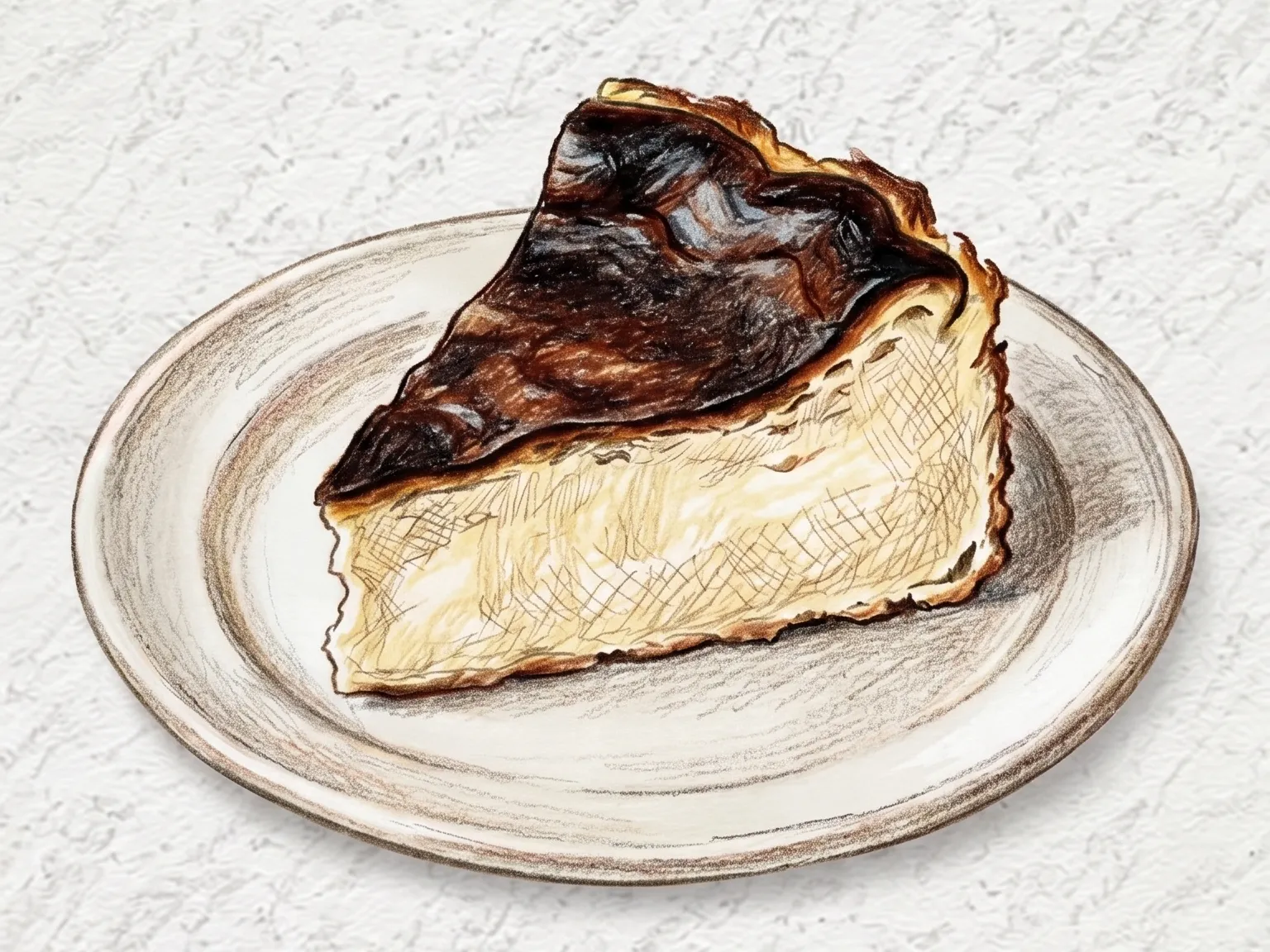
Basque burnt cheesecake originates from La Vina bar in San Sebastian, Spain, and is defined by a deliberately scorched top and an intentionally underset center.

What makes this special

  • Basque Burnt Cheesecake produces a charred top and a creamy center via intense oven heat.
  • Intentional charring at 220 plus degrees develops bitter caramel depth on the surface
  • Crackling caramelized exterior against a custard-soft, spoonable interior
Total time
55 min
Level
Medium
Servings
8 servings
Ingredients
6
Calories
520 kcal
Protein
9 g

Key ingredients

cream cheesesugareggsheavy creamall-purpose flour

Core cooking flow

  1. 1 Preheat the oven fully to 230°C. Line an 18cm pan with parchment rising at l...
  2. 2 Soften 600g cream cheese at room temperature for at least 30 minutes, then loosen it first with a spatula.
  3. 3 Add the 4 eggs one at a time, mixing on low speed until each disappears before adding the next.

Basque burnt cheesecake originates from La Vina bar in San Sebastian, Spain, and is defined by a deliberately scorched top and an intentionally underset center. Cream cheese, sugar, eggs, heavy cream, and a small amount of flour are blended smooth, poured into a parchment-lined pan, and baked at above 220 degrees Celsius until the surface reaches a deep, near-black caramelization. That blackened layer contributes a pronounced bittersweet edge that cuts through the richness underneath. The interior remains loose and custardy - closer in texture to a very dense panna cotta than to a conventional baked cheesecake. Served at room temperature, the contrast between the firm, caramelized shell and the barely-set, creamy core is at its sharpest and most satisfying.

Prep 20min Cook 35min 8 servings

Instructions

Read the steps as a cooking flow: prep, heat, seasoning, doneness control, and finish.

6 steps
  1. 1
    Step

    Preheat the oven fully to 230°C.

    Line an 18cm pan with parchment rising at least 4cm above the rim, pressing it into the corners so the batter can rise without spilling over.

  2. 2
    Season

    Soften 600g cream cheese at room temperature for at least 30 minutes, then loosen it first with a spatula.

    Add 180g sugar and mix until no cheese lumps or sugar grains are visible.

  3. 3
    Prep

    Add the 4 eggs one at a time, mixing on low speed until each disappears before adding the next.

    Pour in 300ml heavy cream and 1 teaspoon vanilla extract, then mix just until smooth.

  4. 4
    Step

    Sift in 15g all-purpose flour and fold with a spatula, scraping the bottom of the bowl so no dry pockets remain.

    Stop as soon as the flour disappears to avoid a heavy texture.

  5. 5
    Heat

    Pour the batter into the lined pan and tap it lightly once or twice if large bubbles appear.

    Bake at 230°C for 30 to 35 minutes, and do not open the oven door midway.

  6. 6
    Finish

    Remove the cake when the top is deeply dark and set while the center still jiggles like jelly.

    Cool at room temperature, chill for at least 4 hours, and serve near room temperature.

After the steps

Pick a recipe that fits this dish.

Continue with shared ingredients, meal pairings, or a similar method.

Recipes That Go Well With This

More Baking →

Based on shared ingredients and meal pairing

Yuja Basque Cheesecake (Korean Citrus Burnt Cheesecake)
Shared ingredient: cream cheese Baking

Yuja Basque Cheesecake (Korean Citrus Burnt Cheesecake)

Cream cheese batter is infused with yuja marmalade and zest, then baked at very high heat until the surface blisters into a dark, almost burnt crust while the interior remains a barely set, spoonable cream. The yuja - a Korean citrus prized for its intense fragrance - lifts the dense richness of the cream cheese with a bright, floral acidity that lingers on the palate. This citrus note distinguishes the cake from standard Basque cheesecake, which relies solely on dairy richness. Oven temperature must reach at least 230 degrees Celsius to achieve the rapid caramelization on the outside before the center has time to firm. Crumpled parchment lining the pan creates the characteristic wrinkled edges. After baking, the cake is cooled and then refrigerated, which gradually thickens the center from a flowing custard to a dense, mousse-like consistency. Served cold, each slice holds its shape on the plate while still feeling creamy and yielding on the fork.

Churros
Shared ingredient: egg Baking

Churros

Churros are fried dough sticks made from a simple paste of water, flour, salt, and sometimes a touch of sugar. The dough is piped through a star-shaped tip, which creates ridges along the length. These ridges increase the surface area exposed to hot oil, producing maximum crunch across every inch while the interior stays soft and pillowy. Straight from the fryer, they are rolled in cinnamon sugar, which clings to the warm, oily surface and creates a sweet, spiced crust. The traditional pairing is thick Spanish hot chocolate -- closer to a warm ganache than a drink -- into which the churros are dipped. The bitterness of the chocolate and the sweetness of the cinnamon sugar play off each other, and the contrast between the crisp dough and the dense liquid makes each dip satisfying. Churros wait for no one: they are at their best within ten minutes of frying, after which the crispness fades as residual oil migrates inward.

Beef Empanadas
Serve together Western

Beef Empanadas

Beef empanadas wrap a cumin-and-paprika-seasoned filling of ground beef, onion, olives, and boiled egg inside flour dough, folded into a half-moon shape and baked until the crust turns golden and flaky. The oven heat crisps the outer shell while the meat filling steams inside, staying moist against the dry exterior. Cumin gives the beef a deep, earthy warmth that distinguishes these from other stuffed pastries; olives add pockets of briny saltiness, and sliced boiled egg introduces a softer texture throughout the interior. Pressing the edges firmly with a fork before baking is essential to keep the juices sealed inside. Compact enough to eat with one hand, each empanada delivers a burst of concentrated, layered flavor the moment the crust breaks, earning its place as both a convenient snack and a genuinely satisfying one.

Caramel Flan
Similar recipe Baking

Caramel Flan

Caramel flan is a Spanish and Latin American custard dessert built entirely on the contrast between two preparations of sugar. The first is a dry caramel cooked in a pan until it reaches a deep amber color, at which point it is poured into the bottom of a mold and left to harden into a glossy layer. The second is a liquid custard of eggs, milk, sugar, and vanilla that is poured on top of the caramel and baked in a water bath. The water bath is critical: it moderates the oven temperature around the mold and prevents the proteins in the egg from contracting too quickly, which would produce a grainy or bubbly texture rather than the smooth, even set that characterizes a well-made flan. Once the custard is baked and fully chilled, the mold is inverted onto a serving plate -- the hardened caramel layer, having been in contact with the custard throughout the baking and cooling time, has liquefied back into a flowing sauce that spills over the pale custard in amber streaks. The flavor follows the visual contrast: the custard is mild, milky, and gently sweet, while the caramel adds a roasted, slightly bitter depth that prevents the dessert from being simply sweet. It is always served cold, and the smooth trembling surface of a properly set flan is considered a mark of careful technique.

Serve with this

Spanish Orange Cod Salad (Spanish Salt Cod Salad)
Salads Medium

Spanish Orange Cod Salad (Spanish Salt Cod Salad)

Remojon is a traditional spring festival salad from Andalusia in southern Spain, built around salt cod that has been soaked in cold water for at least twenty-four hours to draw out the preserved brine before the fish is shredded along the grain into chewy, light flakes. Thick-cut orange segments provide a burst of sweet, juicy acidity that stands in direct contrast to the residual saltiness of the fish, creating the tension at the center of the dish. Thinly sliced red onion and whole black olives add layers of pungent sharpness and deep brininess that widen the overall flavor profile without competing with each other. Good-quality extra virgin olive oil draws every element together into a cohesive whole, coating each piece with a smooth, fruity richness. A measured splash of white wine vinegar tightens the entire salad and gives it a clean definition, while flat-leaf parsley scattered over the top provides a final note of fresh, green fragrance. The salad is well suited to being served tapas-style alongside wine or dry sherry, and because all the components can be prepared in advance, it assembles quickly at the table and makes a composed, elegant starter for guests.

🥗 Light & Healthy 🏠 Everyday
Prep 20min Cook 8min 2 servings
Walnut Cakes (Korean Bite-Sized Red Bean Walnut Pastries)
Desserts Medium

Walnut Cakes (Korean Bite-Sized Red Bean Walnut Pastries)

Hodu-gwaja are bite-sized Korean walnut cakes baked in a dedicated walnut-shaped cast iron mold, made from a batter of cake flour, baking powder, eggs, milk, and melted butter. Each cavity is half-filled with batter, then topped with sweet red bean paste and a toasted walnut half, sealed with a second pour of batter, and cooked over medium-low heat for six to eight minutes per side. The result is a thin, lightly browned shell encasing a moist, soft interior. Toasting the walnut halves at 160 degrees Celsius for five minutes beforehand makes a noticeable difference: the finished cakes carry a deeper, more fragrant nut aroma compared to those made with untoasted walnuts. Resting the batter for ten minutes before using it relaxes the gluten, which reduces air pockets during pouring and produces a smoother exterior surface. The cake originated as a regional specialty of Cheonan in South Chungcheong Province and has since become one of the most recognized snacks sold at highway rest stops and traditional markets across the country.

🧒 Kid-Friendly 🎉 Special Occasion
Prep 25min Cook 20min 4 servings
Korean Banana Milk
Drinks Easy

Korean Banana Milk

Banana milk is a homemade version of one of Korea's most consistently popular packaged beverages, sold in its distinctive small barrel-shaped bottle since 1974. Fresh ripe bananas are blended with cold milk, a spoonful of condensed milk, and a drizzle of honey to hit the characteristic level of sweetness. A small amount of vanilla extract bridges the fruit flavor and the dairy base, smoothing out any sharpness. Blending with ice produces a thick, smoothie-like consistency, while leaving out the ice gives a thinner, pourable drink closer to the original product. Unlike the commercial version, the homemade result contains no artificial flavoring or coloring, so the color stays a natural pale yellow rather than the vivid shade of the packaged drink. The sweetness varies with banana ripeness, and honey can be adjusted accordingly. Using frozen bananas in place of fresh ones plus ice delivers a cold, creamy texture without dilution. The whole preparation takes under five minutes, making it a practical option for a quick snack or light breakfast.

🍺 Bar Snacks 🧒 Kid-Friendly
Prep 8min 2 servings

Similar recipes

Gazpacho
Western Easy

Gazpacho

The secret to an authentic gazpacho lies in the interaction between stale bread and fresh garden vegetables. While tomatoes, cucumbers, and red bell peppers form the base, the addition of water-soaked bread creates a thick, velvety consistency that distinguishes this Andalusian specialty from a simple puree. Blending these ingredients with red onion, garlic, extra virgin olive oil, and red wine vinegar produces a smooth texture where the oil emulsifies the vegetable juices and the vinegar sharpens the natural sugars of the tomatoes. Patience is required after the blending is complete; the soup must rest in the refrigerator for at least two hours to allow the flavors to settle and integrate, a process that does not occur effectively at room temperature. Serving requires a final touch of drizzled olive oil and a handful of finely diced vegetables to create a crisp contrast against the liquid base. For the most refined results, passing the mixture through a fine-mesh sieve ensures a silky finish. Using fully ripened summer tomatoes provides the ideal acidity levels, and storing the leftovers in the fridge for a day or two often leads to a more developed profile.

🥗 Light & Healthy 🎉 Special Occasion
Prep 20min 4 servings
Paella Valenciana (Spanish Saffron Rice with Chicken and Rabbit)
Western Hard

Paella Valenciana (Spanish Saffron Rice with Chicken and Rabbit)

Paella Valenciana is a traditional rice dish from the Valencia region of Spain, cooked in a wide, shallow steel pan with saffron-tinted short-grain rice, chicken, rabbit, and green beans. The chicken and rabbit are seared first to build a fond on the pan's surface, which the rice absorbs as it cooks in the broth. Saffron must be bloomed in hot stock beforehand to extract its color and aroma evenly across every grain. Once the rice goes in, it is never stirred - the undisturbed bottom layer forms the socarrat, a caramelized crust of toasted rice that defines an authentic paella. In the final three minutes, the heat is raised to drive off remaining moisture, leaving grains that are firm on the outside and moist within, sitting atop a crackling golden crust.

🎉 Special Occasion
Prep 20min Cook 45min 4 servings
Fideua (Toasted Noodle Seafood Paella)
Western Medium

Fideua (Toasted Noodle Seafood Paella)

Fideua is a Valencian dish that mirrors paella in technique but replaces rice with short, thin pasta called fideos. The noodles are toasted in olive oil until golden before being cooked in a seafood broth made from shrimp shells, mussels, and fish stock. As the pasta absorbs the broth, it concentrates the flavor of the sea into each strand. The bottom layer develops a crispy crust called socarrat, prized for its caramelized, toasty crunch. Saffron colors the broth golden and contributes a subtle floral note. The dish is traditionally cooked in a wide, shallow pan to maximize surface area and crust formation. Served with alioli on the side, the garlic-infused mayonnaise adds richness and a pungent kick that amplifies the seafood character.

🎉 Special Occasion 🍱 Lunchbox
Prep 20min Cook 25min 4 servings

Tips

A deeply dark top is key to the classic flavor.
Overnight chilling gives a firmer, richer texture.

Nutrition (per serving)

Calories
520
kcal
Protein
9
g
Carbs
26
g
Fat
42
g