BBQ Ribs
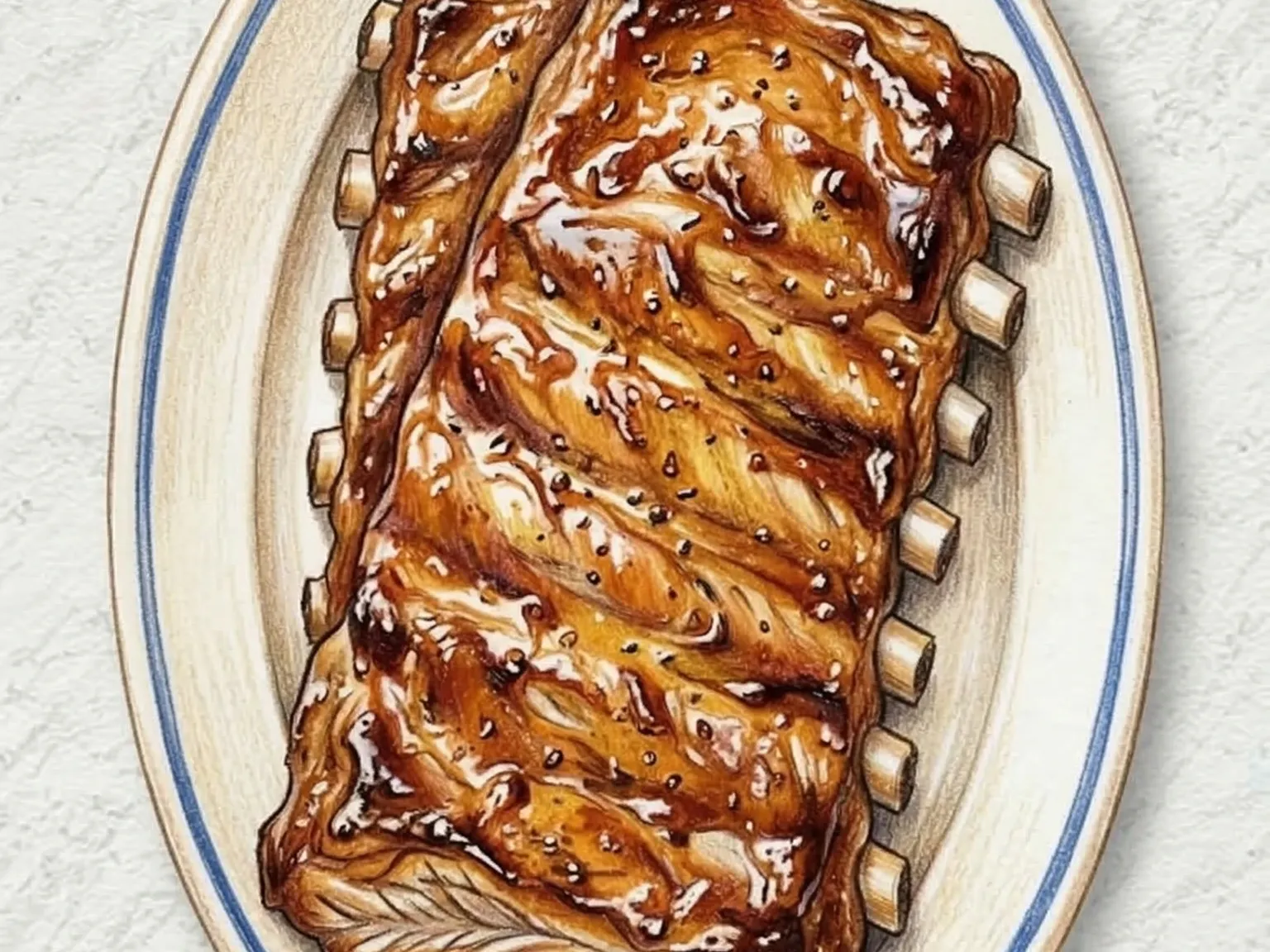
BBQ ribs start with a rack of pork spare ribs rubbed generously with a blend of paprika, brown sugar, garlic powder, and black pepper, then rested overnight so the seasoning penetrates the meat. Low-and-slow cooking at around 130 degrees Celsius for two or more hours dissolves the connective tissue until the meat slides cleanly off the bone. The dry rub caramelizes against the rendered fat into a sticky, darkened crust that carries most of the concentrated flavor. A final glaze of barbecue sauce adds smoky sweetness and a faint vinegar tang that keeps each bite from tipping into one-note richness. Served alongside coleslaw or grilled corn, the pairing offsets the deep, heavy character of the ribs.
Adjust Servings
Instructions
- 1
Remove the membrane from the ribs and pat them dry.
- 2
Mix paprika, brown sugar, garlic powder, salt, and pepper, then coat the ribs evenly.
- 3
Wrap the ribs tightly in foil and bake at 150C for 2 hours.
- 4
Combine barbecue sauce and vinegar, then brush over the ribs.
- 5
Bake at 200C for 15-20 minutes more to caramelize the surface.
- 6
Slice and serve with extra sauce.
As an Amazon Associate, we may earn from qualifying purchases.
Tips
Nutrition (per serving)
More Recipes

Korean Soy-Glazed Pork Back Ribs
Dwaeji-deunggalbi ganjang-gui is a Korean soy-glazed pork back rib dish where thick cuts attached to the spine bone are coated in a glaze of dark soy sauce, honey, garlic, and ginger juice, then slow-roasted in an oven or grill. The thick meat requires at least two hours of refrigerated marination so the salty-sweet flavors penetrate near the bone, and during cooking the sugar in the glaze caramelizes into a glossy, dark-brown crust. A two-stage cooking process defines the texture: forty minutes covered at 180 degrees Celsius to cook the meat through, then ten minutes uncovered at higher heat to crisp the surface. Ginger juice is not optional-it neutralizes the pork's gamey notes, and omitting it throws off the flavor balance.

Pulled Pork Sandwich
Pulled pork sandwich starts with pork shoulder rubbed in salt and paprika, then slow-cooked for two and a half to three hours with onion and garlic until the connective tissue converts to gelatin and the meat shreds effortlessly with two forks. The low-and-slow method delivers a tenderness that faster cooking cannot replicate. Tossing the shredded meat in barbecue sauce layers smoky sweetness and tang over the deep pork flavor, while lightly toasted buns provide a crisp contrast to the moist filling. Making the pork a day ahead and refrigerating it lets the sauce penetrate deeper into the fibers, intensifying the overall taste.

Green Bean Casserole
Green bean casserole bakes blanched green beans in a mushroom cream sauce, then tops them with crispy fried onions for a contrast of textures that defines this American holiday side dish. Blanching the beans for just three minutes and shocking them in ice water preserves their bright green color and a slight crunch that survives the oven. Sauteing onion and mushrooms in butter, stirring in flour to build a roux, and gradually adding milk produces a smooth cream sauce infused with earthy mushroom flavor. After twenty minutes in the oven, the casserole is pulled out and topped with fried onions, then returned for five more minutes so the onions crisp without burning. The finished dish layers the crunch of the topping against the creamy sauce and tender-crisp beans.

Loaded Baked Potato
Loaded baked potato starts with a russet potato baked whole at 200 degrees Celsius for about 50 minutes until the inside is fluffy and the skin is crisp. Rubbing the skin with salt and butter before baking and poking holes with a fork ensures even heat penetration and a thin, crunchy shell. The hot potato is split open, the flesh is fluffed with a fork, then piled with shredded cheddar cheese - which melts on contact - crumbled crispy bacon, cold sour cream, and chopped chives. The sour cream's cool tang balances the salty bacon and rich cheese, while the chives add a mild onion freshness. No additional cooking is needed beyond the bake itself, making it equally suited as a side dish or a full meal.

BBQ Beef Brisket
BBQ beef brisket is the centerpiece of Texas barbecue, requiring nothing more than coarse salt and cracked black pepper rubbed into a whole packer brisket before twelve or more hours of low-temperature smoking over oak. Despite the minimal seasoning, the prolonged exposure to smoke builds a dark, crusty exterior known as bark that concentrates flavor on every surface. The thick fat cap renders slowly and bastes the lean flat beneath it, keeping the meat moist even after half a day of cooking. Collagen breaks down completely, so each slice pulls apart along the grain with almost no resistance. The finished brisket carries oak smoke, sharp pepper heat, and the deep beef flavor that salt draws out - proof that time, not complexity, defines this dish.

Chef Salad
Chef salad arranges sliced ham, turkey, cheddar cheese, quartered boiled eggs, and halved cherry tomatoes in separate sections over a bed of crisp romaine lettuce. A honey mustard dressing - whisked from mustard, honey, and olive oil - ties the salty deli meats and mild greens together with its sharp-sweet balance. Drying the lettuce thoroughly before plating is essential; residual water dilutes the dressing and makes the leaves limp. The cherry tomatoes burst with a bright acidity that cuts through the richness of the meats and cheese. Slicing the cheese just before serving preserves its aroma at the cut surface. The traditional presentation keeps each component in its own zone rather than tossing everything together.