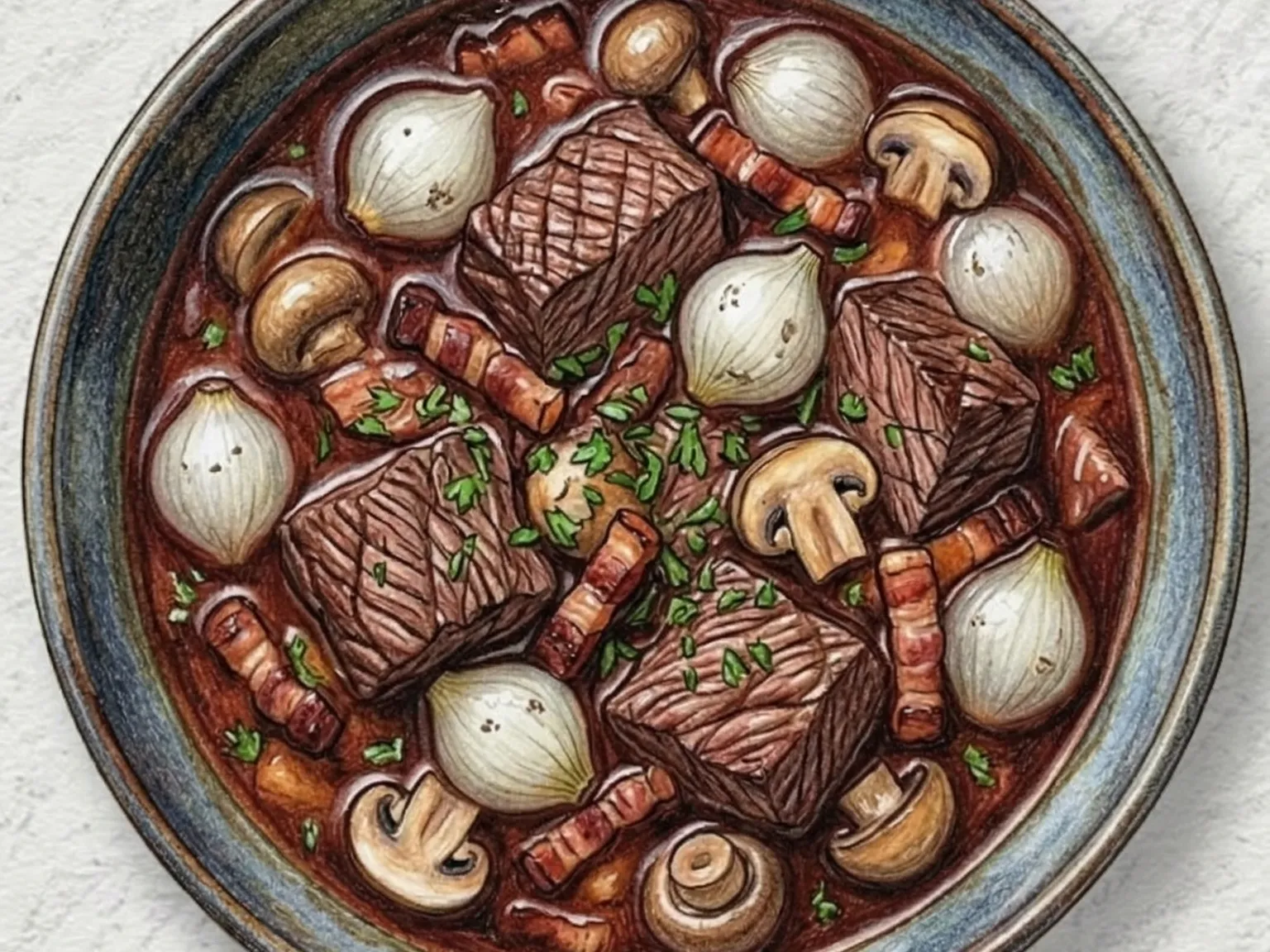
Beef Bourguignon
Beef bourguignon is a Burgundian stew built on the slow braise of beef chuck in red wine, a process that takes about two hours to break down the tough connective tissue into silky, fork-yielding meat. Bacon is rendered first for its fat, which sears the beef cubes into a deep crust before the wine goes in, layering smoky and caramelized notes into the foundation. As the wine reduces around the meat, it transforms from a thin liquid into a concentrated, glossy sauce that coats everything in the pot. Mushrooms and pearl onions absorb this sauce and add their own textures - the mushrooms spongy and meaty, the onions sweet and yielding. Tomato paste and beef stock anchor the wine's acidity so the final dish reads as deeply savory rather than sharp.
Adjust Servings
Instructions
- 1
Cut beef into large chunks, season with salt and pepper, then dust with flour.
- 2
Render bacon in a heavy pot, then remove and reserve.
- 3
Sear beef in the same pot over high heat until browned on all sides.
- 4
Add onion, carrot, and tomato paste, then deglaze with red wine.
- 5
Add beef stock, thyme, and bacon, then simmer gently for at least 90 minutes.
- 6
Add mushrooms and simmer 20 more minutes, then adjust seasoning and thickness.
As an Amazon Associate, we may earn from qualifying purchases.
Tips
Nutrition (per serving)
More Recipes

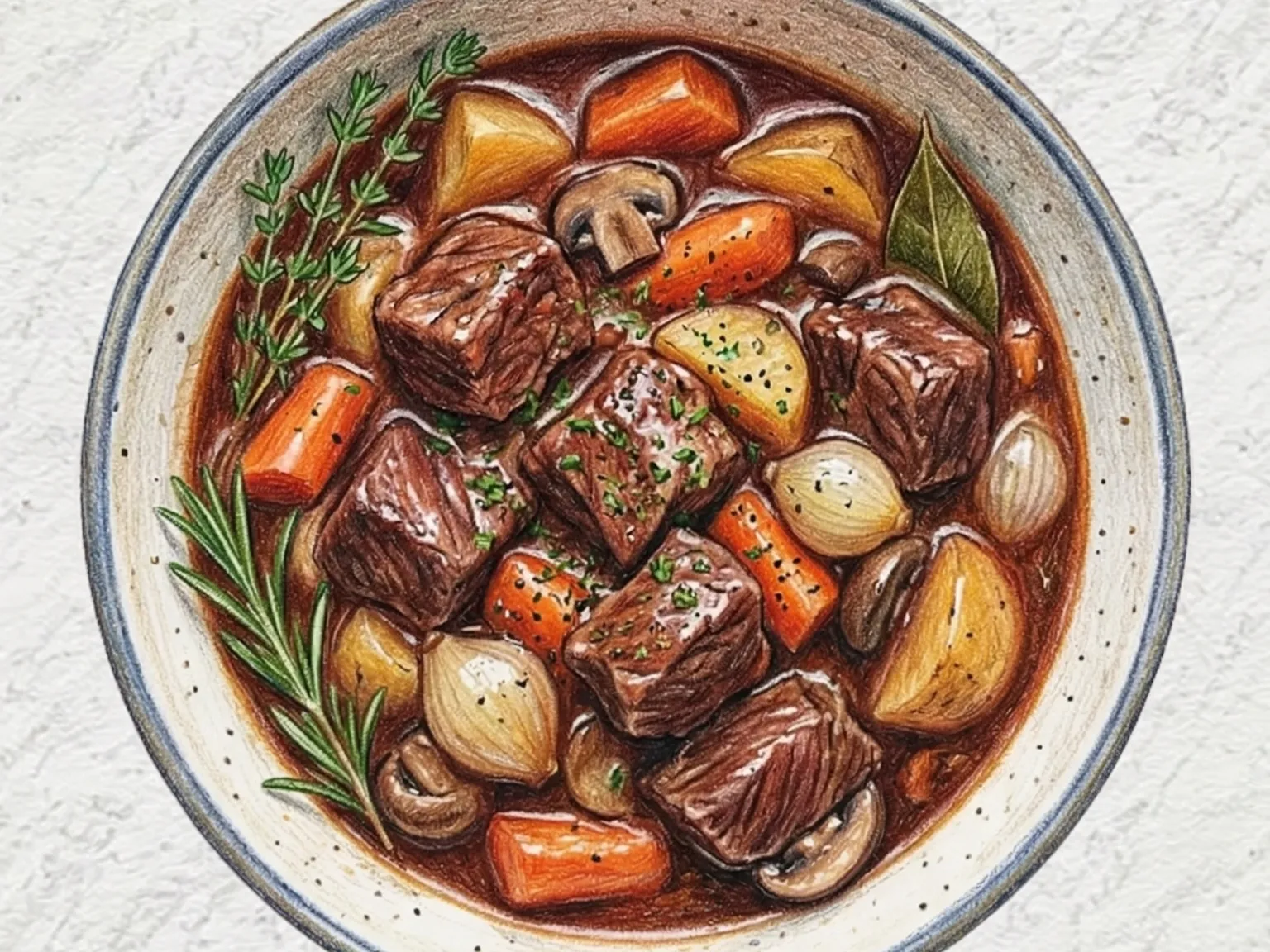
French Beef Stew
French beef stew takes tough, inexpensive cuts of beef and transforms them through patience and slow heat into a deeply flavored, fork-tender dish. Chuck or brisket is cut into large chunks, dusted with flour, and seared until a dark brown crust forms - this initial browning builds the foundation of flavor for the entire pot. Red wine and beef stock are poured in, and the pot goes into a low oven or onto a gentle burner for at least two hours. Root vegetables - carrots, potatoes, celery, and onions - braise alongside the meat, contributing natural sweetness and body to the liquid. As the wine reduces, its acidity dissipates while its fruit depth and tannic structure remain, giving the sauce a robust backbone. Thyme sprigs and bay leaves infuse the broth with herbal warmth. The stew tastes even better the next day, after the flavors have had time to marry overnight in the refrigerator.

Cassoulet (French White Bean and Pork Stew)
Cassoulet is a slow-cooked stew from the Languedoc region of southwestern France, combining white beans, pork shoulder, and sausage in chicken stock for at least two hours. During the long simmer, the beans absorb the broth and release their starch, naturally thickening the sauce without any added roux or flour. Collagen from the pork and fat from the sausages melt into the liquid, building a deep, heavy savoriness that defines this dish. Thyme and tomato paste temper the richness of the meats and add an aromatic backbone. Preparing it a day ahead allows the flavors to exchange fully between beans and meat, producing a noticeably deeper result when reheated.

Coq au Vin (French Red Wine Braised Chicken with Mushrooms)
Coq au vin is a classic French braise in which chicken pieces are browned until golden, then simmered in red wine with bacon lardons, shallots, button mushrooms, garlic, chicken stock, and tomato paste. Browning the chicken first seals the surface and adds caramelized depth to the braising liquid. Cooking the lardons, shallots, and mushrooms in the same pan layers their flavors into the fond before the wine deglazes it. Forty-five minutes of covered braising allows the wine's tannins and fruit character to permeate the meat, producing a sauce that is deeply complex and savory. Reducing the sauce at the end concentrates it to a glossy consistency that clings to each piece of chicken.

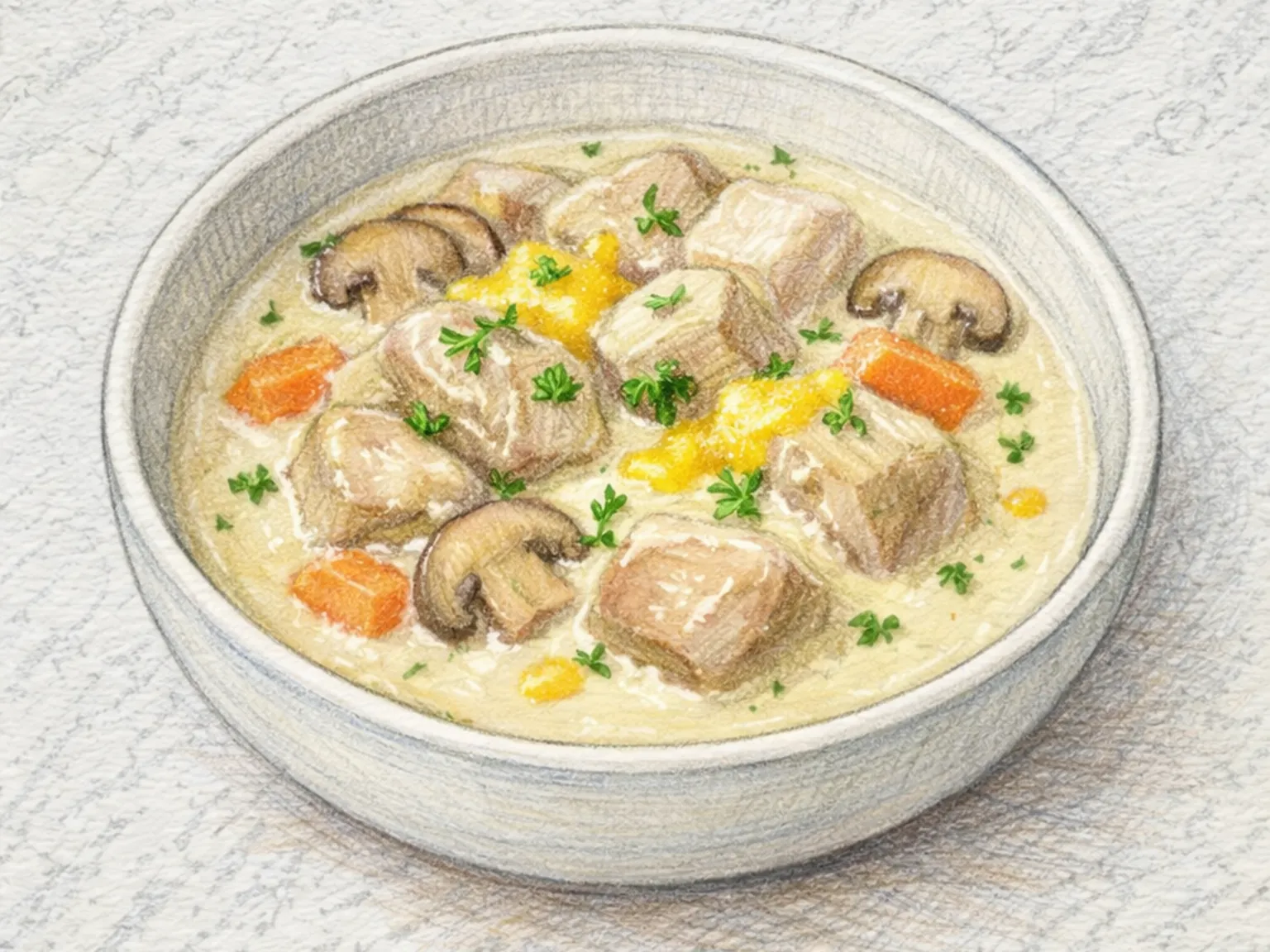
Chicken Fricassee (French White Wine Cream Braised Chicken)
Chicken fricassee is a French white braise where chicken thighs are lightly seared - just enough to firm the surface without deep browning - then set aside while mushrooms, onion, and garlic are sauteed in butter and dusted with flour to form a roux. Chicken stock is whisked in to dissolve the roux into a smooth base, the chicken returns for a twenty-five-minute covered simmer, and heavy cream is added for a final ten minutes of gentle reduction. The deliberately light sear is what distinguishes fricassee from darker braises; heavy browning would muddy the pale, delicate sauce. The roux provides body without heaviness, and the cream transforms the broth into a silky coating that clings to the meat. Mushroom earthiness and onion sweetness emerge quietly within the cream. Bread or boiled potatoes are the traditional side, used to soak up the sauce completely.

Nikujaga (Japanese Beef Potato Onion Soy-Sweet Stew)
Nikujaga is the quintessential Japanese home-cooked stew, often described as the dish that defines a mother's cooking in Japan. Thinly sliced beef, potatoes, onion, carrot, and shirataki noodles are simmered in a broth of dashi, soy sauce, mirin, and sugar. The dish traces its origins to the Meiji era, when a Japanese naval officer attempted to recreate British beef stew using local ingredients - resulting in a clear, soy-based braise rather than a thick, flour-bound stew. The potatoes absorb the seasoned liquid until soft at the edges but still holding shape, while shirataki noodles soak up flavor and add a springy contrast.

Bo Kho (Vietnamese Lemongrass Beef Shank Stew)
Bo kho is Vietnam's answer to beef stew, born in the southern kitchens of Saigon where French colonial influence introduced slow-braised preparations and Vietnamese cooks adapted them with local aromatics. Beef shank and tendon are cut into large chunks and braised with lemongrass, star anise, cinnamon, and annatto oil - the annatto tinting the broth a vivid orange-red that distinguishes bo kho from darker Western stews. Tomato paste and a spoonful of curry powder go in early, building a base that is simultaneously sweet, earthy, and warm. The stew simmers for two hours or more until the beef is fork-tender and the tendon has turned gelatinous, releasing its collagen into the broth and giving it a lip-coating richness. Carrots and daikon radish soften in the liquid during the final thirty minutes. Bo kho is eaten two ways - ladled over rice, or with a crusty baguette for dipping into the aromatic broth. Street vendors in Ho Chi Minh City serve it from dawn, when the morning air carries the scent of star anise from their simmering pots.